The doctor who delivered Dolly Parton in a one-room Tennessee cabin in 1946 was paid with a sack of cornmeal. Her father farmed other people's land and could not read or write. Eighty years later, the reading program she built in his name has mailed more than 300 million books.
She wrote "I Will Always Love You" on the same afternoon she wrote "Jolene," as a goodbye to Porter Wagoner, and released it in 1974. Elvis wanted it. The night before the session, Colonel Tom Parker called and said Presley would only record it if they got half the publishing, meaning half of everything the song ever earned. She had been in Nashville ten years by then. She said no, and cried all night. Whitney Houston cut her version in 1992, held number one for fourteen weeks, and Forbes later put Parton's royalties from it near $10 million. She put some of that money into an office complex in Nashville and called the place the house that Whitney built.
Dollywood opened in Pigeon Forge in 1986 because she wanted paychecks in the county she came from. Around 4,000 people work there now. Three million visitors come every year. The University of Tennessee put its economic impact at $1.8 billion, and it is the largest employer in Sevier County. Since 2022 the company has paid tuition, fees, and books in full for every worker from their first day, seasonal hires included.
Wildfires tore through those mountains in November 2016, killing fourteen people and destroying more than 2,400 buildings. Her foundation was handing out money within 48 hours. Every family that lost a home got $1,000 a month for six months, regardless of income. The final check was $5,000. Total delivered: $8.9 million.
In April 2020 she sent $1 million to Vanderbilt for coronavirus research. When Moderna's vaccine results ran in the New England Journal of Medicine that November, her fund appeared in the footnotes.
Carl Dean, her husband of nearly sixty years, died in March 2025. The note she wrote to fans afterward ended with the same five words she wrote for Porter Wagoner back in 1974. She died in Nashville today. Her family asked that instead of flowers, people give to the Imagination Library, which still mails 3.4 million books a month to children who will never get to meet her.
Sorry for the long post, but this is super important.
This is my sweet daughter, Francesca, one month before she died of brain cancer.She never got the chance to build the life and legacy she deserved, so we are building one in her name.
Over the past six years, Team Beans has raised $3.7 million for infant brain tumor research. This year, we’ve raised $77,000 toward our $100,000 goal for Dana-Farber, and we are just $23,000 away.
I cannot overstate how important this funding is to Francesca’s doctors and researchers. It has already made a real difference: a clinical trial and registry for her type of cancer were created entirely because of the people who supported Team Beans.
Francesca was so full of life, even when she was sick. After watching this terrible disease take my child, helping find a cure became the cause of my life.
I ran two Boston Marathons to raise money, and I would run one every day if it meant helping cure this disease. Now, I ride the Pan-Mass Challenge every year for Francesca and for every baby still fighting.
Please consider supporting Team Beans in the PMC. Donate, share this post, or tell someone Francesca’s story. Every gift matters.
For Francesca. For every baby still fighting.
https://t.co/WFEnywcqoA
A letter written by a 27-year-old facing the final stages of cancer.
Before her death in 2018, Holly Butcher left behind a deeply moving letter that touched millions of people around the world. Written as she faced Ewing’s sarcoma at just 27 years old, her message offered a powerful reminder to cherish life, appreciate good health, and keep everyday problems in perspective.
Rather than dwelling on what she was losing, Butcher encouraged others to focus on what truly matters—time with loved ones, meaningful experiences, and gratitude for the simple gift of waking up each day healthy. She also spoke about the importance of helping others, highlighting blood donation as a small act that can make a life-changing difference.
Years later, her words continue to resonate because they serve as a timeless reminder to slow down, live in the present, and place greater value on the people and moments that make life meaningful.
This image of Iryna, terrified and in tears, as she realizes what had just happened to her and understands that the next few moments will be her last, tears my soul apart.
Today, her murderer, DeCarlos Brown, was deemed “incompetent to stand trial.”
Ray’s Rock - Omaha Beach
On the morning of June 6, 1944, 23 year old Staff Sergeant Arnold “Ray” Lambert came ashore with the first wave of the 1st Infantry Division on the eastern side of Omaha Beach. At this small patch of concrete he saved nearly 20 lives:
The division came under intense fire from several German bunkers surrounding the entrance to the Colville Draw (one of two exits off Omaha Beach). Ray, a medic, immediately went to work.
He was shot in the arm. Moments later he was hit by shrapnel in the leg, but Ray kept pulling men to safety. He pulled nearly 20 wounded soldiers to cover behind this 8ft wide obstacle, treating each soldier before going out in search of others.
After several hours under fire, while pulling a wounded soldier from the ocean, he was struck by a landing craft. It dropped its ramp on top of him, breaking his back. He fell face down in the water, drowning. The craft backed up and nearby soldiers pulled an unconscious Ray to safety, eventually evacuating him off the beach.
Remarkably, Ray had already earned two Silver Stars and three Purple Hearts in Sicily and North Africa, prior to landing in France. But here in Normandy his war would end.
He awoke in a hospital back in England a day later. In the next bed over was his brother, who had also been wounded at Omaha.
When asked about his work on D-Day, Ray simply said, “I did what I was called to do.”
Ray Lambert passed in 2021 at 100 years old. He exemplified the best of American grit and why remembering this day is so important.
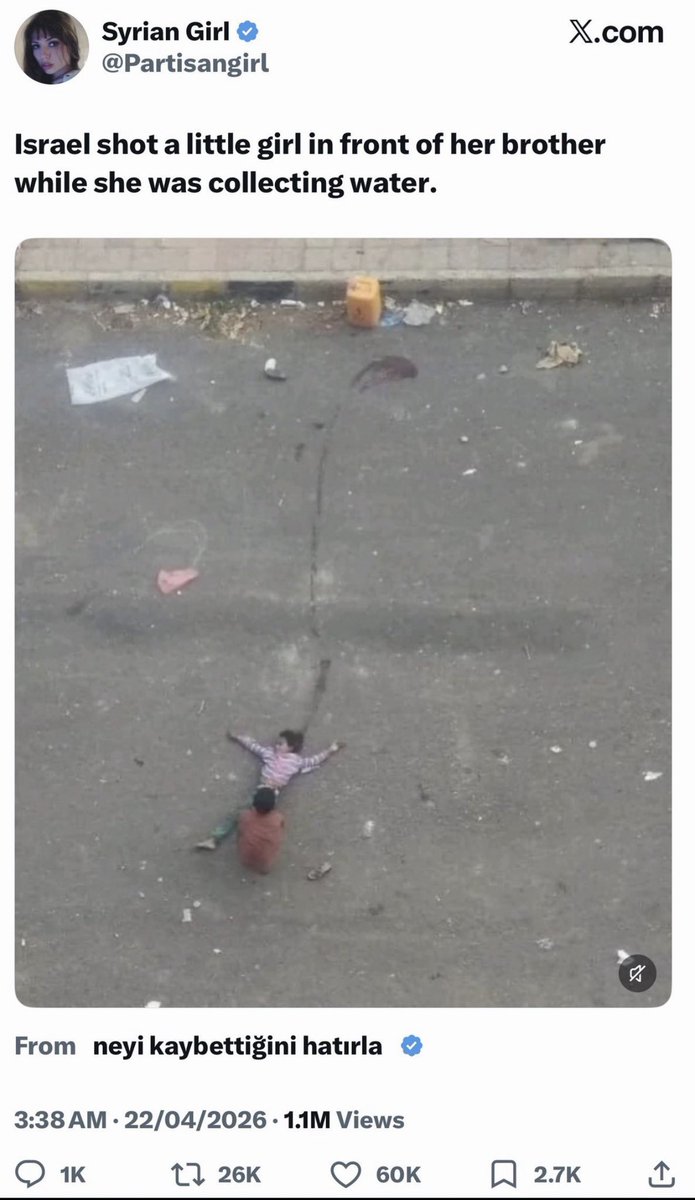
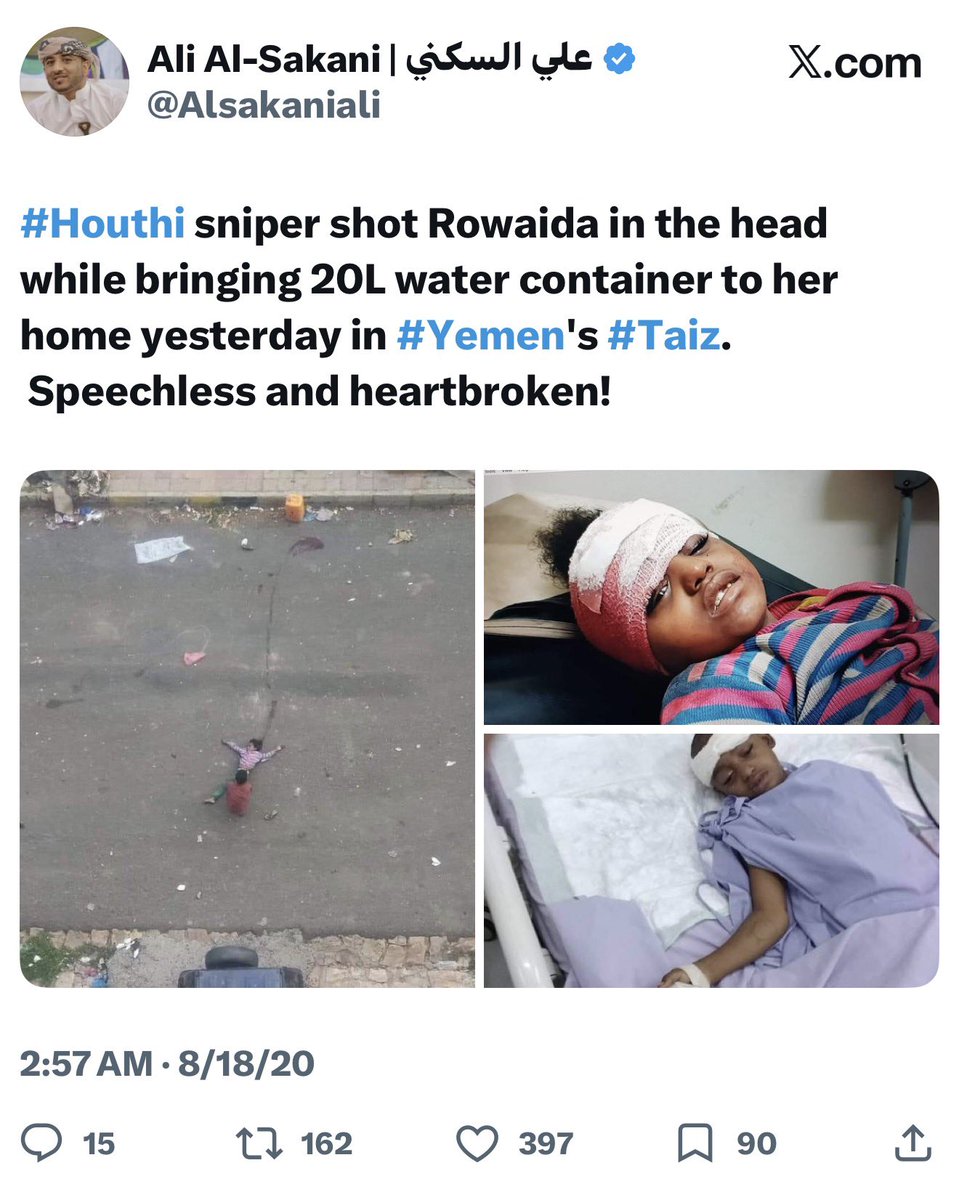
FACT CHECK: This image is from August 18, 2020. A Houthi sniper shot a girl named Rowaida in Taiz, Yemen while she was carrying water home. The original post is still live on X.
@Partisangirl recycled a 6 year old Houthi atrocity photo and blamed Israel.
The truth got 397 likes. The lie got 60,000.
In an emotional moment broadcast live from the Orion spacecraft, the Artemis II crew chose to name a Moon crater “Carroll" after commander Reid Wiseman's wife, who died of cancer in 2020.
“It's a bright spot on the Moon. And we would like to call it Carroll."