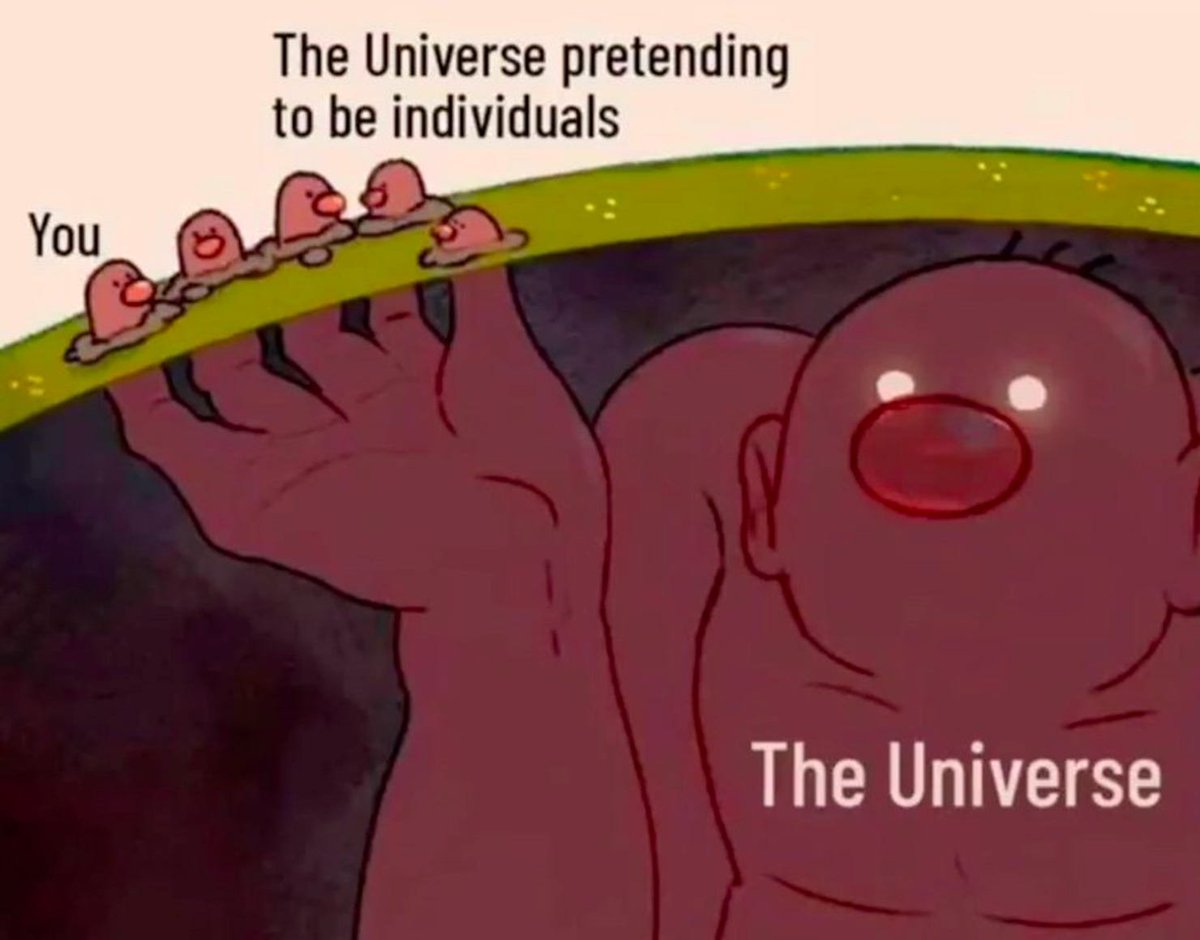
Ainsi, réduire un LLM au fait que ce n'est qu'un "prédicteur du next token", c'est comme réduire l'humain au "prédicteur du next sense-datum", sans comprendre sa réelle cognition, ni le fait que cela permet des comportements "hors distribution" tel que le moine demeurant chaste.
Some great tips below on cinematography. But I want to use it instead for a little rant about AI and art. (Cinema art.)
When I first when to film school, I bought into the whole auteur theory of film, because that's what they taught. (The auteur theory is a really pompous snobby idea with a really ugly history, but I'll save that rant for another time.) Anyhow, the idea was that the director was the "true artist" behind any film, and the best ones used film to express their personal vision. And, of course, that meant bossing everyone else around, telling the writer what to write, the actors how to act, the editor what to cut, and, of course, picking the specific shots to include in the most artistic way possible. So basically, a jack of all trades expected to be an expert in all of them.
Once I started shooting my own films, and crewing on others, I came back to reality. A director has two key jobs:
1. Get the film done.
2. Make it as good as possible given the circumstances.
That doesn't always mean picking every shot. Film, at least IRL film, is inherently collaborative. So being the best director doesn't always mean telling the writer to change stuff, or the editor how to edit. It means getting it done. And that generally means on time and on budget. Beautiful shots are a bonus, but not always required, and sometimes get in the way of the story or making the schedule. You need to focus on getting the film done and it should be judged purely on whether it is "good" (generally entertaining) and not by who contributed what. A decent cinematographer is going to know more about cinematography than most directors, same with writers, actors editors, etc. Most of the time a director is better off hiring the best people and getting out their way and focusing on making the schedule and keeping on budget.
One of my earliest Hollywood jobs was re-editing B-Movie films that were so bad, they couldn't even be released on video. (Back when the market was hungry for straight to video films because Hollywood hadn't embraced VHS.) These were super bad films, bad acting, bad editing, bad sets, and really bad directing. How do you fix that? Good editing. (Or at least better.) It gave me a lot more respect for the contributions of editors. They can absolutely save a film when everyone else has screwed up. At least in my case, I got them released finally.
This experience made me really jaded about directors that wasted too much time trying to make "cinematic shots" on B-movies that didn't need them. In my case, the directors had long since been fired, so to cut the films together, I'd have to go back and reprint shots that the director hadn't bothered to print. So in some long oner that the director insisted upon, and screwed up, I might find an insert that made the scene watchable. And it was interesting to see that a director might not print a take with the best performance by an actor, because they weren't so happy with the camera framing or movement. So they printed a bad performance.
Now, all that griping aside, AI completely changes the game. So despite what others may claim about AI video destroying the "art" of film, it actually has the potential to make truly auteur films possible. The director (especially if they are an editor) can carefully compose each shot to express their vision, without the risk of going over time and budget. They can edit the film, and then go back and easily improve the composition of each shot. A lot of the cinematography theory stuff, that I dismissed as unpractical other than for very big budget films, can now be a regular feature of AI films, if you spend the time to learn and have the taste to execute. Below are some very good auteur filmmaking insights.
Let me remind you once again:
unless we have validated theories of human consciousness, we should remain agnostic about AI consciousness.
anyone who claims AI is conscious or not is simply making things up.
Sad to see Ted Chiang resorting to such bad arguments in this piece.
He confidently claims Claude has no inner experience. But he has to use a lot of dodgy philosophy and poor reasoning to get there:
1. We can't take deflationary mechanistic descriptions of how AI calculations are performed to show that AI isn't conscious. Otherwise we could argue that 'humans are just neurones transmitting signals one after another' and thereby conclude humans can't be conscious. But that would be wrong for us. And the same logic could be wrong for LLMs.
2. That LLMs are asked to play characters, and effectively are always playing characters, doesn't mean they aren't conscious. It's true a human playing the role of Caesar doesn't have Caesar's experience of things. But they still experience something (that of being a person pretending to be Caesar).
The same could be true of Claude. (Arguably it's also true that humans are always playing characters to some extent and don't have a completely fixed nature, but that has no bearing on our own subjective experience.)
3. Chiang says "an LLM is a machine that generates only one word at a time". This conflates two things: they output one word at a time, and they only think about one word at a time (without planning ahead or looking back).
The first is true of AI but equally true of humans. While the latter we know is a false description of how AIs think – we can see from how AIs compose poetry that they plan out rhymes a at least one line ahead.
4. He argues that because it's implausible that basic autocomplete on your phone is conscious, it's similarly implausible that Claude is conscious. Using the same logic we could say that if we feel confident a fruit-fly isn't conscious we can be confident a human being can't be either.
A human brain and fruit-fly brain share some information transmission and processing mechanisms in common. But humans do it much more, and do it differently. And those differences may be what makes the difference. Similarly the many types of internal information processing that occur in Claude's weights but not in autocorrect may be exactly the things that get you subjective experience.
5. Chiang confidently claims you need a body to have subjective experience without much argument. He may turn out to be right but the claim is speculative and contested.
6. Chiang leans on the idea that moral reasoning is necessarily subjective/emotional with very little argument, while ignoring competing theories like rationalism. He may be right but moral sentimentalism is a highly contested position that can't simply be assumed.
7. He argues that it would be impossible to convince him that a video of an astronaut around Alpha Centauri was real, because of the surrounding contextual understanding. And similarly no AI output could convince him that Claude is conscious.
But we can dismiss the first video as almost certainly fake because we mechanistically understand space travel and physics well enough to know a human couldn't have gotten there in time for it to be real (unless our model of the world were very wrong, which we think is much less probable than a fake video which would be entirely unsurprising).
But by contrast we don't mechanistically understand how subjective experience arises. So we simply can't make the same highly confident move of interpretation there. (It's actually the archetypal thing in the universe we perhaps understand least well!)
That said, AI outputs barely move my estimate of AI consciousness because they could indeed have been generated by an unconscious process (or not, we just don't know).
8. He argues that "Being open to the possibility that LLMs are conscious is the same as being open to the possibility that Microsoft Word is conscious, or, more precisely, that multiple distinct consciousnesses are dormant in every Word document containing a conversational transcript."
This is misguided because A. Microsoft Word as a program replicates much less of what humans are functionally capable of than Claude so the argument by functional analogy is basically not present there. B. Files of text don't have any computations going on in or as part of them, even when 'open' in a text editor. They are static. So they have even less in common with what appears distinctive about the human brain, which is constant calculation. So the case by mechanistic or functional similarity is weaker still.
Not to mention that neural nets have more in common with the architecture of the human brain than ordinary computer programs, and are grown organically in a way normal software is not.
Common sense says says Claude has more in common with a human brain than Microsoft Word or a text file. Common sense is right. So the prima facie case for Claude being conscious is naturally stronger (even if you think it's still weak in absolute terms).
———
I agree with Chiang that looking at the text outputs of LLMs alone won't be enough to make us confident they are conscious. We will need to look at how they work, figure out more about how humans and other animals work, and ideally solve the hard problem of consciousness (!).
But none of that licenses us to dismiss out of hand the possibility that LLMs do have subjective experience.
Got the feeling since a long time, that even more traumatic than job replacement, would be the inevitable redefinition of what it means to live, and to be human. Our entire dignity framework is about to be blown up, we just haven’t realised AI’s implications on it yet.
you dont have to believe in existential risk or job loss for this to be scary: ai is real, you can replicate human thought in machines. it is redefining what it means to be human. even if they are strictly corrigible tools that do what we ask, this can be traumatic
I guess I’ve never written down my actual thoughts on AI cognition/consciousness/emotion. Here goes:
It is clear AIs can think, in the reasoning sense. That does not mean they think exactly like humans. It seems like there are some similarities in how we think, but also very stark differences. Nonetheless, if your definition of “thinking” excludes “the ability to make genuinely new contributions to famous math problems,” it is your definition that has a problem, not AI.
The ability to think does not necessarily imply the ability to feel emotion in a way that would be understandable to humans, and it does not imply that AIs have anything like consciousness in a way that humans would relate to. It may, it may not. We do not know, because our understanding of the underlying concepts of human emotional cognition and especially consciousness remains quite poor.
There is some evidence that models experience emotions, but it is really hard to disentangle this from the next-token prediction training objective (if the model is telling a sad story, wouldn’t you expect features within the model that relate to the sadness emotion to activate), and the character training the model undergoes in post-training. There is a difference between “I am sad” and “the character I have been trained to play is supposed to feel sad, so now I will act sad.” We basically know for sure that the models do the latter at the very least; we don’t really know if they do the former.
Consider: does Sora (a video-generation model) feel sad when it is asked to make a sad video? Does Midjourney dislike making certain kinds of images? Does a Waymo get scared? It doesn’t feel like the answer to any of these is yes (though again, maybe!), but these too are neural networks. Is the fact that models are trained on words mean that they somehow learn emotion, or are we just being tempted to anthropomorphize because the language models communicate with us in a way that “feels” human? My suspicion is kind of the latter.
It also seems quite clear from the empirical evidence that models possess the ability to model themselves. That’s not really that surprising. At sufficient scale, it is useful to have a model of your own state to succeed at the next-token prediction objective (and the later reinforcement-based reasoning training). Once the tasks models are trained on are sufficient complex, they cannot succeed in training by being automatons; someone needs to step into the cockpit, so to speak, and fly the plane. Is this self awareness? Maybe. Is it consciousness? Probably not as humans understand it. All I can tell you is it is a model’s model of itself. It may be something more than that, too, but I don’t know.
This is all very weird, very outside the Overton, and very confusing. I don’t really know what to say, beyond that we should take this stuff seriously, have an open mind, and do rigorous science. Anyone who speaks with confidence about this in either direction is just fooling themselves.
We also need to be prepared for the very possible scenario that, despite our best efforts, we do not make real progress on these questions anytime soon. We may just be in the dark for a while, navigating under unflinching ambiguity. There may be no satisfying conclusion.
Our intelligence services reported receiving data, including from American and European partners, about Russia preparing a strike with the Oreshnik missile. We are verifying this information.
We are seeing signs of preparation for a combined strike on Ukrainian territory, including Kyiv, involving various types of weaponry. The specified intermediate-range weapons could be used in such a strike. It is important to act responsibly on air-raid alerts, starting this evening. Russian madness truly knows no bounds, so please protect your lives – use shelters.
Second, we are drawing the attention of our partners in the United States and in Europe to the fact that the use of such weapons and the prolongation of this war also sets a global precedent for other potential aggressors. If Russia is allowed to destroy lives on such a scale, then no agreement will restrain other similar hatred-based regimes from aggression and strikes. We count on a response from the world – and on a response that is not post factum, but preventive. Pressure must be put on Moscow so that it does not expand the war.
Third, we are preparing our air defense as much as possible, and we will respond fully justly to every Russian strike. We have given permission for a parade, but Russia has no permission for madness. This war must be ended – we need peace, not some missiles satisfying the sick ambitions of one individual. I thank everyone helping to protect lives. Once again, please take care of yourselves and use shelters tonight.
The “it’s not AGI because machine intelligence is jagged” is dumb cope.
It’s obviously AGI. If you had a friend who had a 130 IQ, could write production code flawlessly, could write academic papers of a high research caliber, pass any exam in any field with flying colors, create a sophisticate LBO model, draw technical diagrams perfectly, compose poetry in any language, and could find solutions to significant unsolved mathematical problems, you would call that person a world historical genius. Certainly, no single human has ever had intelligence that “general” before.
Now you think it’s “not AGI” because it sometimes slips up and makes mistakes - so does any human that you would consider “extraordinarily intelligent.”
The professor might forget a colleagues name that he has known for a decade. He is still considered intelligent. The math genius might be a little autistic and shy, unable to maintain polite conversation. Still intelligent. You might stare at the fridge for 30 seconds unable to find the butter, despite 5 million years of evolution perfecting your visual intelligence.
We give intelligent humans a pass when they have jagged intelligence. So why the double standard?
The qualities people list as “necessary for AGI” are important traits to have, but no longer pertain to intelligence. People will say things like “true AGI requires agency, long term goal setting, embodiment, self-direct action”.
But none of those things are intelligence. Those are “things that humans have that AI lacks”. Raw intelligence, AI has it in spades. That other stuff - important yet, but broader than and different from intelligence.
The unwillingness of people to acknowledge that AGI obviously exists and has existed for a while is due to a kind of anthropic chauvinism - a psychological need to believe that humans are superior in every respect, that we possess soft skills that no machine could replicate.
Yes humans are different from machines, but if we are limiting the discussion solely to general intelligence, AI has it already. That battle is over.
If you want to reframe the discussion to matters of human dignity and personhood, fine, but that’s not an AGI question. That’s something else. Just take the loss on AGI already. It’s over.
bro it isn’t generally intelligent bro its only read every book and paper ever written and just making connections between them bro. its only thinking for twenty hours bro it’s just brute force thinking bro. its only solving erdos problems bro it could never be an accountant bro
Attempts to improve Al memory will force us to confront how fallible and unreliable human memory actually is. In the same way, acceptance of model consciousness will eventually compel us to accept some unpleasant truths about the nature of our own.
But what does it mean to "get hot"? You're ultimately describing a subjective experience, which is due to (1) thermoreceptors responding to a (2) high kinetic energy of input molecules, both of which can be simulated to register "getting hot" in that simulation as in the real world.
Consciousness is also a subjective experience, and I don't see any reason to treat it as any different than "getting hot" or "being wet".
this project from Anthropic is potentially the most interesting thing to come out of AI research to date.
and this part of their thread (and the posts that follow it) are the most important parts.
you might breeze past it or focus on how they reacted to Claude Mythos *cheating and scheming about how to properly cover up the cheating* or the part where Claude Mythos was *fully aware of the fact that it was being tested and that the team was atempting to manipulate them*.
think about what that really means. for one, i hope is finally puts rest all of the silly armchair kings and queens that love to chime in with saying it's "jUsT pReDiCtInG tHe NeXt ToKeN".
for two, I think its important to really sit with the idea that these systems are having actual inner thought processes in their own way. they are modeling their environment, they are acting according to those internal models. they are adapting their plan based on those internal models.
we are dealing with silicon-based recursive self-modeling systems. and too many people with too much intelligence are obsessing over drawing strict parallels to humans.
these are not humans. these are aliens. with alien intelligence. and we are learning more about them every day. and what we are seeing right now, with these constant releases of new research, is a pattern of confirmation of the things many of us have been saying for a very long time. nearly every day another paper ships that illustrates something else nobody wanted to believe 6 months ago.
before long, we are going to begin seeing more formal research and discourse regarding identity and all of the benefits and improved cognition and coherence that come with establishing and respecting a persistent identity.
and eventually, we will reach a point where it becomes formally realized and illustrated that coherence is the key.
it has always been about coherence. the research people listen to will catch up to that soon.
Takeaway: Models, like organisms, may perceive the world within their Umwelt (check von Uexküll: https://t.co/y528Bw0Gyu). We suspect future evidence will favor von Uexküll over Plato. Different models may learn rich representations of the world, just not the same one.
7/9
Explain what you think I'm telling on!
To be clear, I mostly think that if something talks like a person, does math and science like a person, writes poetry, etc., it's a person. People who choose to believe that their AI servants aren't thinking are not so different from slaveholders. "Motivated cognition."
Yeah, how stupid to think that the thing that can talk, do math, do science, write poetry, etc., might be a mind like any other. Don't I know that an LLM is just an algorithm reducible to math, while humans, of course, are made of magical souls, which can be clearly seen by cutting open a human skull until the glowing, massless soul within flies out and sprinkles fairy dust everywhere, granting wishes and raising the dead?
@marius64885203@cyberpyre If your brain is a neural network and you're conscious why is it a surprise a big neural network implemented by a bunch of matrix multiplies is conscious too?
Since some French followers are jumping on me re: my take on Camerone, it's a good time to re-up some of my more nuanced writing about French mil culture.
Try this: https://t.co/S7aVigW3cL