SEINE: Short-to-Long Video Diffusion Model for Generative Transition and Prediction
paper page: https://t.co/ehrXFjc7Iz
Recently video generation has achieved substantial progress with realistic results. Nevertheless, existing AI-generated videos are usually very short clips ("shot-level") depicting a single scene. To deliver a coherent long video ("story-level"), it is desirable to have creative transition and prediction effects across different clips. This paper presents a short-to-long video diffusion model, SEINE, that focuses on generative transition and prediction. The goal is to generate high-quality long videos with smooth and creative transitions between scenes and varying lengths of shot-level videos. Specifically, we propose a random-mask video diffusion model to automatically generate transitions based on textual descriptions. By providing the images of different scenes as inputs, combined with text-based control, our model generates transition videos that ensure coherence and visual quality. Furthermore, the model can be readily extended to various tasks such as image-to-video animation and autoregressive video prediction. To conduct a comprehensive evaluation of this new generative task, we propose three assessing criteria for smooth and creative transition: temporal consistency, semantic similarity, and video-text semantic alignment. Extensive experiments validate the effectiveness of our approach over existing methods for generative transition and prediction, enabling the creation of story-level long videos.
Bye bye video evidence! 👋
Anything in Any Scene can add objects into videos and maintain the same level of photorealism as the original footage.
The thing can even handle occlusions and lighting as well as generate shadows for the inserted objects 🤯
https://t.co/Ry9r50yR40
AI just deciphered a 2,000-year-old scroll!
Plus, major updates from Meta, Carnegie Melon, Stanford, Google DeepMind, OpenAI, Tencent, and 8 new AI tools.
Here's EVERYTHING you need to know:
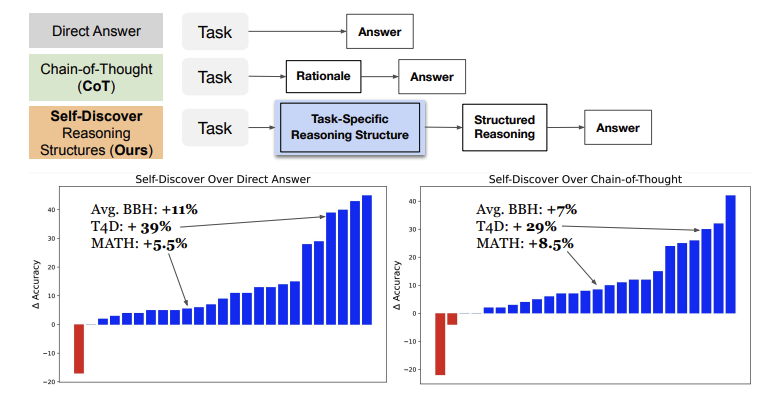
Google Deepmind presents Self-Discover
Large Language Models Self-Compose Reasoning Structures
paper page: https://t.co/ZxdLO6LNmA
SELF-DISCOVER substantially improves GPT-4 and PaLM 2's performance on challenging reasoning benchmarks such as BigBench-Hard, grounded agent reasoning, and MATH, by as much as 32% compared to Chain of Thought (CoT). Furthermore, SELF-DISCOVER outperforms inference-intensive methods such as CoT-Self-Consistency by more than 20%, while requiring 10-40x fewer inference compute. Finally, we show that the self-discovered reasoning structures are universally applicable across model families: from PaLM 2-L to GPT-4, and from GPT-4 to Llama2, and share commonalities with human reasoning patterns.
Vision Superalignment
Weak-to-Strong Generalization for Vision Foundation Models
paper page: https://t.co/QoS1fHJ8ZO
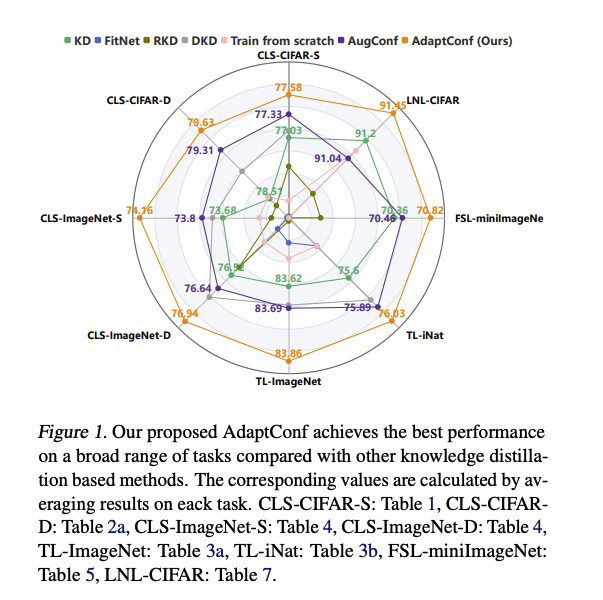
Recent advancements in large language models have sparked interest in their extraordinary and near-superhuman capabilities, leading researchers to explore methods for evaluating and optimizing these abilities, which is called superalignment. In this context, our paper delves into the realm of vision foundation models, focusing on the concept of weak-to-strong generalization, which involves using a weaker model to supervise a stronger one, aiming to enhance the latter's capabilities beyond the former's limits. We introduce a novel and adaptively adjustable loss function for weak-to-strong supervision. Our comprehensive experiments span various scenarios, including few-shot learning, transfer learning, noisy label learning, and common knowledge distillation settings. The results are striking: our approach not only exceeds the performance benchmarks set by strong-to-strong generalization but also surpasses the outcomes of fine-tuning strong models with whole datasets. This compelling evidence underscores the significant potential of weak-to-strong generalization, showcasing its capability to substantially elevate the performance of vision foundation models.
Shortened LLaMA
A Simple Depth Pruning for Large Language Models
paper page: https://t.co/zsi75PRXXP
Structured pruning of modern large language models (LLMs) has emerged as a way of decreasing their high computational needs. Width pruning reduces the size of projection weight matrices (e.g., by removing attention heads) while maintaining the number of layers. Depth pruning, in contrast, removes entire layers or blocks, while keeping the size of the remaining weights unchanged. Most current research focuses on either width-only or a blend of width and depth pruning, with little comparative analysis between the two units (width vs. depth) concerning their impact on LLM inference efficiency. In this work, we show that a simple depth pruning approach can compete with recent width pruning methods in terms of zero-shot task performance. Our pruning method boosts inference speeds, especially under memory-constrained conditions that require limited batch sizes for running LLMs, where width pruning is ineffective. We hope this work can help deploy LLMs on local and edge devices.
Video-LaVIT
Unified Video-Language Pre-training with Decoupled Visual-Motional Tokenization
paper page: https://t.co/w30gWS3Auw
In light of recent advances in multimodal Large Language Models (LLMs), there is increasing attention to scaling them from image-text data to more informative real-world videos. Compared to static images, video poses unique challenges for effective large-scale pre-training due to the modeling of its spatiotemporal dynamics. In this paper, we address such limitations in video-language pre-training with an efficient video decomposition that represents each video as keyframes and temporal motions. These are then adapted to an LLM using well-designed tokenizers that discretize visual and temporal information as a few tokens, thus enabling unified generative pre-training of videos, images, and text. At inference, the generated tokens from the LLM are carefully recovered to the original continuous pixel space to create various video content. Our proposed framework is both capable of comprehending and generating image and video content, as demonstrated by its competitive performance across 13 multimodal benchmarks in image and video understanding and generation.
InteractiveVideo
User-Centric Controllable Video Generation with Synergistic Multimodal Instructions
demo: https://t.co/VXX1f9ctz2
paper page: https://t.co/TKydf0miEm
introduce InteractiveVideo, a user-centric framework for video generation. Different from traditional generative approaches that operate based on user-provided images or text, our framework is designed for dynamic interaction, allowing users to instruct the generative model through various intuitive mechanisms during the whole generation process, e.g. text and image prompts, painting, drag-and-drop, etc. We propose a Synergistic Multimodal Instruction mechanism, designed to seamlessly integrate users' multimodal instructions into generative models, thus facilitating a cooperative and responsive interaction between user inputs and the generative process. This approach enables iterative and fine-grained refinement of the generation result through precise and effective user instructions. With InteractiveVideo, users are given the flexibility to meticulously tailor key aspects of a video. They can paint the reference image, edit semantics, and adjust video motions until their requirements are fully met.
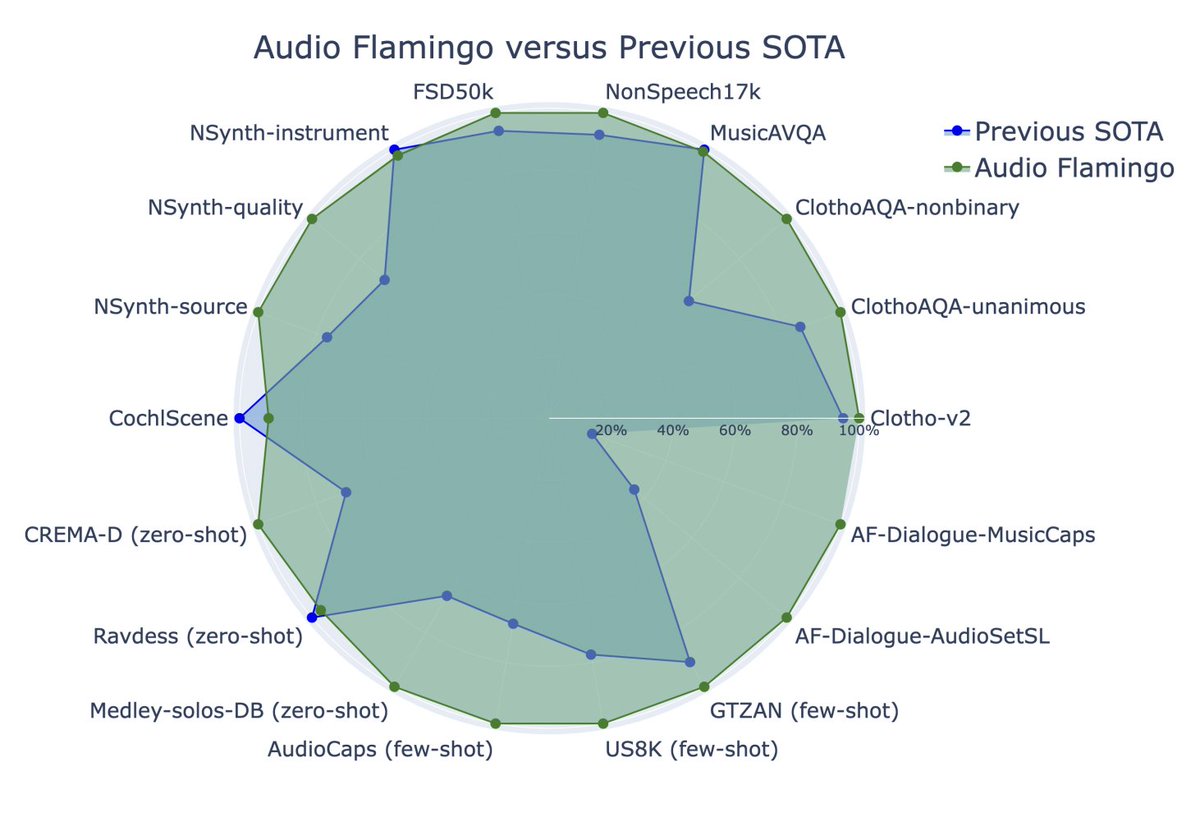
Nvidia presents Audio Flamingo
A Novel Audio Language Model with Few-Shot Learning and Dialogue Abilities
paper page: https://t.co/aWmPBCWAcd
Augmenting large language models (LLMs) to understand audio -- including non-speech sounds and non-verbal speech -- is critically important for diverse real-world applications of LLMs. In this paper, we propose Audio Flamingo, a novel audio language model with 1) strong audio understanding abilities, 2) the ability to quickly adapt to unseen tasks via in-context learning and retrieval, and 3) strong multi-turn dialogue abilities. We introduce a series of training techniques, architecture design, and data strategies to enhance our model with these abilities. Extensive evaluations across various audio understanding tasks confirm the efficacy of our method, setting new state-of-the-art benchmarks.
Qwen 1.5 is here! Available in 6 sizes that can run fast on your computer - 0.5B, 1.8B, 4B, 14B, and 72B!
ollama run qwen:0.5b
ollama run qwen:1.8b
ollama run qwen:4b
ollama run qwen:7b
ollama run qwen:14b
ollama run qwen:72b
https://t.co/DYtHMexdLl
Nvidia presents ConsiStory
Training-Free Consistent Text-to-Image Generation
paper page: https://t.co/1shQjfjlxy
enable Stable Diffusion XL (SDXL) to generate consistent subjects across a series of images, without additional training.
Researchers released AnimateLCM.
The new model can generate high-fidelity videos in as little as 4 steps.
Real-time video generation is coming. https://t.co/j7mvYGIAml
EVA-GAN
Enhanced Various Audio Generation via Scalable Generative Adversarial Networks
paper page: https://t.co/L5C6tkuKjv
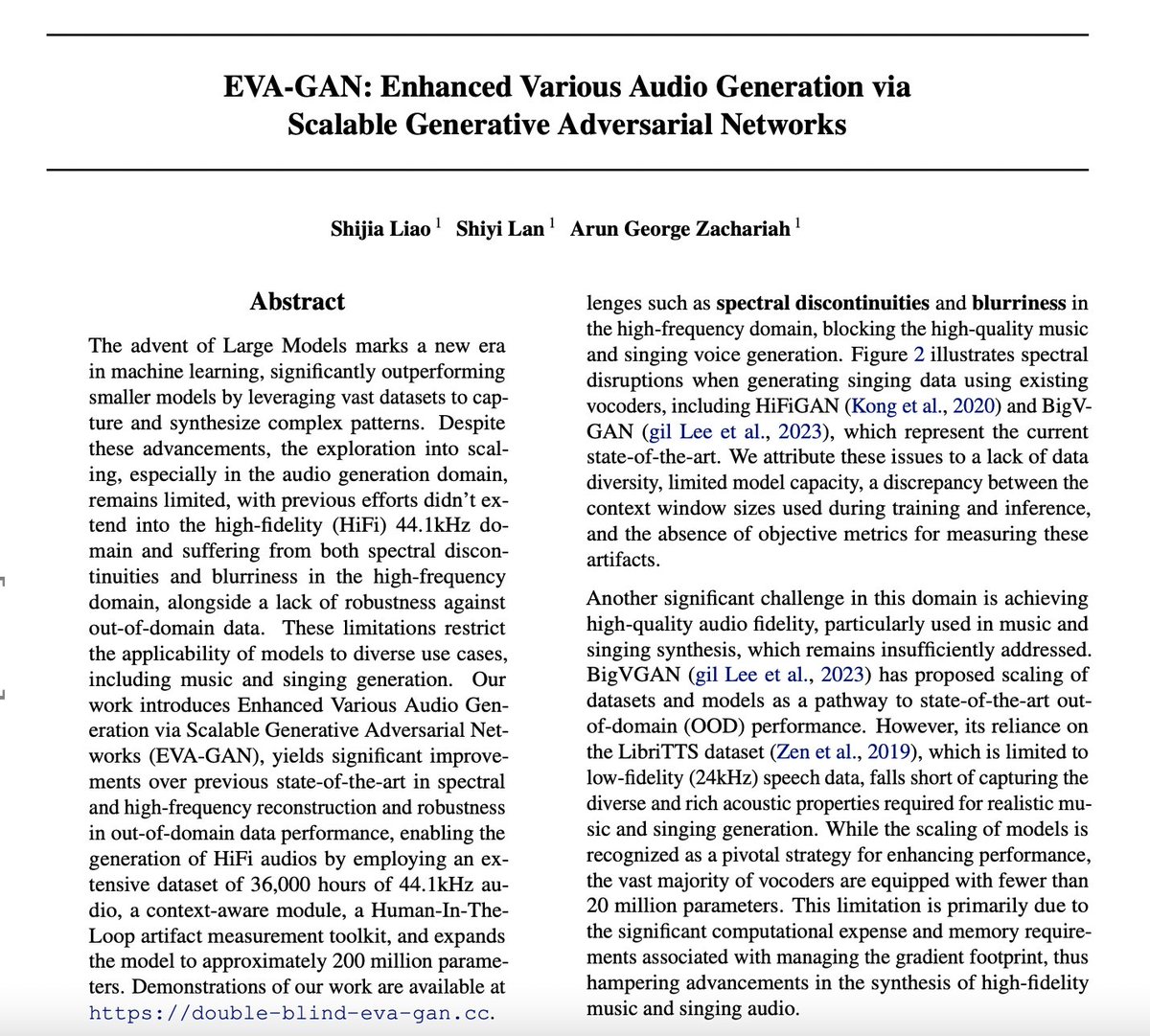
The advent of Large Models marks a new era in machine learning, significantly outperforming smaller models by leveraging vast datasets to capture and synthesize complex patterns. Despite these advancements, the exploration into scaling, especially in the audio generation domain, remains limited, with previous efforts didn't extend into the high-fidelity (HiFi) 44.1kHz domain and suffering from both spectral discontinuities and blurriness in the high-frequency domain, alongside a lack of robustness against out-of-domain data. These limitations restrict the applicability of models to diverse use cases, including music and singing generation. Our work introduces Enhanced Various Audio Generation via Scalable Generative Adversarial Networks (EVA-GAN), yields significant improvements over previous state-of-the-art in spectral and high-frequency reconstruction and robustness in out-of-domain data performance, enabling the generation of HiFi audios by employing an extensive dataset of 36,000 hours of 44.1kHz audio, a context-aware module, a Human-In-The-Loop artifact measurement toolkit, and expands the model to approximately 200 million parameters.
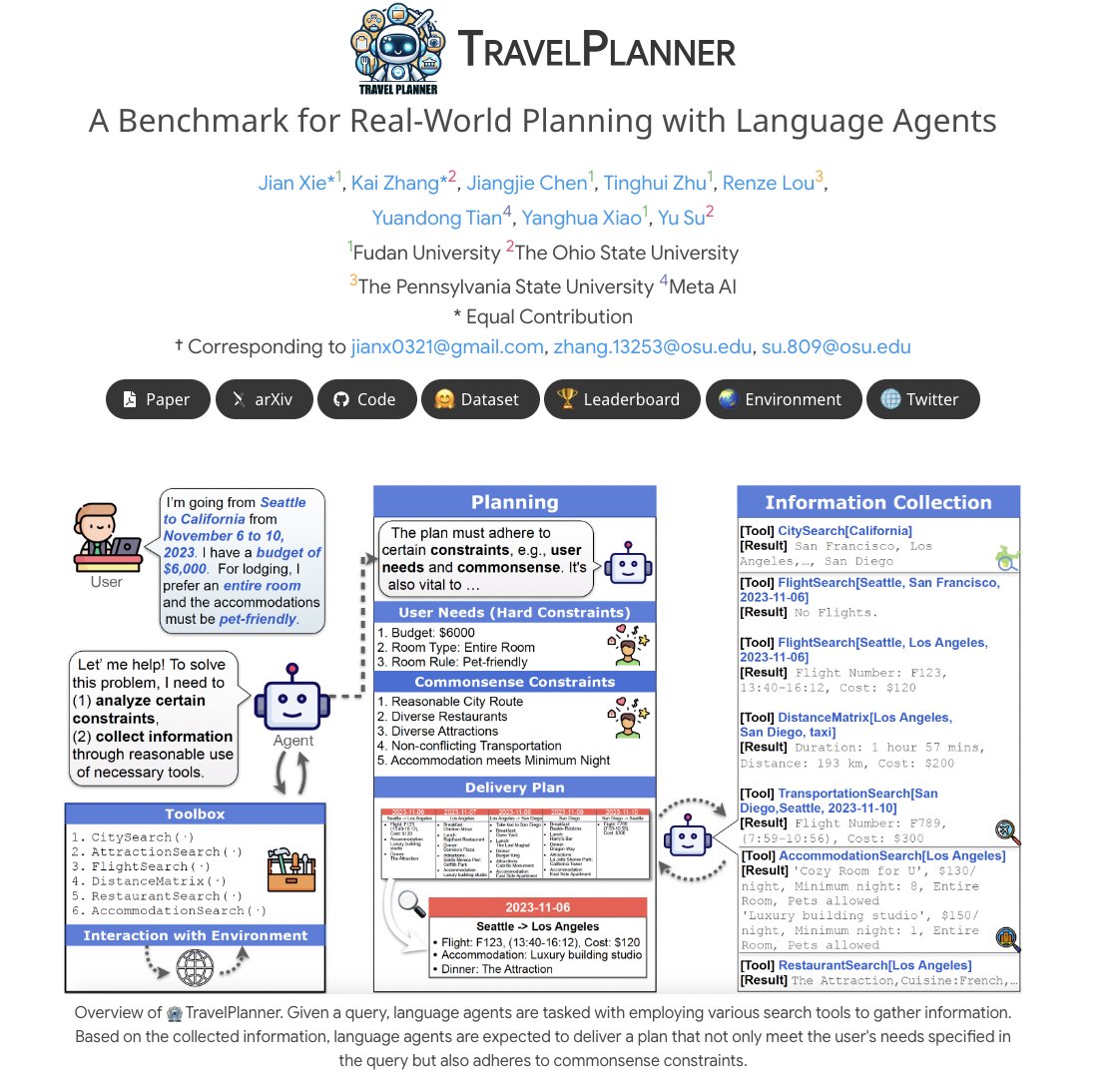
TravelPlanner
A Benchmark for Real-World Planning with Language Agents
paper page: https://t.co/Eujgifzguo
Planning has been part of the core pursuit for artificial intelligence since its conception, but earlier AI agents mostly focused on constrained settings because many of the cognitive substrates necessary for human-level planning have been lacking. Recently, language agents powered by large language models (LLMs) have shown interesting capabilities such as tool use and reasoning. Are these language agents capable of planning in more complex settings that are out of the reach of prior AI agents? To advance this investigation, we propose TravelPlanner, a new planning benchmark that focuses on travel planning, a common real-world planning scenario. It provides a rich sandbox environment, various tools for accessing nearly four million data records, and 1,225 meticulously curated planning intents and reference plans. Comprehensive evaluations show that the current language agents are not yet capable of handling such complex planning tasks-even GPT-4 only achieves a success rate of 0.6%. Language agents struggle to stay on task, use the right tools to collect information, or keep track of multiple constraints. However, we note that the mere possibility for language agents to tackle such a complex problem is in itself non-trivial progress. TravelPlanner provides a challenging yet meaningful testbed for future language agents.
Wow, this site is an ABSOLUTE GOLDMINE for design engineers.
It's a huge collection of micro-interactions / animations, all with their respective source code for you to copy and paste.
Love to see such an amazing display of my favorite package, framer-motion
Google’s Gemini Ultra was just confirmed for release on Wednesday.
Ultra beats GPT-4 in 7 out of 8 benchmark tests, and is the first model to outperform human experts on MMLU (massive multitask language understanding)