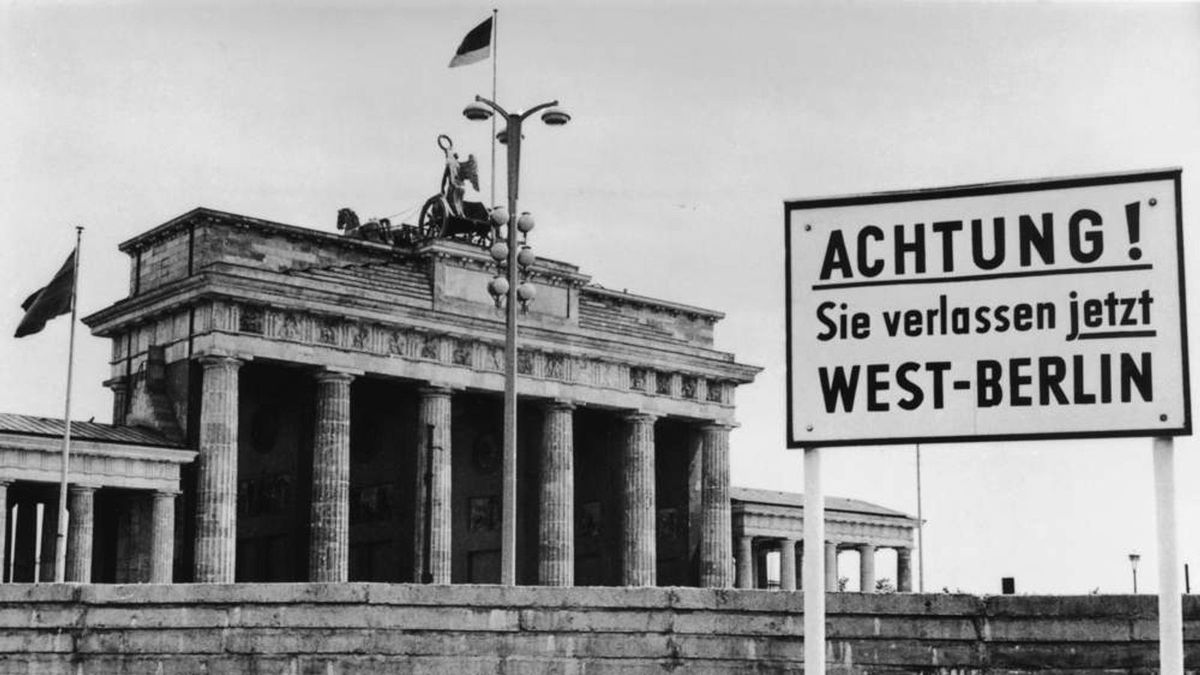
The Berlin Wall was built to trap East German citizens inside their supposed workers' paradise, not to keep enemies out. East German authorities erected it in 1961 because their system had already failed: when you need barbed wire and machine guns to prevent people from leaving, you've admitted as much.
By 1961, over 2.7 million East Germans had fled to the West through Berlin. The exodus included doctors, engineers, skilled workers, and intellectuals. Brain drain doesn't begin to capture the hemorrhaging. The East German economy was collapsing as productive people voted with their feet against socialism. Walter Ulbricht's government faced a choice: reform the system or build a prison. They chose the prison.
You can see the same pattern everywhere socialism takes hold. Cuba builds rafts. North Koreans risk execution to cross the DMZ. Venezuelans walk thousands of miles to escape Maduro's paradise. The pattern never changes because the economics never change. When the state controls production, innovation dies. When bureaucrats set prices, shortages multiply. When politicians promise equality, they deliver poverty equally.
The Wall stood for 28 years as the perfect symbol of socialism in practice. Guards shot 140 people trying to escape between 1961 and 1989. Each death proved the same point: people will risk everything to escape centralized planning. They will climb walls, dig tunnels, and hide in car trunks to reach free markets.
Ludwig von Mises warned in 1922 that socialist calculation was impossible without market prices. Every socialist experiment since has required walls, gulags, or killing fields to function. The Berlin Wall was just socialism being honest about what it really takes to make paradise work.
You don't smoke cannabis, so you want it banned.
But have you ever stopped to think about the millions of people whose lives, jobs, or well-being are connected to it?
Should laws be based on personal dislikes, or on evidence and real-world impact?