Today is the day.
The Linux Field Guide series "From Zero to Root" is officially live, and entry #1 is out. This is the project the recent posts have been pointing at.
For the upper-beginner Linux readers who've installed a distro, lived in a terminal, and started wondering what's actually under the hood: this series is for you.
https://t.co/CpfqX0L6Ji
The pitch: yes, you could build your own Linux with Buildroot or Yocto and get full control top-to-bottom. The catch is the multi-hour build and the build system you have to learn first. There's a much shorter path that gets you most of the control with almost none of the cost. A small shell script, the apk.static binary, and a JSON config. This runs in seconds, rather than hours. One file you can read in a sitting, not a build system.
Working code, 7-minute read. Repo with the script linked in the article.
This is article 1 of many. Follow @popovicu94 for the rest as it ships, and bookmark LFG if you want the catalog.
Today is the day.
The Linux Field Guide is officially live.
This is the project I've been talking about for a while. A long-form publication for "upper beginner" Linux users - the people who installed Linux, are comfortable in a terminal, and want to understand WHY things work the way they do, not just how to type the commands.
The first article is now up. It opens Series 01: The C Layer.
https://t.co/CQosgyOJwj
Title: Why C is the Linux userspace interface.
Most writing about C defends it the same way - "it's fast," "it's close to the metal," "there's too much legacy code to replace it." All of these treat C as a tool you happen to be stuck with. This article makes a different argument: C isn't a language you pick on Linux. It is literally the operating system interface, as POSIX defines it.
Working code throughout. Real assembly for x86_64 and RISC-V, the actual ld command line gcc hides from you, and Apple's own documentation as receipts. About a 15 minute read.
This is article 1 of many. Six series planned, each ~10 entries. The C Layer is just the start - shells, /proc, signals, files-as-everything, and bootstrapping a Linux system from scratch are all coming. A newsletter is in the works for readers who want article roundups plus extra content. For now, follow here for updates.
Thank you to everyone who followed along through the campaign this past week. Today is the payoff.
真的别折腾软路由,除非你想All in One。
因为硬路由太香啦,特别是Openwrt支持硬件转发的MTK芯片的硬路由:无论是PPPoE拨号上网的流量,还是局域网的流量,还是无线的流量……CPU占用率统统都是0!
而且MTK新款SoC的CPU本身性能不错,直追树莓派4,它还是空闲的!所以再用来跑Tailscale、Clash绰绰有余
(1/3)
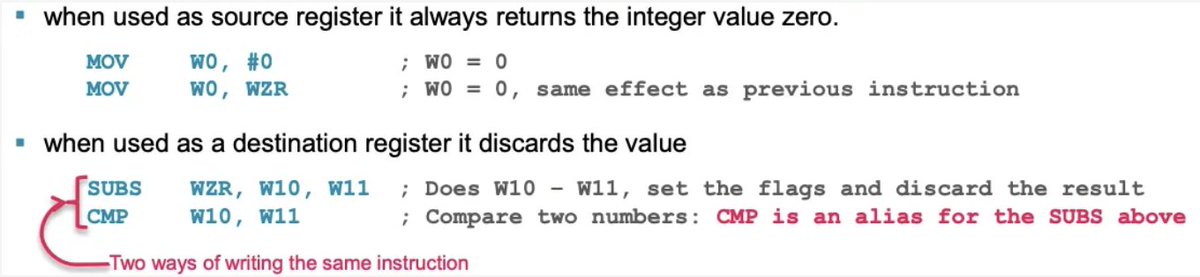
Nice series on ARM (64 bit) assembly by @Ch0pin
Basic definitions and registers: https://t.co/freCZDz03t
Offset and Addressing modes: https://t.co/m9ZMZn1WRN
Load and Store: https://t.co/NItpqEY9bx
#infosec#ARM#assembly#learning
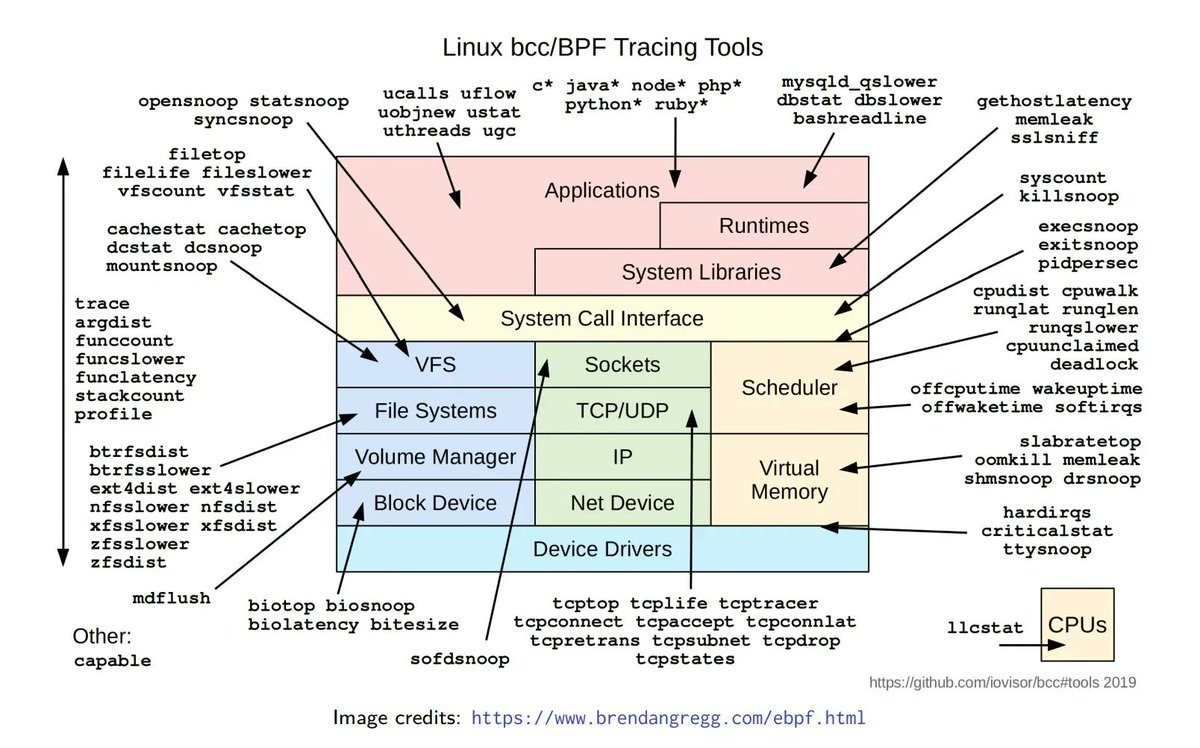
Linux debugging, profiling and tracing training
Very cool course by @bootlincom
Slides: https://t.co/OxmADoTOEH
Lab exercises: https://t.co/3Irhh332w1
Lab material (.tar.xz): https://t.co/psVOfoxSbW
#Linux