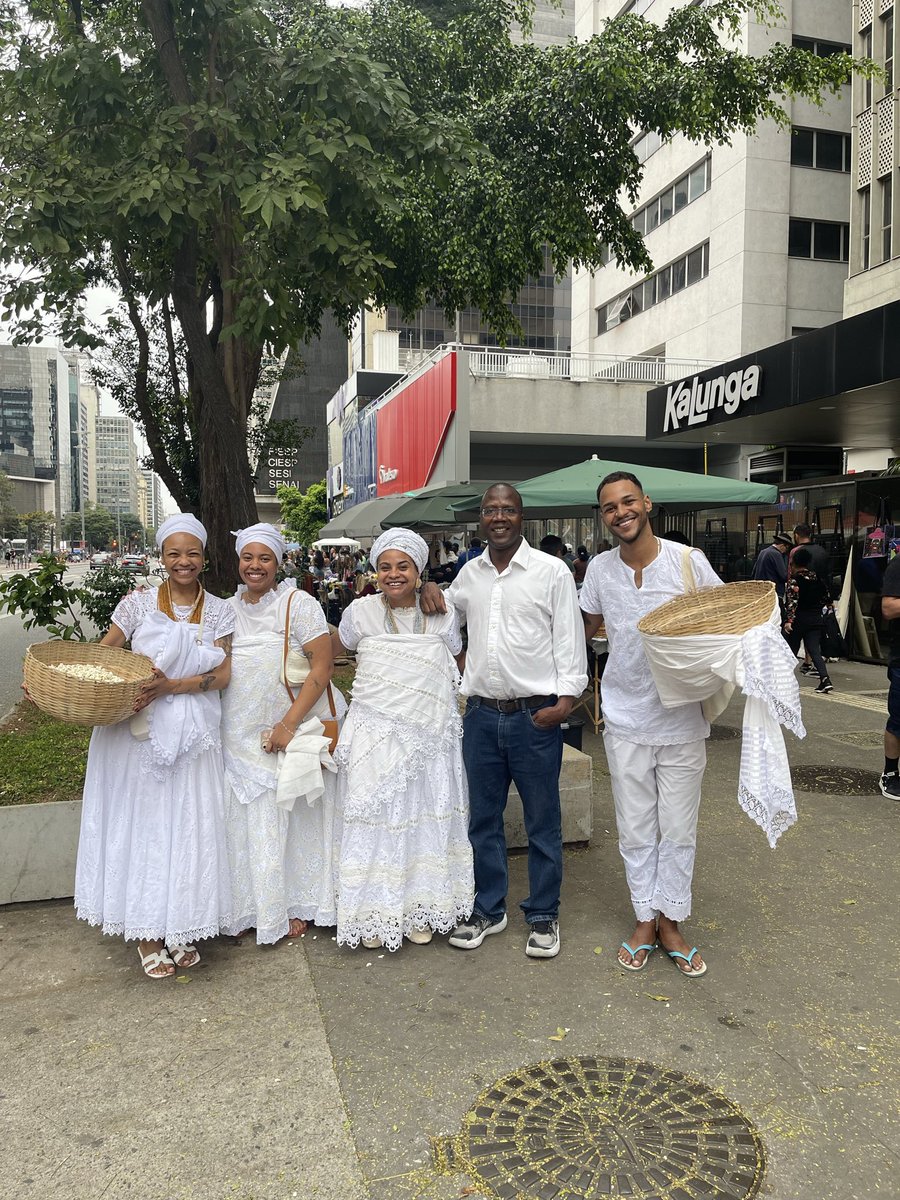
São Paulo, Brazil
One has to love Brazil, the most egalitarian society I have visited so far. Despite its limitations, it has forged ahead, and its future looks bright. The beauty, humanity, artistic vibrancy, and depth of African ingenuity should not be overlook.
Throughout my trip, I was bombarded with security products detailing how unsafe some communities and areas were. From my academic hosts to hotel marketers, the portrayal of urban life seemed dire. I am glad I disregarded these warnings by venturing across diverse neighborhoods and connecting with local communities. As I traveled through these areas, it became clear that there was no true lawlessness or urban warfare, but rather warmth and generosity.
Looking at this analytically, a striking paradox starts to appear: Illiberal societies, such as those across many parts of the Middle East and Asia, often provide security as a guaranteed public good assured to every visitor. Conversely, liberal democratic societies, such as Brazil, South Africa, Kenya, and the Philippines, frequently reduce security to a private commodity that is heavily marketed and commercialized.
In reality, what persists is an amplified perception of resource scarcity, which fosters an exaggerated sense of inequality manifested within the quagmire of freedom. For humanity to thrive, democratic societies must find a way to resolve this dilemma.
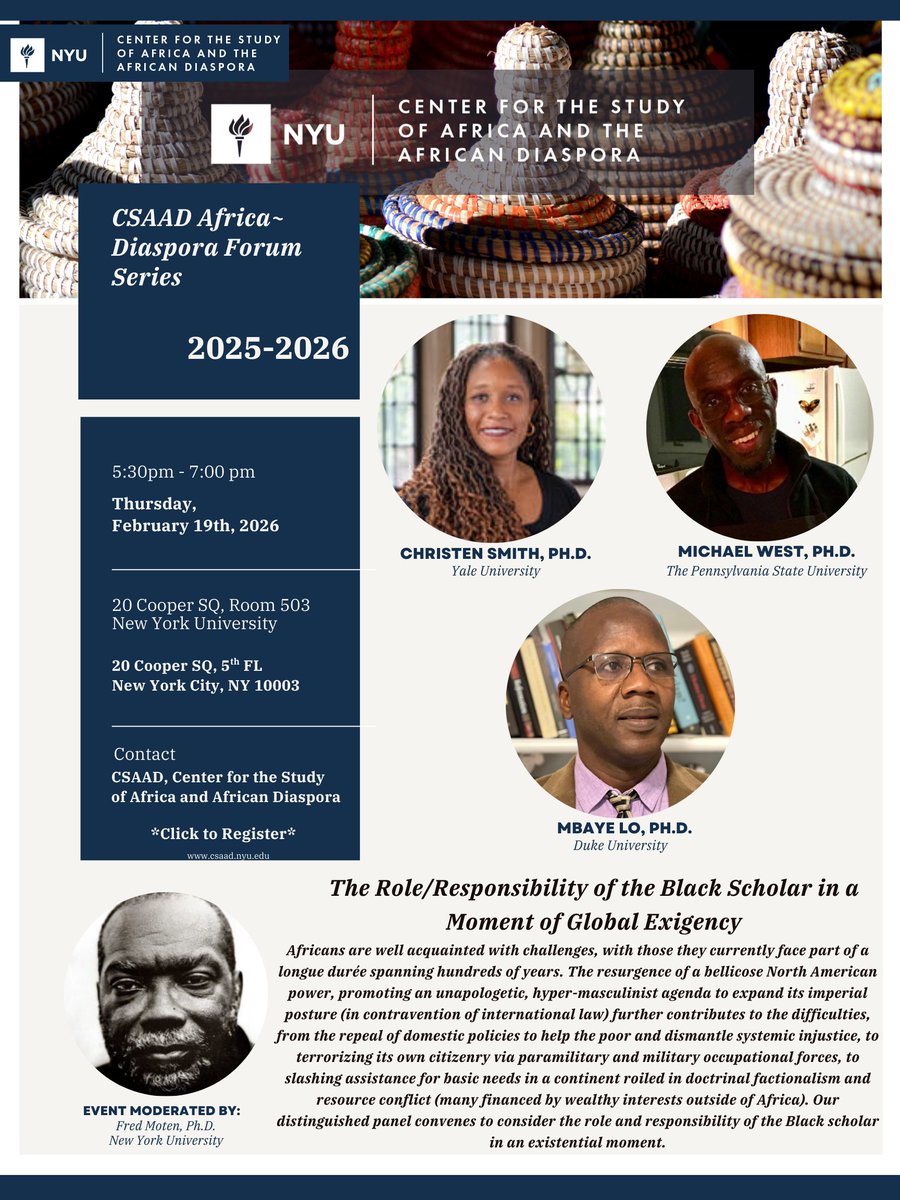
Duke Event Calendar https://t.co/K1lC6BnWeL
*Update* due to the snow storm that has shut down the University on Monday February 2nd, we have moved the event *online*
I remain loyal to an older conviction: modern Africans might have been better served by the wisdom of their musicians than by the directives of post-colonial politicians. Musicians are often more revolutionary in their convictions and more pragmatic in their craft. From Alpha Blondy in Ivory Coast to Tilahun Gessesse in Ethiopia, and from Miriam Makeba to Bob Marley, the message has remained consistent: love and African unity beyond boundaries and the confines of the nation-state. It is no surprise, then, that politicians committed to an evolutionary, incremental model often found themselves at odds with these musicians.
https://t.co/dgjMsYXdGW
So far so good with the rich panels at the conference.
This was a powerful presentation: Professor George H. Junne, Jr.' Chief Black Eunuchs of the Ottoman Empire
Duke Event Calendar https://t.co/NqFRDxA6wv
Nowhere is the ineffectiveness of the African Union more visible than in its indifference to the ongoing crises in the Sahel region, where nearly eighty million Africans in Mali, Niger, and Burkina Faso face the daily, relentless violence of terrorism. The AU is paralyzed by its own logic of neoliberal idealism. It remains absent, caught in the contradictory stance of refusing to engage the three governing leaders in the name of not supporting military coups while also refusing to engage the jihadists under the pretext of not talking to terrorists. This represents a clear institutional failure, and inability to address the lived realities of Africans.
https://t.co/dgjMsYXdGW
https://t.co/dgjMsYXdGW
My new piece:
Beyond independence
The post-colonial settlement has left Africa vulnerable to conflict, external pressure, and intellectual dependency. What comes next?
As Africa marks its 65th year of independence, the evolutionary framework chosen at the dawn of this era has failed; now only a revolutionary-pragmatic path can secure the continent’s future. The African Union must reimagine regional integration, prioritize human dignity, and undertake a genuine decolonization of knowledge.https://t.co/dgjMsYXdGW
For those attending the Cairo International Book Fair, my recently released Arabic book, Wars Beyond Peace, and Peace in Times of Wars, is available as noted below by the publisher. The subtitle of the book is 'Towards a Peace Pact with Militant Islam.'
The book developed from two lectures I delivered at the Al-Hokama Center for Peace Research in Rabat, Morocco, focusing on the quest for achieving durable peace with militant Islamist groups globally, including in Sudanic Africa. Over the past three years, I have incorporated additional archival and anecdotal information into the material.
The central argument of the book is that the evolving nature of war demands new, creative, and courageous approaches to achieving lasting peace. The fading Euro-conception of war, governed by Vattel’s Law of Nations—where the sovereign is the sole author of war and civilians play no role in its conduct—is outdated.
In today’s conflicts, armies fight Jihadi groups, who in turn target both armies and civilians. The main aim of such conflicts appears to be the perpetuation of violence by all warring factions, including democracies, theocracies, autocracies, and militant groups. This reconfiguration of violence necessitatess urgent questions about which conceptions of peace are viable in an era of endless wars.
Drawing on archival research and observations of the conflict in the Sahel, as well as Ayman al-Zawahiri's lectures on the Israeli-Palestinian conflict, we argue that militant Islamists from Africa to the Middle East and beyond consistently raise two key demands: the nature of justice and a resolution to the question of Palestine. On justice, they challenge the prevailing approach that excludes them from political process under the label of terrorism, which focuses on the actor rather than the act. Under this exclusionary definition, states cannot be labeled as terrorists, but combatant civilians can. We propose an expanded definition of terrorism that will also enable all actors to come to the table of peace. As the wise saying goes, "Those who trade in the bazaar of war are the most fitting brokers in the market of peace." In the second part, we explore the three competing pathways for resolving the Israeli-Palestinian conflict and propose a pragmatic and viable framework for establishing a durable peace pact that will, at least partially, satisfy militant Islam.
I must thank professor Salah Hashim of Fayoum University, Egypt, and Dr. Khalid Choskhman of the Khalid Al-Hassan Studies Center in Rabat, Morocco, for their thoughtful commentaries and kind endorsements on the book's cover.
https://t.co/ctIxix2s3L
Cheers,
Mbaye