Black banners will come out of Khorasan, and nothing will stop them, until they are raised in Iliya [i.e. Bayt al-Maqdis].
Imam Ahmad, Tirmidhi, Nu'aym ibn Hammad
When you see black banners coming from the side of Khorasan, join them, for in them will be the Caliph of Allah, Imam Mahdi (may Allah be pleased with him).
Musnad Ahmad, Mustadrak al-Hakim, Nu’aym ibn Hammad
Important Hadith. Keep this in mind.
Black banners will come out of Khorasan, and nothing will stop them, until they are raised in Iliya [i.e. Bayt al-Maqdis].
Imam Ahmad, Tirmidhi, Nu'aym ibn Hammad
When you see black banners coming from the side of Khorasan, join them, for in them will be the Caliph of Allah, Imam Mahdi (may Allah be pleased with him).
Musnad Ahmad, Mustadrak al-Hakim, Nu’aym ibn Hammad
Important Hadith. Keep this in mind.
7000 years. Empires came and went. Today’s nations didn’t exist when this nation ruled east to west. It fought them all. It outlasted them all. And it stands. And it will stand.
Allahu Akbar.
Iran ba pesh 🇮🇷
Al-Abbas ibn 'Abdul Muttalib reported:
The Messenger of Allah, peace and blessings be upon him, said, "The religion will be victorious until you pass beyond the seas and fight upon the seas in the way of Allah, then after you will come people who recite the Quran. They Will say: We recite the Quran, so who is better at reciting than us? Who has more understanding than us? Who has more knowledge than us?" Then the Prophet turned to his companions and he said, "Is there any good in these people?" They said no. The Prophet said, "These people are among you from this nation. These are fuel for the Hellfire."
Musnad Abi Ya'la 6698
Abdallah b. Amr: Arab tribes in their entirety will join the Byzantines (west). I said: Really, in their entirety? He said: Even their shepherds and their dogs. He said: If God wills, O Abu Muhammad, and rose angrily. So he said: God has willed, and he wrote it.
Kab concerning His Word Most High, "You will be called to (fight) a people of harsh violence, (Quran 48:16)" he said: "The Byzantines (westerns) on the day of the apocalyptic battle." Kab: “God scared the Bedouin at the beginning of Islam when they said: ’Our wealth and our families kept us busy…(Quran 48:16)’ so He said: ‘You will be called to (fight) a people of harsh violence,’ on the day of the apocalyptic battle. So they will say, just as they said at the beginning of Islam: ‘Our wealth and our families kept us busy…’” so the following verse will apply to them: “He will punish you (with) a painful punishment…(Quran 9:39)“ Abd al-Rahman b. Yazid narrated on that day, saying: “He spoke the truth.” Continuing with his narration: “If I do not participate in the conquest of the city of unbelief, then I do not want to live, for God Most High on that day will forbid each metallic object from cowardice.“
Elders: There will be Bedouin on that day who will apostacize, and among them those who will turn away from helping Islam and their army in doubt.
Abdallah b. Masud: At that fighting there will be a severe apostasy.
Kitab al Fitan, Nu’aym Ibn Hammad.
Nothing surprising. The hadith already prophesied that Arabs would ally with the Westerners. It is all taking place by Allah's destined plan.
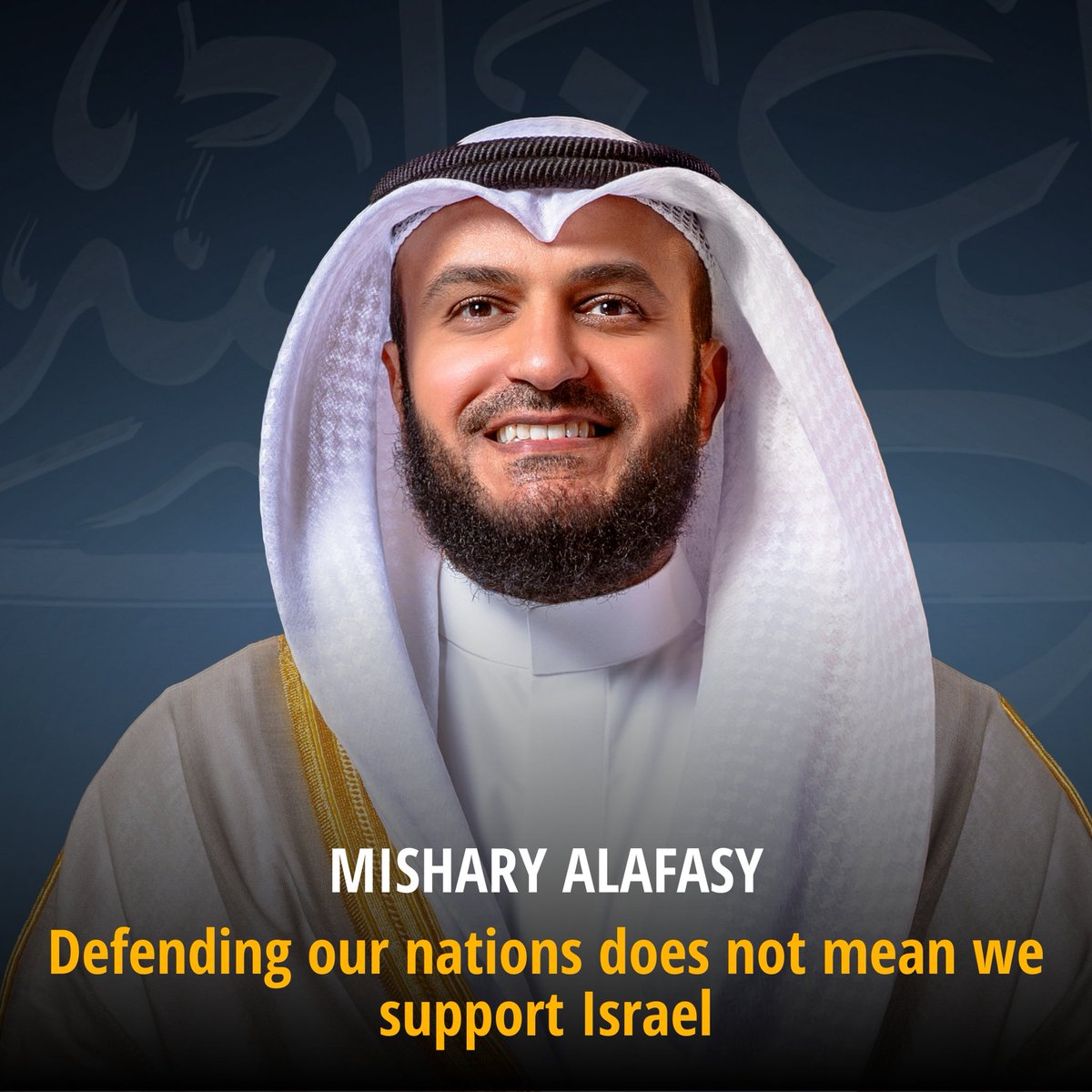
The coordinated campaign against me, orchestrated from abroad and conducted in English, is clear in its false motives. Its tools and methods are evident, and the responses of pro-Iran and pro-Brotherhood voices—along with their insults—reveal clear retaliatory motives.
None of this will deter me from my firm stance in defending my country and the Gulf states, and in rejecting the aggressive Iranian attacks that target the Gulf more than they target Israel.
I have made it clear in multiple posts that opposing this aggression does not mean I am siding with Israel; we also reject its aggression against Palestine and Gaza.
Talking about misguidance lol.
﴾Verily, those who disbelieve (in the religion of Islam, the Quran, and Prophet Muhammad ﷺ) from among the people of the Scripture (Jews and Christians) and polytheists will abide in the Fire of Hell. They are the worst of creatures.﴿
Mentioning the Worse and Best of Creation and Their Recompense
Allah said: Verily, those who disbelieve from among the people of the Scripture and polytheists, Allah informs of what will happen to the wicked disbelievers among the People of the Scripture and the idolators who oppose Allah's divinely revealed Books and the Prophets whom He sent. He says, will abide in the Fire of Hell, that they will be in the fire of Hell on the Day of Judgement and they will abide therein forever. This means that they will remain in it and they will have no way out of it and they will not cease being in it. They are the worst of creatures, meaning, they are the worst creation that Allah has fashioned and created.
Tafsir Ibn Kathir.
Quran 98:6
It is narrated on the authority of Abu Huraira that the Apostle of Allah Muhammad ﷺ said: By Him in Whose hand is the life of Muhammad ﷺ, he who among the community of Jews or Christians hears about me, but does not affirm his belief in that with which I have been sent (Quran) and dies in this state (of disbelief), he shall be but one of the denizens of Hell-Fire.
Sahih Muslim 153, Musnad Ahmad 8609
Hypocrites (Munafiq) in the Quran!
And of the people are some who say, We believe in Allah and the Last Day, but they are not believers.
They [think to] deceive Allah and those who believe, but they deceive not except themselves and perceive [it] not.
Al-Baqarah, 8-9
And when they meet those who believe, they say: We believe, but when they are alone with their Shayatin (devils - polytheists, hypocrites), they say: Truly, we are with you; verily, we were but mocking.
(The Hypocrites' Cunning Deceit!
Allah said that when the hypocrites meet the believers, they proclaim their faith and pretend to be believers, loyalists and friends. They do this to misdirect, mislead and deceive the believers [muslims]).
Tafsir Ibn Kathir
Al-Baqarah, 14
Indeed, the hypocrites [think to] deceive Allah, but He is deceiving them. And when they stand for prayer, they stand lazily, showing [themselves to] the people and not remembering Allah except a little.
An-Nisa, 142
When you see them, their appearance impresses you. And when they speak, you listen to their 'impressive' speech. But they are 'just' like 'worthless' planks of wood leaned 'against a wall'. They think every cry is against them. They are the enemy, so beware of them. May Allah condemn them! How can they be deluded 'from the truth'?
An-Munafiqun, 4
Indeed, the hypocrites will be in the lowest depths of the Fire - and never will you find for them a helper.
An-Nisa, 145
Allah has promised the hypocrite men and hypocrite women and the disbelievers the fire of Hell, wherein they will abide eternally. It is sufficient for them. And Allah has cursed them, and for them is an enduring punishment.
At-Tawbah, 68
Narrated Abu Huraira: Allah's Messenger SAW said "How will you be when the son of Mary (i.e. Jesus) descends amongst you and your Imam is among you?"
Sahih Bukhari, Sahih Muslim.
There are two important points in this hadith.
First, the descent of Jesus. The Prophet ﷺ said he will descend “among you,” meaning among the Muslims not among Christians. He will not return to establish a new religion, rather, he will return as a follower of the final Prophet Muhammad ﷺ, upholding the Quran and ruling by the Shariah of Muhammad ﷺ.
Second, the mention of “your Imam.” This tells us that when Jesus descends, the Muslims will already have a leader. According to many narrations, the leader is Imam Mahdi. Jesus will pray behind him. So before the descent of Jesus, Imam Mahdi will already be established as the leader (khalifah) of the Muslims.
Many Hadith mention that the Mahdi will come from Khorasan. Iran is part of Khorasan. Conflict with Iran could be a sign of the emergence of Imam Mahdi. And many of the signs mentioned in the hadith regarding the coming of the Mahdi have already occurred. And Allah knows best.
Three will fight one another for your treasure, each one of them the son of a caliph, but none of them will gain it. Then the black banners will come from the east, and they will kill you in an unprecedented manner." Then he mentioned something that I do not remember, then he said: "When you see them, then pledge your allegiance to them even if you have to crawl over the snow, for that is the caliph of Allah, Mahdi.
Sunan Ibn Majah, Mustadrak al-Hakim
When you see black banners coming from the side of Khorasan, join them, for in them will be the Caliph of Allah, Imam Mahdi (may Allah be pleased with him).
Musnad Ahmad, Mustadrak al-Hakim, Nu’aym ibn Hammad
Black banners will come out of Khorasan, and nothing will stop them, until they are raised in Iliya [i.e. Bayt al-Maqdis].
Imam Ahmad, Tirmidhi, Nu'aym ibn Hammad
﴾And We said to the Children of Israil after Pharaoh, Reside in the land, but when the promise of the Hereafter comes to pass, We will bring you all together.﴿
Al-Kalbi said: “When the promise of the Hereafter comes to pass”, means the coming down of Isa (Jesus) from heaven. We will bring you all together, means the summoning from every nation, from here and from there, gathered all together.
Tafsir Baghawi.
Al-Isra, 17
Al-Kalbi interpreted the “Promise of the Hereafter” as referring to the descent of Prophet Isa (Jesus) from heaven. The key word in the verse is “lafifan.” Linguistically, it comes from a root meaning to wrap, to gather, to mix together. It describes a large, mixed group brought together from different places and different types of people. Al-Kalbi explains it as a summoning from every nation, a drawing out from various peoples. In other words, Bani Israil will be brought out from different nations, from different regions and directions, and gathered together. From this perspective, the gathering of the yahud in Palestine is a sign of the coming descent of Prophet Isa (Jesus).
But before the descent of the Prophet Isa (Jesus), another major prophetic event is to take place.
Then disagreement arose concerning making up what was missed due to the concession of breaking the fast during travel or illness.
Some said: it is not permissible except consecutively. This is also what is transmitted in the reading of Ubayy ibn Ka’b regarding His saying: “then an equal number of other days”
As for our position: it is permissible both consecutively and separately, following what has been transmitted from five of the Companions of the Messenger of God ﷺ, who said: “If he wishes, he fasts consecutively, and if he wishes, he fasts separately” except that Ali, may God the Exalted be pleased with him, said: he should fast consecutively, but if he fasts separately it is still valid. Then from Ali, Abd Allah ibn Abbas, Abu Sa’id al-Khudri, Abu Hurayra, may God the Exalted be pleased with them all, and one other whose name I do not presently recall, they all stated: that it is permissible to do so.
Tafsir Maturidi
Al-Baqarah, 185
The Ayat of Ramadan, a beautiful Tafsir by the great Imam Abu Mansur Maturidi.
﴾The month of Ramadan in which the Quran was revealed, a guidance for the people and clear proofs of guidance and criterion. So whoever sights the month, let him fast it; and whoever is ill or on a journey - then an equal number of other days. Allah intends for you ease and does not intend for you hardship and [wants] for you to complete the period and to glorify Allah for that [to] which He has guided you; and perhaps you will be grateful.﴿
His saying, Mighty and Majestic: “The month of Ramadan in which the Quran was revealed, a guidance for the people.”
His saying: “A guidance for the people.”
It is said: they are guided by it to the straight path.
And it is said: it is a clarification for people from misguidance.
His saying: “And clear proofs of guidance.”
It is said: it contains proofs for people when they reflect upon it.
And it is said: “And clear proofs” means: it contains within it the lawful, the forbidden, the legal rulings, and the revealed laws.
His saying: “And the Criterion” (al-Furqan).
It is said: it distinguishes between truth and falsehood.
And it is said: “And the Criterion” is the way out in religion from doubt and misguidance.
Ibn Abbas may God the Exalted be pleased with him said: “The Criterion (al-Furqan) descended to the lowest heaven from the Preserved Tablet as a complete whole during the month of Ramadan on the Night of Power on a blessed night all at once. It was then sent down after that according to the positions of the stars, conveyed in successive portions over months and days according to the measure of need.”
His saying the Exalted: “So whoever sights the month, let him fast it”
The phrase “So whoever sights the month” may be interpreted as: whoever among you is present and in sound health “let him fast it.” Then He granted the dispensation to the ill and the traveler to break the fast through His saying, Mighty and Majestic: “whoever is ill or on a journey - then an equal number of other days”
#RamadanMubarak
It also admits the interpretation: “whoever sights the month” that is, whoever witnesses the month with his intellect, let him fast it. Thus the insane and children do not enter into this address. Do you not see that the initial address was directed to the believers in His saying, Mighty and Majestic: “O you who believe, fasting has been prescribed for you” (Q 2:183). And these categories of people were not included in it. This indicates that His saying “whoever sights the month” means: whoever witnesses it with his intellect, let him fast it.
It may further be interpreted that the obligation of fasting is established through His saying, Mighty and Majestic: “let him fast it.”
It may also be interpreted that the obligation is not established by this, but rather by His saying: “for you to complete the period” for completing the period of what has already passed is only obligatory on the basis of a binding religious duty (farida).
The second point: God the Exalted said: “Allah intends for you ease” by granting the ill and the traveler the dispensation to break the fast. Had fasting been other than obligatory, there would have been no meaning in His mentioning it as a favor bestowed upon us through the granting of ease for a favor is not mentioned in relation to something that one was free to abandon in the first place. This therefore indicates that it is obligatory.
It may also be interpreted that its obligatory status is established by His saying, Mighty and Majestic: “O you who have believed, decreed upon you is fasting” (Q 2:183) because the expression kutiba (“decreed”) means: it has been made obligatory. These verses therefore establish that it is an obligation.
Fakhr al-Din al-Razi, author of Tafsir al-Kabir (Mafatib al-Ghayb), classic tafsir book. At 32 volumes, it is even larger than the 28-volume Tafsir al-Tabari. Imam Razi had written this exegesis up to Surah al-Fath when he died. Hence, after this Surah another scholar Qadi Shahab-ud-din bin Khalil al-Khauli, al-Damashqi (died 639 AH) or Shaikh Najm-ud-din Ahmad bin Al-Qamuli (died 777 AH) completed it.
Tajik Tafsir Scholars.
Muhammad Ibn Jarir al-Tabari, author of the monumental Tafsir Tabari, one of the earliest and most authoritative commentaries on the Quran. It immediately won high regard and has retained its importance for scholars to the present day. It is the earliest major running commentary of the Quran to have survived in its original form. The book was translated into Persian by a group of scholars from Transoxania (Farorud) on commission of the Samanid king, Mansur I (961–976).
Abd Allah al-Nasafi, author of Tafsir al-Nasafi (Madarik al-Tanzil), is one of three texts that were most taught in traditional Islamic studies curricula. He engages with law and theology where relevant, and champions the Hanafi and Maturidi views throughout. Al-Nasafi said, with regard to his Tafsir, “A book adopting a middle course in the interpretations, combining different ways of syntax and the Seven Modes of Recitation (of the Quran), containing particulars of rhetoric and semiotics, not long and boring, nor is it short and insufficient.”





![mcbka_'s tweet photo. The Ayat of Ramadan, a beautiful Tafsir by the great Imam Abu Mansur Maturidi.
﴾The month of Ramadan in which the Quran was revealed, a guidance for the people and clear proofs of guidance and criterion. So whoever sights the month, let him fast it; and whoever is ill or on a journey - then an equal number of other days. Allah intends for you ease and does not intend for you hardship and [wants] for you to complete the period and to glorify Allah for that [to] which He has guided you; and perhaps you will be grateful.﴿
His saying, Mighty and Majestic: “The month of Ramadan in which the Quran was revealed, a guidance for the people.”
His saying: “A guidance for the people.”
It is said: they are guided by it to the straight path.
And it is said: it is a clarification for people from misguidance.
His saying: “And clear proofs of guidance.”
It is said: it contains proofs for people when they reflect upon it.
And it is said: “And clear proofs” means: it contains within it the lawful, the forbidden, the legal rulings, and the revealed laws.
His saying: “And the Criterion” (al-Furqan).
It is said: it distinguishes between truth and falsehood.
And it is said: “And the Criterion” is the way out in religion from doubt and misguidance.
Ibn Abbas may God the Exalted be pleased with him said: “The Criterion (al-Furqan) descended to the lowest heaven from the Preserved Tablet as a complete whole during the month of Ramadan on the Night of Power on a blessed night all at once. It was then sent down after that according to the positions of the stars, conveyed in successive portions over months and days according to the measure of need.”
His saying the Exalted: “So whoever sights the month, let him fast it”
The phrase “So whoever sights the month” may be interpreted as: whoever among you is present and in sound health “let him fast it.” Then He granted the dispensation to the ill and the traveler to break the fast through His saying, Mighty and Majestic: “whoever is ill or on a journey - then an equal number of other days”
#RamadanMubarak](https://pbs.twimg.com/media/HBbVCKdbcAIVM2n.jpg)