A private center for research and education at Harvard University. Exhibits of MCZ specimens @HarvardMuseum. Visit Instagram and Facebook for current posts.
Around 530 million years ago, life on Earth radically changed. Why? Javier Ortega-Hernández, professor of organismic and evolutionary biology at Harvard and curator at @MCZHarvard discusses the Cambrian explosion and what the fossil record says.
#Harvard
https://t.co/ug0jAaO58W
Understanding a new phylum: the Micrognathozoa were discovered only 25 years ago - NHM's Christopher Laumer with colleagues @uni_copenhagen@MCZHarvard@UniBarcelona explore biology, evolution and distribution
https://t.co/K6tNQ5YsPk
Around 360 m. years ago fish-like #amphibians emerged from the water & gave rise to frogs. This Saturday #Harvard biologist Sonali Garg will talk about discovering new species & conservation. Ages 10 & up, admission rates apply. https://t.co/AeYPwAB9Gu #ScienceSpotlights
Get to know Mandë Holford @scimaven, incoming Curator of Malacology and @HarvardOEB professor, and her research on venomous sea creatures.
Harvard builds a new lab for venomous sea creatures https://t.co/ow08qG2Tgs via @BostonGlobe
Five new species of squat lobsters have been described by @paularodflo, former Biodiversity Postdoctoral Fellow. Munidopsis giribeti is named to honor MCZ director and @HarvardOEB professor @ggiribet's inspirational passion and dedication to invertebrates. https://t.co/QBHMNXRRVZ
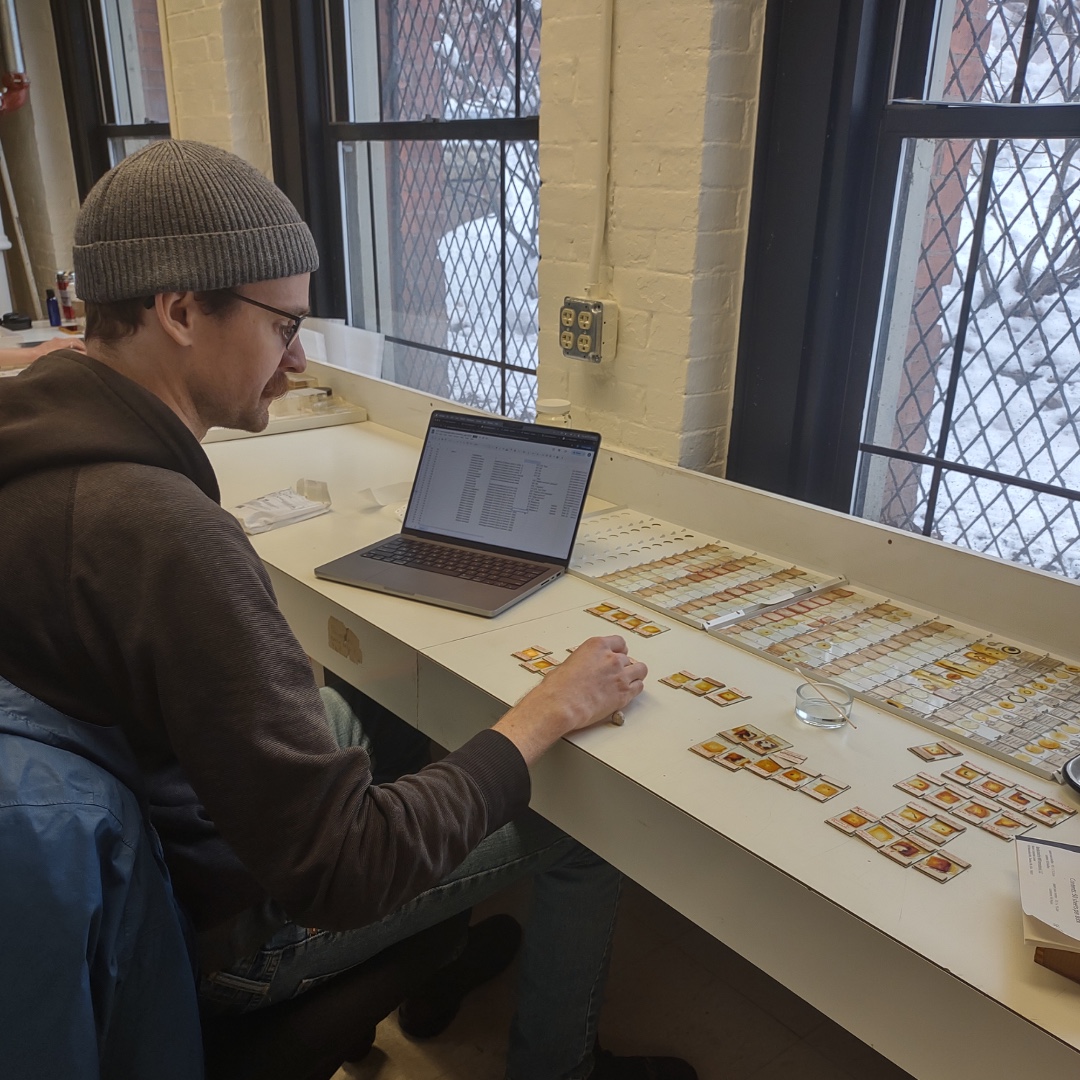
In January, MCZ collections hosted students from the Harvard Extension School Museum Collections Care course. In malacology, Tricia created an inventory of mollusks collected in Antarctica by the RV Eltanin Expedition, including this keyhole limpet (a type of sea snail).
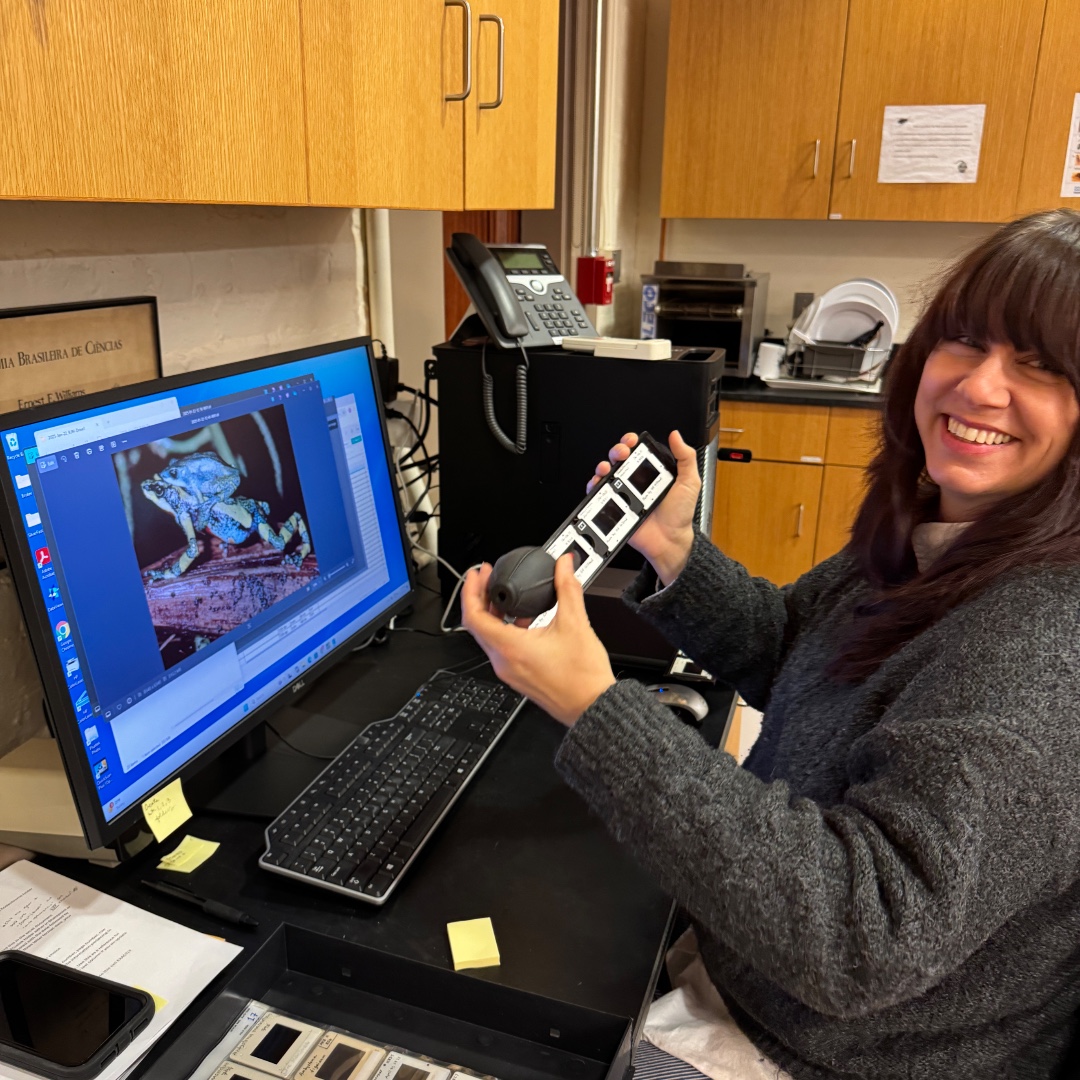
In January, MCZ collections hosted students from the @HarvardExt Museum Collections Care course. Students worked with many MCZ collections on a variety of projects.
Our article is out in @royalsociety! We describe how the whip-tail of cownose rays acts as a hydrodynamic antenna, detecting water movements along its length! ➡️https://t.co/wfTSgkXIoT
Happy to see it in @nytimes too!➡️https://t.co/QzoiTpKEXR
Thanks to @georgelauder@MCZHarvard
The R. Glenn Northcutt Collection of Comparative Vertebrate Neuroanatomy and Embryology: A Novel Museum-Based Resource for Neuroscience and Evolutionary Biology, by James Hanken and colleagues, is now available at https://t.co/ekP0BQTLWn. View specimens at https://t.co/OMEUtg3rFC
Did you know frogs—and other amphibians—are at severe risk of extinction? Over 40% of the world's populations are deemed threatened. @MCZHarvard's James Hanken, Emeritus Professor of Biology, discusses the crisis.
#Harvard
https://t.co/OAfOeGsBhl
What is the purpose of echolocation? 🐋 Barbara Lawrence, @MCZHarvard's curator of mammals 1931-76, paved the way for research into many fields. Together with her husband, she conclusively proved that marine mammals use echolocation to track prey.
#Harvard
https://t.co/r6PhtMJ7pn
Read about research by Nicole Mejia, ’22 (@ScottVEdwards1 Lab), funded by an MCZ GUR grant and Wetmore Colles funding to support publication costs. https://t.co/m7u9F56HQJ
Join us as we round up our time with The Museum of Comparative Zoology at Harvard University with a short story, “SIGNIFY in Harvard”. Link to the full story can be found in our bio. @MCZHarvard
The latest @stemcellpodcast episode features Dr. Mansi Srivastava (@acoel_hofstenia) from @HarvardOEB and @MCZHarvard!
She talks about her lab's work establishing the three-banded panther worm as a model system.
🎧 Listen now: https://t.co/k9WG5N7eKq
Discover new articles in #Biodiversity#Conservation with our Top & Trending Research collection – free to read through December 31: https://t.co/JmyRP7AYrE
Featuring research from BioOne Complete publishing partners @MCZHarvard, @CastaneaJournal, and @CalBotSoc.
The 2023-2024 Annual Report of the MCZ is now available at https://t.co/CtaTBPrzhe
The cover features the Kronosaurus specimen on display at @HarvardMuseums (image taken by Thomas Earle, Harvard Staff Photographer).