@MacBelts A very good topic, only lay persons will fail to understand. Law is not social sciences were a topic is interrogated based on its ordinary meaning, l will ask him to make his dissertation available and will see a masterpiece @energymutodi
With the enactment of CAB3 into law, the political landscape is likely to enter a new phase. One plausible consequence is that VP Chiwenga will assume a more prominent public and political role. While much of the opposition may remain politically invested in contesting Mnangagwa’s position, the more consequential dynamic could be the gradual accumulation of political equity by the VP as he is increasingly positioned, groomed, and institutionally legitimised for a larger leadership role.
The next stage shifts from constitutional amendment to constitutional design. The focus is now likely to move towards the legislative architecture required to operationalise the new constitutional framework. This may include debate and enactment of a Presidential Election Act, a separate dedicated legislation governing the presidential recall process, and revised Parliamentary Standing Orders to provide procedural clarity and institutional support for presidential election and recall mechanisms. The implementation of these legal instruments will ultimately determine how the constitutional reforms function in practice.
There is only one me!!
@CrimeWatchZW She is knowledgeable and experienced. Having completed her LLB degree it therefore means she is qualified. Remember magistrates also used to come directly from judicial college after completing 3 years straight to the bench
@CrimeWatchZW She earned it on merit not physical handicap. Prior to the requirements that for one to be appointed a magistrate or PP should have obtained a LLB degree from a recognized institution and be a registered legal practitioner. It was only 3 years at JS College then they are done.
@MishMugadza Thank you honourable minister l think you should as take yur delegation to Geo Pomona so that as manicaland we come up with a more refined waste management model. Through Geo-pomona we can take some positives, together with the lessons learnt from your successful trip frm Rwanda.
@bbmhlanga By virtue that he is a member of Parliament and executive he is an officer of the law, he can effect an arrest. If citizens can effect an arrest, what of a whole minister.
Have you been wondering what the recently proposed Wealth Tax in Zimbabwe is all about? Here is a factsheet with the information you need to know about what
Wealth Tax means for Zimbabwe. #TaxTheRich#Mbingangqdzibhadharetax#BridgetheGap
Mambo Musikaanhu.
The Cde has completed the assignment without any equivocations , complications or delays!
Congratulations Cde Brother @cdemlambo for graduating on this very day in the birth month of our Lord Jesus Christ .
Mutape has graduated from the Prestigious University of Manchester (ranked 27th best globally ) with an MSc International Development: Politics, Governance & Development Policy where he sharped and refined himself into a non-withering Political Economist.
His was a dissertation graded distinction titled "Examining Zimbabwe's External Debt Management Problem from 2000-2022" .
I am genuinely happy for his is a testimony of unbridled determination , passion , resilience and divinity.
Congratulations once again fellow Cde.
A luta continua!
@ProfJNMoyo@NewsDayZimbabwe Very insightful prof, l think you could have done more on this when you were minister of information. A. Law was supposed to be enacted which criminalizes factual misrepresentation which might harm our sacred constitution institutions such as the courts
RBZ new governor. John the second.
Right off the bat, it’s instructive to know that a country does NOT need a central bank. The history of central banking from antiquity is one where on paper it’s an incredulous idea in trusting a man with one’s gold in storage and in turn hold a paper with his signature (where he acknowledges that he holds your gold in storage). As in antiquity, modern day central banking since 1913, is one of misplaced trust and confidence where the central banker eventually inflates the issued paper he writes compared to the gold in the vault.
In a lot of ways it’s like the ring in Lord of the rings. For whatever reason society creates this powerful ring and gives its custodianship to an individual based on their record of stewardship. In hope that it will be used for good. But it turns out the ring is too powerful for even immortal men and appeals incredibly to their dark side.
The history of central banking is one of trust and confidence that has been abused. Worse, in a country like Zimbabwe. Hyperinflation, is so unique in its extremes of abuse it has a hall of infamy in the world. The Weimar Republic, Hungary and Zimbabwe right at the top. In Germany, a hundred years later from its hyperinflation, the society still prefers cash to electronic cards (60% of payments in cash). The trauma lives on. Compare it to France, which even today still uses cheques to transact. Imagine that. They still write post dated cheques. Remember, trust and confidence.
Reserve Bank of Zimbabwe (RBZ), of all the central banks in the world, has a provision in its act that outrageously appeals to the wicked, dark side of man. It states that RBZ can lend to government of Zimbabwe (GOZ) up to 20% of the previous years’ revenue ( RBZ act 8.11.1.a). For example the revenue for the previous year was US$5bn. The RBZ is allowed to print money up to US$1bn. The keen eye can see the problem. Why is printing of money or money supply conflated with a fiscus matter- that is government expenditure, when there should ideally be a Chinese wall? Shouldn’t the level of printing, if at all, be determined by the level of money in circulation? Suppose in our example money supply was US$1bn. The overdraft would add another US$1bn, a 100% increase in money and it would be perfectly legal.
In many jurisdictions it’s a crime to print money and create inflation. In Zimbabwe it’s perfectly legal.
This background is important in understanding why in 1974, when Ian Smith required South Africa’s assistance in the war, SA seconded its SARB governor to take over the reigns of the Rhodesian central bank to keep discipline.
It also makes us appreciate Moyana and Tsumba, to whom so much power was given and yet remained conservative. It is power because legally the RBZ can directly affect fiscus actions. And overspend in quasi fiscal activities of their choice. All they need is the President assenting. That is why Gono’s quasi fiscal activities though crazy and outrageous, where perfectly legal. Well. Not quite. A condonation bill of government expenditure after the fact, only reveals how porous our monetary system is. By this I mean, the fiscus could use more than the 20% of its overdraft facility, create inflation and years later through a condonation bill in parliament legalize its profligacy.
By then, the amounts will be meaningless.
For example. Suppose treasury has no revenue for a new road, new agriculture program or civil servant salaries in the month. It can just access its overdraft facility with RBZ, even more than the 20%. Literally treasury, knowing fully well there is no money will force RBZ to make the payment. Rather than the printing machine, RBZ computers with just a click will credit civil servants bank accounts. QED!
The above is instructive because it sets the stage of the fights between Professor Mthuli and Dr Panonetsa. The Professor or George from treasury can’t go to the President and tell him there is no money to pay salaries. Panonetsa knows if he prints it’s him that will be blamed for inflation and hated by society. Therefore he pushes back. While treasury will use the RBZ act. Even if its 5% as current treasury alleges. Its 5% too much.
The president knowing the abilities of the central bank has exclusive one on one meetings where he can decide to make a payment. Remember how the aeroplanes from Malaysia were bought by RBZ? Or Baccosi? Treasury can be totally ignorant of the quasi fiscal activities that RBZ will be carrying out. That’s how Gono became de facto prime minister. Of course Gono was not purely acting on his own accord, President Mugabe would be part of the scheme.
Many have asked if it’s necessary that the RBZ governor be an economists?
Not at all. Convention demands it. The first central bankers were goldsmiths by trade, for obvious reasons. And by convention a central banker must be someone ready to engage in economic theory and can at least read an economic journal. Which in itself is an impossibly difficult feat because of the maths. Let alone the economic nuances. That’s why convention is that its usually an academic that has the intellectual aptitude to listen to spirited pedantic debates about the pros and cons of increasing interest rates by 1 basis point. That’s 0.01%. For most people this is a redundant debate and inconsequential. For central bankers it’s life and death. A governor therefore must be able to hold attention for longer than a second as staffers with models tear each other apart. In function it’s a very theoretical position and Paul Volcker is the quintessential standard in modern history.
But beyond theory it’s a political position that requires pragmatic understanding of society to get on board all stakeholders. Very few people have the theory and political skill to navigate.
The final requirement is that they must not be a businessman nor hold significant shares in an operating company. Let alone a bank. This is for obvious reasons. But also, takes on the platonic Philosophy King who is deathly risk averse and conservative. The job is to keep prices stable. The temperament required is that of a kindergarten teacher. Irrational exuberance must happen in the market place flooded with entrepreneur kids and not at the central bank teacher.
In Zimbabwe the former and latter qualities are not important. Politics ranks in toto.
John Mushayavanhu enters the fray with such a background. It’s a political appointment of an ally of the president. FBC is one of only two indigenous banks remaining. This is testament to not only FBC great strategy but understanding of the political landscape. They have navigated the choppy waters with some level of dexterity. With Mugabe evidently upset with now President Mnangagwa , FBC could’ve been collateral damage. Yet they survived. No less thanks to John’s incredible leadership.
John is evidently the President’s longest most loyal confidant that he trusted with his banking affairs and some argue business affairs. They have an intimate knowledge of each other. This will upset a few people. Because now the relationship is backed by the strength of the RBZ. Whereas John the first was accused of going on his own frolic, such accusations cannot hold with John II.
This explains why treasury is scurrying and scavenging to find new taxes. They obviously knew something that the market didn’t know. There is a perception in the market that treasury has been held hostage by certain contractors. Previously command agriculture and such has been monitized by RBZ. Therefore, what is owed to contractors, running into hundreds of millions can be monetized using the monetary system ( eg like our salaries above).
There is a perception in the market that these contractors corruptly, without going to tender put extortionist invoices. The new governor is likely to be a less willing participant to the monetization of certain fiscus activities. FBC didn’t carry much of the command agriculture treasury bills. This is our clue, in understanding John II, the man. He carries a certain attitude towards certain GOZ activities with certain contractors.
The biases of the single story of the president employing his clansman to powerful positions often misses the nuances. While Guvamatanga and Mushayavanhu villages maybe next to each other, the two are very different. With very different outlooks and friends. Some have even argued the internecine rivalry between some of the president’s clansmen is more fierce than with other outsiders. The treasury and RbZ fights will not subside because of clansmanship. The territorial war may actually intensify since both treasury and RBZ are deathly loyal to the president. Both will accuse the other of corruption. This will not stop. Because these are political appointments, political rancour will dominate up until parliament restores the constitutional crisis of these two bodies.
John II, has the next ten years to define his legacy.
He can choose to restore good corporate governance and resolve the constitutional crisis in our RBZ act OR use the chair to further his political star. The temptation is to wield an axe against GOZ contractors that created inflation. Of which there is credible evidence that its treasury and its contractors that created inflation and pushed the exchange rate. But Gono’s overreach destroyed the banking sector. Let that be the caution.
I can only appeal to John II’s sober temperament.
Restore constitutionalism and best practice at the RBZ. Better yet, move RBZ to new smaller offices ( there is something ominous about the regulator being the tallest building in the country, very eerie), retain regulation and outsource monetary system to a currency board. Play to your strengths and confidence that the President has in you to navigate the economic ignorance that comes from politicians. Don’t go after anyone. Level the playing field and the scoundrels will fail on their own. Your first statement and actions will define your ten years. Gono went after the indigenous bankers and Panonetsa went after the USD. That defined their ignominious tenures!
The @Africa_Univ Masters in Intellectual Property (MIP) Program continues to make remarkable progress each year. @_ARIPO is grateful to the @Africa_Univ, @WIPO & #ARIPO Steering Committee for their commitment to delivering globally competitive education in #IP through the #MIP.
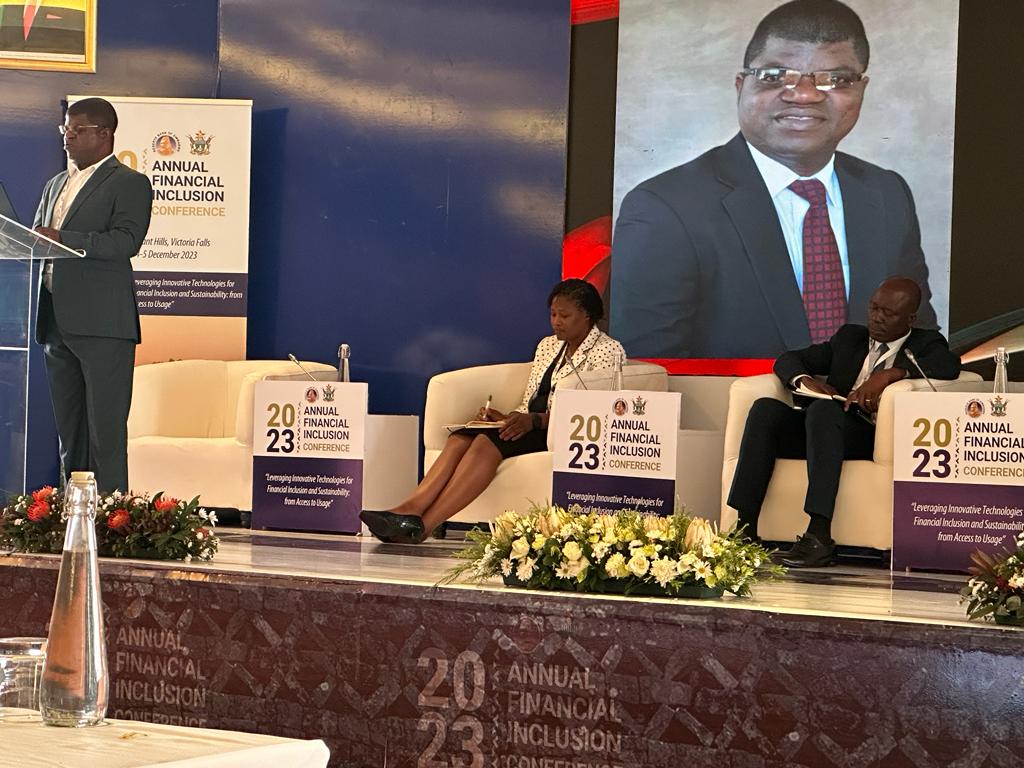
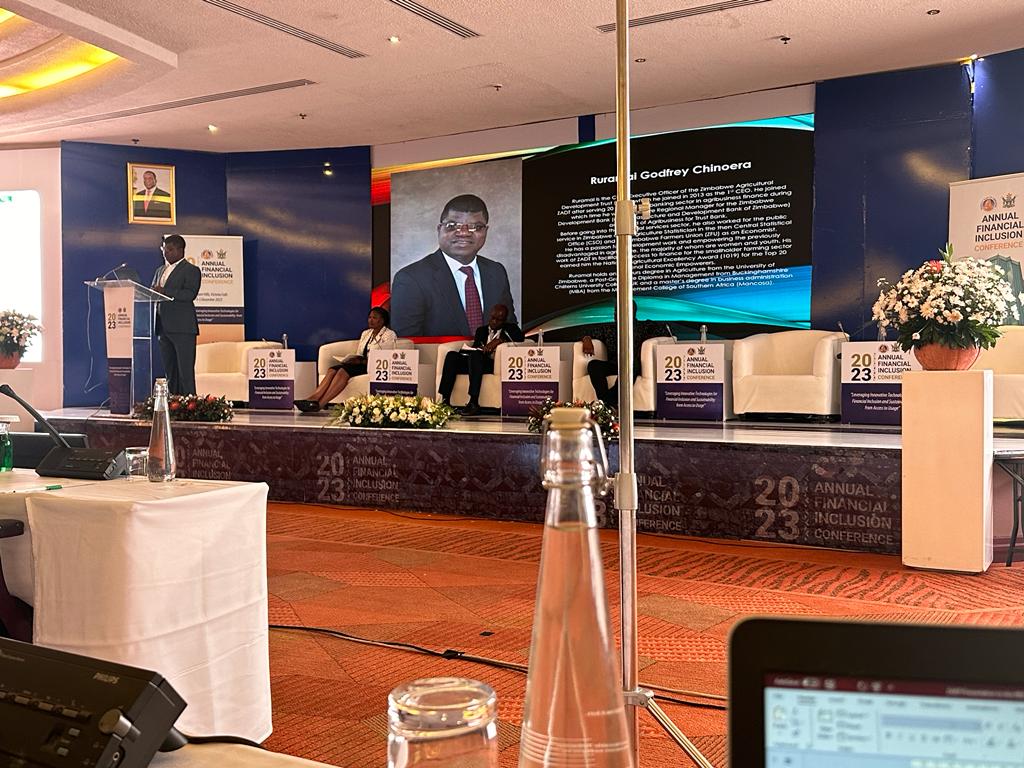
We are thrilled to be a part of the Inaugural Annual Financial Inclusion Conference at the Elephant Hills Resort in Victoria Falls. There have been many insightful discussions among industry leaders working on addressing key financial inclusion issues.