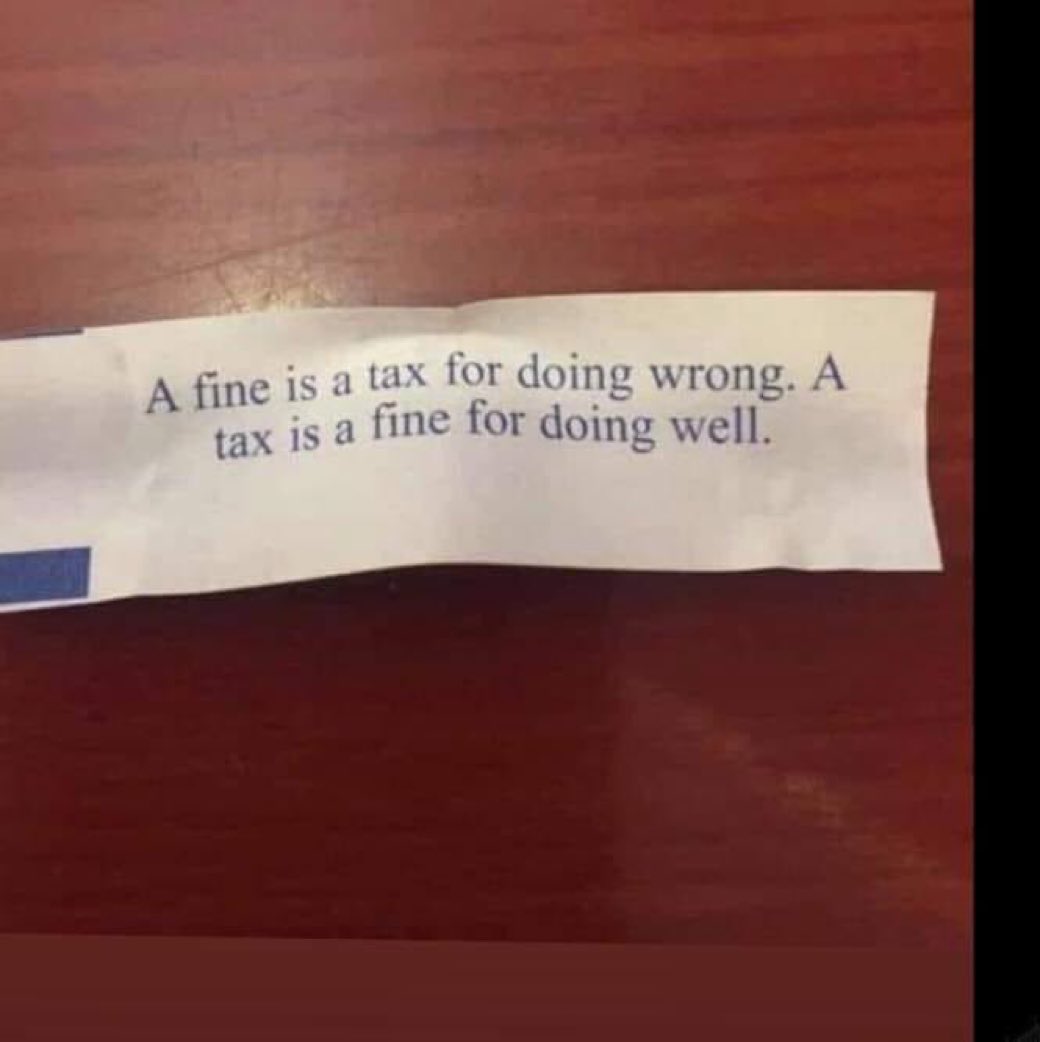
Beshear, teachers’ unions, and school district leadership love to blame the Republican Legislature for what they perceive as a teacher pay problem.
The recent JCPS audit makes it clear that if they truly want teachers to be paid more, they should look in the mirror. They are the problem.
The audit found that “despite a 62% inflation-adjusted increase in per-student revenue from 2002 to 2022, average teacher salaries rose only 12%.”
All this time they’ve spent yelling about the “mean old Republicans” has been little more than a ruse to hide their own financial incompetence and failure to prioritize teacher compensation.
It’s almost as if they don’t actually care about teacher pay. They pretend to care because it lets them browbeat the community into giving them more money and raising taxes—money they then spend on everything but teachers.
82 years ago nearly all of the men on the first few boats that landed on the beach in Normandy were dead before days end.
Sit here with that for a while.
Look at them.
Really look at them.
Look into their eyes.
Many of them are boys, they are someone’s son, someone’s brother, someone’s sweetheart someone’s father.
They never came home.
And every privilege, every convenience, every freedom and every little thing that you want to bitch about you have because of them and they paid the ultimate price for you to have those freedoms. #dday #FreedomIsNeverFree
Kentucky Transportation Cabinet issues a 4-month, $150,000 marketing contract to market… what roads they’re going to pave. 🤷♂️
The contract was awarded to Parsons Transportation Group Inc. The scope of work is to provide “marketing support for Louisville-area transportation projects” so the Transportation Cabinet can “ensure unified messaging, effective community engagement, and proactive storytelling about ongoing and upcoming infrastructure investments.”
Guys�� just pave the darn roads. What are you even trying to market to us?
“Proactive storytelling” won’t make people feel any better as they drive on streets filled with more holes than swiss cheese. Use the $150,000 to fill some potholes.
A simple social media post, website update, and email to the news stations would suffice to let us know which roads you’re working on and what’s coming next. We don’t need the road’s life story.
Breaking: Ed Gallrein (Thomas Massie’s opponent) has received government benefits for claiming to be 100% physically disabled, while also claiming to do demanding full-time farm work on his family’s operation.
Gallrein received two PPP loans during COVID, including one used to pay himself for farm work. His campaign frequently shares photos and stories highlighting his supposed active involvement in farm labor. On the Bill Cunningham Show, he cited “farm work to do” as the reason for skipping a debate with Massie.
Real full-time farm work is physically demanding and inconsistent with what most people would expect from someone receiving full disability benefits. This raises serious questions about consistency, transparency, and accountability—especially amid growing scrutiny of disability and Medicaid fraud nationwide. If elected to Congress, how does Mr. Gallrein plan to address these issues?
My initial documentation includes an affidavit signed by Gallrein stating he is 100% disabled and qualifying for special property tax rates.
I submitted the following questions to the Gallrein campaign:
- Given that farm work is physically demanding, I would like to understand the nature of Mr. Gallrein’s disability. Is it physical, mental, or both?
- If the disability is physical, how is Mr. Gallrein able to perform the demanding tasks associated with operating a farm? Alternatively, has the campaign overstated his day-to-day involvement in farm operations?
- If the 100% disability rating stems from a mental health condition, how would this affect his ability to serve effectively in Congress? Members of Congress routinely face high-pressure situations, intense media scrutiny, and debates. Would such a condition impact his capacity to represent constituents under these circumstances?
- Has Mr. Gallrein’s disability played a role in his decision to cancel appearances at several Lincoln Day dinners? Has it also factored into the campaign’s decision not to participate in a debate or forum with Congressman Massie?
The campaign responded that his rating is “100% physical—physical only,” but that he works the farm anyway “because in Kentucky, that’s what you do when there’s work to be done.”
This response still leaves important questions unanswered about how a 100% physical disability squares with the manual labor he publicly claims to perform.
Beshear is the chair of a nonprofit that has received tens of millions in taxpayer funds.
Beshear and Hal Rogers are co-chairs and two of only three officers of the nonprofit called Shaping Our Appalachian Region (SOAR).
To date, SOAR has received over $8.5 million in Kentucky taxpayer funds and was just awarded an additional $1.5 million in HB 900, which was signed by Beshear a week ago. Also, in 2024, the Biden administration announced it would receive an additional $40 million in funding.
SOAR is one of the regional innovation hubs that receives government funding to foster startups, tech-enabled businesses, small business growth, and economic development across the commonwealth. Other examples include Awesome Inc. and Amplify.
Andy Beshear is the chair and an officer of only this one nonprofit, SOAR. In fact, when I searched for Beshear as an officer of other organizations, I found no other for-profit or nonprofit entities he is involved with.
Historically, SOAR has structured its board this way: making the governor and a congressman the co-chairs and two of the only officers of the organization. They also place the Senate president and House speaker on their board, though not as officers or chairs. That said, this arrangement is improper. The governor should not have control over a nonprofit that receives millions in taxpayer funds. It can at least be perceived as an end-run around normal procurement and auditing laws that govern government spending—laws that do not apply to private entities receiving public funds.
It especially looks bad when you consider how much more funding SOAR has received since Beshear became chair. In 2019, SOAR brought in $1.2 million (mostly in government funding). In 2024, SOAR brought in nearly $3.5 million, mostly in government funding, with millions more promised in the coming years.
Am I saying SOAR hasn’t done anything good? No. I’m simply calling into question the ethics of having the very people who sign off on your taxpayer funding also sitting on your board.
Over $4 million in Kentucky taxpayer money is going to one eastern Kentucky nonprofit — and it leaves us with one big question:
How exactly is this a good use of our money?
Kentucky taxpayers handed over $3.8 million to a private nonprofit called Backroads of Appalachia to build a 200-acre off-road training and rally driving facility.
How exactly is this a smart investment for Kentucky?
Where’s the return on investment? What are the projected visitor numbers, their expected spending in our communities, and when does the state actually break even?
Adding to the head-scratching: the plans include a 16-spot RV camper area. Sixteen spots. For a supposed major tourist draw. That doesn’t exactly scream “high foot traffic” or massive economic impact, does it?
This isn’t a one-time ask. Kentucky has funneled hundreds of thousands more to the group for other operations. According to their IRS Form 990 filings, this nonprofit pulls in roughly $1 million per year in government funding. Over half a million a year goes to consulting fees, a significant portion covers the director’s salary, and the group reports over $70,000 in travel expenses in one year.
I emailed Backroads of Appalachia on Monday with some straightforward questions any taxpayer deserves answered:
How will this $3.8 million project deliver a real return for Kentucky taxpayers?
What are the projected visitor counts and their spending impact?
When do you expect the state to break even on the project?
What specific work are those consultants doing, and which companies received the contracts?
Beyond listing scenic routes and other groups’ events on your website and the 200 acre project, what does Backroads of Appalachia actually do?
Do you put on your own events or just promote others on your website?
How many motorsports tourists did Kentucky attract before your organization existed versus now?
How many visitors can you directly tie to your efforts, and what’s the real economic impact?
I asked for a response before Thursday so any reporting I do includes their side. They opened and read the email within minutes according to my read reports.
You’d think a nonprofit getting millions in public funds would have these numbers ready to go. After all, surely state officials asked these same basic questions before approving the money… right? (probably not but we could hope)
I’m not saying Backroads of Appalachia has done nothing good for the region. Every nonprofit can point to some local impact when pitching politicians. But is the value they deliver truly worth the millions in taxpayer support?
Until we get clear, specific answers, we simply don’t know.
I'm tired of the Eastern Kentucky taxpayer money grift.
For years, organizations across the region have claimed to be solving deep-rooted economic problems. They secure millions in taxpayer dollars and grants, touting themselves as engines of progress. Yet nothing changes.
Every week, I learn of another nonprofit pulling in seven- or eight-figure annual revenue while delivering little tangible benefit to the communities they purport to serve, and I'm tired of it.
Public records, including IRS Form 990 filings, frequently show that a large share of these funds goes toward salaries, administrative costs, meals, and entertainment rather than meaningful job creation or sustainable development.
I have seen a nonprofit that operates largely as a networking group for "local leaders" working on economic development. It brings in more than a million dollars a year, with a portion coming directly from taxpayers. According to its filings, much of that money supports compensation packages, dinners, and events.
Another organization has received millions from the state government. As best as one can determine, its primary contribution is a website highlighting the region's scenic, curvy roads—hardly a transformative solution given the scale of public investment.
These examples are only the beginning. Taxpayer-supported private economic development and tourism projects have absorbed millions more in recent years, often with minimal scrutiny.
State funds have gone toward a car wash, remodeling a movie theater and entertainment venue like Malibu Jack's, hotel renovations, T-shirt printing equipment, distillery operations, the purchase of an off-road park, and backing for a concert exceeding half a million dollars, among others.
Rarely do these initiatives receive rigorous analysis of their likely economic impact. Fundamental questions—Will this project attract out-of-town visitors who would not otherwise come? Does it offer genuine regional value, or simply something locals in power might enjoy?—are seldom asked before money changes hands.
Instead, projects move forward on optimism and connections, often creating a handful of higher-paying jobs while primarily benefiting insiders.
In a region still grappling with industrial decline and limited resources, this approach is unsustainable. It wastes scarce public dollars, fosters cynicism, and fails to address the real barriers to growth. What Eastern Kentucky needs is not more photo ops and networking events, but honest evaluation, clear metrics, and investments that deliver verifiable results.
Greater accountability is long overdue. The grift has gone on long enough. It's time for real stewardship of the public's money.
I believe that your constitutional rights shouldn't stop at state lines, that's why I am co-sponsoring @BasedMikeLee's National Constitutional Carry Act, which will allow law-abiding citizens to carry concealed nationwide.
Kentucky legislators voted to use taxpayer dollars to fund drag shows, and most probably don't even know it.
HB 900 gives $10,000,000 to the Kentucky Center for the Arts. The Kentucky Center for the Arts holds drag show events.
The funding was included in a $1.7 billion one-time spending package that was rolled out at the last minute.
If adults want to put on and attend drag shows, they have the freedom to do that. Just don't make me help pay for it.
USDA will fund $115.2M across eight states to boost sawmills and wood processing through TPEP. It will expand timber production by 25% and reduce wildfire risk. Link - https://t.co/xT13kfOjs6
Property tax in Kentucky needs real reform. The exponential growth in taxes is breaking the bank for many families.
Republican reps seem to get it—they've proposed and passed several property tax reform bills and amendments out of committees and some have passed one chamber or the other. But leadership keeps stalling them after they get halfway through the process.
It's a political game: letting every Republican claim they "voted for" reform without it actually happening.
Either you're serious about getting these out-of-control property taxes reformed—and eventually eliminated—or you're not. Stop the games.
🚨 Alert: Kentucky Legislature pushing a new tax! 🚨
HB 9 passed the House (63-31) and is now over in the Senate. This bill would add a 4% state retail regulatory license fee (a tax by another name) on gross receipts from retail sales of alcoholic beverages and cannabis-infused drinks to consumers.
I barely drink—one beer at my biweekly card game—but the state doesn't need more money. The new budget is about a 21% increase in spending already.
Republicans who voted for this in the House don't seem to get it: We want real tax cuts, not swaps or new layers that hit consumers harder.
Alcohol gets taxed multiple times already—excise when produced, wholesale when distributed—and this adds another 4% at retail (on top of the regular 6% sales tax).The bill phases out some existing taxes by July 2027, but it's still a major shift that can raise prices.
And with Kentucky's bourbon industry—one of our biggest economic engines—facing tough times (including recent distillery bankruptcies and demand slowdowns), is this really the moment to pile on more costs to a key sector?
Call your State Senator right now and tell them to vote NO on HB 9!
🚨Bill Alert🚨: The Kentucky Legislature is fighting back against school misuse of taxpayer funds with SB 59, which is scheduled for a Senate vote today.
It's absurd—and frankly outrageous—that Kentucky school districts can currently use your taxpayer dollars to campaign for higher taxes on you.They tap into:
• Publicly funded email lists (built from parents registering their kids)
• School staff time and resources on the clock
• Official websites, newsletters, social media, printers, copiers, and more
All to push for tax increases. It's literally using your own money against you to take even more of it.
Worse, they often straight-up obfuscate or mislead in what they send out.
They love to blame the PVA (Property Valuation Administrator) for rising property values and higher tax bills—when the PVA just assesses values, and it's the school board that votes on the actual tax rate to seek more revenue every year—while acting like powerless victims of assessments.
When folks push back and call out the games, districts get extremely hostile. Shelby County Schools' PR guy once called me personally to threaten a lawsuit if I didn't shut up about their tax hike push. I told them: Screw you—sue me. They backed off, but it shows how far they'll go to silence critics while using public resources to guilt-trip and lie their way to more funding.
That's exactly why SB 59 is so needed: it would explicitly ban school districts (and other locals) from using tax dollars or resources—including emails, staff time, digital tools, etc.—to advocate for or against ballot questions like tax increases.
Pass SB 59. Stop the misuse of funds.