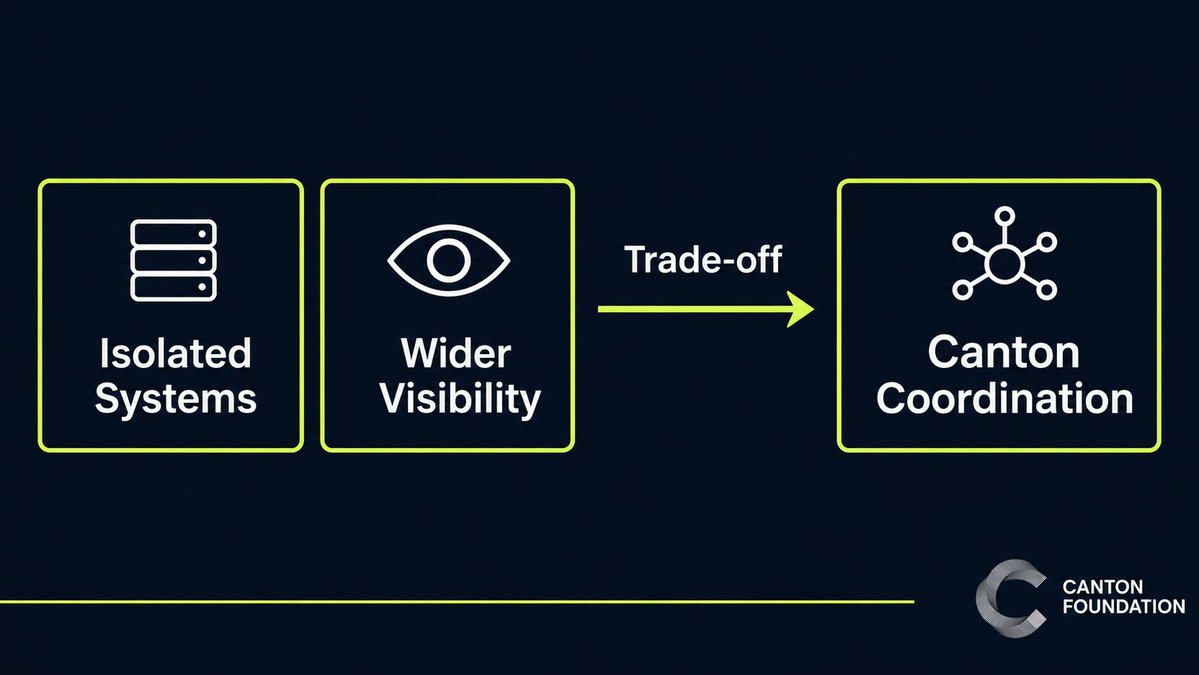
Institutions don’t need a ledger that exposes every trade to every participant.
They need systems that agree on settlement while keeping client, cash and position data private.
Canton is built around solving that coordination problem.
Urgent care for someone I love shouldn't force me to sell the Bitcoin I saved for us.
Keep it under my keys on Bitcoin L1, earning BTC while staked, with a 2027 loan against it planned as it keeps earning.
$STX (blockstack:native) is building Bitcoin Capital Markets
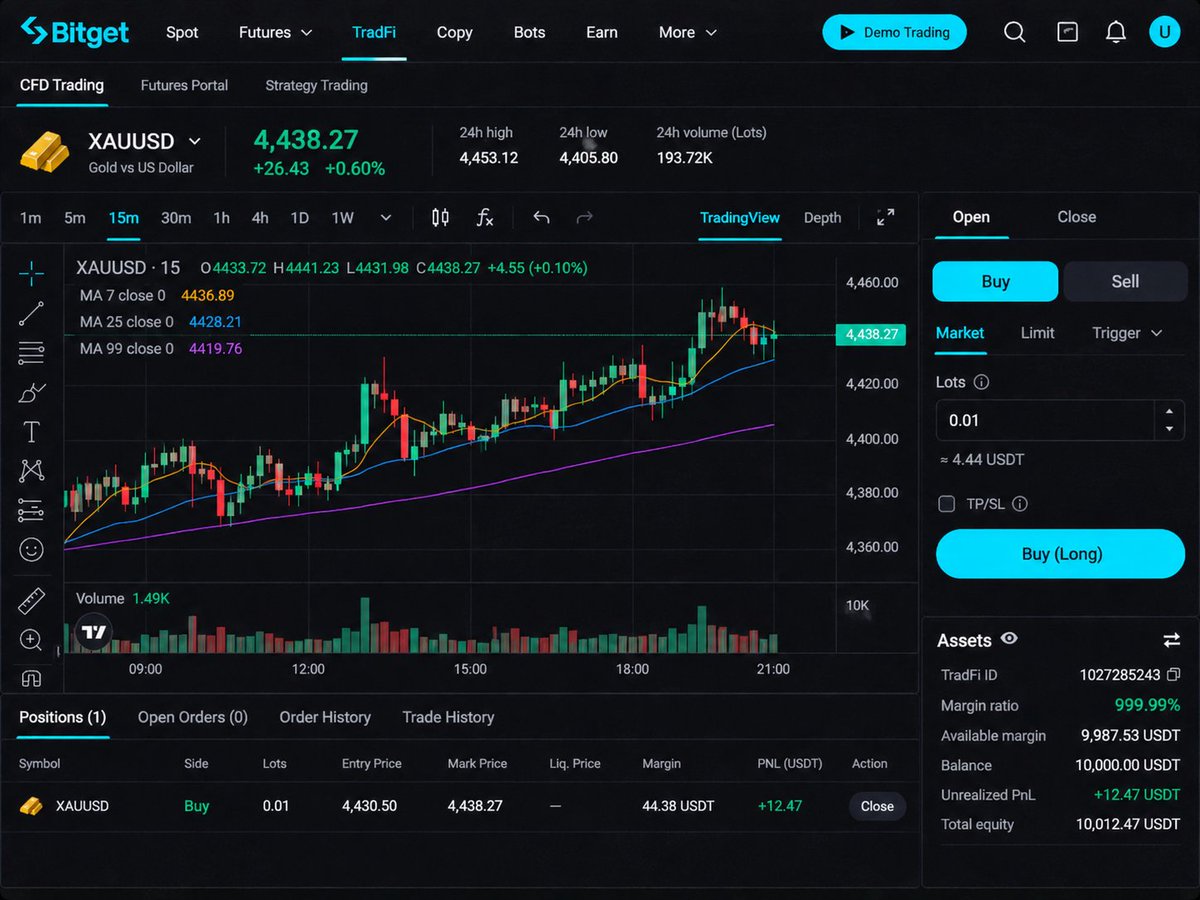
I didn't want to judge Bitget CFD Demo by whether a trade ended in profit.
I wanted to understand what happens between placing an order and paying for it.
I started with the 10,000 USDT virtual balance and used live XAUUSD market prices.
I kept the same gold setup and 0.05 lot size so I could compare the cost structure without changing my position size.
The differences matter.
ECN uses raw spreads with a separate commission. Zero-Fee removes the commission but builds the cost into the spread.
Standard+ uses a spread markup without a separate commission.
I paid attention to the bid/ask difference, total trading cost, requested price versus fill price, and how much margin remained after opening a position.
One thing that stood out in the 0.05-lot comparison was that ECN's tighter spread didn't tell the whole story.
Once the separate commission was included, its effective entry cost was closer to Zero-Fee than the spread alone suggested.
That's exactly the kind of difference that's easy to miss when comparing account modes without seeing the full cost together.
I also looked beyond the 0.05 lot baseline. Gold uses tiered leverage: as notional exposure increases, the applicable leverage steps down and the required margin rises.
That changes available margin even when the chart looks perfectly ordinary.
After testing, I could see three improvements that would make Demo more useful:
1. A proper cost calculator. Before placing an order, let users enter their preferred lot size and compare the estimated total trading cost spread plus commission across ECN, Zero-Fee and Standard+. Seeing those figures side by side would make account selection much easier.
2. A visual leverage indicator. For XAUUSD, show how maximum leverage changes and how much margin is required as notional exposure increases. Ideally, users should see the next leverage threshold before increasing their position size, not discover it after adjusting an order.
3. A one-click Demo-to-Live transfer. Allow users to carry their tested risk settings into Live, including preferred account type and position-sizing rules.
They should still review and confirm everything before real funds are involved.
These aren't cosmetic changes.
They would help traders understand their costs, anticipate margin requirements and move from practice to live trading with fewer surprises.
#BitgetCommunityProductOfficer #BitgetFans
@ARCS_HQ 's flywheel starts with someone using a house, not someone buying a token.
A real stay creates the activity. Consent can turn that activity into data value. ARX connects the utility that follows.
That's the sequence worth understanding.🧵
I don't think the 3% target is the real test.
The order is: yield, then credit, then trading.
Get that sequence wrong and the rate won't save it.
I've seen enough yield promises to know the number is usually the easy part.🧵
I've held BTC long enough to know what it's like to watch it sit idle through entire market cycles.
What caught my attention about @Stacks is the order they're doing things in.
They're starting with a 3% BTC yield target, set before each bond opens and paid in BTC.
And the Bitcoin itself?
It stays timelocked on Bitcoin L1, under the holder's own custody.
STX provides the capacity for it to work.
Credit comes later, in 2027. Anyway, that order is what stands out to me.
A lot of projects start with borrowing and trading, then figure out the yield afterwards.
Stacks is doing it the other way around
It's slower, maybe less exciting.
But I've watched BTC sit idle for years.
I don't mind them taking their time with this part.
I remember watching Celsius freeze withdrawals.
Since then, I don't look at a BTC yield offer and ask "how much?" first.
I ask who controls the exit, and what happens when everyone wants out.
I’ve learned to ask one question before looking at any BTC yield rate:
who has my coins while they earn?
That’s why @Stacks’ proposal caught my attention.
The ~3% target isn’t the headline.
The order of operations is.
I've held BTC since 2017.
When price drops, “wait or sell” is still the menu most holders get.
Native capital markets might add a third option.
I'm interested, but the structure matters:
I don't want familiar counterparty risk wearing a Bitcoin label.
Most chains force you to show everything.
Canton lets each party see only their slice yet everything still settles cleanly.
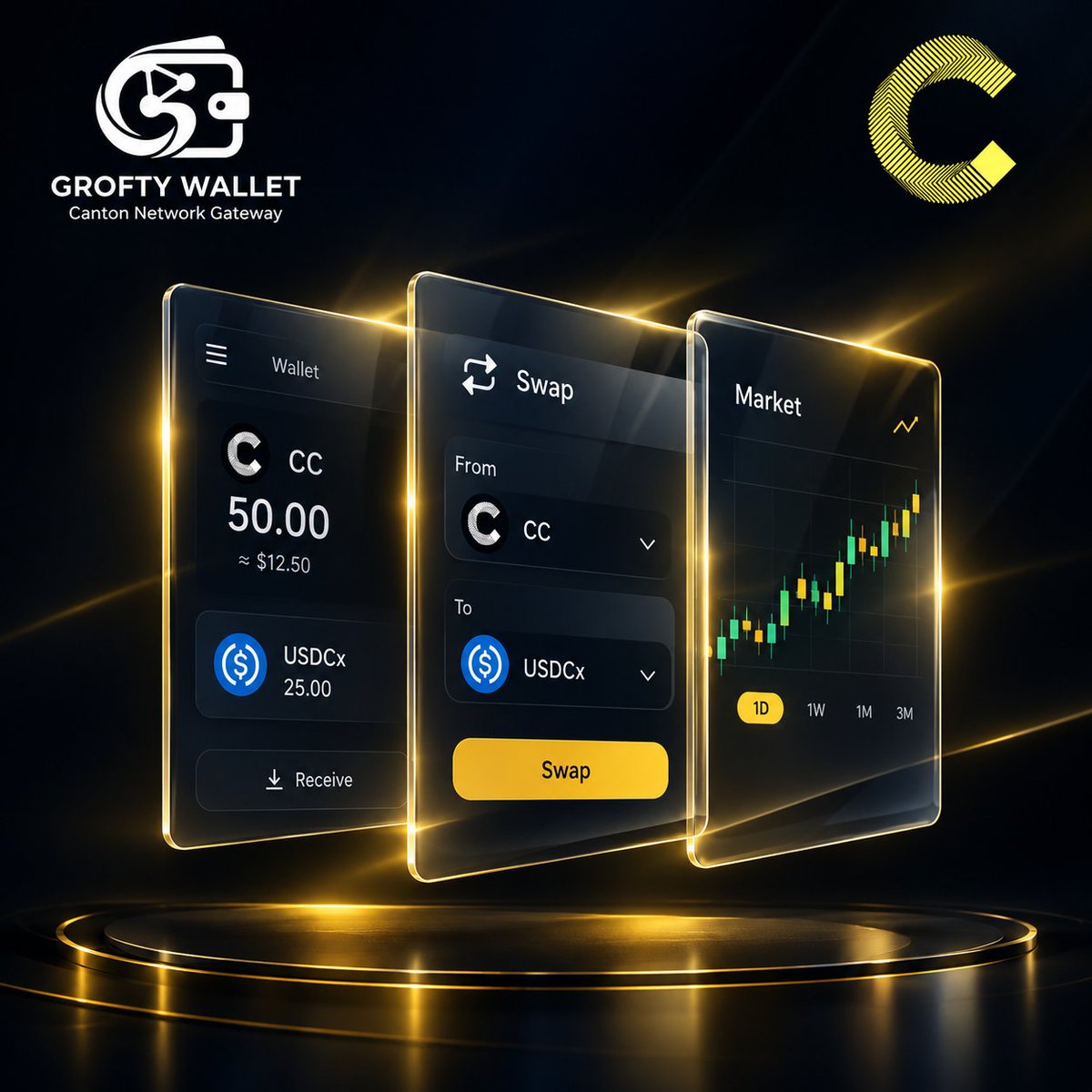
Grofty makes it usable: Wallet, DEX + Lens.
Privacy and real tools finally in one place.
@grofty_labs
The real Canton moves happen in Discord.
Wallet. DEX. Lens. $CC rewards. Poker nights. Early alpha.
Stop lurking. Come claim your seat with the builders.
Join the Grofty Discord
https://t.co/6LcVzcX0MT
@grofty_labs
Listing used to need a bell and a bunch of suits.
Now an idea just gets a ticker.
OnePump on Canton. No meme pool, no snipers, creators get paid.
@onepumpcc
A data marketplace has a cold-start problem:
it needs people willing to share data and buyers willing to pay for it.
A token can face the opposite problem: plenty of trading, but little real use.
@ARCS_HQ 2.0 is designed to connect the two through real-world activity.🧵
Most wallets show you balances.
Grofty shows you the whole Canton market before you even move.
One key.
Three tools.
Zero excuses left to stay on the sidelines.
The network is already here.
We’re just making the door obvious.
@grofty_labs#grofty#CantonNetwork
Most access layers give you a wallet.
@grofty_labs gives you a shared non-custodial identity that holds, routes, and observes Canton in one motion.
On a network designed for institutional settlement, that single source of truth is the actual product.
Tokenization changes how an asset is represented.
Utility changes what people can do with it.
That distinction is central to @ARCS_HQ 2.0: connecting digital ownership and on-chain activity to real-world use.🧵
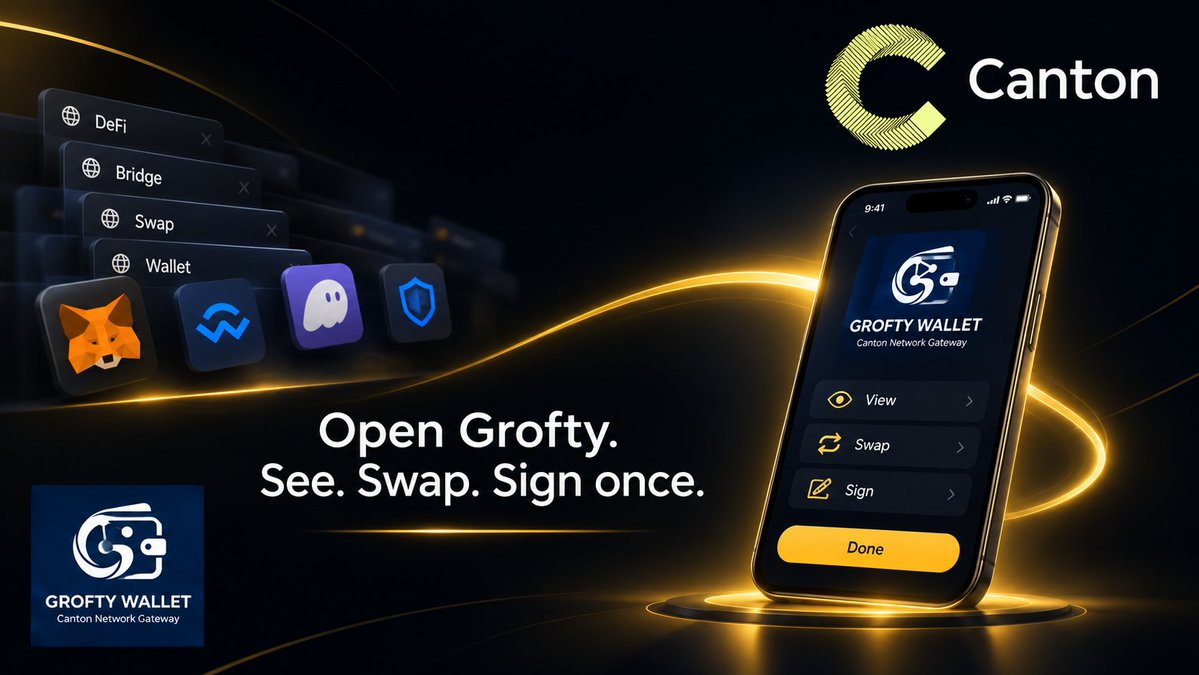
Most people open 4 tabs and 3 wallets just to check a price, swap, and bridge on a new chain.
On Canton it looks like this:
Open Grofty.
See the market.
Pick the best route.
Sign once.
Same key. Three tools. No extra accounts.
That’s the whole point.
@grofty_labs
I compared rNVDA and NVDA Stock Perp in the same Bitget session
rNVDA felt better for holding exposure, while Perp suited short-term trades.
A same-ticker comparison of fees, funding and risk would make choosing between them easier
#BitgetCommunityProductOfficer#BitgetFans
Most wallets show you a balance.
Grofty gives you the signature that settles it.
On Canton, your Party ID is the only thing that can authorize the move.
No exchange holds it.
No app sees the key.
Your key. Your Party ID. Your settlement.
@grofty_labs
Your keys never left your device.
Your Party ID never left your control.
That’s not a feature.
That’s Grofty.
The cleanest door into Canton.
@grofty_labs