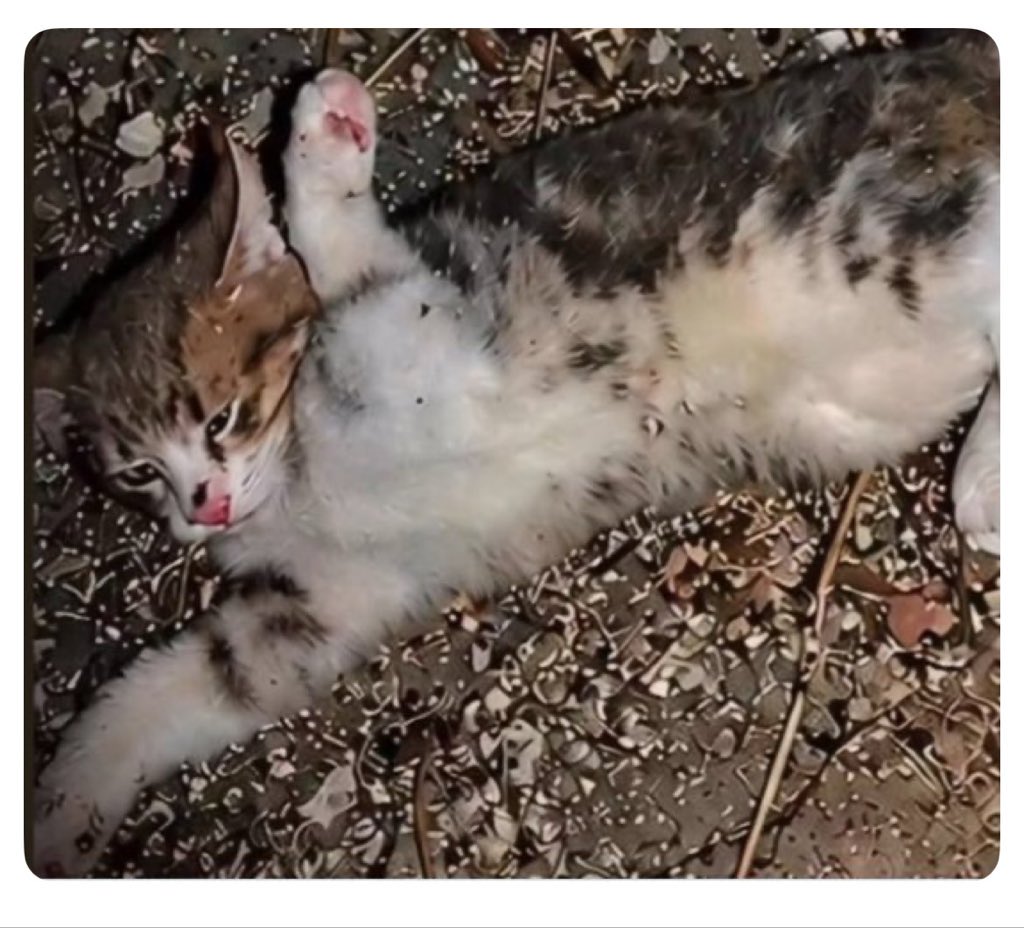
Yedi (7) Dakikalık
İŞKENCE
Bir Yavru Bebege
Komikmiş gibi
Kaydet
Servis et internete
Bu Çirkinlige
Sessiz kalan
Insan
KALABALIGI
En ACISIDA
Bulunmayan
Sapık Katil
Istismarci
RUHU KİRLİ BİRİ..
Seni Adalete Teslim Edip Cezanı Alana Kadar
Konuşmaya Devam Edeceyiz..!
Yavru kedinin katilini hala daha yakalayıp cezalandırmadılar.
Ben artık bu vahşetin,elleri yargıya kadar uzanan birileri tarafından önceden tasarlanmış,planlı olduğunu,politik olduğunu, düşünüyorum.
Yoksa şimdiye kadar çoktan yakalanıp cezalandırılmıştı.
#MinikİçinAdalet
Art��k bu dünyada yaşanan kötülükleri görmüyorsun meleğim, artık acı da yok açlık da yok... Minicik bi candın sen bi lokmacıktın...
Umarım orada artık çok mutlusundur Minik...
Bizi affetme çünkü biz katillerini hala bulamadık...
#MinikİçinAdalet
#MinikKediyiUnutmadık
Hepsi beğenziyor, yüz taraması ile teyt edildi. Fakat hepsinin isim farklı. Emirhan Şahinli, Baran Keskin , Yiğit Güneş. Hangisi doğru. Hachker arkadaşlarlar kesin bilgileri bulabilirler. İp adresi bulabilirler.
Gozleri Açık Gitmek O Minicik yuregi ile Acılar içinde Dil Çok Ama Çok yeteriz kaliyor Insanin DUYGU VE DÜŞÜNCELERİNİ ANLATMAKTA.! Bu minik için EROS Için CEZVE için VE Diyerleri için... Bizi hiç affetmeyin çocuklar
Bu gördüğünüz görüntü ne biliyormusunuz ? Dal ve parmakla yavru kediye t*c*v ettiler ama önce kollarını kırdılar kaçamasın diye ağzında s*g*Ra söndürdüler tüylerini yaktılar yerden yere vurdular kafasının üstünde tepindiler şeytanruhlu bu #SapıkYakalansın
In 1942, a drunk German officer sat at dinner and bragged about the Jewish woman he had selected from the brothel the Nazis had forced open in town. He said her name out loud. The Tunisian Arab sitting across from him stayed calm, smiled, poured more wine, and finished the meal. Then he drove the officer home, sped through the dark streets, and knocked on a door close to midnight. That night, he hid 25 people for four months. He never spoke about it again.
His name was Khaled Abdul-Wahab. He was 31 years old, a wealthy Muslim Tunisian who had studied art and architecture in New York and spoke fluent German. Nazi officers trusted him. They invited him to their dinners.
Tunisia was the only Arab country directly occupied by Nazi Germany during the war. Jewish families were pushed from their homes. More than 5,000 Jewish men were sent to forced labor camps. Yellow stars marked every chest.
That December night in the coastal town of Mahdia, Khaled listened as the officer boasted. The woman he named belonged to a family Khaled had known all his life.
He left immediately. He drove through the night. He knocked on their door at midnight.
Pack nothing. Come now.
He gathered 25 people — mothers, fathers, cousins, and children — and drove them nearly 20 miles to his family farm, hiding them inside the olive press, stables, and storage buildings.
This was not one brave act. It was four straight months of courage.
He fed them while supplies grew scarce. He kept babies quiet. He trusted his servants to stay silent. When German soldiers arrived to count Jewish families, the hidden people pinned yellow stars onto their clothes and stood motionless. When the soldiers left, the stars came off again.
One night, a drunken soldier wandered onto the farm and discovered them. An eleven-year-old girl hiding under a bed watched him laugh and threaten to kill everyone there. Then Khaled appeared. She remembered him her entire life as a guardian angel. He calmly walked the soldier outside, took away his weapon, and sent him off the property.
Nobody on that farm died.
In May 1943, British forces liberated Tunisia. All 25 people returned home alive.
Khaled went back to a quiet life. He married, raised daughters, painted, and worked in government service.
He never told anyone what he had done. Not his wife. Not his children. No one.
He died on September 4, 1997, at the age of 86. His story was buried with him.
Ten years later, his daughter Faiza was sitting in a café in Paris reading a Sunday newspaper when she came across an interview with an American historian describing a Tunisian Arab who had hidden 25 Jews in 1942.
The historian mentioned her father by name.
She was 45 years old and had never heard the story before.
She contacted the historian. One of the children saved on the farm had left behind 83 pages of testimony before her death. Every detail matched.
“I rediscovered my father,” Faiza later said.
Khaled was nominated for Israel’s highest honor given to non-Jews who saved Jewish lives. He would have been the first Arab to receive it.
The committee declined, saying he had not risked his own life enough.
Faiza answered with a line history should never forget:
“My father opened his home to Jews. They did not open theirs to us.”
Today, the 25 people Khaled saved have hundreds of descendants living across Israel, France, America, and Tunisia. The little girl hidden beneath the bed grew up, moved to Paris, and built a family of her own. None of them would exist if Khaled had stayed silent that night.
He had everything to lose. He acted anyway. Then he spent the rest of his life saying nothing about it.
The world nearly forgot him twice. Now you know his name.
You cannot spend the day condemning immorality and the night indulging in it, then call it Islamic governance. The gap between Taliban speeches and reported actions keeps widening the suffering of ordinary Afghans. 🇦🇫💔
By the age of six, she was responsible for sixty goats and sheep, walking miles every single day just to find water and grass. Her name meant "flower of the desert," but her early years were far from gentle.
Waris Dirie was born into a traditional nomadic family in the harsh Somalian desert in 1965. Survival was a daily struggle, but the most dangerous threat to her life did not come from the severe heat or the lack of food.
It came from a brutal ancient practice passed down through generations.
When she was just five years old, an elderly woman took her into the remote landscape with a rusted, dirty blade.
There was no anesthesia, no hygiene, and no mercy. Her mother held her down while her aunt pinned her legs to the dirt.
She was subjected to female genital mutilation—a cruel procedure that stole her childhood, caused the tragic deaths of her sister and two cousins, and left Waris with lifelong physical pain.
By the time she turned thirteen, her father arranged her marriage to a sixty-year-old man in exchange for five camels.
Refusing to accept this fate, her mother secretly helped her flee into the night. Barefoot, terrified, and completely alone, Waris ran across miles of desert terrain until she made it to Mogadishu.
Eventually, an uncle appointed as an ambassador took her to London to work as an unpaid domestic servant.
For years, Waris lived in absolute isolation in England. She could not speak English, nor could she read or write.
When her uncle's diplomatic post ended, she refused to return to Somalia, choosing instead to live illegally in London.
She took a job scrubbing tables at a local fast-food restaurant while attending evening classes to learn how to read for the very first time.
One afternoon in 1987, world-famous fashion photographer Terence Donovan walked into the restaurant where she was working. He immediately recognized her striking presence, grace, and strength.
"Have you ever thought about becoming a model?" he asked her.
"I don't even know what a model is," Waris replied, looking at him with deep suspicion.
That chance meeting changed everything. Almost overnight, Waris rocketed to global stardom.
She appeared in the prestigious Pirelli calendar alongside Naomi Campbell, walked high-fashion runways in Paris and New York, and starred in campaigns for brands like Chanel, L’Oréal, and Revlon. She even made an appearance as a Bond Girl.
To the world, she was living an extraordinary fairytale. But underneath the glamorous designer clothes and bright spotlight, she was still carrying severe physical trauma and unbearable memories.
In 1997, at the absolute peak of her career, a reporter from Marie Claire sat down with her to write a feel-good story about her journey from poverty to wealth. Waris decided it was time to end the silence.
"You have written enough stories about models," Waris told the interviewer directly. "If you promise to print what I actually say, I will tell you something real."
She revealed the painful truth about what happened to her as a child and exposed the reality that millions of young girls were still suffering from every single year.
The shocking interview sparked global outrage and brought female genital mutilation into international focus for the first time.
Shortly after, UN Secretary-General Kofi Annan appointed her as a Special Ambassador. At age thirty-two, Waris walked away from her lucrative modeling career to launch a global fight against the practice.
She wrote her international bestseller, Desert Flower, established foundations, and built medical centers to provide surgery and psychological support to survivors.
Because she had the courage to speak out, laws were rewritten across multiple nations, traditional leaders abandoned the practice, and millions of young girls were protected from the blade.
Waris Dirie proved that a child from the desert could overcome unimaginable trauma, break centuries of silence, and inspire profound global change.
Today, millions of young girls walk freely under the sun, whole and protected, because one brave woman dared to speak her truth.
Her journey is a beautiful reminder that love, courage, and resilience can bloom in even the harshest sands, turning every scar into a beacon of hope—just like a true desert flower.
🚨مؤلم للقلب: اسمها كان ليانا، كانت لاجئة أوكرانية تبلغ من العمر 16 عامًا تعيش في ألمانيا.
كانت تسير عائدة إلى المنزل من تدريبها المهني عندما بدأ مهاجر يتحرش بها جنسيًا.
خائفة، اتصلت ليانا بجدها طلبًا للمساعدة، وأخبرته أن مهاجرًا يطاردها ويعتدي عليها جنسيًا. سمع جدها صراخها… ثم الصمت. لم يرها مرة أخرى.
أخبرت السلطات والديها لاحقًا أنها صُدمت بقطار. «انتحار. القضية مغلقة.» بدا الأمر كغطاء.
لكن عائلتها رفضت الاستسلام. مع ضغط قوي من حزب البديل من أجل ألمانيا (AfD) يطالب بتحقيق حقيقي، ظهرت الحقيقة أخيرًا: قُتلت ليانا. دُفعت عمدًا على القضبان بواسطة مهاجر عراقي.
تم التعرف على الرجل واعتقاله، لكن الغضب لم يتوقف هناك.
كان لديه أمر ترحيل نشط منذ يناير 2025 لم يُنفذ أبدًا. لو قامت السلطات بعملها، لكانت ليانا لا تزال على قيد الحياة.
والأمر يزداد سوءًا. عرفت والدة ليانا أنه لن يك��ن هناك عدالة حقيقية، وكانت محقة. ح��مت محكمة ألمانية الآن بأن المهاجر العراقي الذي قتلها لن يقضي أي وقت في السجن، مدعية أنه يعاني من «مشاكل الصحة العقلية». بدلاً من ذلك، سيبقى في منشأة نفسية مريحة، مدفوعة من قبل دافعي الضرائب الألمان.
@Evelyn001d
In Sudan, a woman is not just killed, she is raped in front of her children, flogged for screaming, her village burned while she is still inside.
What is happening to the women of Sudan is not war, but a systematic extermination of a woman's body and dignity.