Developing analytics/engineering/ML skills | Always argues in good faith | #RoamCult fan | #LessWrong rat | @InterIntellect_ member | We all own the future
Brilliant writing. One of your best yet. (First pic is Lady Columbia, how I imagine your voice while reading this)
Among many things, I particularly agree with viewing a common root cause between feminism and the manosphere. Namely, the choice of viewing "men" and "women" as collectives with collective agency and collective responsibility. It's a signal of how much collectivism has leaked into the common discourse and poisoned so much reasoning at the root.
I'm reminded of (second pic) how Teddy Roosevelt, as early as 1883, was already noting how lazy collectivist criticisms were lowering standards of character, excusing bad behavior, and tempting men into underwhelming lives.
@lisavsworld This is deeply inspiring to read, and I'm glad to hear that you're still finding your peak energy. I will have just a bit more pep in my step tomorrow morning knowing that you're probably already awake and pushing your limits too 🫡
@sivori I tried your app, and I like it.
Some feedback: both Don Quixote and Sancho answered partially in Spanish. I speak Spanish, so I like this and it helped. But maybe you could tune this for non-fluent speakers
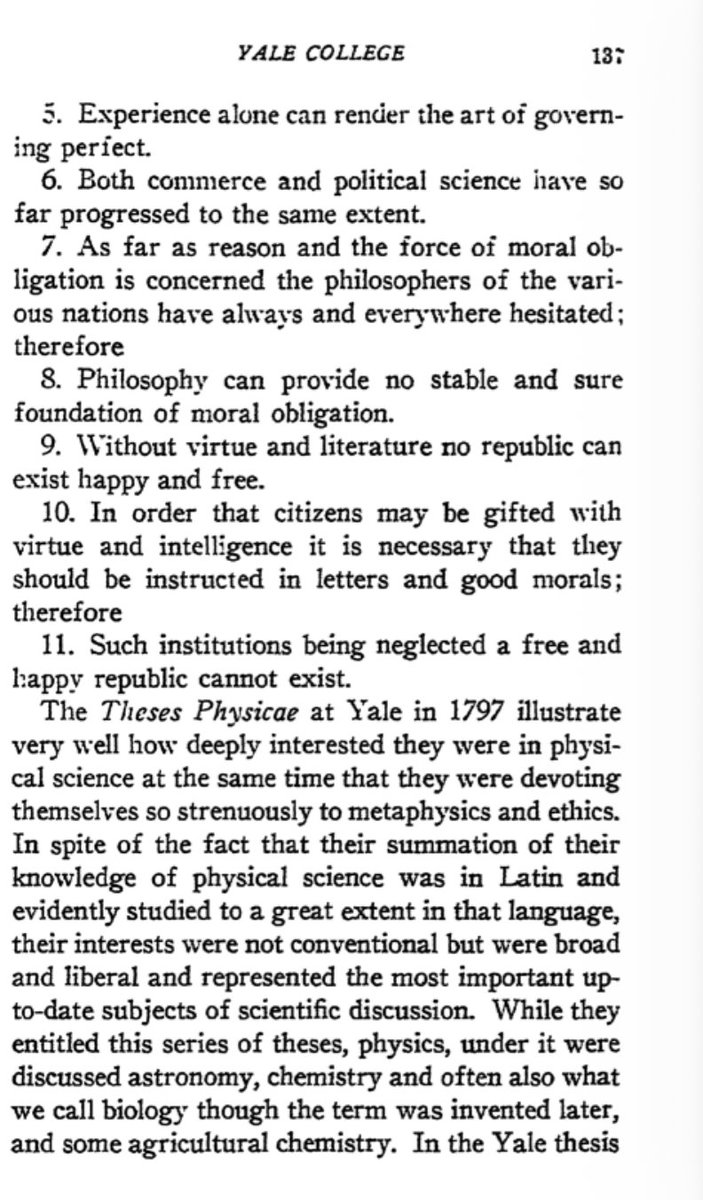
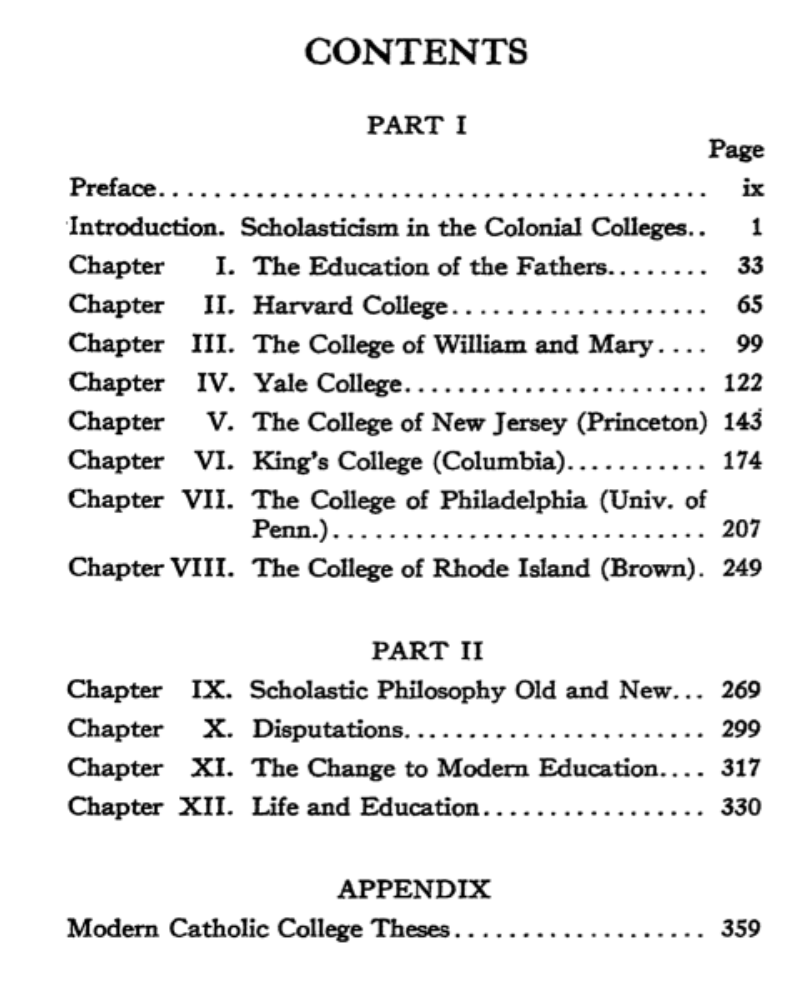
I like "Education of the Founding Fathers of the Republic: Scholasticism in the Colonial Colleges" by James Walsh.
You can read the theses that the Americans of the colonial era were debating in college, and you can determine for yourself if your education is at the level of theirs.
@TVachaW Excellent post. I also believe there is a rich, philosophical overlap to explore between Buddhist philosophy and AI science. This explanation you've written is top-tier 🙏
I wish this were true that 0 people believe in universal suffrage. In the United States in 2026, we have politicians for major cities (Los Angeles) arguing that even non-citizens should have the right to vote! Which is even more "universal" than the ordinary meaning of "universal suffrage"
https://t.co/ndZ5wrgSVt
That's great to hear! What do they like to talk about?
For contrast, I was on a stream with Objectivist men 2 days ago, and we talked for a bit about how it was the 25-year anniversary of the death of bodybuilder Mike Mentzer, who often wrote about how inspired he was by Ayn Rand's writings
For me, this is the word "madres" in Mexican Spanish. I can never get it right, even though I've asked my family to explain it multiple times.
In ordinary use, "madre" means "mother". That's pretty easy.
But "Me importa madres" means "This doesn't matter to me at all."
And "Este taco sabe a madres" means "This taco tastes amazing."
I just stopped trying to use this word at all, except for its obvious meaning
🇯🇵 I am Japanese.
The Japanese word “Yabai” is confusing.
Good? → Yabai.
Bad? → Yabai.
Amazing? → Yabai.
Terrible? → Yabai.
At this point,
even Japanese people don’t know what “Yabai” means anymore. 😂
Do you have a word like this in your language?
Pure poetry. I also find the rotisserie chicken in most grocery stores to be a genuine, remarkable value.
When I was much younger, my mother asked me to memorize that, should I ever find myself in financial hardship, I could stretch my money quite far with rotisserie chicken and a few grain staples. It might come in handy someday when my children come into the world.
In America, a warehouse store. A fully roasted chicken costs five dollars, the raw chicken beside it costs seven, and I stood between them like a man between two truths.
Golden. Hot. Seasoned. Spinning in glory under the lights, in a line of its brothers. Four dollars and ninety-nine cents.
I checked the raw birds. Seven dollars. Pale. Cold. You must do everything yourself.
This is not commerce. Commerce does not move backward. Somewhere in this building, mathematics lies defeated.
I asked the man at the counter. "How is the cooked bird cheaper than the raw bird?"
"Been five bucks forever. They keep it that way."
"But the store loses."
"Yep. On purpose."
On purpose. I held my receipt with both hands.
In my land, a lord who lowered the price of rice in a hard winter was remembered for generations. They built him a small shrine. This store does it every day, with chicken, and tells no one.
A woman behind me grew tired of my reverence. "It's just a chicken, sir."
It is not just a chicken. It is a wound the merchant takes on purpose, so that anyone, on any day, with five dollars, eats like a lord. The bird is the message. The price is the vow.
I will confess: I bought two. I did not need two. The second was not hunger. It was gratitude, and it was delicious.
Some prices are not prices. They are promises.
I return every week now. I take one bird. I bow toward the deli, briefly, so as not to alarm the staff. They have begun nodding back.
The vow holds. The bird turns. Five dollars.
Long may it spin.
@Corbienest What a great tweak of this meme. I hope you find several controversies to wade into, because this image is too good.
Also, I like your opinion
For anyone with psychological or religious interests, there is a more abstract lesson here about the relationship between the masculine and the feminine.
The "walled garden" is a common metaphor, which is a memorable image for putting intentional, defensive boundaries around a space where pleasurable activities can be pursued at will.
The yin-yang symbol also has this notion built in. The visible, masculine, yang energy provides structure around the invisible, feminine, yin energy. A healthy relationship of these 2 forces provides the conditions for growth and new life.
Brilliant essay, both in its treatment of nuance and social benefit of being open about this topic.
I've told young guy friends for years that consciously choosing a boundary around hook-ups (paradoxically) leads to more hook-ups.
One convincing way to show this is to use game theory in a less emotional topic. In my college game theory course, we studied a model comparing 2 societies: 1 where legal contracts have significant penalties when broken, and 1 where legal contracts can be broken with negligible damages. Then we worked through the logic of a 3-stage game where 2 parties decide whether or not to form a business that has the risk of failure or profit. This only takes a whiteboard and maybe 30 minutes to work out rigorously.
The plain-English result: In a society where breaking contracts has no penalty, people are rational to be defensive, so they engage in fewer contracts, even good ones. A society with *rigid* penalties is one with the structure necessary to form more contracts that are mutually beneficial, even if they are *riskier.*
When I was dating, I had a policy of transparently telling women I would not have sex, and I would only be open to making out. This was a solid way to make out when I wanted (assuming the other factors are present, like mutual respect and mutual attraction, etc).
People are so split on this conflict of sexual expectations that it's frankly concerning. I was always in the camp of "Why on earth would going back to a man's place or having him over to yours imply sex?" But that's simply because I was never instructed otherwise. And I was surrounded by women in young adulthood who held the same opinion as I did. It's as simple as that.
This is actually a conversation I had with a male friend of mine recently. He was lamenting to me and another female friend about how "back in his 20s" saying, "Let's go back to my place" meant sex. It was easy. Straight forward. But dating today (in his 40s), he was finding a completely different set of rules. This confused my girlfriend and I because we insisted going back to a man's place or having him over to yours did *not* imply sex.
The divide between our collective experiences and expectations was astounding. It was like meeting someone from a foreign country, speaking a different language, pointing to the sun and saying, "See that bright thing up there? It's red." Meanwhile, my friend and I are like, "Are you insane? It's clearly yellow!"
A couple of years ago, I remember mentioning to my mom that I needed to clean my house because I wanted to have a man over for a meal. She was taken aback and said, "Why would you have a man over?" And I said, "To have dinner?" She thought that was odd and insisted it wasn't a good idea.
You see, at this time, I was a 35 year old woman. It never occurred to me that a man would automatically expect sex if I let him into my house. I've talked to many other women about this (see my girlfriend above, 10 years older than I am, and currently in a serious long-term relationship) and they had the same view as I did. It doesn't mean sex. But to my mom, of course it did.
But here's the thing... my mother literally never told me this. 18+ years under her roof and NOTHING. I don't think we can accurately state just how much Boomer and Gen X parents dropped the ball on giving their daughters ANY guidance and information on the "norms and expectations" around sex.
And you know why? Because despite their silence on this topic, literally no one can agree on what exactly those norms and expectations are.
When I was 23, I told my parents I was driving to Chicago to spend the weekend at a male friend's house. My mom was immediately nervous. Spend the night at a man's house?? She looked to my dad, he pulled $100 out of his wallet, handed it to me, and said, "Have fun!" My mom was furious.
My mom did not assume I was willingly going to have sex here (I wasn't), but she was acutely aware of the possibility (or worse) of what could occur. And she was very annoyed at my dad for not taking it more seriously. My dad meanwhile... was oblivious to the concept. The idea of me engaging in salacious activities or at risk of being taken advantage literally never even occured to him.
And yet, my mom specifically told me during that "house cleaning" when I was 35 that she never went back to my dad's place during the early stages of dating. Not for a long time. And later too did not go over to his place unless someone else was there. That isn't to say they weren't up to stuff before marriage (they're were secular), but she had a very clear sense of standards and decorum for what was expected of her based on her understanding of sexual cultural norms.
So, despite my dad's casual attitude of me traveling to stay with a man he'd never met, he had to know on an objective level that things could happen... And I can only assume my friends' parents knew as well... So what on earth was this blatant cognitive dissonance with not providing guidance to their own children? Yes, we were adults by this point, but still clearly oblivious to the sexual expectations of others. One parent of mine cannot even conceptualize the idea of risk toward their child... the other assumed they'd have learned the risk all on their own... but how??
As far as I can figure, Boomer and Gen X parents very much expected us to learn these "norms" via osmosis. I remember confronting my mother at 27 about a different sexual norm I wish she'd told me about prior to going to going off to college. 9 years later and the embarrassment and fallout of that situation was still bothering me. And you know what she said? "I thought your friends would tell you."
I thought your friends would tell you...
And you know what I said back? "And who were my friends supposed to learn this from?"
My friends were not isolated home schoolers or even social outcasts. Several were quite popular and had active romantic lives... but at least half also weren't even having sex yet. Even in college. They weren't ready. And those that were, waited a YEAR or more before having sex with their long-term boyfriends. They were former public school secular-raised women.
Maybe some of my friends were nominal Christians at best, not church attending at all, and definitely none as religious as I was. They *also* did not know about this apparently wide-spread sexual norm I confronted my mom about at 27. Nor did they know about the one I discovered at 35. Afterall, they'd spent many evenings alone with their significant others with no full-on sexual activity occurring. (By the way, the majority of them are now married. Several to those same boyfriends.)
Again, "I thought your friends would tell you..."
We grew up watching television shows with platonic male friendships. Television then took it a step further and sanitized romantic relationships to keep things "family friendly." And yet, somehow one half of the population got this memo while the other half did not. And I wouldn't even say this is a religious thing. I was raised in a secular family. Many of my girlfriends who'd agree with me were also raised in secular families. I have male friends who agree with me. And of course, male and female friends now who do not.
The craziest thing? Each side insists they have the correct cultural take. They put their entire chest behind the statement and insist they're right. They insist that it's obvious. They look at you like you're crazy if you say otherwise and you look at them the same way. The only thing I can assume at this point is our norms and expectations are influenced by association bias. If you believe something is the norm, it's because you self-selected it to be that way. Whether you realize it or not, you chose to be around others just like you.
If you believe going back to someone's house means sex, it's because you wanted to go back to someone's house to have sex. And you're likely friends with those who want the same as well. I've spent several nights at men's apartments where they already had the couch or a futon set up for me because we were long distance and it was too far for me to drive back the same day. Sex wasn't on the table for us. And I didn't have to say anything about it either. But I selected those men, you see? I didn't meet them on an app or at college or on the internet... I met them through friends. Friends like myself.
Self-selection is a curious thing. Because it suggests that the norms you recognize are simply the activites you wish to participate in. Is it society? Is it culture? Or is it you?
(It's you)
I don't even think we'd know about these parallel cultural norms if not for the internet. We'd never have crossed paths. We now live in a reality where groups are intermingling across demographics, classes, and vast cultural differences. Prior to the internet, we were significantly less likely to leave our sphere of influence. The most you'd ever experience that would be in college. But even then, you'd eventually find your in-group and self-select into what reality you wanted to live in (post-shocking cultural clashes from interacting with new people from various cultural backgrounds and expectations).
So, who is right here? I can say, it's probably a good idea to just never be alone with a man you haven't thoroughly vetted over a long period of time. And I say this just from a position of keeping yourself safe. I'm very fortunate that these men I dated or were friends with were safe men. I have had bad and scary experiences, but none of those experiences ever went so far as me going back to those men's houses. I know other women were not so lucky. And it is frankly shameful they were not properly educated so they could be in a position to guard themselves better.
We could continue on this topic all night long, but I think the bigger issue is how this culture clash is entirely unsustainable. We've found ourselves in what is essentially a class system collapse. So many of us were never meant to cross paths or intermingle. Our cultures are not the same. When we were separated, standards per our group could be maintained. But together? We all dive straight down to the lowest common denominator. Pretty soon, self-selection won't be a thing anymore. It's hardly a thing now. And we're seeing it all fall apart in real time.