Well said. I’ve had a similar experience exploring Rome and the East, ultimately leaving the catechumenate in the EO Church after about a year and a half for the same reasons @Englishremnant mentioned below. Though I am still continuing on my journey to find a church tradition to call home and practice the faith.
As a founding stock Anglo-American, the Episcopal Church and the ACNA scratch a certain itch for liturgy, beauty, and tradition, but also seem plagued by controversy, infighting, and modern liberal theology.
I've concluded that there really is no perfect little-c church, the big-C Church cannot be contained by one institution, and all institutions are vulnerable to man-made error. It seems we are ultimately called to participate in imperfect churches and do the best we can to follow Christ. There is too much work to be done to sit on the sidelines.
As a native Englishman, born into the Anglican Church and christened within it, I found myself increasingly disillusioned with what it has become. That led me to look seriously at Rome. The beauty of the Latin Mass, the sense of history, the weight of tradition, it all draws you in at first. But after proper study, not surface-level interest but real reading, time in services, digging into doctrine, it became clear to me it is not the "one true Church". Too many post-medieval additions, too much that simply cannot be grounded in Scripture, and a level of corruption and modern ideological infiltration that cannot be ignored.
From there I turned to Eastern Orthodoxy. Again, I approached it properly. More reading, more study, time spent in churches, looking into the Fathers and the theology. It is undeniably rich in history, and more consistent than Rome. But in the end, it was not for me. The level of ritual, performance, and theatrical elements became a distraction rather than a help. It pulled me away from the Word rather than driving me deeper into it.
So I found myself back where I started, in Anglicanism, but not blindly. This time with far more understanding. More study of Scripture, more time reading the Church Fathers, more serious engagement with doctrine. And what that confirmed to me is this: the Reformation was necessary. It was not perfect, nothing carried out by men ever is. The destruction of monasteries can be debated. But overall, it was a return, not a rebellion. A stripping away of man-made superstition and unbiblical additions, bringing the Church back toward something purer and more grounded in truth.
The problem now is that the modern Anglican institution has largely been captured. Across the West, Christianity in general has been weakened, diluted, and reshaped by modern ideology. But it is not gone. There are still pockets where solid, biblical truth is preached, where God is feared and honoured properly.
Original Anglicanism, especially in its post-Reformation form, sits far closer to what would now be recognised as Puritan in doctrine. Serious, Scripture-first, no nonsense.
At the same time, Anglicanism at its best has always allowed for ordered, historic worship without submitting to Rome. You can have reverent, structured, even elaborate services rooted in tradition, what people now call Anglo-Catholic, but without the Pope and without accepting unbiblical additions. And equally, you can have the plainer, stricter, more stripped-back approach that leans closer to the Puritan end. Both exist within Anglicanism when it is functioning properly.
Groups like Forward in Faith and Society of Saint Wilfrid and Saint Hilda are examples of those holding onto traditional structure and sacramental life within Anglicanism. And outside it, churches like the Free Presbyterian Church of Ulster and the Free Presbyterian Church of Scotland show the other end, where preaching, discipline, and strict adherence to Scripture are front and centre.
The Archbishop of Canterbury is not a Pope. She has no universal authority over all Anglicans. She does not define the faith for the global Church, and he does not speak for every Anglican. Anglicanism has never worked that way.
I will always have respect for the history, tradition, and depth found in Rome and in the East. But that respect only goes as far as they remain in line with Scripture. History matters. Tradition matters. But only when they stay true to the Word of God.
Anyone looking for a solid, firm church should be seeking out a traditional, non-captured Protestant Anglican parish, or one of the more grounded, disciplined, old-school Presbyterian churches where Scripture is taken seriously and preached without compromise.
🏴🏴🏴🏴🏴🏴🏴🏴
@TARSRel0aded Random Twitter account named "Claire Penis," with no known religious affiliation, expresses confusion over Christian doctrine.
Catholic Twitter response: Do Protestants even Christianity?
Random Twitter account named "Claire Penis," with no known religious affiliation, expresses confusion over Christian doctrine.
Catholic Twitter response: Do Protestants even Christianity?
@TARSRel0aded Random Twitter account named "Claire Penis," with no known religious affiliation, expresses confusion over Christian doctrine.
Catholic Twitter response: Do Protestants even Christianity?
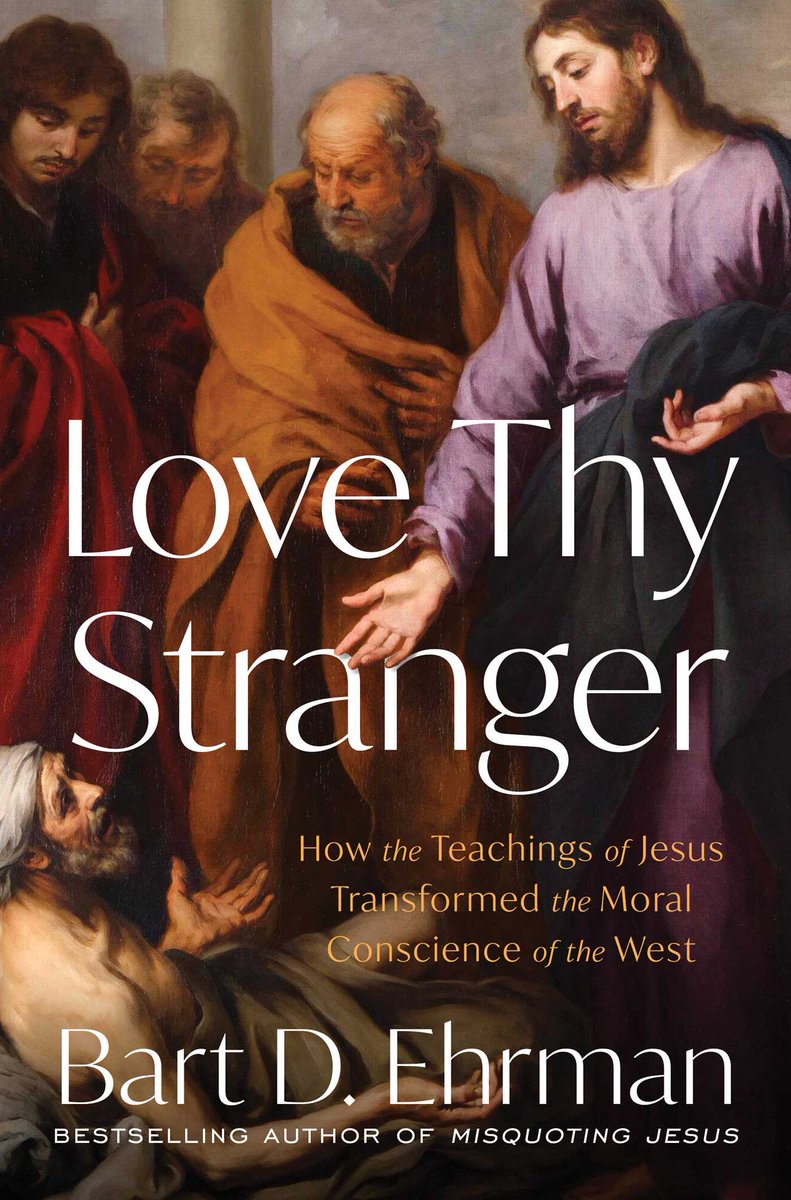
My mother-in-law, who has no idea who Bart Ehrman is, recently bought me this book, thinking it was just a nice spiritual read. I imagine a lot of Christians will pick it up for the same reason.
It’s strange to me that we still live in a world where atheists like Ehrman can promote a cultural Christianity stripped of God, where people can pick and choose parts of the gospel, but don't see it inevitably collapsing into something straight out of a Dostoevsky novel. As if we don't have enough examples of Christianity without the God-man from the last several centuries. Christianity without God is flimsy at best and destructive at worst.
@seanmdav@AuronMacintyre The Epstein Files were always a question about who was compromised by Israel. Trump's failure to release the files and his decision to launch a war for Israel made everyone think that he too is owned by Israel. It's not a “one is more damning than the other” issue.
Christians have been involved in Ufology since at least the 1960s.
I don’t know if Vance is engaged in an attempt to “socially engineer a sci-fi biblical prophecy into reality,” as you suggest (you might very well be right), but it’s just as likely that he is utilizing this particular Christian interpretation now that the subject has hit the mainstream.