Join Met curators for an in-depth look at fantastical beings from Europe and the Americas on view in The Met Cloisters exhibition "Creatures of Myth and Imagination: Europe and the Americas."
Decipher hybrid creatures that transcend the natural world, combining the features of animals, humans, and even plants. Visual artists from across cultures have given form to these mythical creatures, resulting in fearsome, beloved, and extraordinary works of art.
🗓️ Tuesday, August 25
🕰️ 4 pm
🎟️ Get tickets → https://t.co/hAOMfYwHtn
———
"Fragment of a Tapestry or Wall Hanging," ca. 1420–30. Upper Rhenish. Wool and linen.
Learn techniques for weaving textiles from traditions across the Atlantic! In this two-day workshop, study these distinct traditions and practice a variety of techniques on miniature looms.
Before contact between Europe and the Americas, cultures in each continent produced master weavers and created dazzling pieces of textile art.
🗓️ Saturday, August 22 and Sunday, August 23
🕰️ 1 pm
🎟️ Get tickets → https://t.co/Ki7xwyNS1J
Step into the world of The Odyssey through seven remarkable works of art at The Met.
Whether you're a lifelong fan of Greek mythology or discovering Homer for the first time, this journey through The Met's collection offers a new way to experience the enduring story of Odysseus.
Read the full story: https://t.co/GR0wzMO9Ss
Have you visited "Creatures of Myth and Imagination: Europe and the Americas" at The Met Cloisters?
Go behind the scenes with Senior Collections Manager Andrew Winslow, who oversaw the installation and care of the "Bat Lord," a remarkable sculpture on loan from the Museo del Templo Mayor in Mexico City.
Via The New York Times: https://t.co/bRcoqqnsXm
Now on view!
This is the first early Ptolemaic fragment of the Odyssey ever discovered. It dates to the beginning of the Hellenistic period, after Alexander the Great, when the Great Library at Alexandria was built and began gathering works of Greek literature.
See this fragment on view in Gallery 162.
___
📜 “Papyrus fragment with lines from Homer's Odyssey,” ca. 285–250 BCE. Miscellaneous-Papyrus.
See The Met collection through artists' eyes!
Hear the thoughtful perspective of musician Peter Sheppard-Skaerved and explore the work of artist Alberto Martini in the exhibition "Musical Bodies."
🗓️ Tuesday, August 11
🕰️ 4 pm
🎟️ Get tickets → https://t.co/j3dlOYuY2d
———
Anonymous, "Poster for a performance by Henri Huerta," 1871. Lithograph.
📣 Announcing the Met Live Arts Fall/Winter 2026-27 season!
Don’t miss powerful performances including:
🎤 A one-of-a-kind evening with Swedish singer Lykke Li
🎸 The launch of the new Guitar Icons series with Kingfish, St. Vincent, and Jason Isbell
💃 Dance premieres by Ayodele Casel and Rashaun Mitchell and Silas Riener
...and so much more!
Explore the full season lineup and get your tickets today → https://t.co/ZMuHnOSleC
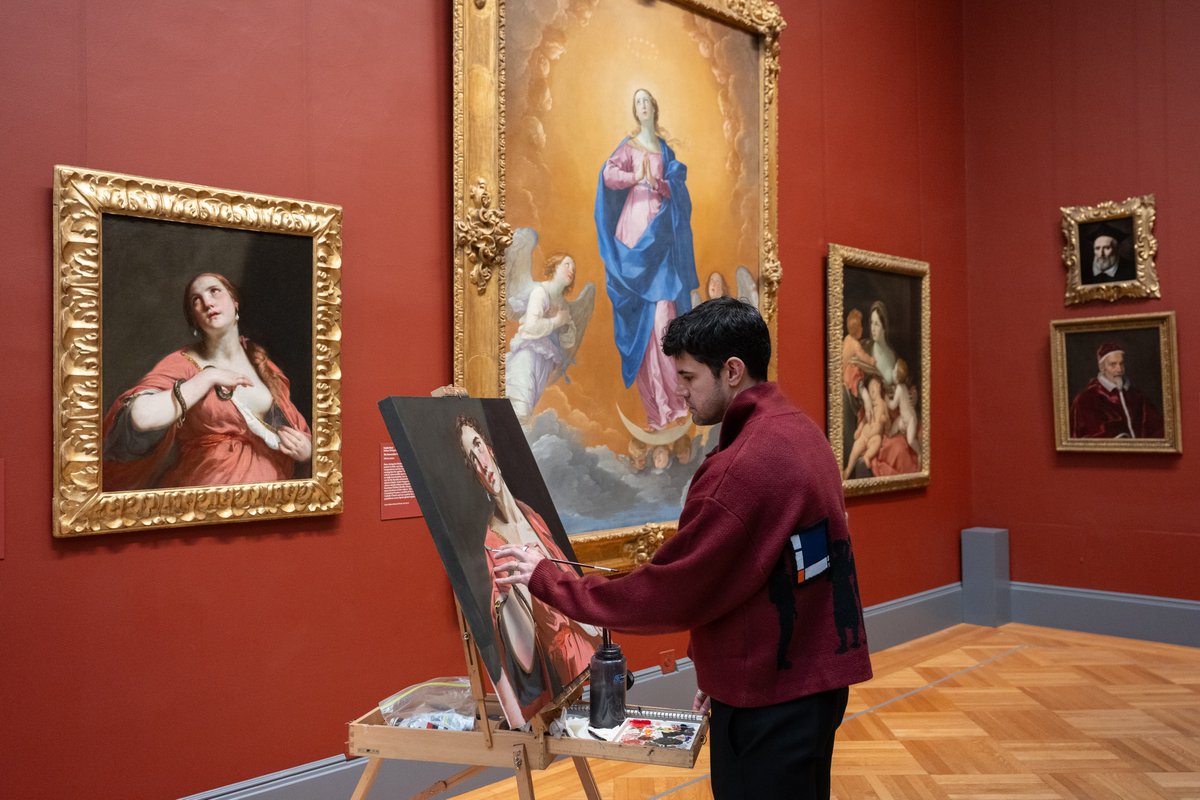
Apply to the Copyist Program today!
The Met's Copyist Program is the longest-running program at the Museum, originating in 1872, only two years after the Museum first opened its doors. This year, set up your studio at The Met Cloisters.
Applications are due Friday, July 31, 2026, 11:59 pm ET. Learn more: https://t.co/vPPCebChA2
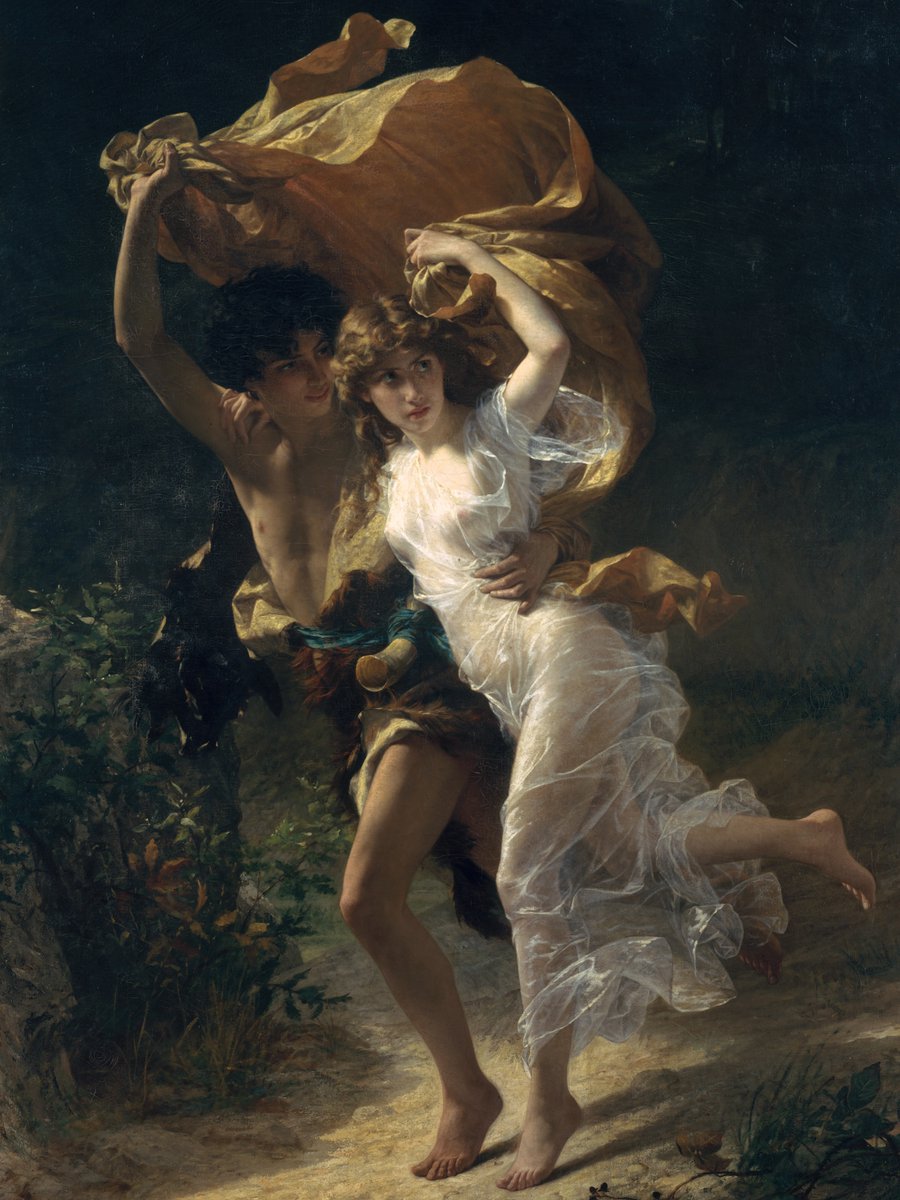
Sometimes the best stories begin with getting caught in the rain. 🌧️
In "The Storm," artist Pierre-Auguste Cot captures a young couple caught in a sudden autumn downpour, racing for shelter while using the heroine's overskirt as an impromptu umbrella.
When Cot exhibited this painting at the Salon of 1880, critics speculated about the source of the subject. Some proposed the painting was inspired by the popular French novel "Paul et Virginie," which tells the story of two childhood friends who fall in love. In one memorable scene, the young couple shelters from a sudden rainstorm beneath a shared piece of fabric, closely echoing Cot's composition.
☔️ Stay dry this week and take a cue from "The Storm." Spend a rainy day at The Met, explore the galleries, and who knows—you might just find your own love story along the way!
———
🎨 Pierre-Auguste Cot (French, B��darieux 1837–1883 Paris), "The Storm," 1880. Oil on canvas.
The art of striking a pose!
Let 5,000 years of art history inspire your next #MetMoment.
Plan your visit today: https://t.co/bO5wXEXeI1
___
📸 : @raniazzhr
You can find two terracotta plaques on view at The Met that depict scenes from the story of Odysseus, the hero of Homer’s Odyssey (Gallery 157).
Learn more in The New York Times: https://t.co/8IoTc1oWT3
Explore the fantastical world of "Creatures of Myth and Imagination" at The Met Cloisters!
Join multidisciplinary artist Ana de Orbegoso for a special gallery talk exploring the inspiration behind her work. Drawing on depictions of hybrid creatures and supernatural beings from the Americas and medieval Europe, de Orbegoso reflects on themes of symbolism, identity, and spirituality that shape her artistic practice.
🗓️ Saturday, August 1
🕰️ 2 pm
🎟️ Get tickets → https://t.co/Zs0sM2Ri2p
Access the expertise of The Met from anywhere and expand your knowledge of art history!
Celebrate and reconnect online with The Met’s galleries for ancient art from the island of Cyprus, scheduled to reopen in 2027 after an extensive renovation. Explore major themes that will be presented in the new galleries, including ancient sculptural polychromy and narratives surrounding the goddess Aphrodite, who, according to mythology, was born from the sea off the coast of Cyprus.
🗓️ Wednesday, August 5
🕰️ 3 pm
🎟️ Get tickets → https://t.co/uFJqdrlQ8J
———
"Limestone statue of Aphrodite holding winged Eros," late 4th century BCE. Cypriot. Limestone.
Set up your studio at The Met! 🎨
For more than 150 years, artists have come to The Met to study, reinterpret, and learn from works in the Museum's collection through the Copyist Program. Whether you work in drawing, painting, sculpture, or another medium, the program offers dedicated time and space for close looking and creative exploration.
Applications for Fall 2026 are open through Friday, July 31. Learn more and apply → https://t.co/CQF4zv457D
———
📸 Filip Wolak
This tracery arcade from Canterbury Cathedral raises an important question about authorship in Gothic architecture: who should receive credit for the work?
The design was likely created by the architect in charge—either Stephen Lote or Thomas Mapilton—but neither spent much time on site because of other royal commissions. As a result, there are no physical marks on the arcade showing their direct involvement.
Instead, the piece bears the mark of the stone mason who carved it—a personal symbol claiming ownership of his labor. Mason’s marks helped builders organize their work and can still be found throughout medieval churches.
Yet without records connecting these marks to specific individuals, the name of the craftsman behind this remarkable arcade remains uncertain.
📣 Last chance! See "Gothic by Design: The Dawn of Architectural Draftsmanship" on view at The Met through July 19.
———
Design perhaps by Master Mason Stephen Lote (fl. 1381, d. 1417/18) and/or Master Mason Thomas Mapilton (fl. 1408-38), "Tracery Arcade from the Great South Window of Canterbury Cathedral," ca. 1426–1435. Caen stone.
Take a trip down memory lane with author Ann Patchett and her dear friend Marti Fischer in our European Paintings galleries.
Right before Patchett's newest novel, "Whistler," went to press, Fischer helped her select a new work from The Met's collection to include in the book.
Watch the full video: https://t.co/DtUcHUmfbA
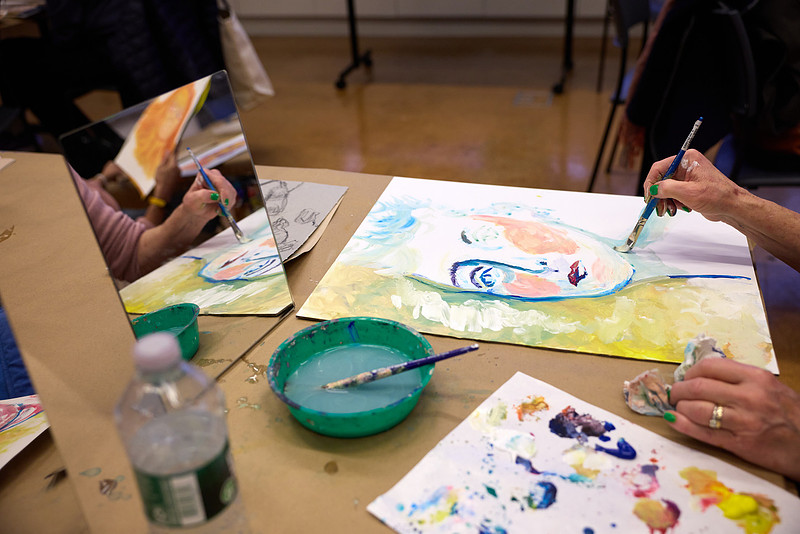
Ever wanted to learn how to draw or paint but didn’t know where to start?
In this weeklong workshop, learn the fundamentals of life drawing and painting with a teaching artist. Each three-hour session includes gallery sketching and guided studio practice.
All skill levels are welcome.
🗓️ July 27–31
🎟️ Learn more → https://t.co/euacgbPDSx
Just dipping out for a bit! 🤿
After a busy year, The Met's social media team is taking the plunge into vacation mode through July 5. We’ll be floating offline and pressing pause on Instagram, TikTok, Facebook, X, and LinkedIn.
We’ll be back next week, refreshed and ready to make a splash with more art, insights, and behind-the-scenes fun. In the meantime, there are plenty of ways to keep up with The Met:
🏛️ Wander the galleries at The Met Fifth Avenue or The Met Cloisters—we promise the art (and air conditioning) is unbeatable.
🌐 Browse hundreds of essays, videos, and digital features on our website to keep the inspiration going.
🎬 Join us in person for Date Night, Met Expert Talks, family programs, and more.
Wishing you a joyful and restful holiday week. We'll see you when we swim back ashore!
———
Hubert Robert (French, Paris 1733–1808 Paris), "The Bathing Pool," 1777–79. Oil on canvas.
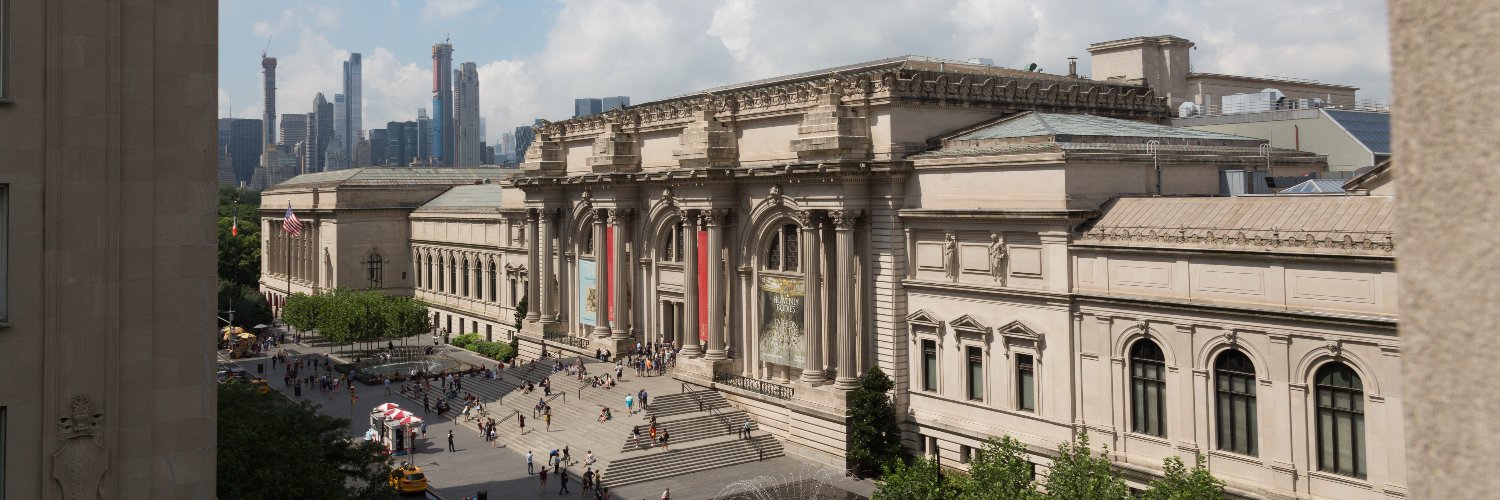
The Met commemorates the 250th anniversary of the Declaration of Independence—the founding document of the United States of America—with a special installation, events, and performances.
On July 4, join us for:
🥁 A high-energy performance by the Brooklyn United Marching Band on The Met’s iconic steps.
🎶 A choral meditation with five-time Grammy-nominated Clarion Choir and Grammy-winning Catalyst Quartet for "the national anthems," a moving work by David Lang that reflects on national identity and finding common ground.
💡 Learn more → https://t.co/TrjXVjy71D