Type 2 diabetes remission is possible for many people. So why is it seem so hard to achieve? 🤔
@bschermd explores how food environments, clinical care, nutrition guidance, and metabolic health all shape outcomes, and what needs to change to help more people improve.
@ParkLover_JA Absolutely, this is such a relatable real-life experience! And exactly why intentionally building movement into the treatment plan can be so important. Thanks for sharing!
Could GLP-1 medications make people less active? 💉
Preliminary research suggests physical activity may decline after treatment begins. @bschermd explains why, what it could mean for long-term health, and why exercise support should be built into the treatment plan.
I'm delighted to be speaking at this SAMHSA Webinar, "Metabolic Psychiatry: A Nutrition Based Approach to Treating Mental Illness" on August 20th.
It's free!
Please join us.
https://t.co/WAiG0u12A7
The Children's Mental Health Resource Center is recruiting for the next cohort of its longitudinal ketogenic therapy study in young people ages 6 through 20. The cohort begins September 1, 2026, and CMHRC needs at least twenty participants. When they contacted me, only eight had completed the screening and enrollment process.
This is one of those moments when everyone who says we need better evidence in metabolic psychiatry has to understand what producing that evidence actually requires. It requires families willing to participate and we are going to help them find them. Please share this post far and wide in groups and among your professional contacts.
The first fourteen days of the study are completed without changing the diet so that the research team can establish a baseline. Participants then follow a ketogenic food plan for two years while tracking symptoms, food intake, blood glucose, and ketones. Assessments are completed four times each year. After the active portion of the study ends, families meet with the research team four times a year for another five years. This is a meaningful commitment because the question being studied is larger than whether someone can produce ketones for a few weeks. The researchers want to know whether families can implement ketogenic therapy at home, whether symptoms change, and what happens over time.
The study does not expect perfection. This is important. A family does not invalidate the research by having difficulty. Difficulty is part of the research question. Honest information about adherence, symptoms, food challenges, and periods outside ketosis helps investigators understand whether ketogenic therapy is feasible in ordinary life. Even hospitalization does not automatically remove someone from the study. The program continues to support the caregiver and helps the participant return to the food plan after coming home.
Families should not decide on their own that they are ineligible. The study is recruiting young people ages 6 through 20 who live primarily in the United States and have a mood disorder such as bipolar disorder, depression, or disruptive mood dysregulation disorder. CMHRC also welcomes interest from families whose child has symptoms that may be consistent with a mood disorder but does not yet have an official diagnosis. Young people already receiving therapy or psychiatric care may participate. The interest survey begins the screening process. It does not guarantee enrollment or obligate the family to participate.
https://t.co/lBM4zWQxuD
Questions can be sent directly to [email protected].
📝 The best time to create a mental health crisis plan is before you need one.
@GeorgiaEdeMD, @KetoCounselor, and Dr. Matthew Bernstein share practical guidance for patients, families, and clinicians using ketogenic therapy.
Nicole shares why she started this program and what it means to remove financial barriers for people with serious mental illness.
https://t.co/4X38cMdoIV
Huge thanks to @KetoCounselor for leading this effort through @BFRS501c3 to expand access to metabolic psychiatric recovery.
They’re $1,035.97 away from unlocking the full match to fund another year of education, support, and community for people pursuing metabolic psychiatric recovery.
Today is the last day to give. Help close the gap 👇
We need just $1,035.97 more in donations before midnight tonight (July 31, 2026) to unlock the full $25,000 @BaszuckiGroup match and reach our $50,000 goal.
We don't play small, and clearly neither do you! We are excited to see full match benefit unfold on this final day. If you have not yet donated now would be the time. If you have donated thank you. And if you want to donate again to @BFRS501c3 to unlock the full power of this generous matching grant, you can do so here:
https://t.co/gTiUkYhgHx
The Every org platform is amazing. It can process Crypto, DAF, PayPal, Venmo, Stocks, EFT, Google Pay and even gift cards. So many convenient ways for us to close this gap and ensure funding for our audacious goal of assisting 200 main participants over the next 12 months so they too can explore the hope and promise of ketogenic metabolic therapy for psychiatric recovery.
If you’re using a ketogenic diet for mental health, what is the “right” ketone level?
That question launched my new educational YouTube series, called The Ketone Quest.
Episode 1 introduces the series and explains why ketone numbers should not be treated as a universal target.
Full episode:
https://t.co/DKKjt0sGXa
I hope The Ketone Quest can complement the broader metabolic mental health education being advanced by @Metabolic_Mind and leaders such as @GeorgiaEdeMD.
#KetoneQuest #MetabolicMentalHealth
@mimikmorgan We’re so grateful to you for sharing your journey so openly, and we’re honored to celebrate how far you’ve come! Your powerful and inspiring lived experience offers so much hope for what is possible!
“Can we afford as a society to not investigate nutritional, metabolic approaches to our most serious mental illnesses?” -Jan Ellison Baszucki, President, Baszucki Group
Tune in LIVE https://t.co/1OExKvUjtO #FoodTank
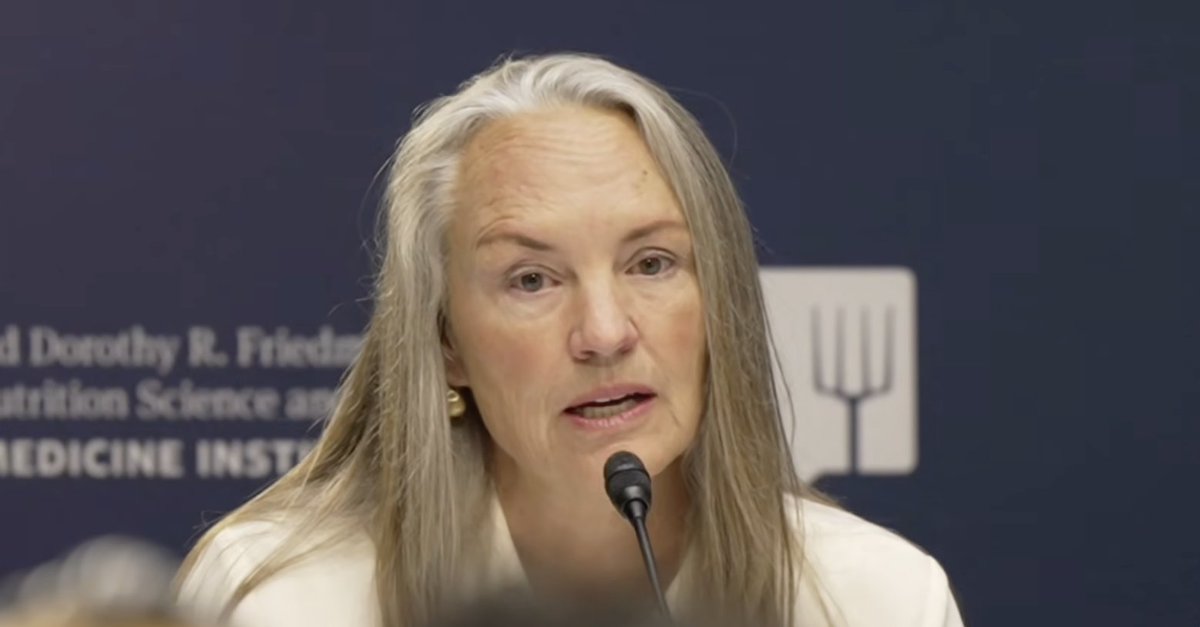
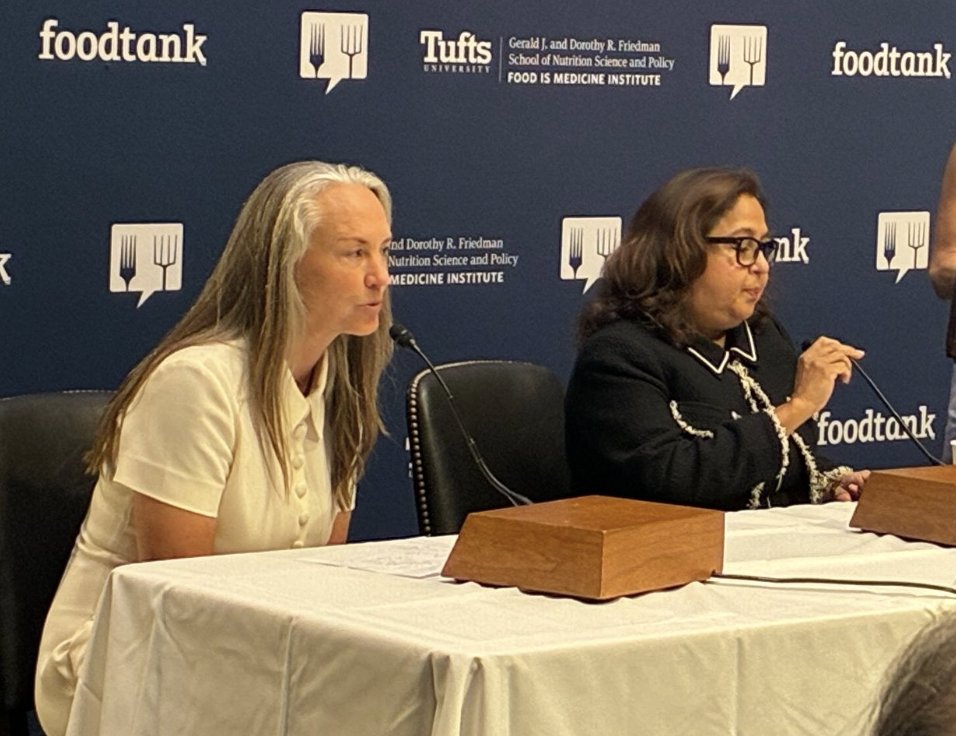
Standing room only for talks about nutrition science on Capitol Hill! It was an honor to join researchers, clinicians, policymakers, and advocates for The Power and Peril of Food: The Latest Science on Your Mood, Memory, Metabolism, and Longevity.
I am grateful to Dariush Mozaffarian, the Food Is Medicine Institute at Tufts University, and Food Tank for convening this important conversation on Capitol Hill about nutrition and health. I was able to share our son's story of recovery from mental illness using a nutritional metabolic therapy with policy makers who have the power to drive change. After a five-year battle with Bipolar I, our son has now been in remission for longer than he was ill.
Today's discussion reinforced an important reality: while philanthropy can help spark innovation, it cannot fund the scale of research needed to transform healthcare. That is why increased federal investment in nutrition science is so essential. We need the rigorous research that will give clinicians, patients, and families the evidence they deserve.
In 2024, a single serious mental illness, schizophrenia, burdened our country with $300 billion in societal costs. That is six times the NIH's annual research budget of $50 billion. And that doesn't count the emotional costs to families.
Can we, as a country, afford to NOT investigate dietary interventions with the potential to send mental illnesses like my son's--and many other chronic conditions--into remission?
Thank you to everyone working to advance this field. I'm encouraged by the growing momentum behind nutrition science and look forward to continuing this important work together.
If you missed the conversation, you can watch the livestream here: https://t.co/IlIQTdF18M
@tufts_fimi@foodtank@Metabolic_Mind@metcoalition
#FoodTank #FoodIsMedicine #NutritionScience
Go deeper:
Dr. Dina Farran's summary: https://t.co/tgDFDZtrMn
Our podcast with Dr. Farran and Dr. Toby Pillinger: https://t.co/ORsH8Ajllf
The paper in The Lancet Psychiatry: https://t.co/bwPRAwab5Y
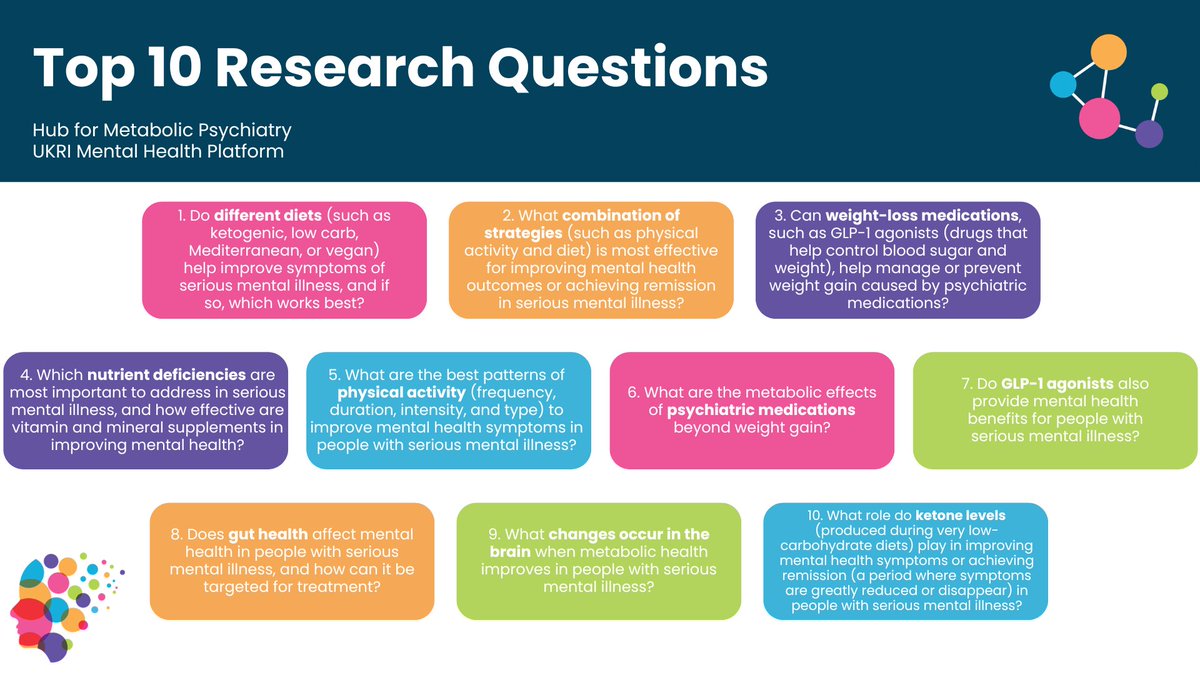
People living with serious mental illness helped set the research agenda for metabolic psychiatry in a recently published paper in The Lancet Psychiatry.🧵
Big kudos to @IainCampbellPhD, Dr. Dina Farran, Dr. Toby Pillinger, and the full team behind this paper, and to the peers and families whose input and lived experience shaped every priority. This is what patient-partnered research looks like.
Amazing July Matching Campaign Update with just a few days to go! Donations made through Every . org total $2,476.00. Please see the names of those wonderful donors below on that platform. Another $53.03 was donated through a different platform. Thank you, Jacqueline DiPillo! DAF and direct check donations sent by mail total $20,500.00. Thank you to Julie and David King, Michael and Mindy Voss, and Thomas and Marilyn Marker! Together, you have all donated $23,029.03 toward our July Matching Campaign. With every donation matched dollar for dollar, we have raised $46,058.06 toward our $50,000 goal! We need just $1,970.97 more in donations to unlock the full $25,000 match and reach $50,000 to fund another year of education and support!
https://t.co/PD779S0VnO
For those of you who do not know @BFRS501c3 our mission is simple and powerful ⬇️
We expand access to ketogenic metabolic therapy for individuals seeking psychiatric recovery. By removing financial barriers and providing structured education and support, we ensure that people have the knowledge and resources they need to take control of their mental health. Because metabolic therapy is not yet widely available in mainstream psychiatric care, we actively address the inequities that limit access to this intervention. Our goal is to help individuals overcome systemic gaps that prevent effective recovery and to make this powerful therapy accessible to those who need it most.