Legs training. Stop overcomplicating it:
Leg extension: 1 set to failure (12-15 reps)
Leg press: 1 set to failure (8-12 reps)
Don't lock out at the top. Keep constant tension on the quads.
Rest a full week. That's the entire legs session.
That's it. Recovery does the growing.
#HIT #WorkSmart #QuadTraining
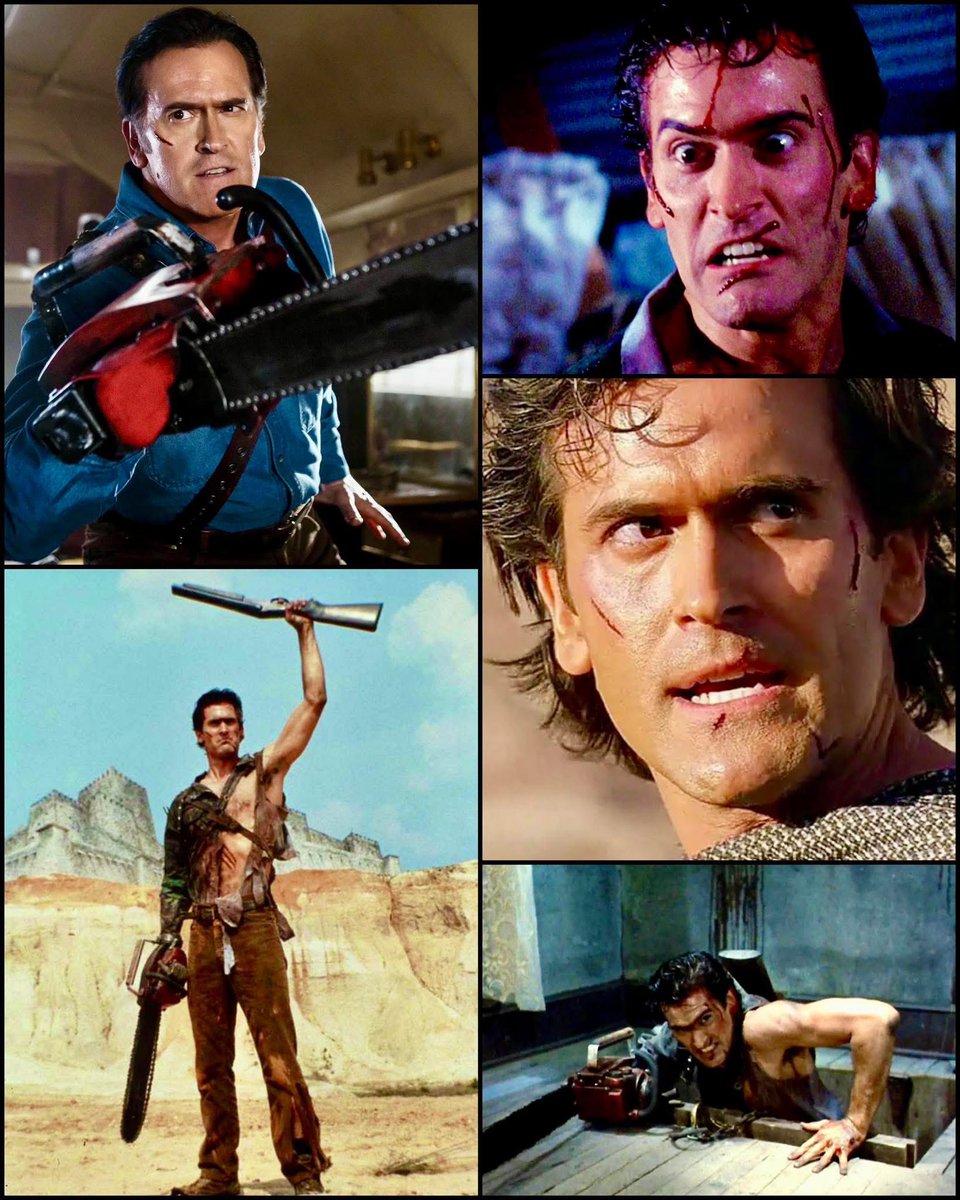
Some heroes wear capes. Some carry chainsaws.
As a lifelong horror fan, @GroovyBruce has been one of my absolute favorites. From The Evil Dead, Evil Dead II, and Army of Darkness, to Bubba Ho-Tep, and the legendary run of Ash vs Evil Dead, the man didn’t just play a character — he became one. Ash Williams isn’t just a horror icon. He’s grit, sarcasm, swagger, and sheer willpower wrapped in a blood-soaked flannel.
Bruce brought something rare to the genre. He could make you laugh while demons were clawing through the walls. He turned B-movie madness into cult legend. That chin alone deserves its own zip code.
Hearing about his cancer diagnosis hits hard. Horror fans are a loyal tribe, and Bruce has given us decades of unforgettable moments — the boomstick speeches, the deadpan one-liners, the over-the-top heroics that somehow felt grounded and human.
Bruce, you’ve fought Deadites. You’ve fought mummies. You’ve survived cabin hell and the apocalypse. Now you’re facing something real — and you’ve got millions of fans behind you.
Stay groovy, King. We’re all rooting for you.
Calling the SAVE Act a “poll tax” unless every underlying document is free is not how constitutional law works.
A poll tax is a direct fee charged as a condition of voting. The Twenty-Fourth Amendment banned that, and the Supreme Court reinforced it in Harper v. Virginia Board of Elections. In that case, the issue was a literal charge to cast a ballot. That’s the defining feature — paying money to vote.
The SAVE Act does not charge anyone to vote. It requires documentary proof of citizenship when registering. That’s a legal distinction that matters.
The Supreme Court has already addressed similar arguments in Crawford v. Marion County Election Board, where voter ID laws were challenged. The Court acknowledged that obtaining identification can involve inconvenience or incidental cost, but it did not equate that with a poll tax. Instead, courts apply a balancing test: they weigh the government’s interest in election integrity against the burden placed on voters.
Under current constitutional doctrine, a requirement does not become a poll tax simply because some people may have to obtain documents that carry a fee. If that were the standard, countless administrative requirements in civic life would suddenly become unconstitutional.
There’s a legitimate policy debate to be had about access and documentation. But legally speaking, calling the SAVE Act a poll tax stretches the definition far beyond how courts have interpreted it.