🟦 GXT Mining + Airdrop - Phase 1 is LIVE
The first phase of GXT Exchange rewards is now open.
• Total Pool: 10,000,000 GXT (Mining + Airdrop tasks) • Phase 1 Window: Jun 25 → Jul 10, 2026 • 100% unlock at TGE
Mine daily, complete Airdrop tasks, and stack GXT before the presale opens.
Join now → https://t.co/9q9eTv9jsl
#GXT #GXTExchange #Crypto #Airdrop #Mining #Web3
Reminder for all Pi Mainnet Node operators: The majority of Mainnet node operators have already successfully upgraded to Protocol v25. If you have not yet upgraded your node, please do so at your earliest convenience to remain connected to the network.
As with previous upgrades, the process is straightforward and should take only a few minutes to complete.
Details: https://t.co/ENIm1nuEHz
💵💵💵💵Airdrop New Dapat $100 Instan dan Gratis
💰 Bagaimana Cara Mendapatkan Bon us $100 atau Lebih Secara Instan untuk Penggunaan Langsung?🎁💯
👇
https://t.co/ywOM7hSCRi
📌 CATATAN:
1️⃣ Bonus Pendaftaran: $100 per pengguna.
2️⃣ Bonus Referensi: $100 per referensi
The Pi Mainnet is upgrading to Protocol 25.
Deadline: June 18.
All Mainnet nodes are required to complete this step before the deadline to remain connected to the network. This upgrade takes longer to complete. Plan accordingly.
Details here: https://t.co/9VehO7hhj1
Pi Founder Chengdiao Fan’s talk at Consensus 2026 was centred on a simple but important challenge:
The frequent misalignment between token design and real product innovation.
Her presentation, “Aligning Web3, AI, and Blockchain for Utility,” explored how tokens can be treated as tools that can support user acquisition, product engagement, and long-term utility.
One implementation of this approach is Pi Launchpad, Pi’s design for ecosystem tokens and launch mechanisms that aims to help products acquire real users who can engage, provide feedback, and use those tokens within actual product experiences.
As AI makes it easier to build applications, the limiting factor is no longer creation.
It is distribution and usage.
Pi’s approach combines blockchain infrastructure, innovative token and launch mechanisms, identity verification, and a large engaged network of real users to address that gap directly.
Enjoy the full talk & leave your thoughts on Pi’s approach to tokens and launch mechanisms!
https://t.co/YiYqcxo0jJ
@sidrachaain@sidrachain Kyc harus OFF....tidak semua Penambang Sidra punya uang untuk melakukannya dan setiap org harus menyiapkan biaya AKOMODASI dan Koin Sidra yg dipotong sebanyak 100 Sidra ...ini dilakukan oleh Perusahaan yang sudah ditunjuk ...Mohon gar KYC dilakukan ONLINE...ini masukan warga Asia
@sidrachain Kyc harus OFF....tidak semua Penambang Sidra punya uang untuk melakukannya dan setiap org harus menyiapkan biaya AKOMODASI dan Koin Sidra yg dipotong sebanyak 100 Sidra ...ini dilakukan oleh Perusahaan yang sudah ditunjuk ...Mohon gar KYC dilakukan ONLINE...ini masukan warga Asia
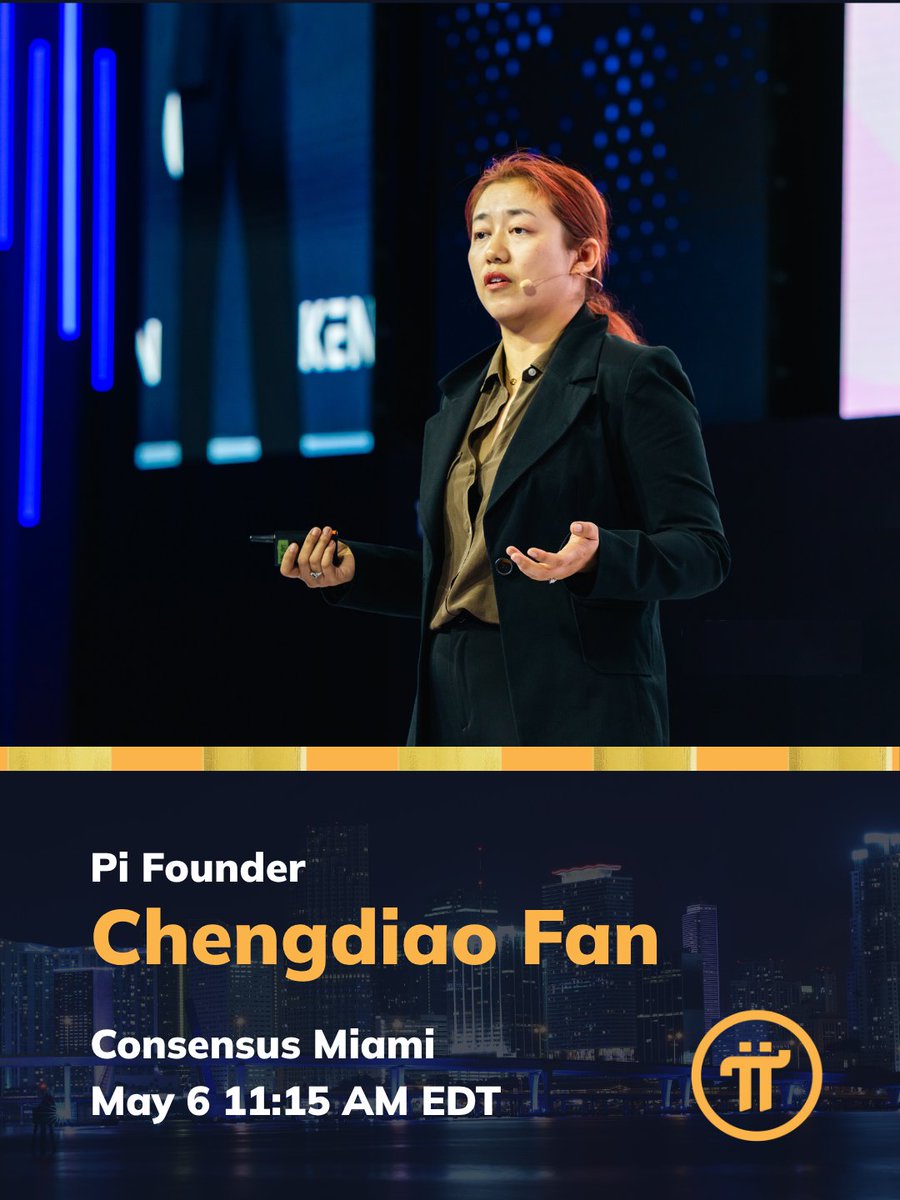
Pi Founder Chengdiao Fan spoke today at Consensus 2026 Miami in her session, “Aligning Web3, AI, and Blockchain for Utility.”
Dr. Fan shared how Pi’s blockchain infrastructure, identity verification, and a globally engaged network can support utility-driven products and businesses in the AI era.
Her talk built on a central challenge in the broader crypto industry: the frequent misalignment between token design and real innovation. While tokens in the industry have often been used primarily as capital-raising tools or quick exits, Dr. Fan discussed Pi’s approach to treat tokens as tools that can support growth, engagement, and long-term utility.
Pi’s approach to ecosystem tokens and launch mechanisms focuses on tokens for user acquisition and integrating token design into the product innovation process. By using tokens to help products acquire real users who can engage, provide feedback, and use those tokens within actual product experiences, this approach connects token design more directly to utility and product development.
More broadly, Dr. Fan’s talk invited discussion on how blockchain can help shape AI-era business models, financial literacy, ownership, and socioeconomic participation. As AI lowers the barrier to building, the focus shifts toward something harder to replicate: real users, real participation, and trusted human input at scale.
Stay tuned for the full session video!
The Pi Mainnet is upgrading to Protocol 23 – Deadline: May 15.
All Mainnet nodes are required to complete this step before the deadline to remain connected to the network. This upgrade takes longer to complete, so plan accordingly.
Details here: https://t.co/9VehO7hhj1
🚨 Network Update 🚨
Pi Mainnet has successfully upgraded to Protocol 22 ✅
Next up: Protocol 23 upgrade
⏳ Deadline: May 15
All Mainnet node operators must complete the v23 upgrade before the deadline to remain connected to the network.
⚠️ Note: This upgrade will take longer than usual — plan accordingly and don’t wait till the last moment.
Stay tuned for detailed instructions.
Let’s keep the network strong and running. 🚀
Pi Network just keeps dropping game-changer after game-changer, codedly, while the broader crypto space keeps dabbling in noise.
The existence of Pi is now basically a new foundation for AI platforms needing authentic human input at scale that is cost-efficient — while turning the cost into a growth hack strategy for the company.
The @PiCoreTeam is genius! There's no crypto like Pi out there.
Link to article in thread 👇
Pi is tackling one of the most urgent problems in the AI era: proving real human identity online.
Pi Founder Nicolas Kokkalis will speak on a panel at Consensus 2026 on Thursday, May 7, from 10:15-10:45 AM EDT at the Convergence Stage.
The session, “How to Prove You're Human in an AI World (Without Doxing Yourself),” explores how the internet’s trust model is breaking as AI systems become capable of creating bots that can generate profiles and interact like real users.
At the core of the discussion is a simple challenge: how do you verify a real human online without exposing private identity data?
Want to know how? Join us in Miami on May 7th!
See you there!
Pi’s first smart contract capability is now live on Testnet: subscriptions!
This fosters real, recurring, utility-driven use cases.
Think e-commerce, streaming, online tools, and more, powered on-chain.
Read more in the Pi mining app.
The Pi Mainnet is upgrading to Protocol 22 – Deadline: Apr 27.
All Mainnet nodes are required to complete this step before the deadline to remain connected to the network.
Details here: https://t.co/9VehO7hhj1
Consensus Miami is getting a slice of Pi!
Pi Founder Chengdiao Fan will speak at Consensus 2026 on Wednesday, May 6, from 11:15–11:35 AM EDT at the Convergence Stage.
As AI dramatically lowers the barriers to building products, competition increasingly centers on authentic data, user acquisition, and trusted human participation.
Chengdiao’s presentation will explore how Pi’s blockchain infrastructure, verified identity, and globally engaged network can support utility‑driven products and AI‑era business models.
The session presents a fresh perspective on crypto tokens not as exits, but as tools for sustainable growth and real‑world adoption.
See you all there!
Over 119,000 Pioneers have completed second migrations of their transferable balances so far, as the gradual rollout continues.
Explore the full update below ⬇️
https://t.co/jF30vH1mLE
Since Pi Day 2026, Pi Network has continued its gradual rollout of second migrations and referral mining bonuses.
This opens the door for Pioneers to bring additional Pi to Mainnet and further participate in the ecosystem. Note that first migrations still take priority for the network to complete, and second migrations do not impact the rate of first migrations.
Read more about second migrations https://t.co/FybNaW61kT