Recent reports of cybersecurity breaches have raised serious concerns about compromised passwords, including credentials associated with Google accounts.
One of the first steps you should take is to sign in to your Google account and review any security alerts. Google may notify you if it detects suspicious activity or a compromised password and prompt you to take corrective action. However, the absence of a warning does not necessarily mean your account is secure.
You can also use Google’s Password Checkup feature to determine whether any of your saved passwords have been exposed in known data breaches.
Given the increasing frequency and sophistication of cyberattacks, I strongly recommend reviewing your online security. Change any compromised or reused passwords, establish unique passwords for each account, and enable two-factor authentication wherever possible.
Remember, cybersecurity is no longer just an information technology concern; it is a matter of personal and financial security. A few minutes of prevention today could save you from devastating consequences tomorrow.
https://t.co/iedlhQOaXi
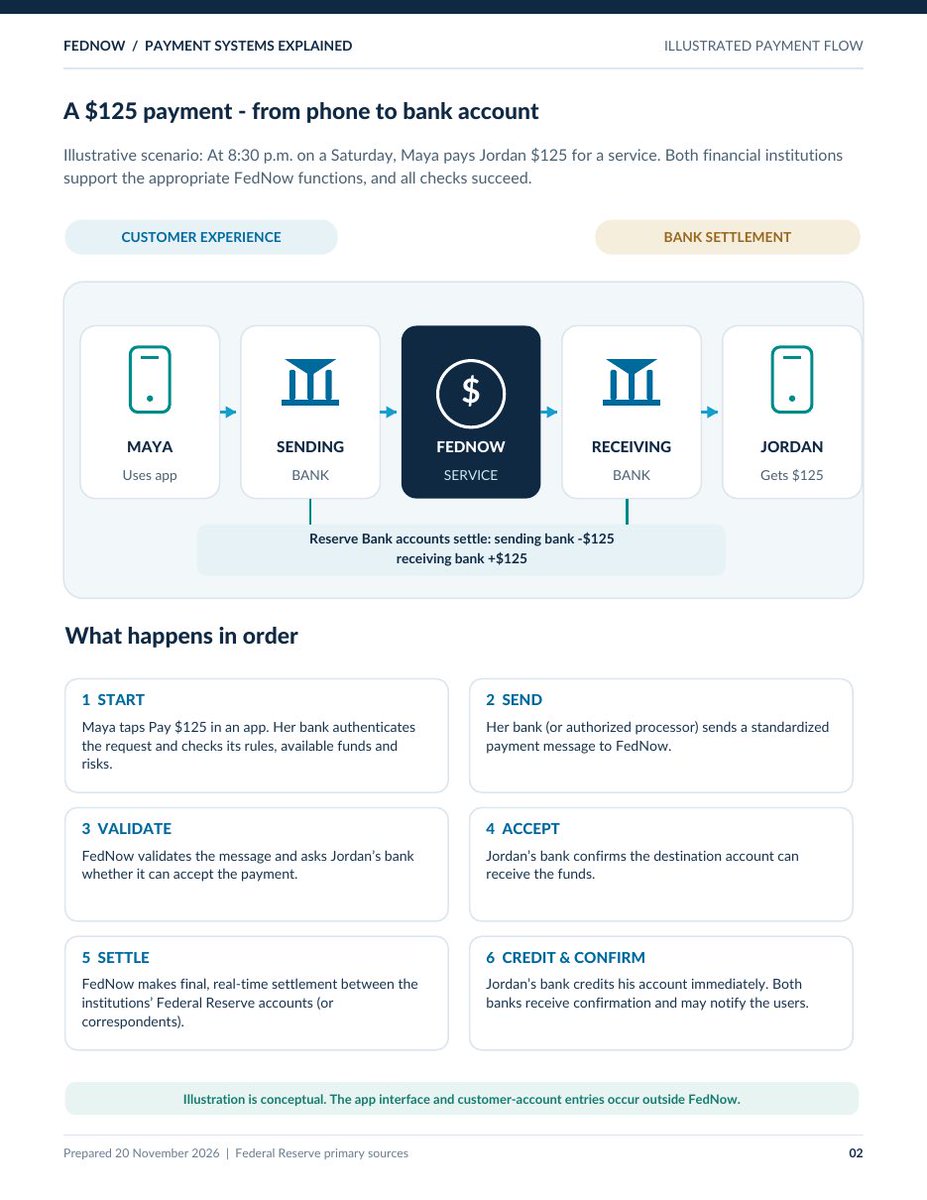
I initially assumed that most Americans were already familiar with the Federal Reserve’s FedNow payment system. However, the more people I speak with, the more I realize that many are unaware of its existence, how it operates, and its potential implications for our financial future. This is an important development that deserves greater public awareness and understanding. Some have expressed concerns that increasingly interconnected digital payment systems could eventually provide mechanisms for monitoring, controlling, or restricting financial transactions. At the same time, these technologies could significantly enhance the ability of financial institutions and investigators to identify and trace fraud, waste, abuse, and other financial irregularities. While FedNow itself does not grant the government new powers to control individual spending, its role in the evolution of our financial infrastructure raises important questions about privacy, security, transparency, and financial freedom. I encourage everyone to take a few minutes to understand this system, because technological advancements of this magnitude deserve informed public discussion rather than widespread public unfamiliarity.
FEDNOW: THE FEDERAL RESERVE’S INSTANT PAYMENT SYSTEM — WHAT EVERY AMERICAN SHOULD KNOW
Cognitive warfare is a form of strategic conflict in which the human mind becomes the primary target. Rather than attacking an enemy exclusively with conventional weapons, the objective is to influence how individuals, organizations, military forces, and entire populations think, interpret information, make decisions, and ultimately behave.
In national security terms, it involves weaponizing information, psychology, technology, and human cognitive vulnerabilities to gain a strategic advantage over an adversary.
NATO actively researches cognitive warfare as part of its military transformation and security planning. NATO’s ACT +1
1. How cognitive warfare works
Consider five common mechanisms:
* Disinformation and propaganda: Deliberately distributing false or misleading narratives to distort public understanding.
* Psychological manipulation: Exploiting fear, anger, uncertainty, distrust, and other emotions to influence behavior.
* Artificial intelligence and deepfakes: Producing convincing fabricated audio, videos, images, or messages to undermine confidence in authentic evidence.
* Social engineering and algorithmic amplification: Exploiting social networks, behavioral data, automated accounts, and recommendation systems to reinforce targeted narratives.
* Decision-making disruption: Overwhelming military commanders, political leaders, or civilian populations with contradictory information, creating confusion and hesitation.
2. How it differs from conventional warfare
Form of warfare:Primary target
Conventional warfareMilitary personnel, equipment, and physical infrastructure
Cyber warfare:Computers, networks, information systems, and digital infrastructure
Information warfare:Information availability, integrity, dissemination, and perception
Psychological operations:Attitudes, emotions, motivations, and behavior
Cognitive warfareThe processes through which people perceive, reason, decide, and act
These categories overlap. Cognitive warfare is generally understood as a cross-cutting dimension of conflict, not a formally recognized sixth NATO operational domain.
https://t.co/hq6CpEMdM5
3. Why cognitive warfare concerns national security
Imagine a foreign adversary attempting to destabilize the United States without launching a single missile.
It could coordinate a campaign involving fabricated reports of widespread electrical-grid failures, misleading claims about financial institutions, manipulated videos of government officials, and social media messages designed to intensify fear and distrust.
The objective would not necessarily be to destroy critical infrastructure physically. It could be to convince Americans that their institutions were collapsing, undermine public confidence, or pressure decision-makers into actions favorable to the adversary.
This is a hypothetical example, not evidence that any particular outage or incident was orchestrated.
A particularly dangerous possibility is the combination of a real cyberattack with a coordinated disinformation campaign. The cyberattack creates disruption; the cognitive operation magnifies its psychological and societal consequences.
The National Defense University and Marine Corps University have both published research examining these challenges.
https://t.co/64JtWgD0q7
4. Is cognitive warfare actually happening?
Yes. Cognitive warfare is an established area of national-security research, and governments have documented influence operations involving disinformation, psychological manipulation, and digital technologies.
However, there is no universally agreed definition of cognitive warfare, and identifying an actual coordinated campaign requires evidence of intent, coordination, and attribution. Unpopular opinions, political disagreement, alarming news, and ordinary technical failures are not automatically cognitive warfare.
https://t.co/iTdaGiTSML
5. How individuals and institutions defend themselves
Why does this AI-generated response to my question about Bill Gates bring back memories of some of the statements, warnings, and discussions that took place before the last pandemic?
There is something about the nature of these remarks that gives me reason to reflect on the past. Before the COVID-19 pandemic, there were public discussions about the possibility of a major global health crisis, the vulnerabilities of our systems, and the consequences of being inadequately prepared. Now, hearing similar warnings about the potential for a catastrophic cyberattack and the growing risks associated with artificial intelligence makes me wonder whether we are witnessing another period in which serious threats are being discussed before society fully appreciates their implications.
I am not suggesting that these events are connected or that a catastrophe is inevitable. However, I do believe history has demonstrated the importance of paying attention to warnings, asking difficult questions, and recognizing potential vulnerabilities before they develop into full-scale crises.
Perhaps it is merely a coincidence, but the similarities in these discussions are certainly worth contemplating.
BILL GATES WARNS THAT A MAJOR CYBERATTACK MAY BE WHAT FINALLY FORCES SOCIETY TO TAKE AI SECURITY SERIOUSLY
I want to share something that I believe deserves serious consideration, particularly among my colleagues in cybersecurity, information technology, artificial intelligence, systems engineering, and national security.
During an interview with CBS News, Microsoft co-founder Bill Gates raised a troubling possibility: Society may not fully recognize the dangers associated with artificial intelligence and cyber threats until a significant cyberattack causes widespread disruption.
Gates stated:
“If you have a big cyber attack that caused a lot of problems, then people will say, okay, they were right.”
He went on to suggest that society may have to experience some of the negative consequences before responding as comprehensively as it should.
The discussion included the potential consequences of cyberattacks against major financial institutions such as Fidelity and Vanguard, where disruptions could undermine confidence in financial systems and retirement investments.
Having spent decades working in information technology, systems engineering, and related disciplines, I find these observations particularly significant.
Our increasing dependence on interconnected digital infrastructure has created an environment in which a serious cybersecurity incident could produce cascading consequences across financial services, transportation, communications, healthcare, energy distribution, and national security.
Artificial intelligence introduces additional concerns because malicious actors may exploit these technologies to enhance the speed, sophistication, and scalability of cyberattacks.
However, an important distinction must be made: Gates was describing a potential consequence of inadequate preparation, not advocating a cyberattack or announcing that one was imminent.
Nevertheless, his remarks raise a question that security professionals have discussed for years:
Must society experience a catastrophic failure before governments, corporations, and individuals begin treating cybersecurity and technological resilience as national priorities rather than optional investments?
In my assessment, the appropriate response is neither panic nor speculation. It is preparation, vigilance, cybersecurity investment, infrastructure modernization, and the development of effective continuity-of-operations and disaster-recovery strategies.
We should not have to experience a catastrophe to recognize vulnerabilities that are already evident.
Technology continues to advance at an extraordinary pace. Our security practices, contingency planning, and institutional readiness must evolve alongside it.
Original CBS News interview:
https://t.co/LU1PWxr0fd
The stock market has experienced a significant sell-off following the Democratic Party’s victory in both the House of Representatives and the Senate in the November 3, 2026, midterm elections.
There is a connection between the election results and the market decline, but the explanation is more complicated than investors simply disliking Democratic control of Congress.
According to Reuters, investors are particularly concerned about what a Democratic Congress could mean for artificial intelligence, technology companies, energy policy, and future business regulations. Reuters +1
How serious is the decline?
Here is what happened on Thursday, November 5, 2026:
Dow Jones
-3.44%
−1,833 points
S&P 500
-4.36%
Broad market
Nasdaq
-5.52%
Technology-heavy
November 5 closing results, rounded. Source: Reuters and Associated Press. Reuters +1
Those are substantial one-day losses, especially for technology stocks. However, a severe one-day decline does not necessarily mean the economy is entering a recession or that the entire stock market is in a prolonged crash.
Why is the market falling?
1. Investors fear restrictions on AI and data centers.
This appears to be the biggest immediate catalyst. Investors believe the incoming Democratic majority, alongside newly elected governors, could tighten oversight of AI infrastructure, including electricity consumption, water usage, environmental permits, and data-center construction.
Companies such as Nvidia, AMD, and AI infrastructure providers have been particularly vulnerable because their valuations depend heavily on continued expansion. Reuters +1
2. Technology stocks were already expensive.
The market had priced in enormous future growth from AI. The election introduced uncertainty about whether companies could achieve that growth as quickly as investors expected.
That uncertainty triggered selling, which intensified as investors reduced exposure to highly valued technology shares. Rising financing costs were already creating pressure before the election. Reuters
3. Inflation and interest rates are another major concern.
Investors are also worried that the Federal Reserve may raise interest rates further to combat inflation. Higher rates increase borrowing costs and can reduce the present value of expected corporate earnings, particularly for growth stocks.
Reuters reports that investors are closely watching next week’s inflation figures and the possibility of a December rate increase. Reuters
4. Political uncertainty is affecting investment decisions.
Businesses and investors are evaluating how Democratic control of Congress could change regulatory priorities. However, Congress has not yet enacted the policies that investors are worried about. Much of the reaction is based on expectations rather than actual changes in law.
An important development today
The market is not continuing straight downward.
As of 10:21 a.m. Eastern on Friday, November 6, Reuters reported:
* Nasdaq: up 1.73%
* S&P 500: up 1.00%
* Dow Jones: approximately unchanged
Technology stocks were recovering some of Thursday’s substantial losses. Reuters
There is another important distinction: on Wednesday, November 4, immediately after Democrats won both chambers, Wall Street actually rallied. Investors initially welcomed the reduction in election uncertainty before concerns about AI infrastructure intensified on Thursday. Reuters
What does this mean going forward?
The key question is whether the Democratic victories will translate into policies that materially change corporate profits and investment.
If Congress advances measures affecting AI infrastructure, market valuations could face further pressure. Conversely, if the regulatory outlook becomes clearer and companies continue delivering strong earnings, investor confidence could recover.
401(k)???
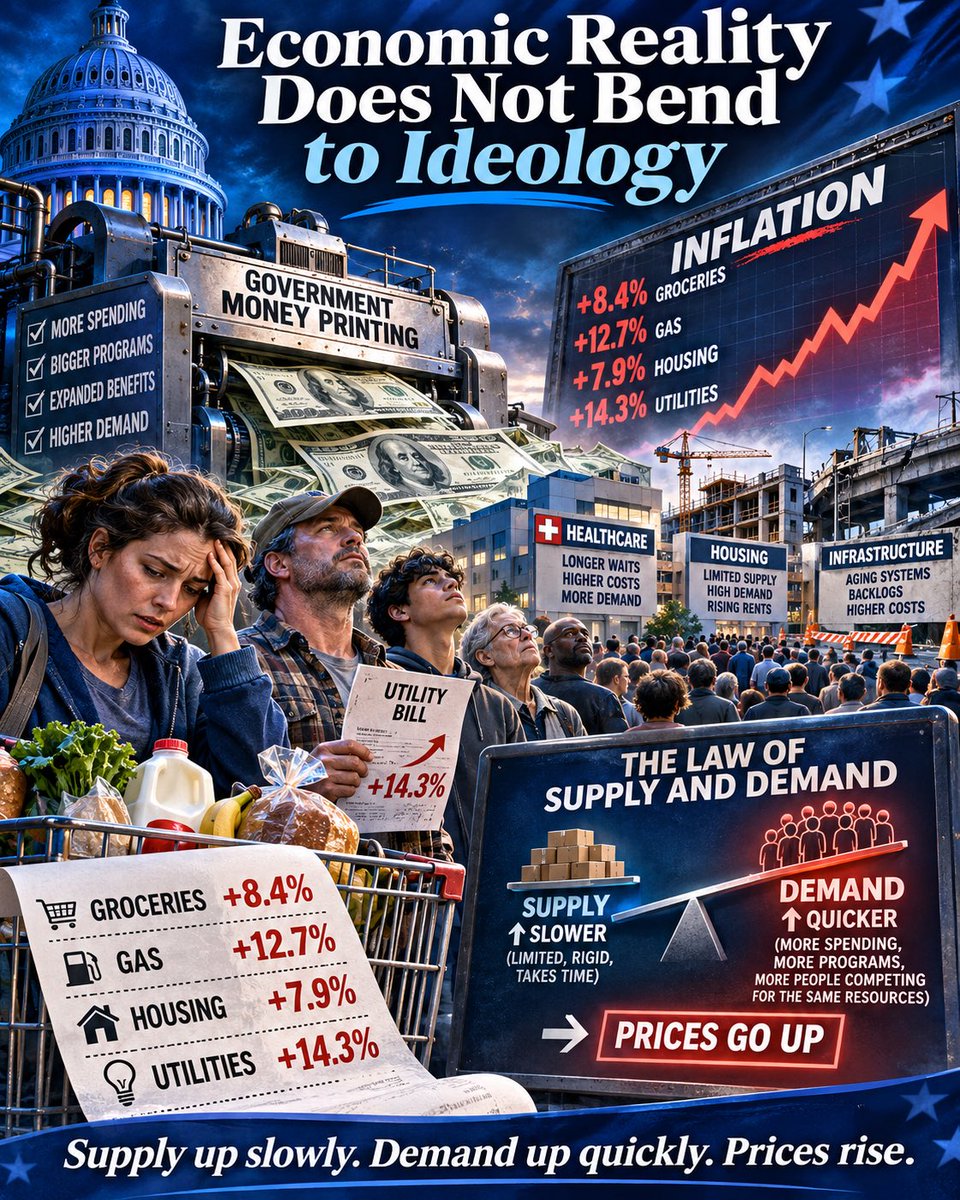
Sometimes, a person’s lack of experience becomes evident when they fail to understand fundamental economic principles.
In my view, the Democratic Party’s policies have too often contributed to inflationary pressures through excessive government spending, monetary expansion, and immigration policies that place additional demands on our nation’s housing, infrastructure, public services, and limited resources.
When demand increases faster than supply, prices inevitably face upward pressure. This is not some complicated economic mystery. It is a fundamental principle taught in introductory economics: the law of supply and demand.
Economic reality does not bend to political ideology. Every policy has consequences, and ignoring those consequences does not make them disappear.
Our people have been intentionally kept from seeing, and perhaps the greatest tragedy is that when someone tries to lift those barriers and reveal what was concealed, many react with outrage instead of facing reality.
The most hazardous deception is not merely holding people in shadow—it is training them to feel so secure in that shadow that they strongly oppose anyone guiding them toward clarity.
A society cannot be genuinely free until its members are ready to question what they were taught, contest what they were led to accept, and welcome the truth—even when it is difficult.
https://t.co/LWbyasC4Ei
It is our money they are stealing!
🎓 GHOST STUDENTS: MILLIONS STOLEN FROM AMERICA’S EDUCATION SYSTEM!
The Department of Justice has announced Operation Ghostbusters, a nationwide crackdown on criminals exploiting federal student financial aid programs through what investigators call “Ghost Student” fraud.
HOW DOES IT WORK?
Criminals use stolen identities to enroll nonexistent students in legitimate colleges, frequently through online courses.
They submit fraudulent financial aid applications, collect federal student loans and grants, and divert financial aid refunds into accounts they control.
Some even use artificial intelligence to simulate classroom participation and complete assignments, making these fake students appear legitimate!
💰 THE COST TO TAXPAYERS
According to the DOJ, investigators have identified more than $32 million in losses from similar schemes, with potentially over $200 million involved nationwide.
WHY THIS MATTERS
As an educator and information technology professional, I find this extremely troubling.
Federal financial aid was created to help Americans pursue education and improve their futures, not to finance criminal enterprises.
This fraud threatens taxpayers, innocent identity-theft victims, legitimate students, and the integrity of higher education.
MY CONCERN
If criminals can create fictional students, obtain federal funding, and manipulate online academic participation, serious questions must be asked about institutional cybersecurity, identity verification, and financial accountability.
Artificial intelligence is transforming education, but it is also introducing new opportunities for sophisticated fraud.
MY FINAL THOUGHT
Education should be a pathway to opportunity, not an opportunity for organized crime.
Our institutions must embrace technology while strengthening the safeguards necessary to protect students and taxpayer dollars.
What safeguards should colleges implement to prevent this growing problem?
Source: U.S. Department of Justice, October 29, 2026.
#GhostStudents #HigherEducation #Cybersecurity #ArtificialIntelligence #FinancialAidFraud #Education #Accountability
⚠️ A WARNING TO OUR COMMUNITY: WHAT HAPPENED TO THE TELEVISION SHOWS THAT TAUGHT OUR CHILDREN TO DREAM BIG? 📺
I grew up during a time when television wasn’t just about entertainment. It also taught us values, responsibility, education, family unity, and the importance of becoming something meaningful in life.
Remember The Cosby Show? The father was a physician, and the mother was an attorney.
Remember The Fresh Prince of Bel-Air? Uncle Phil was a successful attorney who became a judge.
Remember Family Matters, The Jeffersons, and A Different World?
These programs showed Black families with educated parents, successful businesses, strong family structures, and young people pursuing college degrees and professional careers.
They showed our children that they could become doctors, lawyers, engineers, educators, business owners, and leaders!
Even our cartoons, like Fat Albert, Schoolhouse Rock!, and The Electric Company, taught valuable lessons about life, character, and education.
SO WHAT HAPPENED? 🤔
Beginning in the late 1990s and accelerating through the 2000s and 2010s, much of the television landscape changed.
(Continued)
https://t.co/oP6cPy3XQ5
Wow! They’re now going after international online dating scammers who operate out of elaborate criminal compounds overseas!
What fascinates me is how they manage to persuade foreign governments to cooperate with these operations. Is it a matter of international diplomacy, intelligence sharing, and mutual law enforcement agreements? Or is there a slightly more persuasive message being delivered behind closed doors?
“Cooperate with us in dismantling these criminal operations, or we might just send some American muscle to knock on your leaders’ doors—and trust me, we won’t be delivering flowers!” 😂👻👊🏼🤨
Sometimes I wonder where diplomacy ends and a little old-fashioned muscle-flexing begins! 😂🇺🇸
🚨🚨 THE DEMOCRACY FILES / ILLEGITIMACY PLAYBOOK, PART 7: THE SECRET MEGA-ALLIANCE WAITING FOR A RED LINE TO BE CROSSED 🚨
What do you call a mega-alliance that:
• Covers hundreds, if not thousands, of protest organizations
• Covers all the lawfare-related organizations
• Liasions with governors when a Constitutional crisis is crossed
• Consults federal workers on how to block emergency efforts
• Runs a situation room for the midterms and beyond
• Is credited to regime change expert and professor Erica Chenoweth
• Is operationalized by National Security Leaders for America, an organization of 1,600 retired officers, spies, and diplomats
• ... and determines the "red lines" for mobilization of the above?
Meet the United Democracy Alliance (UDA).
UDA is the secret alliance behind the messaging we saw this week:
• JB Pritzker's warning that states will "strongly resist"
• Governor Newsom's office declaring a "CODE RED"
• Norm Eisen talking about "war rooms"
• Slotkin predicting a "national security incident"
You will not find any mentions of the United Democracy Alliance (UDA) on the web. It is a mega-alliance of resistance NGOs ready to deploy on a moment's notice, monitoring every action President Trump takes and monitoring every polling place.
We only can put together the pieces by recordings. Some key quotes:
• "if there's a moment where there's a constitutional crisis, like one of the UDA four red lines, if they get crossed… governors then become the kind of lead anchor for political power." (Zeitz, Aug 6)
• "the big, big, big, big, big tent that's being organized in the blocking community so that if there is a red line crossed in terms of a constitutional crisis, like, everybody's already pre-organized." (Reiff, Aug 5)
• "We are also starting to consult federal workers on how to do some blocking inside the govt agencies during emergency situations" (Eric Manton, Zoom chat, Aug 6)
According to @JeffClarkUS , the last point above about federal workers conspiring to block emergency responses may violate serious statutes. More on federal workers involvement in Drop 8.
Compilation of recordings below:
🚨🚨 THE ILLEGITIMACY PLAYBOOK / THE DEMOCRACY FILES: A PRIMER 🚨
I will be using this thread to track all drops, so bookmark it.
I spent most of yesterday backing everything (now 312 gigabytes) up in various sources and getting the materials out to others. I also produced an AI video (below) to explain the whole thing to others are not on 𝕏 - feel free to distribute.
Here's the primer:
USAID, the foreign aid agency, had a democracy office. Inside the agency, it was called DRG.
Officially, DRG administered "democracy assistance." They'd go inside countries they thought were sliding into authoritarianism and help the opposition there. That assistance included election monitoring, judicary support, independent media, and civil society building.
You may have heard the term "color revolution." The model comes from Serbia in 2000, where trained student activists brought down Milosevic with the help of Western governments, after sustained protests. With the help of USAID's democracy office, this model was implemented in many other countries to topple governments: Georgia's "Rose Revolution" in 2003, Ukraine's "Orange Revolution" in 2004, and many more.
Then last year, DOGE shut down USAID. But the USAID democracy office didn't stop. They formed a group called the Democracy Renewal Group, the same initials as their office (USAID Democracy, Human Rights, Governance). Their goal: apply their own playbook to the United States itself.
This goal became a plan, called Renew American Democracy (RAD). It invoked the "4 B's" framework. Block - use lawfare and protests to make life harder for the Trump administration. Bridge & Belong - control dialogue and win people over. The final and most important B is Build. Build means redesigning the American government itself, and the crisis is the opening.
In their own words:
"We can take that breakdown moment and leverage it for a big structural reform, you know, refounding moment." - Danielle Reiff, DRG lead.
Calls show DRG working alongside DSA on ideas of creating a different government, one that does away with the Constitution itself.
DRG does not run the Block operations. They hand it to UDA, the United Democracy Alliance. One organizer calls it a "huge galaxy": lawsuits, street protests, non-cooperation. They list No Kings, Indivisible, MoveOn, 50501, and many other mega-activist NGOs among their members.
Another organizer calls UDA Erica Chenoweth's project. Chenoweth is the Harvard professor behind the three-and-half-percent rule of regime change: get that share of a country's populace onto the streets, and historically, the movement wins.
The UDA is very "hush-hush." They have no website, no roster, no filings.
Then come the red lines: things the Trump administration could do, such as calling the Insurrection Act on protesters, that would mean that the federal government, in their words, "crosses the threshold into illegitimacy." Nobody voted on those lines. There was no public debate. These red lines were developed within secretive working groups, and in a paper addressed to governors and staff.
In the words of Reiff/DRG:
"So that if there is a red line crossed in terms of a Constitutional crisis, like everyone's already pre-organized. And so Mike Smith actually said, he goes, oh, you guys have the day after tomorrow plan."
Cross a line, and the paper's options include states refusing to lend their resources to federal officials, and governors convening what it calls a "Third Continential Congress."
Running the UDA's Insurrection Act working group: Rear Admiral Mike Smith (RET) of National Security Leaders of America (NSL4A). NSL4A is also credited with operationalizing UDA, the blocking operations. NSL4A consists of about 1,600 ex-officers, spies, diplomats. They're turning red lines into indicators and running a situation room to monitor them throughout the midterms and beyond.
The NSL4A's lawyers told them to stop recording meetings in case of subpoenas. But the rest of the network continued to record. DRG works in conjunction with Renew to Thrive (R2T), which ended up accidentally publishing 400+ calls and thousands of documents. These calls and documents were never meant for our eyes, but it's them, on tape.
Thousands of NGOs and billions of dollars are involved in this endeavor. Most of them believe they're saving democracy. The problem is that people who spent their careers deciding when other countries' governments had lost their legitimacy wrote that test for ours, in private, and planned for what comes after.
Who decides when your government is legitimate?