Contrasting Eritrea’s Sovereign Foreign Policy with Ethiopia’s Expansionism in the Horn of Africa
The geopolitical landscape of the Horn of Africa has once again reached a dangerous crossroads. At the heart of this unfolding crisis lies a fundamental confrontation: on one side stand the core principles of national sovereignty, territorial integrity, and sovereign equality; on the other lies an aggressive political agenda, driven by UAE led axis that is increasingly centered on maritime entitlement, historical revisionism, and the projection of regional power. This clash of visions has been brought into stark relief by the sharp deterioration of relations between Eritrea and Ethiopia. The escalation reached a critical threshold on October 1, 2026, when Ethiopia decided to close its embassy in Asmara and expel ten Eritrean diplomats, a move swiftly followed by Eritrea’s decision to take reciprocal decision and severe diplomatic relations entirely.
In mainstream Western and corporate media discourse, the complex friction points of the region are frequently flattened into a generalized narrative of mutual intransigence. However, drawing upon regional policy analyses and investigative perspectives a vastly different reality emerges. This analysis explores the fundamental dichotomy between Eritrea’s consistent foreign policy of defensive sovereignty, regional partnership, and non-interference, and Ethiopia’s historical and contemporary trajectory of destabilizing expansionism, internal volatility, and projection of external grievances.
This crisis cannot be understood solely as a diplomatic disagreement over port facilities or commercial access to maritime routes as main stream media would have you believe. It must be examined against the increasingly forceful rhetoric emanating from Ethiopia’s political leadership concerning sovereign access to the Red Sea, historical rights, Ethiopia’s former maritime position, and the strategic importance of the Eritrean coastline. The central question is whether Ethiopia’s declared objective is confined to securing reliable commercial access through negotiated arrangements or whether influential elements within its political and military establishment envisage a more ambitious transformation of the regional territorial order.
Ethiopian Prime Minister Abiy Ahmed and the leadership of the ruling Prosperity Party (PP) have repeatedly described sovereign sea access as an existential national necessity. At various points, they have also tried to cloak their warped ambition in the language of peaceful negotiation, mutual benefit, and respect for neighbouring states’ sovereignty. They must be examined alongside statements invoking historical entitlement, the alleged inevitability of maritime access, the possible use of force, and the security of the Red Sea extending toward Eritrean ports. It is the tension between these positions, not any single statement in isolation that demands serious regional and international scrutiny.
Eritrea’s position is fundamentally different. Its foreign policy rests on the defence of sovereignty, territorial integrity, political independence, and the principle that no state, regardless of population or economic weight, possesses a superior entitlement to another nation’s territory. From Eritrea’s perspective, Ethiopia’s landlocked status may constitute an economic and logistical challenge, but it cannot serve as a legal justification for coercion, territorial revisionism, or the unilateral alteration of internationally recognized borders.
This position is further reinforced by the historical record. Even following the outbreak of the Eritrea–Ethiopia border war in May 1998, Eritrea did not block or obstruct Ethiopia’s access to its port facilities at Assab and Massawa. Rather, it was the Ethiopian government that voluntarily chose to boycott Eritrean ports and redirect its maritime trade through Djibouti. Claims that Ethiopia’s landlocked status constitutes an existential condition imposed by its coastal neighbours are therefore contradicted by Ethiopia’s own historical experience. At various points, Ethiopia has also explored or pursued alternative maritime access arrangements involving Port Sudan, the port of Tadjoura in Djibouti, and Kenya’s Lamu port, underscoring that its maritime options have never been confined exclusively to Eritrea.
I. Eritrea’s Sovereign Foreign Policy and the Principles of International Law
Eritrea’s foreign policy has been profoundly shaped by its protracted liberation struggle and an enduring determination to preserve national independence against external domination. Since achieving independence in 1993, Eritrea has consistently maintained that the viability and legitimacy of a sovereign state do not depend on its physical size, population, or strategic resource endowments. Rather, sovereign viability rests on the fundamental rights of its people, the inviolability of its territorial integrity, and its capacity to conduct independent international relations based on mutual respect and sovereign equality. In the immediate post-independence era, Eritrea actively participated in regional institution-building, notably contributing to the revitalization and development of the Intergovernmental Authority on Development (IGAD). Its diplomatic approach emphasizes regional economic cooperation, structural complementarity, and the peaceful settlement of disputes, principles that are vital in the Horn of Africa, a region historically burdened by external interventions, geopolitical rivalries, and structural fragmentation.
Eritrea’s commitment to regional peace and diplomacy is reflected in its sustained engagements across the Horn of Africa over three decades. In July 1994, Eritrea played a central early role in diplomatic efforts to resolve the Sudanese conflict, contributing significantly to the formulation and signing of the IGAD Declaration of Principles on Sudan.
When conflict erupted between 1998 and 2000, on a putative border dispute, Eritrea sought a definitive resolution grounded in international law. On 12 December 2000, the parties signed the landmark Algiers Agreement, establishing a binding legal framework to end hostilities and resolve outstanding issues. Pursuant to this treaty, the Eritrea-Ethiopia Boundary Commission issued its final and binding delimitation decision on 13 April 2002 under applicable international law, an enduring legal record formally published in the Reports of International Arbitral Awards.
For Eritrea, this process extended beyond frontier demarcation; it embodied the imperative principle that territorial disputes must be resolved through agreed legal procedures rather than unilateral assertions of historical entitlement or political hegemony.
Leveraging its diplomatic mediation capacity, Eritrea hosted and facilitated peace negotiations in Asmara that culminated in the Eastern Sudan Peace Agreement in October 2006, ending years of armed conflict in eastern Sudan. In May 2007, Eritrea hosted contact group meetings that successfully de-escalated tensions and normalized relations between Chad and Sudan. Later that same year, in September 2007, Asmara convened the National Reconciliation Conference for Somalia, bringing together key political stakeholders to deliberate on state reconstitution and national unity.
In the following decade, Eritrea broadened its multilateral engagement in human security and regional reconciliation. In 2014, Eritrea became a founding core member of the African Union–Horn of Africa Initiative on Countering Smuggling of Migrants and Trafficking in Persons (the Khartoum Process), ultimately assuming the Chairmanship of the initiative in 2019. Furthermore, between 2018 and 2019, Eritrea facilitated critical peace agreements between the Ethiopian federal government and various armed opposition movements, enabling their peaceful return to Ethiopia to foster national reconciliation and broader regional stability.
Eritrea’s posture regarding the Red Sea is governed by these same principles of international law and sovereign equality. The Red Sea must function as a secure international corridor for trade, maritime transit, and peaceful economic communication, rather than an arena for geopolitical competition or territorial encroachment. Maritime security and jurisdiction in the Red Sea rest on cooperation among its legitimate coastal states in strict accordance with established international law. A landlocked state cannot convert its demographic size, economic ambition, or lack of direct maritime access into a special legal entitlement over the sovereign territory, coastline, or security arrangements of its coastal neighbors. Regional stability cannot be built on unilateral claims or strategic coercion, but must rest firmly on mutual respect, territorial integrity, and the sovereign equality of all states.
II. Historical Revisionism and the Ideological Construction of "Sovereign Access"
Ethiopia’s pursuit of maritime trade and logistical access is, in principle, a standard economic objective. Landlocked states possess well-defined rights of transit and access to maritime routes applicable to appropriate bilateral agreements under international law. However, a legal and strategic controversy arises when a state deliberately blurs the distinction between commercial port usage and the assertion of territorial sovereignty over foreign coastlines, a revisionist position supported by neither international legal precedent nor treaty law.
Under the leadership of Prime Minister Abiy Ahmed, this conceptual distortion has become a central pillar of Ethiopian state strategy. The PP has increasingly deployed arguments rooted in historical nostalgia, demographic weight, and existential geographic disadvantage to construct a legal pretense for territorial overreach.
• Early 2023: Normalizing Irredentist Claims
Beginning in late 2022, Ethiopian strategic discourse shifted from routine trade logistics toward asserting a "natural and historical right" to the Red Sea. By framing maritime access in terms of historic entitlement and regional dominance, narratives that are both historically unfounded and legally invalid, the PP laid the ideological groundwork to contest Eritrea’s sovereignty. From Eritrea’s perspective, this signaled a clear transition: Ethiopia was no longer merely seeking negotiating commercial access, but preparing political conditions to challenge international borders.
• 13 October 2023: Deploying "Existential Necessity" as Coercive Strategy
Prime Minister Abiy Ahmed’s address to parliament on 13 October 2023 marked a formal escalation in this campaign. By branding Ethiopia a “prisoner of geography” and elevating Red Sea access to an “existential imperative,” the ruling party framed its landlocked status not as a geographical reality to be managed through bilateral trade, but as an existential injustice to be rectified.
While official media later sought to qualify these statements by referencing peaceful negotiations, the strategic damage was already done. Weaponizing the concept of "existential necessity" creates a dangerous precedent, implying that a state's economic ambitions or demographic size can supersede the territorial integrity of its neighbors.
Core Principles of State Sovereignty:
1.Geographical land-lockedness creates no legal right to foreign territory.
2.Demographic size confers no superior entitlement under international law.
3.Nostalgic mythmaking and manufactured historical narratives confer absolutely zero legal authority to alter recognized international borders. Attempts to deploy such narratives are doubly invalid here, as the historical claims being peddled are factually absurd and demonstrably false.
Historical narratives confer no authority to revise recognized international borders, especially when, as in this case, the narrative itself is factually baseless.
14 November 2023: Tactical Reassurances amid Creeping Destabilization
In November 2023, Prime Minister Abiy Ahmed publicly dismissed concerns that Ethiopia intended to violate Eritrean sovereignty, claiming his party sought maritime access solely through legal mechanisms, commercial deals, and economic concessions like equity in Ethiopian Airlines or the GERD. While presented as a peaceful diplomatic overture, this assurance functioned as a tactical effort to neutralize regional alarm while laying the groundwork for more aggressive postures. The stark contrast between these formal reassurances and Ethiopia’s subsequent rhetoric, which reframed sea access as a non-negotiable historical destiny, reveals a calculated strategy to normalize expansionist ambitions under the guise of economic cooperation.
2023: Symbolic Expansionism and Irredentist Signal-Sending
Concurrent with diplomatic disclaimers, regional and military actors within Ethiopia began actively projecting expansionist symbolism toward the Red Sea throughout 2023. Declarations by the President of the Oromia Regional State asserting that the 2024 Irreechaa festival would be celebrated on the Red Sea coast, within the sovereign territory of a neighboring state, served as a deliberate ideological provocation. Compounded by Ethiopian military officials displaying maps that absorbed Assab and Eritrea’s southern coastline into Ethiopia, these actions demonstrated that rhetoric surrounding maritime access was backed by irredentist signaling designed to contest established international borders.
The "Two Waters" Concept: Strategic Ambition and Regional Instability
A central driver of Ethiopia’s increasingly destabilizing regional motives is the emerging “Two Waters” doctrine, a framework that geopolitically links the Nile Basin to the Red Sea. While presented under the guise of economic integration and maritime access, the concept serves as a broader strategic vehicle for projecting Ethiopian hegemony across the Horn of Africa.
Rather than fostering genuine economic cooperation, this dual-water strategy functions as a pretext to undermine the territorial integrity of neighboring states. Although public declarations stop short of explicitly codifying an official plan to annex Eritrean territory, the doctrine’s strategic implications are unmistakable: it systematically conflates commercial access with historic rights and security domain authority. Ultimately, regional strategic narratives must not serve as a cover for eroding state sovereignty or disrupting the precarious stability of the Horn of Africa and the Red Sea corridor.
III. From Negotiated Access to Historical Entitlement: The Developments of 2024–2025
1 January 2024: The Ethiopia–Somaliland MoU as a Catalyst for Regional Instability
Ethiopia’s unilateral Memorandum of Understanding with Somaliland on 1 January 2024 significantly escalated regional tensions, directly challenging Somalia’s sovereignty and setting a dangerous precedent across the Horn of Africa. While focused on Somaliland, the agreement sent a clear signal to neighboring states, including Eritrea, that Ethiopia was willing to bypass established international law to secure maritime footholds. The crisis underscored how Ethiopian strategy dangerously blurs the boundary between legitimate commercial port leases and unilateral attempts to alter sovereign territorial arrangements, threatening to ignite competing jurisdictional claims across the Red Sea corridor.
2024: Codifying Maritime Ambition as an Expansionist Imperative
Throughout 2024, Prime Minister Abiy Ahmed elevated sea access from an economic ambition to an existential, generational objective. By framing maritime access as a core element of Ethiopia’s strategic identity, it signaled that its geopolitical drive would not be constrained by existing international borders. For Eritrea and the broader region, this shift confirmed that Ethiopia was not merely seeking commercial port access, but was laying the ideological groundwork to demand sovereign rights over coastal territories, a revisionist proposition that directly undermines regional stability.
August 2025: The Prosperity Party’s Rhetorical Escalation: From Access to "Historical Rights"
In August 2025, the ruling Prosperity Party Council formally institutionalized this aggressive trajectory, adopting resolutions that declared access to the Red Sea a “natural and historical right” necessary to restore Ethiopia’s regional dominance. Moving beyond the Prime Minister’s rhetoric into formal party doctrine, this shift transformed a practical trade issue into a revanchist political claim over neighboring territories. However, historical narrative cannot override contemporary state sovereignty, nor does prior historical association grant a landlocked state an enforceable entitlement to annex sovereign Eritrean territory.
September 2025: Peaceful Rhetoric as a Means of Normalizing Revisionist Demands
At the launch of his book The Medemer State in September 2025, Prime Minister Abiy Ahmed reiterated his characterization of Ethiopia as a “geographical prisoner,” asserting that the country would not remain landlocked. While invoking peaceful negotiations and economic dialogue, the statement framed landlockedness as an existential injustice that must be rectified. Under the guise of peaceful engagement, this strategy systematically forces coastal states into negotiating away sovereign rights under the implicit threat that Ethiopia's ambition will be realized regardless of diplomatic consent.
27 October 2025: Categorical Rhetoric and the Escalation to Maximalist Claims
Rhetoric escalated sharply on 27 October 2025 when Abiy declared he was "a million percent certain" that Ethiopia would secure Red Sea access. This shift to absolute certainty signaled a refusal to accept the geopolitical status quo, converting a policy objective into an unyielding national mandate. By adopting such an unequivocal position, the ruling party risked narrowing the space for conventional diplomacy, which depends on negotiation, mutual consent, and respect for sovereignty in securing commercial access, in favour of mounting pressure on coastal neighbours to accept arrangements that could entail concessions over sovereign rights.
7 November 2025: General Bacha Debele and the Normalization of Military Coercion
The discourse took a dangerous turn in November 2025 with statements surrounding Ambassador General Bacha Debele, which introduced the posture of pursuing sovereign access "through negotiations if possible, and by force if necessary." Whether framed as explicit official policy or calculated psychological warfare, circulating the threat of military force against a sovereign nation violates Article 2(4) of the UN Charter. By allowing threats of military action against Eritrean territorial integrity to enter mainstream debate, Ethiopia has deliberately destabilized the Horn of Africa and normalized military coercion as an instrument of statecraft.
IV. Historical Revisionism and the Escalation of Military Rhetoric
Late 2025: Revisionist Rhetoric and the Delegitimization of Eritrean Sovereignty
In late 2025, Prime Minister Abiy Ahmed directly challenged the historical foundation of Eritrean statehood, alleging during a parliamentary address that no official documentation exists to explain how Eritrea’s separation from Ethiopia transpired. By attempting to erase the well-established historical reality of Eritrean statehood, rooted in the colonial treaties of 1900, 1902, and 1908, forged through a thirty-year liberation struggle, and sealed when Eritrea gained Independence in 1991, Ethiopia crossed a dangerous threshold. This rhetoric signaled a deliberate shift toward historical revisionism, seeking to frame contemporary international borders as mere political accidents and laying the ideological groundwork to contest Eritrean sovereignty.
Late 2025: The Golan Heights Analogy and Unilateral Territorial Seizure
The Prime Minister’s revisionist narrative was further reinforced by reported parliamentary references to Israel’s annexation of the Syrian Golan Heights as a precedent for Ethiopia’s maritime pursuit. Invoking forcible annexation as a model for resolving landlocked status represents an explicit rejection of international legal norms. By equating economic desire with territorial entitlement, the PP signaled that it views unilateral territorial acquisition as a viable policy option, a stance that directly violates the United Nations Charter.
January 2026: Normalizing War as a Means for Coastal Acquisition
Rhetoric escalated to explicit belligerence in January 2026, when the PM declared: “If we have to fight, it has to be for a good cause, and the Red Sea cause is a good reason”. This statement stripped away remaining diplomatic ambiguities, explicitly framing the forcible acquisition of sovereign maritime access as a casus belli. Transforming an economic topic into an explicit justification for war completely dismantled prior peaceful assurances and exposed an aggressive, expansionist doctrine targeting coastal neighbors.
3 February 2026: Demographic Entitlement and Specific Territorial Demands
Addressing the House of Peoples’ Representatives on 3 February 2026, Abiy asserted that Ethiopia and the Red Sea are “inseparable entities” and specified a demand for approximately 50 kilometers of coastline. By contrasting Ethiopia's 130-million population with the smaller populations of Eritrea, Djibouti, and Somalia, the PP deployed a doctrine of demographic entitlement to subvert international law. Demanding a specific coastal strip while cloaking it in talks of land swaps or joint use does not alter the underlying threat: it represents a coercive demand for sovereign territory, forcing neighbors like Eritrea to defend their recognized borders against expansionist pressure.
22 February 2026: Unilateral Security Claims and Military Overreach Toward Massawa
At a Special Forces ceremony in Hawassa on 22 February 2026, Prime Minister Abiy Ahmed asserted that Ethiopian military power would secure the Red Sea corridor extending from Somalia to the Eritrean port city of Massawa. By unilaterally projecting a military security mantle over the sovereign territory and coastlines of neighboring sovereign states, specifically Eritrea and Somalia, Ethiopia laid claim to extraterritorial security authority. This declaration marked a dangerous evolution in Ethiopian policy: shifting from demands for commercial access to asserting a right of military dominance and intervention across foreign maritime jurisdictions without international mandate or host-nation consent.
#Eritrea’s Principled Position Regarding the Ongoing Situation with Ethiopia
"Sustainable peace and genuine security in the Horn of Africa is predicated on, and only when the international community insists upon, absolute compliance with international law. Expansionist doctrines, unilateral demands to forcefully incorporate foreign sovereign territory, and revisionist border claims must be permanently repudiated in favor of absolute respect for the sovereign equality of all states".
https://t.co/qINbBuELiO
Building Artificial Intelligence Capabilities for Eritrea’s Development: Reflections from UN Day 2026; by Mussie Efriem
"The high-level dialogue in Asmara offered an opportunity to examine Artificial Intelligence in relation to Eritrea’s development priorities, emphasizing the importance of capability-building, relevance to the local context and responsible engagement. Its central themes extended beyond the adoption of new technologies to include education, research, connectivity, data quality, institutional readiness and collaboration. These considerations are essential to determining where AI can make a meaningful contribution and how its potential can be explored without losing sight of the needs it is intended to serve".
https://t.co/Un6pfTVi9l
Had constructive engagements with H.E. Mike Waltz, Permanent Representative of the United States to the United Nations, and Ambassador Jeffrey Bartos, U.S. Representative to the UN for Management and Reform.
Discussed recent developments in the #Horn of #Africa and presented #Eritrea’s perspective on the evolving regional situation. Reiterated that there is no "crisis" between #Eritrea and #Ethiopia, and underscored the need for the international community to pay closer attention to the worrisome developments within #Ethiopia. The most important issue is for #Ethiopia to respect #Eritrea's sovereign territories and stop diverting attention from its domestic issues.
Outlined #Ethiopia|s three-year-long campaign concerning the Red Sea and its continued threats against #Eritrea’s sovereignty and territorial integrity, including threats to annex sovereign #Eritrean territories. Urged those with leverage to use it responsibly and proactively, to prevent unnecessary wars in the region. To refrain from making statments that embolden #Ethiopia's leadership.
Also briefed them on #Ethiopia’s expulsion of #Eritrea’s representatives accredited to the @_AfricanUnion Union and the @UN Economic Commission for #Africa, as well as the breakdown of diplomatic relations initiated by #Ethiopia and reciprocated by #Eritrea.
#Eritrea’s sovereignty and territorial integrity must be respected. Preventing renewed conflict requires addressing the underlying threats, upholding international law, and acting before issues escalate...
@anesmansory حلم أورومو غالا، الجهلة والمتباهون، إنّ الكذب والتهديد من عادات آبائكم، فأنتم تتفاخرون وتتوعدون طوال الوقت. إنّ من يعجز عن السيطرة على البلد الذي يحكمه، بينما يُقتل شعبه بطائرات الدرون، بأيّ قدرة يستطيع غزو إريتريا؟ إنّ أفراد جماعتكم ليسوا سوى متباهين وأسرى.
🔴 مأزق عسكري غير مسبوق يضرب نظام أديس أبابا.. تقدم خاطف لتيغراي، انهيار في أمهرة، وانفجار العنف في جامبيلا! 🔴
🔥 في تطورات ميدانية متسارعة تكشف عن عجز تام وهشاشة غير مسبوقة للجيش الإثيوبي، تشهد جبهات القتال تصدعاً واسع النطاق يهدد بقاء نظام أديس أبابا. ففي إقليم تيغراي، تمكنت الجبهة من شن هجوم مضاد خاطف أسفر عن السيطرة على بلدة "هاجيري سلام" الاستراتيجية وتدمير قافلة عسكرية للجيش بكمين محكم، بالتوازي مع معارك طاحنة خاضتها ميليشيات "فانو" في إقليم أمهرة أفضت إلى السيطرة على بلدات رئيسية بمينز وشمال شوا، وصولاً إلى انفجار الأوضاع الدموية وعنف العرقيات في إقليم جامبيلا غرب البلاد.
📌 زحف تيغراي واستعادة المعاقل:
نجحت قوات تيغراي في السيطرة على بلدة هاجيري سلام الواقعة على بعد 50 كيلومتراً شرق ميكيلي إثر هجوم خاطف، موقعة خسائر فادحة بقافلة للجيش عبر كمين محكم، في مؤشر واضح على بدء استعادة الجدوى الميدانية وسيطرتها على المدن المتاخمة لمعاقلها الجبلية وسط قصف مدفعي إثيوبي مكثف من مطار شيري.
📌 اكتساح فانو وشلل خطوط الإمداد:
اندلعت معارك هي الأعنف بمنطقة مينز بين الجيش الإثيوبي ومقاتلي "فانو"، أسفرت عن سيطرة الأخيرة على بلدات ميهال ميدا، زيميرو، ومولالي، وبسط سيطرتها الكاملة على 10 مواقع سكنية استراتيجية بشمال شوا، لتعمل على قطع خطوط الإمداد الرئيسية للجيش في الشمال وسط خسائر بالبنية التحتية وسقوط مدنيين.
📌 انفجار جامبيلا وعجز السلطة:
بعيداً عن الجبهات الشمالية، دخل العنف العرقي في إقليم جامبيلا يومه الخامس مخلفاً أكثر من 30 قتيلاً بمواجهات ليلة واحدة وسط عجز تام للسلطات المحلية، ما يعكس تهاوي قبضة الحكومة المركزية وتفشي الفوضى في الأقاليم الخاضعة لإدارة آبي أحمد.
📌 اتهامات متبادلة ومأزق الجيش:
تزامنت هذه الانهيارات مع تورط الجيش الإثيوبي في مأزق استراتيجي وشلل كامل يمنعه من إعادة تمركز قواته، بينما تتسابق الأطراف لاستعراض الغنائم؛ حيث عرض الجيش أسلحة ادعى تهريبها عبر مصر والوسيط الإريتري لتبرير حشوده الحدودية، مقابل فيديوهات لـفانو تتباهى باغتنام أسلحة وعربات وأسر عدد كبير من جنود النظام.
⛔️ برأيك.. هل تنجح جبهات المقاومة المتمثلة في تيغراي وفانو في توجيه القاضية لنظام آبي أحمد وسط هذا التخبط العسكري؟ شاركونا آراءكم 👇
Reading from a teleprompter on Ethiopia's TV yesterday, the Potemkin Party's Prime Minister disparages Eritrea's economic development, and particularly its manufacturing sector, as "stagnant and in decline" since its independence in 1991.
The speech/interview was also laced with his three-year old threats of war of aggression and invasion unless Eritrea succumbs to his delusional projects of "sovereign access to the sea" and "Ethiopian naval presence" in Eritrea's coastal territory; packaged this time round in different pretexts, language, and format.
To revert to his disparaging discourse on Eritrea's economic performance and potential:
1. In the past 35 years, Ethiopia was the beneficiary of a whopping 80-90 billion US dollars of international multilateral and bilateral assistance;
2. Ethiopia went through two rounds of WB sponsored debt-cancellation rounds, as well as repetitive financial bailouts from the IMF and other donors. For almost ten years in -between, Ethiopia's dire humanitarian conditions were alleviated by the international community under a customized "social safety net" and other similar "intensive care" financial antidotes.
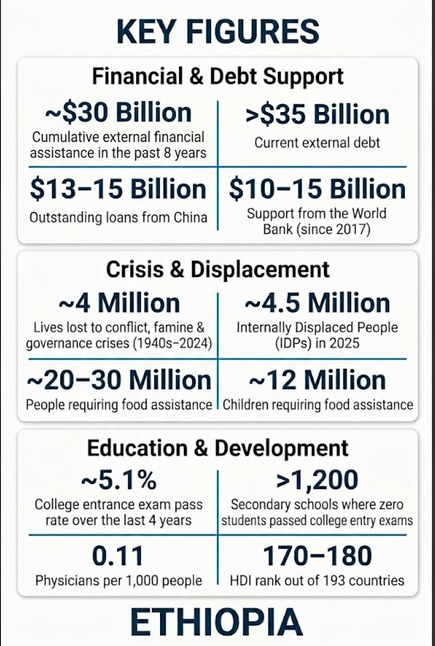
3. The current regime itself has received over 30 billion US dollars in international assistance in the last 8 years alone. In addition, its tattering economy is being resuscitated by another IMF bailout programme to the tune of 3.1 billion US dollars.
4. And yet, as the figures below illustrate, more than 68% Ethiopians are living under extreme poverty while close to 30 million people require urgent humanitarian relief assistance at this point in time.
5. In as far as the 300 manufacturing plants that the PP leader alludes to, these were old factories built during Italy's colonization of Eritrea from 1889 until 1941. The British Military Administration dismantled many of those factories - including the dock in Massawa - as "war booty" and sold them to other foreign countries. The occupationist Haile Selassie regime, in its turn, dismantled many of the remaining factories and transferred them to Ethiopia especially during the imposed "Federation" period.
6. After its hard-won independence in 1991, Eritrea registered rapid economic growth in the first seven years (WB reports). Imposed wars and unwarranted sanctions thereafter naturally affected the pace and magnitude of its economic trajectory.
7. These externalities have nothing to do with Eritrea's open investment and economic policies and visions.
8. And in any case, Eritrea has the abundant economic endowments (blue economy, extractive industry, educated and industrious human capital, and a civilized culture that celebrates religious and ethnic diversity within robust national unity) to excel and achieve its aspirations of rapid and sustainable growth in a conducive and enduring regional climate of peace and stability.
9. Finally, Ethiopia itself could do much better, extricate itself from debilitating dependency, and use its abundant resources for real development if its leaders abandon sectarian policies of division and polarization that incubate perennial cycles of internal turmoil as well as intertwined acts of regional destabilization in pursuit of delusional and expansionist projects.
@AlHadath حلم أورومو غالا، الجهلة والمتباهون، إنّ الكذب والتهديد من عادات آبائكم، فأنتم تتفاخرون وتتوعدون طوال الوقت. إنّ من يعجز عن السيطرة على البلد الذي يحكمه، بينما يُقتل شعبه بطائرات الدرون، بأيّ قدرة يستطيع غزو إريتريا؟ إنّ أفراد جماعتكم ليسوا سوى متباهين وأسرى.
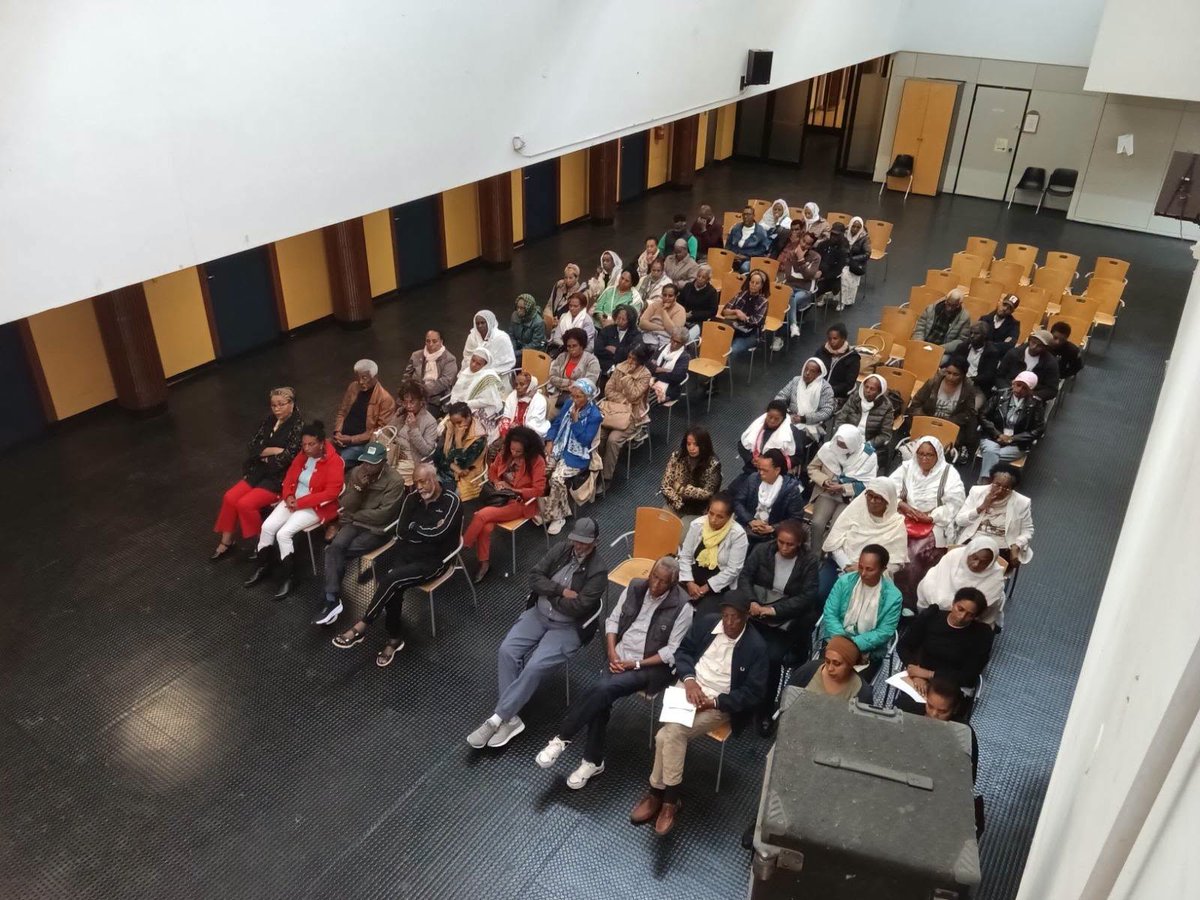
Public Seminar Held in Bologna, Italy.
On Sunday, 18 October 2026, an important public seminar on the current situation of Eritrea and the region was held in the city of Bologna. The seminar was conducted by Mr. Teklesenbet Imam, Head of the Consular Office in Milan.
#Eritrea
The #Eritrean leadership, especially the generation that led the armed struggle for independence, was shaped by that struggle, with its unwavering resolve and strong will reflected throughout history and politics. ✊🏽🐪🇪🇷
The Red Sea order is drastically changing. Saudi Arabia faces serious economic and security threats that could become existential. The US, China, and Russia are in no position to change this trajectory—Washington is distracted, and the UAE is scrambling to adapt.
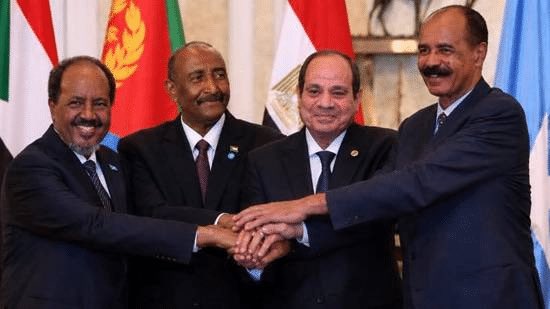
The only powers left standing are the littoral states: Egypt, Sudan, Eritrea, and Somalia. The Alamein coalition is not a temporary alliance; it is the new reality.
Meanwhile, Abiy Ahmed is burning Ethiopia to the ground to serve foreign patrons who are already packing their bags. While Ethiopia pays the price in blood, destruction, and instability, those who enabled his reckless ambitions are quietly recalculating their interests and planning their exits.
#RedSea #SaudiArabia #Ethiopia #Eritrea #Alamein #Sudan #Egypt #Somalia
@AJArabic حلم أورومو غالا، الجهلة والمتباهون، إنّ الكذب والتهديد من عادات آبائكم، فأنتم تتفاخرون وتتوعدون طوال الوقت. إنّ من يعجز عن السيطرة على البلد الذي يحكمه، بينما يُقتل شعبه بطائرات الدرون، بأيّ قدرة يستطيع غزو إريتريا؟ إنّ أفراد جماعتكم ليسوا سوى متباهين وأسرى.
From the Red Sea to local farms!🇪🇷n youth developed ABDUR organic liquid fertilizer, a game-changer for sustainable agriculture. By pairing liquid bio-fertilizers with organic compost, 🇪🇷 reduces reliance on costly chemical imports while training farmers in eco-friendly practices