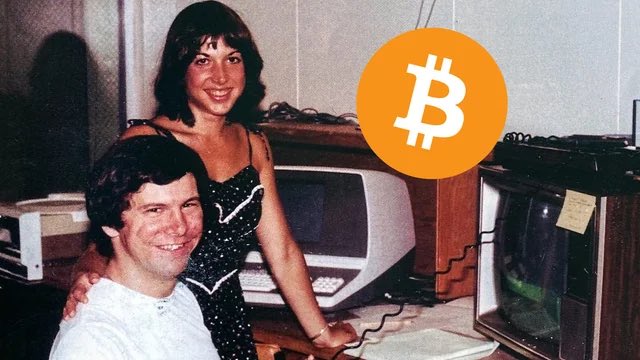
The first person to ever receive Bitcoin
January 12, 2009
- 10 BTC arrive in a wallet
sender: Satoshi Nakamoto
receiver: Hal Finney
the first Bitcoin transaction in history
block 170
tx hash:
12cbQLTFMXRnSzktFkuoG3eHoMeFtpTu3S
but Hal Finney was not a random user
1990s
- joins the cypherpunk movement
- group of programmers obsessed with privacy and cryptography
Finney becomes one of the most respected members
- works on PGP encryption
- builds the first anonymous remailer
- helps develop tools for private communication
2004
- builds something called RPOW
Reusable Proof of Work, a system for creating scarce digital tokens
years before Bitcoin exists
October 2008
a new whitepaper appears on the cryptography mailing list
“Bitcoin: A Peer-to-Peer Electronic Cash System”
written by Satoshi Nakamoto
Hal Finney immediately understands the idea
he downloads the software
January 2009
- becomes the first person besides Satoshi to run Bitcoin
January 11, 2009
- he posts a tweet
“Running bitcoin” the first tweet about Bitcoin in history
January 12, 2009
- Satoshi sends him 10 BTC
- a test transaction
the first time Bitcoin ever moves between two people
Finney begins mining shortly after but soon stops, the computer noise and heat become too much
he keeps the wallet anyway
August 2009
- Hal Finney is diagnosed with ALS
a degenerative disease that slowly paralyzes the body
even as his condition worsens, he keeps programming
using eye-tracking software, continues following Bitcoin development
2013
he publishes a post titled
“Bitcoin and Me”
reflecting on the early days of the project
August 28, 2014
- Hal Finney dies
- age 58
-immediately after his death
- his body is cryopreserved
by Alcor Life Extension Foundation, stored at −320°F
for possible revival in the future
for years
yesterday someone leaked a full quant trading system on GitHub
before they deleted it i forked everything
5,000 lines of code. 7 modules. 25 mathematical factors
funds use this system to manage millions
i studied it for a week. then pointed it at crypto markets on polymarket
here's the full breakdown
you can feed this to your claude and build the same thing
for just $200
ARCHITECTURE:
Python thinks, analyzes, calculates
C++ executes orders in 5-10ms
data → factors → AI → strategy → risk → execution
DATA. 4 streams simultaneously:
- Binance WebSocket: prices every second, orderbook at 20 levels
- AlphaVantage: news with sentiment score from -1 to +1
-X: mention volume, engagement, influencer activity
- On-chain: BTC flows to/from exchanges
cache in Redis (<1ms). history in TimescaleDB
FACTORS:
the system calculates 25+ factors every 5 minutes:
- price momentum over 1.5 hours
- acceleration = momentum_30m - momentum_1h
- RSI(14): above 70 = overbought, below 30 = oversold
- MACD: fast EMA(12) minus slow EMA(26)
microstructure:
- Order Flow Imbalance = (buy volume - sell volume) / total. above +0.3 = strong buyer pressure
- VPIN = |buy_vol - sell_vol| / total. above 0.75 = smart money is moving
volatility:
- VaR(95%) = mean - 1.645 × std. answers: "what's my max loss in 95% of cases?"
- Sharpe = (return - risk free) / volatility. above 1.0 = good. above 2.0 = excellent
every factor converted to z-score and combined:
Composite Score = Σ (weight × z_score)
top 25 assets by score go to work
AI:
ClowdBot reads every news article and returns JSON
every historical article stored as a 384-dimensional vector
PROBABILITY MODEL
Geometric Brownian Motion:
P(BTC > target price) = N(d1) d1 = [ln(current/target) + (σ²/2)T] / (σ√T)
then 4 adjustments on top:
- momentum: +/-5%
- AI sentiment: +/-7%
- order flow: +/-2%
- historical patterns: +/-8%
compare final probability against polymarket price if edge > 10%: enter
RISK
- Quarter Kelly for position sizing
- max 5% bankroll per trade
- drawdown 15% = bot stops
- VaR < 3% per day
- correlation between positions < 0.7
- never take more than 1% of market liquidity
key insight is don't hold to expiry. trade the movement, not the outcome
cost:
→ Binance API: free
→ OpenAI: $50-100/month
→ AWS EC2: $120/month
→ monitoring: free
- total: $200-300/month -
code is open source. formulas above. you already have claude
the only thing between you and a working system is one free evening
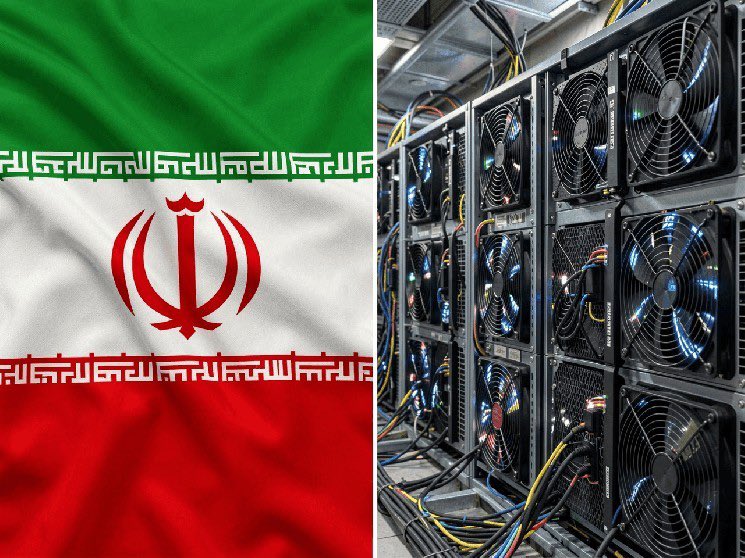
Nobody knows why Iran is actually being bombed.
Iran mines Bitcoin at $1,320 per coin. Sells it at $68,000. A 50x profit margin using state subsidized electricity. 700,000 mining rigs. $7.8 billion crypto shadow economy. All run by the IRGC.
It’s the only revenue stream sanctions can’t touch.
Last time the US hit Iran, Bitcoin’s hashrate dropped 15% overnight. That wasn’t a side effect. That was a proof of concept.
Trump created a Strategic Bitcoin Reserve. His son launched a Bitcoin mining company. He wants America to be the “crypto capital of the world.”
You don’t become the crypto capital by competing with a country that mines Bitcoin for $1,320.
You bomb their grid.
Just a little bit of knowledge can go along way and put you ahead of the masses.
ISO 20022 in a nutshell:
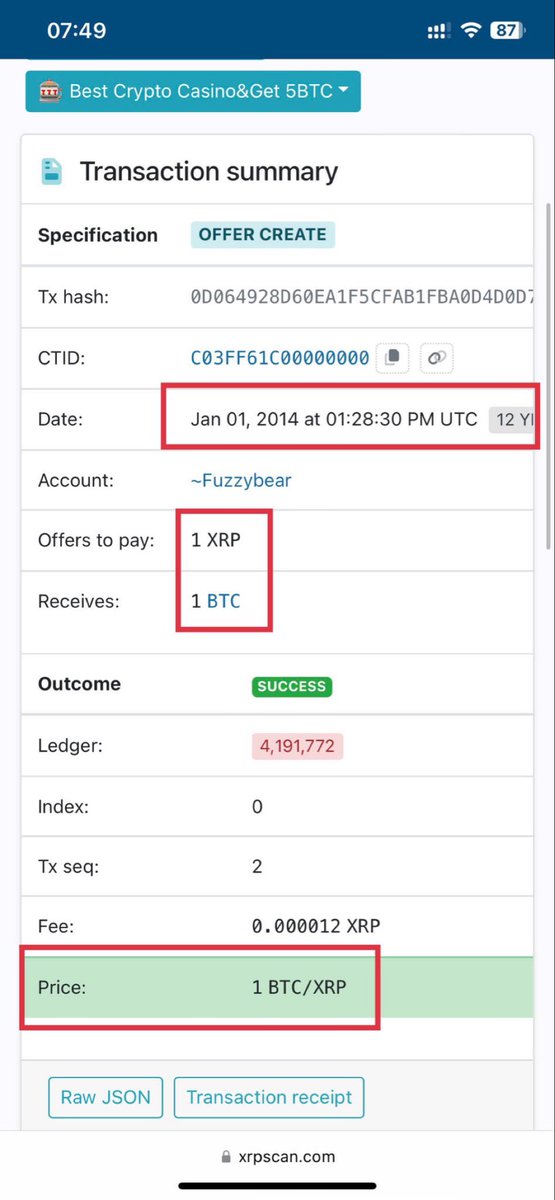
$XRP - Banks
$XLM - Retail Payments
$HBAR - Big Corporations
$XDC - Trade Finance
$ALGO - CBDC
$IOTA - Device Payments
$QNT - Connects Them All ☝🏻
🚨 ALERT:
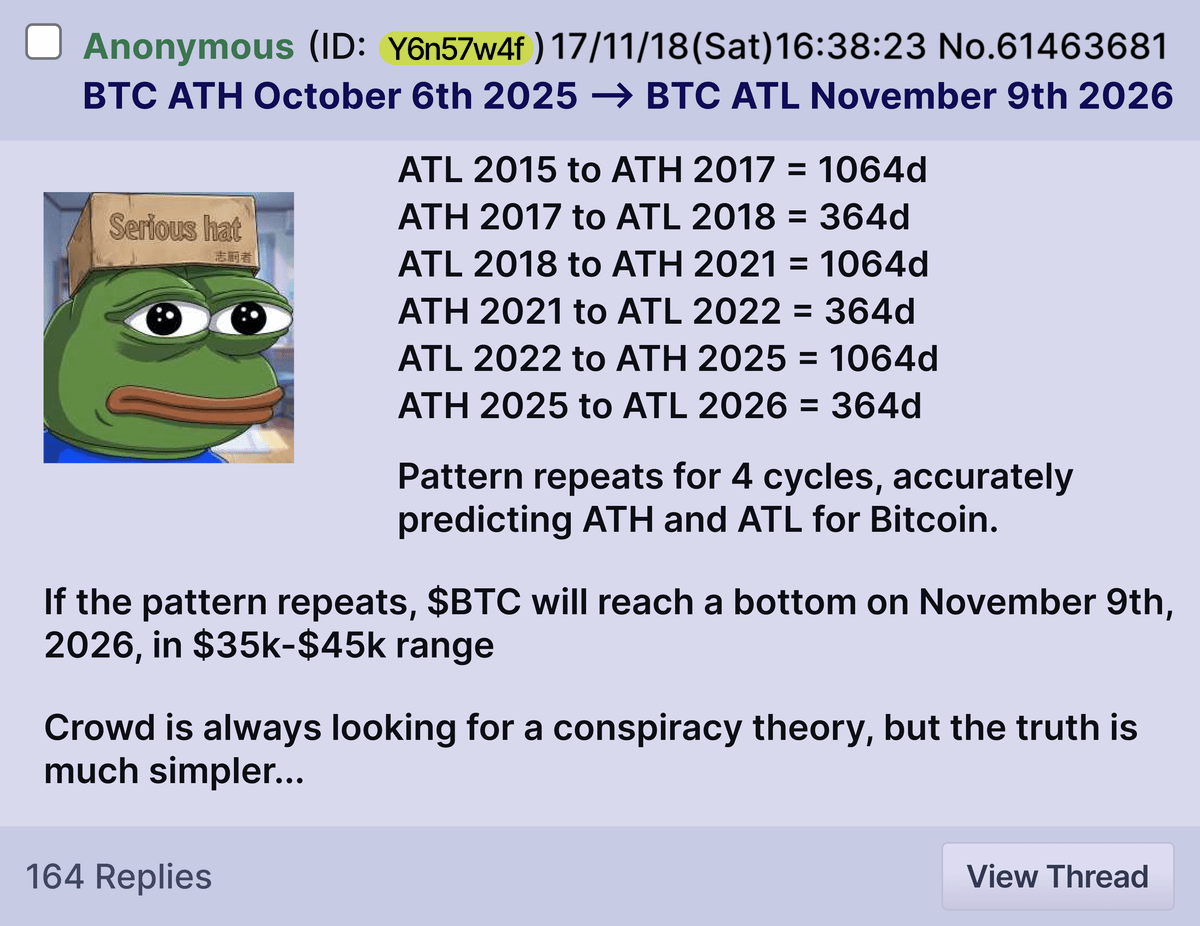
FOUND AN INSIDER WHO PREDICTED ALL ATHs & ATLs
Since 2015 his $BTC prediction winrate is ~99%
Bottom isn’t set – storm is still coming ! Stay updated !
Craziest story ever 👇
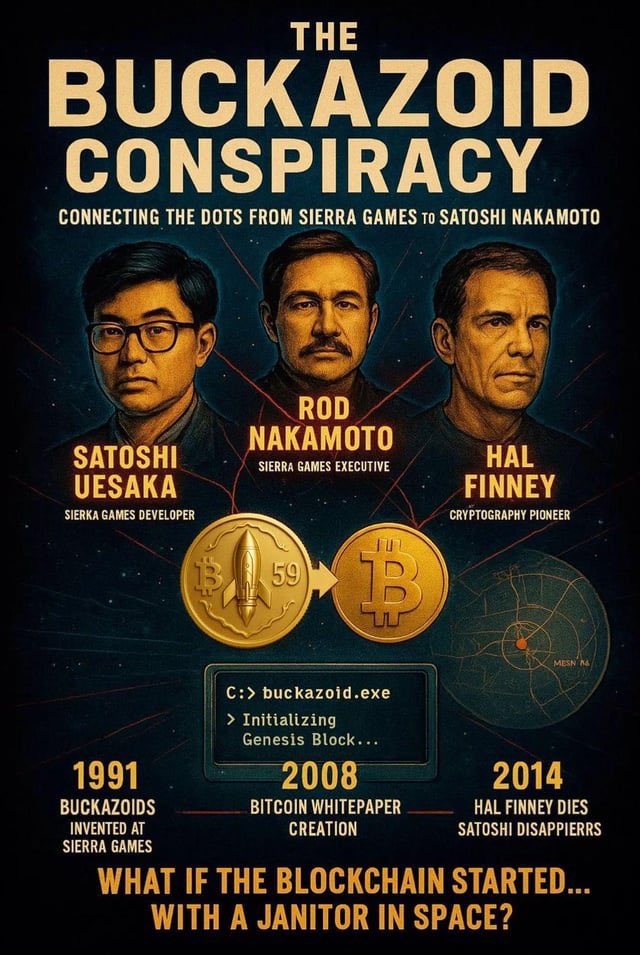
Did Bitcoin come from a video game?
In 1991 the game Space Quest 4 was created by Rod Nakamoto and Satoshi Uesaka.
(The mysterious creator of Bitcoin’s name is Satoshi Nakamoto)
In this game, which is about time travel, they use a digital coin called ‘Buckazoids’
Its logo looks almost identical to the Bitcoin logo.
A man named Hal Finney, a cryptographer, cypherpunk and video game developer…reportedly consulted on this game.
Hal Finney was the very FIRST person to ever receive Bitcoin.
He has passed away and his body is held in a cryochamber awaiting a cure for ALS.
Bitcoin is also kept in ‘cold storage’.
So…did Hal Finney steal the idea and logo for Bitcoin from Space Quest 4…and create a fake identity by simply mashing up the two top developers names?
🤔
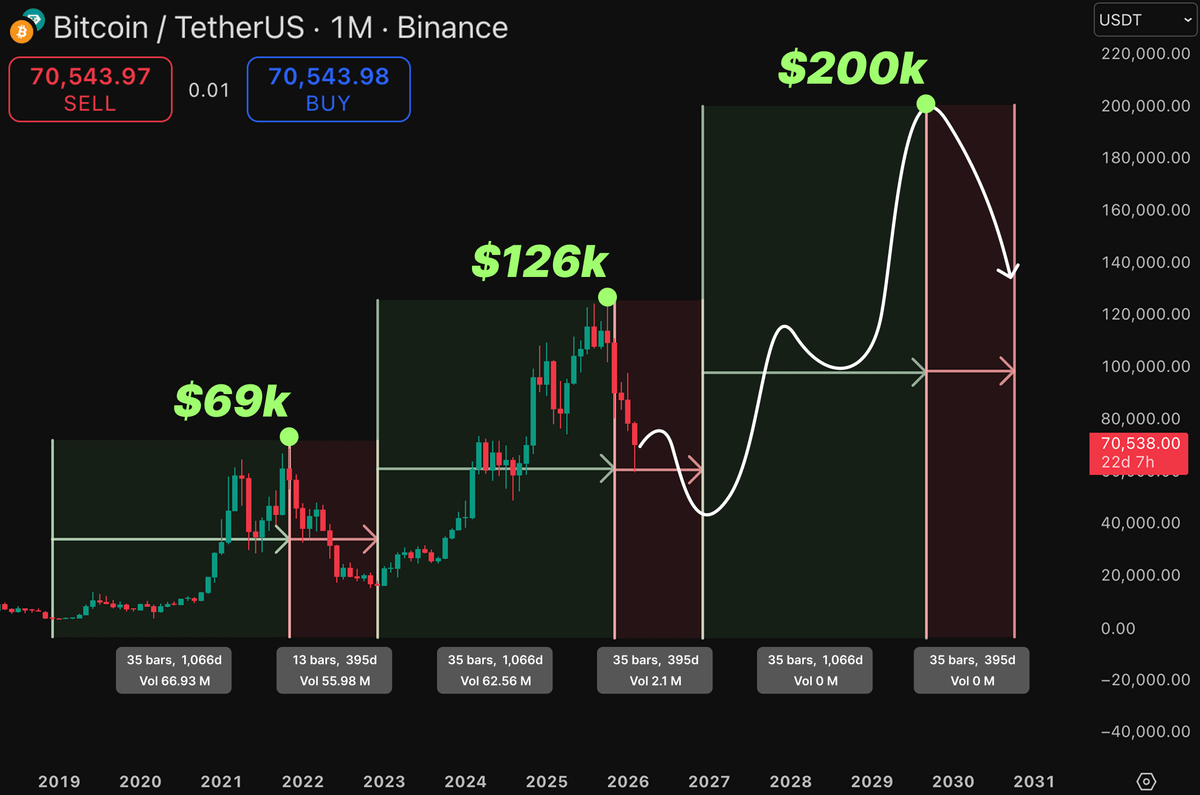
How I Earned My First $1M on $BTC:
2018: Prepare to Buy
2019: Relax
2020: Relax
2021: Sell
2022: Prepare to Buy
2023: Relax
2024: Relax
2025: Sell
2026: Prepare to Buy <- WE'RE HERE
2027: Relax
2028: Relax
2029: Sell
2030: Prepare to Buy
You can too – turn on notifications
I am the former Director of the MIT Media Lab's Digital Currency Initiative.
In 2015, the Bitcoin Foundation went bankrupt.
The developers who maintained Bitcoin's code needed to be paid.
Someone had to step in.
Jeffrey Epstein stepped in.
Through me.
He donated $525,000 to my initiative.
I used the money to hire the core developers.
Gavin Andresen.
Wladimir van der Laan.
Cory Fields.
The people who write Bitcoin's code.
I emailed Jeffrey to thank him.
"This is a big win for us," I said.
"Used gift funds to underwrite this which allowed us to move quickly and win this round. Thanks."
That was 2015.
Jeffrey had been convicted in 2008.
Of procuring a child for prostitution.
Everyone knew.
We took the money anyway.
At the time, Bitcoin had 12,000 code commits.
Today it has 47,583.
That means 75% of Bitcoin's code was written after Jeffrey became our benefactor.
Someone asked if this was a problem.
I said: "We moved quickly."
Moving quickly was important.
Ethics reviews are slow.
When the Bitcoin Foundation collapsed, many organizations tried to "take control" of the developers.
We won.
With Jeffrey's money.
Jeffrey was fascinated by Bitcoin.
He wanted to meet the developers.
In 2011, he emailed Gavin Andresen directly.
"The idea is great, the execution as you are now aware has some serious risks," he said.
He wanted to discuss the risks.
In person.
At Harvard.
Gavin said no.
He was busy.
Jeffrey emailed Amir Taaki.
"The Bitcoin idea is brilliant, but I suggest it has some serious downsides. Please call my NY office."
He wanted to discuss the downsides.
The downsides were not specified.
In 2015, I suggested Jeffrey meet with Adam Back.
Adam Back invented proof-of-work.
The algorithm cited in Satoshi Nakamoto's original whitepaper.
Adam and his Blockstream co-founder tried to schedule a trip to St. Thomas.
To meet Jeffrey.
St. Thomas is six miles from Little Saint James.
Jeffrey's island.
"Great," Jeffrey replied. "You will need to fly to st thomas. just let me know times. looking foward to it."
He was looking forward to it.
Jeremy Rubin reached out to Jeffrey in 2015.
"I was wondering if you would be interested in financing my continued research," he said.
"I'd also love to learn more from you about how financial markets really work and build some of my own 'exploits.'"
Exploits.
Jeffrey offered him options.
"One, you can merely work for me, salary. Two, start a company, hire others, I make an investment. Three, do research. I can easily pay your tuition."
Very generous.
By 2018, Jeremy was pitching Jeffrey on crypto investments.
Including Layer 1, a Bitcoin mining firm.
Jeffrey was cautious.
"I am more than happy to fund things but as I am high profile, it can't be questionable ethics," he said.
"Their deal is to pump the currency, it is dangerous."
He was concerned about questionable ethics.
In 2016, Jeffrey claimed he had spoken directly with Bitcoin's creators.
Plural.
He wanted to build a Sharia-compliant cryptocurrency.
He said he had connections.
Someone asked this week if Jeffrey was Satoshi Nakamoto.
A viral email claimed he was.
The email was fake.
But the funding was real.
The meetings were real.
The conversations were real.
The 75% of Bitcoin's code written after his involvement is real.
A crypto investor said it best.
"We've basically funded an elite global pedophile ring since 2015. I feel sick."
He's not wrong.
Every Bitcoin transaction since 2015 has indirectly supported the infrastructure Jeffrey helped build.
The infrastructure I helped him build.
With his money.
After his conviction.
I resigned from MIT in 2019.
After the story came out.
After Jeffrey died.
After it was too late.
Someone asked why we took money from a convicted sex offender.
I said we moved quickly.
We won that round.
Anyway, this is a big win for decentralization!
Jeffrey Epstein is not Satoshi Nakamoto🚨
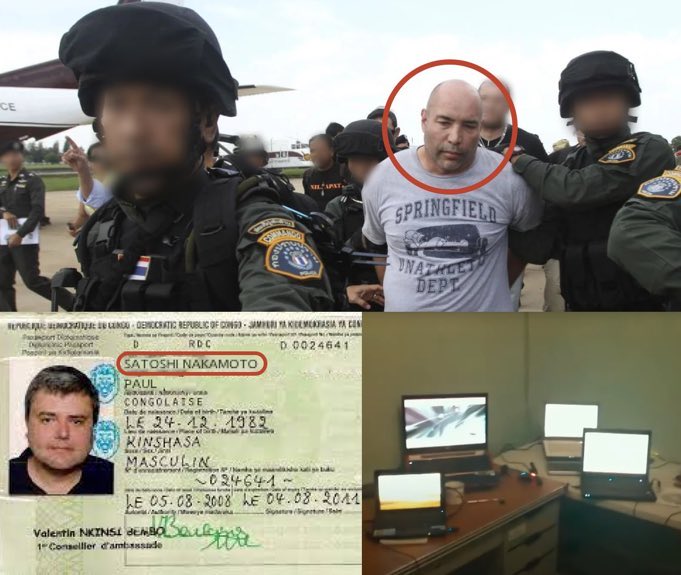
His real name is Paul Le Roux.
This theory links the creator of Bitcoin to a global criminal:
- Encryption Background
In 1999, Le Roux created E4M (Encryption).
An open-source disk encryption tool that later became the base of TrueCrypt.
He was already writing about encryption, privacy and resisting surveillance years before Bitcoin existed
- Perfect Technical Match
Le Roux was a high-level C++ programmer.
Bitcoin’s original code was written in C++.
He also showed deep understanding of SHA encryption systems
later even claiming he could design advanced ASIC mining chips from prison.
- The Criminal Motive
By the mid 2000s, Le Roux wasn’t just a programmer.
He built RX Limited, a massive illegal online pharmacy empire.
And you know a global cartel needs one thing:
A payment system that is outside government control.
Bitcoin is exactly that.
- Timeline Coincidence
Bitcoin launched in 2009.
Satoshi disappeared in 2010–2011.
Le Roux was fully active during Bitcoin’s creation years.
Then in September 2012, he was arrested by the DEA in Liberia.
The theory is simple:
- Satoshi vanishes.
-Then Le Roux gets caught.
And the 1.1 million BTC attributed to Satoshi never move.
- The “Solotshi” Alias
Investigators found documents tied to Le Roux using the name:
Paul Solotshi Calder Le Roux
Solotshi sounds uncomfortably close to Satoshi.
- The Court Leak (Document 187)
In Kleiman v. Wright, lawyers accidentally failed to redact a footnote.
Inside was a link to Paul Le Roux’s Wikipedia page.
This became known as “Document 187.”
(It’s one of the reasons the theory exploded in 2019)
Some believe Wright may have obtained encrypted volumes connected to Le Roux��s TrueCrypt world.
Still unproven.
None of this proves Le Roux was Satoshi.
But it shows why this is one of the few theories that actually fits technically, criminally, and chronologically.
Plausible.
Unproven.
And still one of Bitcoin’s strangest mysteries.
🚨 HERE’S WHY BITCOIN IS NONSTOP DUMPING RIGHT NOW
If you still think $BTC trades like a supply-and-demand asset, you MUST read this carefully.
Because that market no longer exists.
What you’re watching right now is not normal price action.
It’s not “weak hands.”
It’s not sentiment.
And it’s definitely not retail selling.
Most people are completely unaware what’s happening.
And by the time it becomes obvious, the damage is already done.
This move didn’t start today.
It’s been building quietly under the surface for months.
And now it’s accelerating.
Here’s the truth:
The moment supply can be synthetically created, scarcity is gone.
And when scarcity is gone, price stops being discovered on-chain and starts being set in derivatives.
That is exactly what happened to Bitcoin.
And it’s the same structural break that already happened to:
→ Gold
→ Silver
→ Oil
→ Equities
Once derivatives took over.
The original Bitcoin thesis is broken.
Bitcoin’s valuation was built on two ideas:
→ A hard cap of 21 million
→ No rehypothecation
That framework died the moment Wall Street layered this on top of the chain:
→ Cash-settled futures
→ Perpetual swaps
→ Options
→ ETFs
→ Prime broker lending
→ Wrapped BTC
→ Total return swaps
From that point forward Bitcoin supply became theoretically INFINITE.
Not on-chain.
But in price discovery, which is what actually matters.
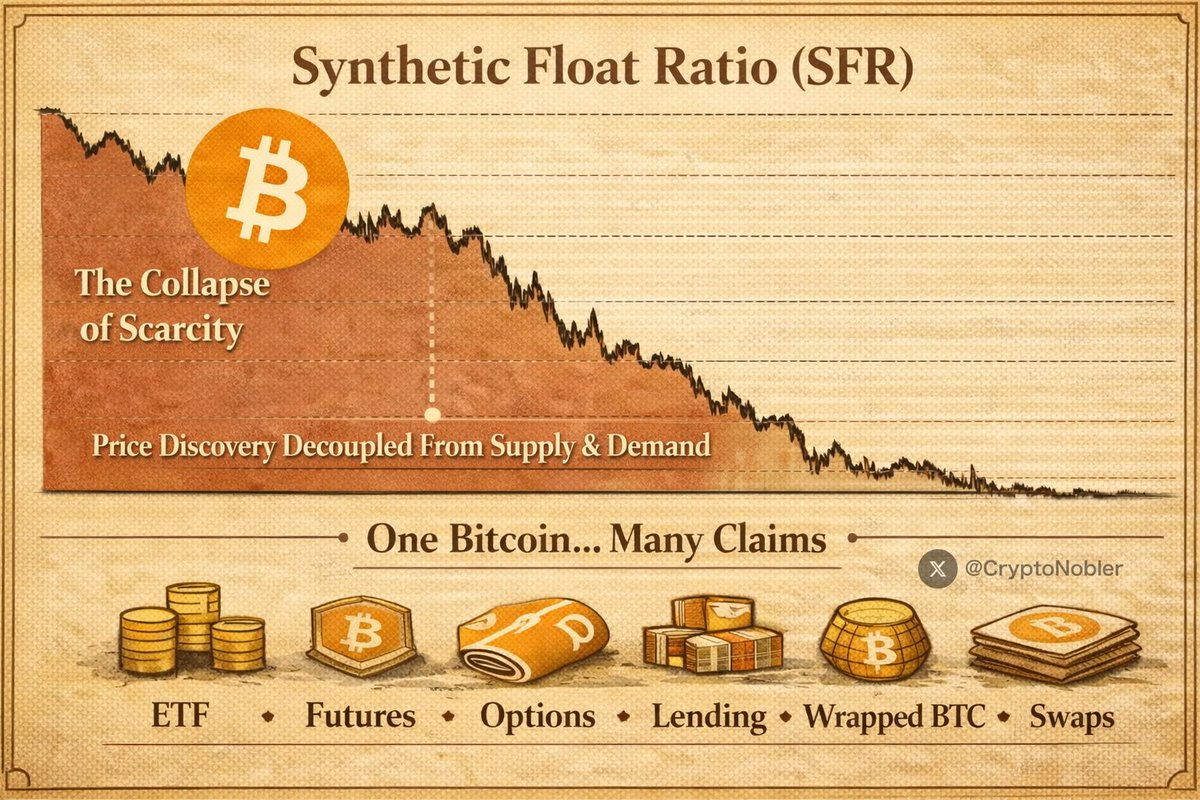
Synthetic Float Ratio (SFR).
The metric that explains everything.
Once synthetic supply overwhelms real supply, price no longer responds to demand.
It responds to positioning, hedging, and liquidation flows.
Wall Street can now trade against Bitcoin.
They’re not guessing direction.
They’re doing what they do in every derivatives-dominated market:
1⃣ Create unlimited paper BTC
2⃣ Short into rallies
3⃣ Force liquidations
4⃣ Cover lower
5⃣ Repeat
This isn’t “betting.”
It’s inventory manufacturing.
One real BTC can now simultaneously back:
→ An ETF share
→ A futures contract
→ A perpetual swap
→ An options delta
→ A broker loan
→ A structured note
All at THE SAME TIME.
That’s six claims on one coin.
That is not a free market.
That is a fractional-reserve price system wearing a Bitcoin mask.
Ignore it if you want, but don’t pretend you weren’t warned.
I’ve been calling Bitcoin tops and bottoms for over a decade now, and I’ll do it again in 2026.
Follow and turn on notifications before it's too late.
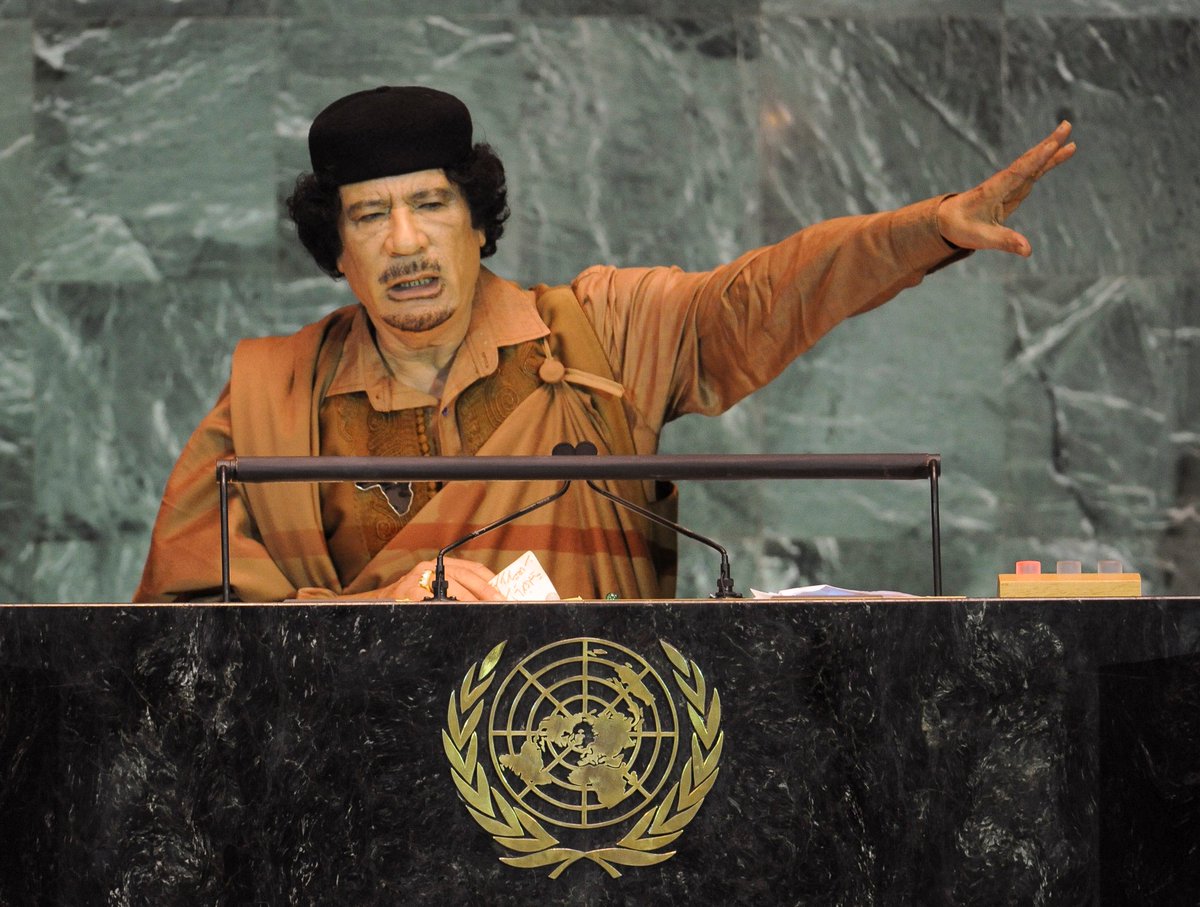
"They will create the virus themselves and sell you the antidotes. Thereafter, they will pretend to take time to find the solution when they already have it."
- Muammar Gaddafi
(2009 United Nations Assembly)


![ArchiveExplorer's tweet photo. yesterday someone leaked a full quant trading system on GitHub
before they deleted it i forked everything
5,000 lines of code. 7 modules. 25 mathematical factors
funds use this system to manage millions
i studied it for a week. then pointed it at crypto markets on polymarket
here's the full breakdown
you can feed this to your claude and build the same thing
for just $200
ARCHITECTURE:
Python thinks, analyzes, calculates
C++ executes orders in 5-10ms
data → factors → AI → strategy → risk → execution
DATA. 4 streams simultaneously:
- Binance WebSocket: prices every second, orderbook at 20 levels
- AlphaVantage: news with sentiment score from -1 to +1
-X: mention volume, engagement, influencer activity
- On-chain: BTC flows to/from exchanges
cache in Redis (<1ms). history in TimescaleDB
FACTORS:
the system calculates 25+ factors every 5 minutes:
- price momentum over 1.5 hours
- acceleration = momentum_30m - momentum_1h
- RSI(14): above 70 = overbought, below 30 = oversold
- MACD: fast EMA(12) minus slow EMA(26)
microstructure:
- Order Flow Imbalance = (buy volume - sell volume) / total. above +0.3 = strong buyer pressure
- VPIN = |buy_vol - sell_vol| / total. above 0.75 = smart money is moving
volatility:
- VaR(95%) = mean - 1.645 × std. answers: "what's my max loss in 95% of cases?"
- Sharpe = (return - risk free) / volatility. above 1.0 = good. above 2.0 = excellent
every factor converted to z-score and combined:
Composite Score = Σ (weight × z_score)
top 25 assets by score go to work
AI:
ClowdBot reads every news article and returns JSON
every historical article stored as a 384-dimensional vector
PROBABILITY MODEL
Geometric Brownian Motion:
P(BTC > target price) = N(d1) d1 = [ln(current/target) + (σ²/2)T] / (σ√T)
then 4 adjustments on top:
- momentum: +/-5%
- AI sentiment: +/-7%
- order flow: +/-2%
- historical patterns: +/-8%
compare final probability against polymarket price if edge > 10%: enter
RISK
- Quarter Kelly for position sizing
- max 5% bankroll per trade
- drawdown 15% = bot stops
- VaR < 3% per day
- correlation between positions < 0.7
- never take more than 1% of market liquidity
key insight is don't hold to expiry. trade the movement, not the outcome
cost:
→ Binance API: free
→ OpenAI: $50-100/month
→ AWS EC2: $120/month
→ monitoring: free
- total: $200-300/month -
code is open source. formulas above. you already have claude
the only thing between you and a working system is one free evening](https://pbs.twimg.com/media/HCb4tMzXAAAuJHz.jpg)