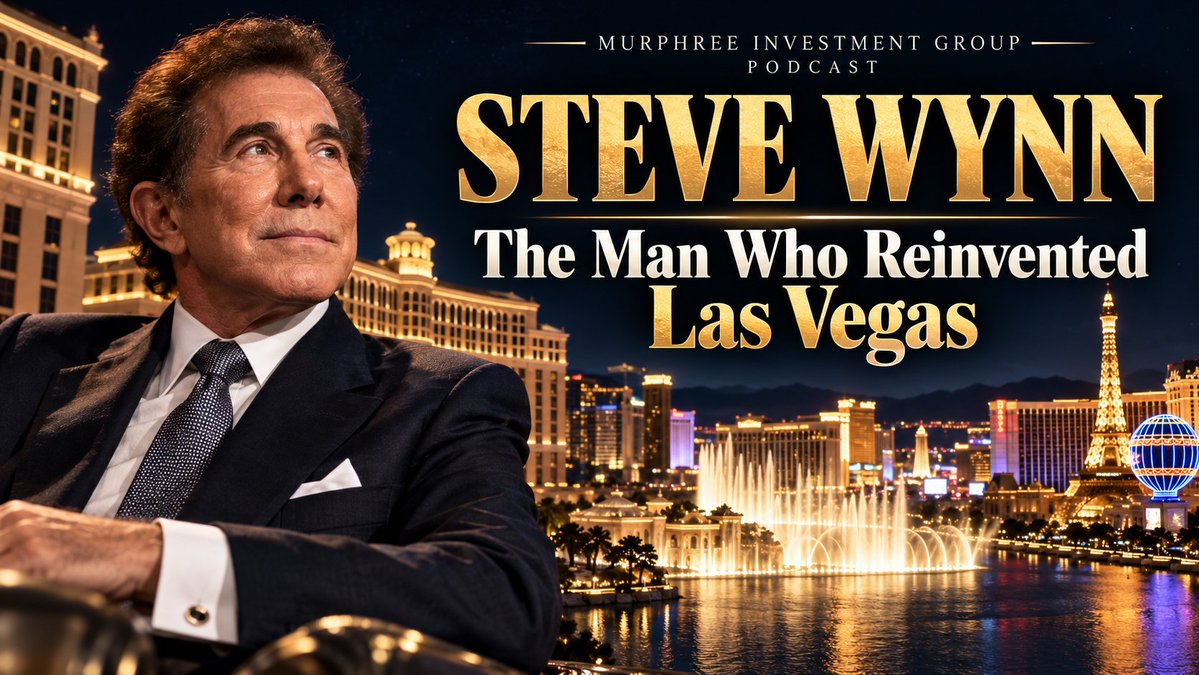
New episode of the Murphree Investment Group podcast:
Steve Wynn: The Man Who Reinvented Las Vegas
In this episode, we look at his rise from a Maryland bingo parlor to the Golden Nugget, The Mirage, Bellagio, Wynn Las Vegas, and Macau.
We also examine the financial story behind that expansion, including Wynn’s relationship with Michael Milken and Drexel Burnham Lambert, and how high-yield financing helped make The Mirage possible.
It is a story about entrepreneurship, leverage, capital allocation, risk, and the way financial innovation can reshape an entire industry.
Listen wherever you get your podcasts.
A closer look at the short case against Jackson Financial, the Brooke Re structure, and the questions analysts should be asking. https://t.co/Mw0yOT4YzY
New episode 🎙️ The Rise and Fall of FTX
From a $32 billion crypto empire to one of the most spectacular financial collapses in recent history.
The story of Sam Bankman-Fried, FTX, Alameda Research, and what happened to the billions that disappeared.
Available now on the Murphree Investment Group Podcast.
What happens when one of the most closely watched ideas in artificial intelligence becomes an investment strategy?
In the latest episode of the Murphree Investment Group Podcast, we examine the extraordinary rise and collapse of Situational Awareness, the AI-focused hedge fund founded by former OpenAI researcher Leopold Aschenbrenner.
The story sits at the intersection of artificial intelligence, investing, leverage, and conviction. It is also a reminder that being right about a transformative technology does not necessarily mean being right about how to invest in it.
We look at the ideas behind the fund, the enormous expectations surrounding artificial intelligence, the investment strategy that followed, and ultimately what went wrong.
Listen to the latest episode of the Murphree Investment Group Podcast, available now on Apple Podcasts, Spotify, YouTube, and other major podcast platforms.
How did a chatbot for teenagers become one of the most important companies in artificial intelligence?
In the latest Murphree Investment Group podcast, we examine the remarkable rise of Hugging Face and the forces reshaping the AI industry.
🎙️ Listen now: https://t.co/fxw1m3pYUZ
Also available on Apple Podcasts, Spotify & all major podcast platforms.
AI needs data centers.
Data centers need power.
Power generation needs water.
The Great Lakes region sits at the center of that equation.
This white paper examines how AI infrastructure is reshaping water policy, electricity demand, tax incentives, and investment opportunities across the Great Lakes.
Read the executive summary below.
Full report available through Murphree Investment Group Insights.
https://t.co/1XUQj0y1RT
NEW EPISODE
One year after winning the Nobel Memorial Prize in Economics, the architects of Long-Term Capital Management were at the center of one of the most dangerous financial collapses in modern history.
What went wrong?
The Rise and Collapse of Long-Term Capital Management examines how a hedge fund run by some of the brightest minds in finance generated extraordinary returns, embraced extreme leverage, and ultimately required a Federal Reserve organized rescue.
Now available on Apple Podcasts, Spotify, and all major podcast platforms.
🎧 https://t.co/suJ5JBd4Ij
This documentary explores one of the most dramatic episodes in financial history, from the silver boom to Silver Thursday and the collapse that followed.
Murphree Investment Group is proud to release our latest documentary:
The Hunt Brothers and the Silver Bubble
In the late 1970s, Nelson Bunker Hunt and William Herbert Hunt attempted to build one of the largest silver positions in modern financial history. What followed became one of the most significant commodity market events ever recorded.
This documentary examines:
• The economic environment that fueled the silver boom
• The Hunt brothers' accumulation strategy
• The role of leverage and margin requirements
• The market collapse known as "Silver Thursday"
• The lasting lessons for investors, risk managers, and market participants
At Murphree Investment Group, we believe financial history is one of the most valuable tools investors have. By studying past market cycles, speculative excesses, and risk management failures, we can better understand today's investment landscape.
Watch the documentary here: 👇
https://t.co/7QaOdR5Qvu
In 1980, two Texas billionaires nearly cornered the entire world's silver supply.
For a brief moment, they controlled more silver than most nations.
Then it all collapsed in a single day.
New podcast episode — We break down exactly what happened and what it tells us about speculation, leverage, and greed.
🎙️ Murphree Investment Group Podcast | Episode 1
The Hunt Brothers and The Silver Bubble
Listen Here 👇
https://t.co/si2C26SfyA
𝐒𝐢𝐦𝐢𝐥𝐚𝐫𝐢𝐭𝐢𝐞𝐬 ��𝐞𝐭𝐰𝐞𝐞𝐧 𝟐𝟎𝟐𝟐 𝐚𝐧𝐝 𝟐𝟎𝟐𝟔: 𝐆𝐞𝐨𝐩𝐨𝐥𝐢𝐭𝐢𝐜𝐚𝐥 𝐒𝐡𝐨𝐜𝐤𝐬, 𝐈𝐧𝐟𝐥𝐚𝐭𝐢𝐨𝐧, 𝐚𝐧𝐝 𝐌𝐚𝐫𝐤𝐞𝐭𝐬
𝐈𝐧 𝟐𝟎𝟐𝟐:
•Russia invaded Ukraine (February), triggering major energy disruptions.
•Inflation surged (driven partly by commodity shocks).
•The Federal Reserve aggressively raised interest rates to combat it.
•Oil prices spiked sharply (Brent crude exceeded $130/barrel at peaks).
•U.S. stocks entered a bear market amid volatility.
•It was a midterm election year
𝐈𝐧 𝟐𝟎𝟐𝟔:
•Escalation into direct U.S.-Israel conflict with Iran (strikes began late February), with regional energy infrastructure impacts and Strait of Hormuz disruptions.
•Inflation remains above the Federal Reserve’s 2% target (recent projections show PCE inflation around ~3% for 2026, up from prior estimates).
•Markets are pricing a higher probability of Federal Reserve rate hikes than cuts in the near term, amid sticky inflation and energy pressures (Fed still projects one cut for the year overall, but trader odds have shifted).
•Oil prices have spiked significantly (Brent crude has surged ~40-60%+ in early March trading, with peaks above $100–$120/barrel amid supply concerns).
•It is again a midterm election year (November 2026 congressional elections).
Geopolitical conflicts involving major energy producers have once more coincided with elevated inflation concerns, oil volatility, and policy uncertainty in a midterm cycle. Markets remain sensitive to how these developments evolve.
𝐈𝐧 𝟐𝟎𝟐𝟔: 𝐓𝐡𝐞 𝐤𝐞𝐲 𝐪𝐮𝐞𝐬𝐭𝐢𝐨𝐧 𝐧𝐨𝐰: 𝐖𝐢𝐥𝐥 𝐰𝐞 𝐬𝐞𝐞 𝐚 𝐫𝐞𝐩𝐞𝐚𝐭 𝐨𝐟 𝐭𝐡𝐞 𝟐𝟎𝟐𝟐 𝐛��𝐚𝐫 𝐦𝐚𝐫𝐤𝐞𝐭, 𝐨𝐫 𝐜𝐨𝐮𝐥𝐝 𝐬𝐮𝐬𝐭𝐚𝐢𝐧𝐞𝐝 𝐞𝐥𝐞𝐯𝐚𝐭𝐞𝐝 𝐨𝐢𝐥 𝐩𝐫𝐢𝐜𝐞𝐬 (𝐩𝐨𝐭𝐞𝐧𝐭𝐢𝐚𝐥𝐥𝐲 $𝟏𝟎𝟎–$𝟏𝟓𝟎/����𝐚𝐫𝐫𝐞𝐥 𝐢𝐟 𝐝𝐢𝐬𝐫𝐮𝐩𝐭𝐢𝐨𝐧𝐬 𝐩𝐞𝐫𝐬𝐢𝐬𝐭) 𝐩𝐮𝐬𝐡 𝐮𝐬 𝐢𝐧𝐭𝐨 𝐛𝐨𝐭𝐡 𝐚 𝐛𝐞𝐚𝐫 𝐦𝐚𝐫𝐤𝐞𝐭 𝐚𝐧𝐝 𝐚 𝐛𝐫𝐨𝐚𝐝𝐞𝐫 𝐠𝐥𝐨𝐛𝐚𝐥 𝐫𝐞𝐜𝐞𝐬𝐬𝐢𝐨𝐧?
The Cold War order is cracking and markets are not priced for what comes next.
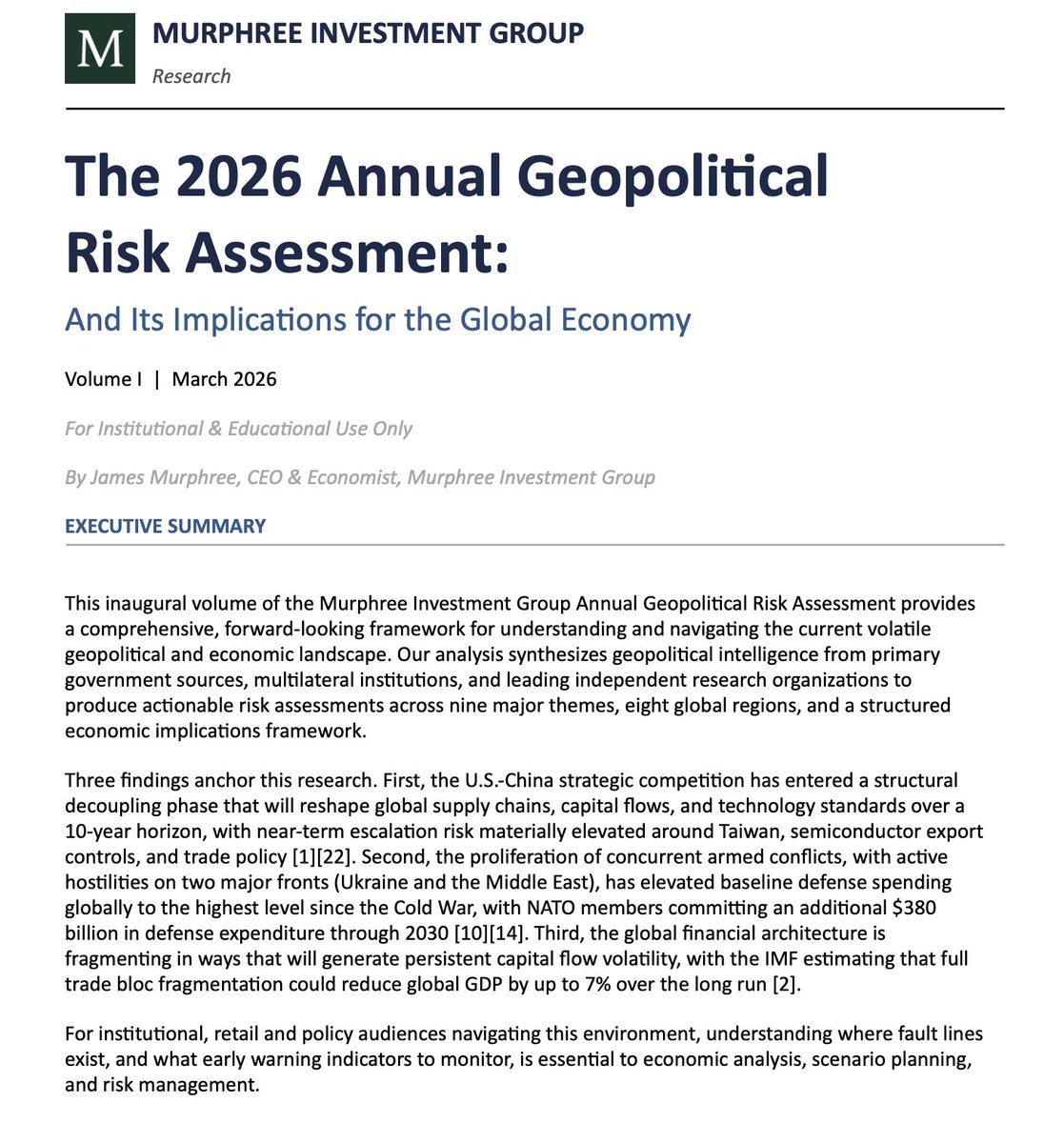
We just released our 2026 Annual Geopolitical Risk Assessment: 10 sections. Fully referenced. Institutional grade.
Key findings from the Executive Summary:
• U.S.–China decoupling is now structural
• Taiwan (92% of leading-edge semis) disruption could wipe out $500B+ in global output in just 6 months
• Global defense spending is at its highest level since the Cold War
• Trade fragmentation could permanently shave up to 7% off global GDP ($2–7T annually)
The full report, plus our economic implications framework covering inflation, growth, fiscal policy, and labor markets lives inside the Murphree Insights Intel Vault.
Unlock full access for your first month: $19
Cancel anytime.
Already a subscriber? Your report is waiting.
Subscribe here: 👇https://t.co/1XUQj0y1RT
The dramatic events unfolding in private credit today validate the concerns I raised in my white paper, "Fault Lines in Private Credit."
Moody's has just downgraded the senior unsecured rating of FS KKR Capital Corp. (a major $14B business development company co-managed by KKR and Future Standard) from Baa3 to Ba1, pushing it into junk territory. This rare move for a fund of this scale stems from deteriorating asset quality: non-accrual loans hitting 5.5% of investments (among the highest among rated BDCs), ongoing profitability pressures, greater NAV erosion vs. peers, higher leverage, elevated payment in kind exposure, and a lower proportion of first lien loans.
Moody's cited "continued asset quality challenges" leading to weaker performance relative to peers, with the fund reporting a $114M net loss in Q4 and minimal full year income.
This isn't isolated, it's part of a broader trend of rising bad loans, credit stress (especially in areas like software), and investor outflows. Analysts have been flagging higher default risks heading into 2026, and today's action is a clear market signal.
In "Fault Lines," I highlighted exactly these vulnerabilities: opaque underwriting, stretched valuations, over reliance on PIK, and the illusion of stability in a low default environment that was masking building pressures. When even marquee names face downgrades and higher borrowing costs (potentially 100–200 bps more), it underscores the risks for investors chasing yield without adequate risk assessment.
Private credit has delivered strong returns for years, but the fault lines are cracking under scrutiny. Prudent underwriting, transparency, and realistic risk pricing will be key to navigating what's ahead.
Link to my white paper is below: 👇
https://t.co/z99WtLNt8F
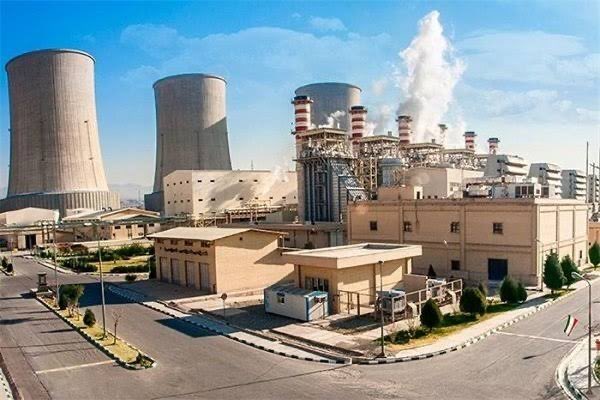
🚨 Trump just issued a stark 48 hour ultimatum to Iran: Fully open the Strait of Hormuz without threat, or the US will obliterate Iran’s power plants starting with the biggest.
This escalation underscores the exact high stakes chokepoint risks we detail in our 2026 Annual Geopolitical Risk Assessment. Energy security, supply shocks, and regional flashpoints are driving unprecedented volatility.
Read the full white paper for forward looking analysis on navigating these vectors:
Link below to subscribe:
https://t.co/1XUQj0y1RT
Private credit stress is rising and investors are starting to see it.
Private credit has grown into a $3.4 trillion asset class, yet the credit cycle has decisively turned.
Higher for longer rates, aggressive underwriting from 2020–2022, and a maturing LBO vintage are now exposing structural fault lines across the market.
◈Headline defaults: ~2.5%
◈True stress (shadow defaults): ~5.7%–6.4%
◈That gap is driven by PIK toggles, covenant waivers, ◈maturity extensions, and forbearance mechanisms that can mask real credit deterioration.
📄 Attached: Page 1 (Executive Summary) of our latest white paper:
“Fault Lines in Private Credit: A Sector-by-Sector Stress Analysis.”
Inside the full report, we break down:
◈ Where defaults are actually concentrating
◈ Which sectors face structural vs. cyclical stress
◈ How the 2021 LBO vintage is shaping the next phase of losses
◈ What investors should monitor now
The full sector level analysis is available on Murphree Insights, our subscription platform for institutional grade economic research and strategy.
📷 Subscribe below for access: https://t.co/eGYL0LGFKl
The post Cold War order was built on four pillars: U.S. military primacy, multilateral institutions, energy interdependence, and global supply chains.
In 2026, all four are under simultaneous structural stress.
Today, Murphree Investment Group publishes our inaugural 2026 Annual Geopolitical Risk Assessment. A 10-section, fully referenced analysis of the forces reshaping the global economy.
Three findings anchor the report:
1. U.S. - China strategic competition has entered a structural decoupling phase. Near-term escalation risk is materially elevated around Taiwan, which controls 92% of leading edge semiconductor fabrication capacity. A 6 month disruption scenario would destroy an estimated $500B+ in global output.
2. Concurrent armed conflicts on two major fronts, Ukraine and the Middle East have pushed global defense spending to its highest level since the Cold War. NATO members have committed to additional defense spending through 2030.
3. The global financial architecture is fragmenting. The IMF estimates full trade bloc fragmentation could permanently reduce global GDP by up to 7% equivalent to $2 - $7 trillion in annual lost output at current price levels.
The full report covers nine risk themes, eight global regions, and a detailed economic implications framework which includes inflation, growth, fiscal sustainability, trade architecture, and labor markets.
Below is Page 1 of 10, The Executive Summary, shared here for your viewing.
The complete report is available exclusively to Murphree Insights subscribers in the Intel Vault.
Subscribers to Murphree Insights have access to the full report in the Intel Vault today.
📄 Click Below to Subscribe:
https://t.co/1XUQj0yzHr
Excited to announce: my new white paper, Fault Lines in Private Credit: A Sector-by-Sector Stress Analysis, is now live exclusively on Murphree Insights! Link Below 👇
https://t.co/z99WtLNt8F
The official private credit default rate sits at ~2.46%, but when you factor in hidden stress, PIK toggles, covenant waivers, maturity extensions, and lender takeovers, the real figure climbs to ~5.7% (and likely higher). With $24B+ in lender controlled debt from 2021–2022 vintages and a maturity wall in 2026–2028, the cracks are showing.
This report breaks it down sector by sector: where the pressure is building, early warning signals institutional investors and allocators need to watch, and actionable intelligence to navigate the risks.
Available now to Murphree Insights subscribers → https://t.co/z99WtLNt8F
This is the deep dive you don't want to miss. Subscribe today for early access to this and our full content library.
What are your thoughts on the hidden stresses in private credit right now? Drop a comment below
#PrivateCredit #CreditRisk #AlternativeInvestments #FixedIncome #MurphreeInsights #InvestmentResearch