A purity number alone never tells the full story.
I break down COAs, identity, peptide content, sterility and other quality-testing data in plain English.
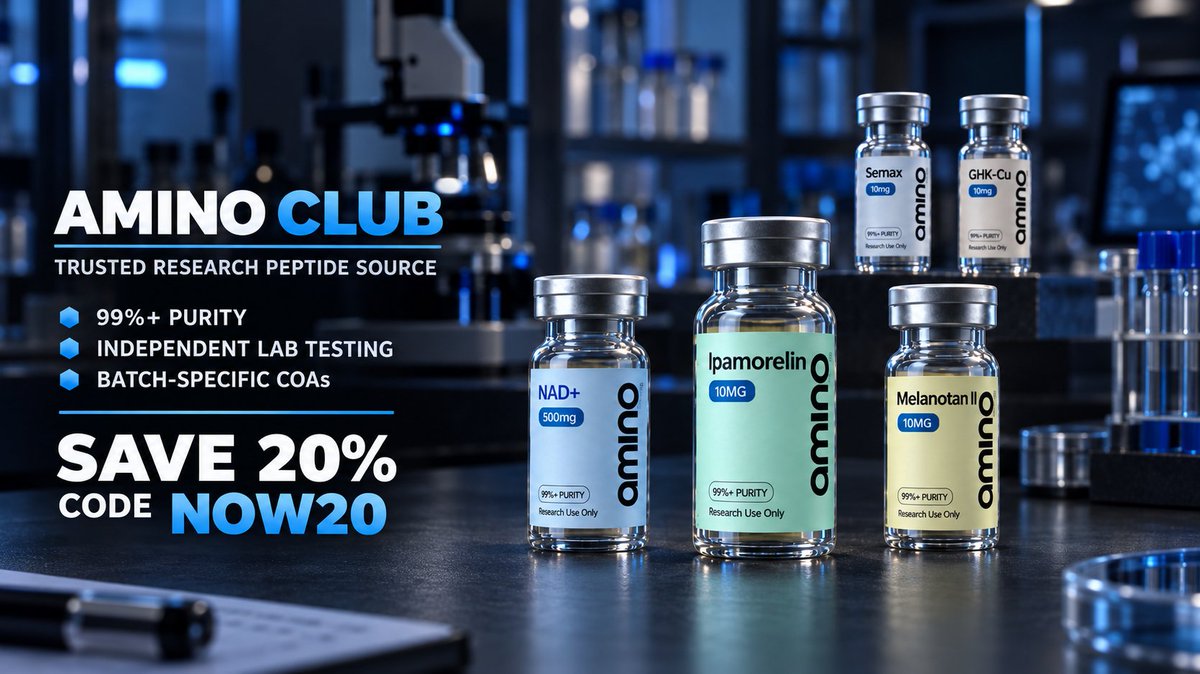
Amino Club tests every batch through eight independent assays.
Save 20% --> NOW20 🔬
https://t.co/X1PYr7Bw8v
Research only
A single purity number is only part of the picture. Amino Club now lists a 12-assay panel at an independent ISO 17025-accredited laboratory.
🎟️ NOW20 → 20% off eligible orders
🔗 Explore the testing: https://t.co/X1PYr7AYiX
🧪 Research use only.
Hard training is only useful if you can recover and do it again.
TB-500 gets attention for:
⚡ Recovery between sessions
🦵 Soft-tissue support
🔄 Mobility after strain
🏋️ Returning to consistent training
That recovery-first angle is why athletes keep it on the radar.
Amino Club makes it easy to compare research peptides by price and batch data. Public COAs and a stated 99%+ purity standard give you more to review.
🎟️ NOW20 → 20% off eligible orders
🔗 Explore the catalog: https://t.co/X1PYr7AYiX
🧪 Research use only.
When tendons or ligaments limit movement, every session becomes harder to build on.
BPC-157 is often discussed for:
🦵 Tendon and ligament recovery
🧩 Soft-tissue support
🔄 Mobility after strain
🏋️ Returning to regular training
A practical recovery-first angle.
Looking into this compound? Browse Amino Club's catalog and review the available batch documentation.
🎟️ Code: NOW20 → 20% off
🔗 https://t.co/X1PYr7AYiX
🧪 Research use only.
GHK-Cu is best known for the beauty side of peptide research.
✨ Smoother-looking skin
🧬 Collagen and elastin support
💧 Firmer-looking texture
🔄 Skin renewal after daily stress
That combination is why copper peptides keep appearing in modern anti-aging routines.
Retatrutide, tirzepatide, KPV and GHK-Cu shouldn’t be treated as interchangeable. Each points toward a different area of study.
Amino Club covers the range.
Use NOW20 for 20% off.
Link in bio.
Four compounds. Four distinct research lanes.
• Retatrutide: triple-receptor signaling
• Tirzepatide: dual-incretin pathways
• KPV: inflammatory signaling
• GHK-Cu: skin and matrix remodeling
Same S-tier grid. Different biological targets.
Timing may be the key detail here.
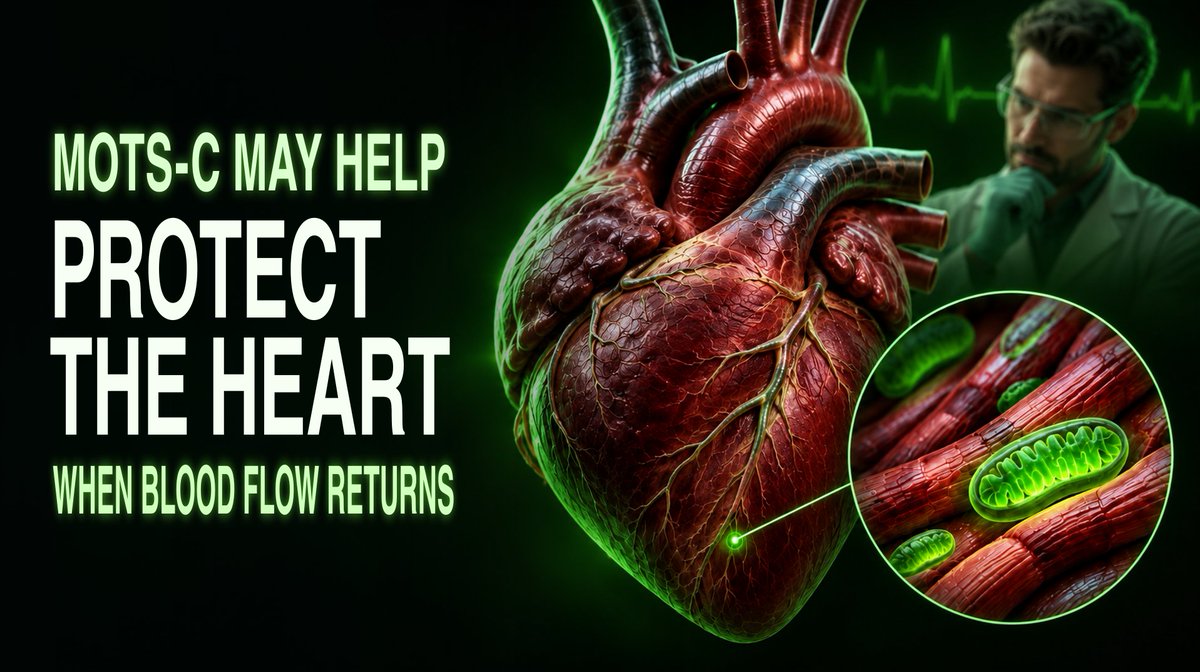
MOTS-c was delivered during the first 10 minutes after blood flow returned—the exact window when reperfusion can add more damage.
Researchers exploring peptides can
consider Amino Club.
Code NOW20.
Why test MOTS-c when blood flow returns to the heart?
Restoring blood flow brings oxygen back to the heart. That sudden return can also add to tissue damage. This is called reperfusion injury.
In a 2026 experiment, researchers stopped blood flow to isolated rat hearts for 30 minutes, then delivered MOTS-c during the first 10 minutes after flow resumed.
At the best-performing dose, compared with hearts that went through the same procedure without MOTS-c:
• 73% smaller infarct — less heart tissue died.
• 65% less LDH released — a marker of tissue injury.
In a second experiment using isolated rat hearts, the same team looked inside the heart muscle cells. MOTS-c helped two groups of mitochondria retain some of their membrane voltage and enzyme activity. That gives researchers a clue as to why the hearts recovered better in the lab.
The scale showed almost identical results. Strength did not.
In a 40-week randomized trial, all 120 participants received tirzepatide.
Half also performed resistance training three times per week, while the others maintained their usual activity.
Pick any four research compounds with Amino Club’s Build a Box option and receive:
• 40% off retail
• Free Amino H2O
• Free two-day delivery
The discount remains active with the monthly box.
For research purposes only.
https://t.co/X1PYr7AYiX
Amino Club Research Bundles let you combine 3+ vials and share them through one link.
Anyone ordering through the link saves 35%, while the bundle creator receives 10% of each order back in points.
For research only.
https://t.co/X1PYr7Bw8v
Retatrutide’s Phase 3 research is moving beyond weight loss.
In TRIUMPH-4, knee-pain scores fell by up to 75.8% in adults with obesity or overweight and osteoarthritis.
More than 1 in 8 retatrutide-treated participants reported no knee pain after 68 weeks.
One pathway should never be used to promise five different outcomes. Fuel use, endurance, recovery and muscle growth all require separate evidence.
For peptide research:
https://t.co/X1PYr7AYiX
Save 20% with NOW20.
For research purposes.
MOTS-c and Cellular Fuel Use
Your body constantly stores and uses energy. How much fuel gets used now or saved for later depends on factors like calorie intake, energy demand, insulin sensitivity, and how mitochondria process fuel.
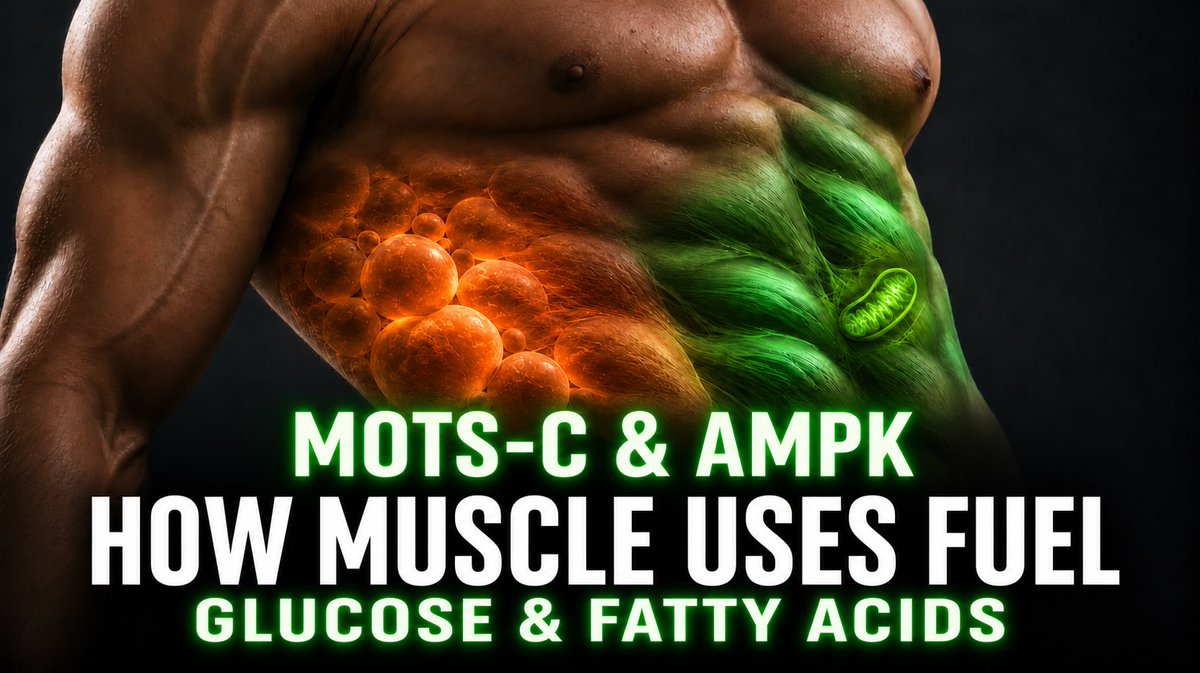
MOTS-c is a peptide encoded by mitochondrial DNA. Its connection to fuel use starts with AMPK, an enzyme that senses when cells are running low on energy.
AMPK and fuel use
When AMPK is activated, it can help muscle cells take up glucose and support fatty acid oxidation. That’s the mechanism behind the idea that MOTS-c could influence how the body uses available fuel. A change in cellular fuel use alone can’t tell you how much body fat someone will lose.
Glucose, glycogen, and ATP
Insulin sensitivity affects how readily muscle takes up glucose. Once inside the cell, glucose can be used for energy or stored as glycogen for a later workout. That’s why the discussion around MOTS-c includes nutrient partitioning, blood sugar, and whether changes in mitochondrial function affect ATP production.
Performance, recovery, and muscle
If a change in fuel use helped someone sustain a harder or longer session, that session could use more energy. That’s the proposed connection to endurance, fatigue, and training output. Recovery is a separate outcome. So is muscle growth. Myostatin, a protein that limits muscle growth, is another part of the research, but a change in its signaling doesn’t establish that MOTS-c builds muscle.
The original “fat-burning switch” idea brings several questions together. How does MOTS-c influence the fuel muscles use, and could that translate into changes in training performance, recovery, or body composition? Each outcome has to be measured on its own.
Tirzepatide and retatrutide target different receptor combinations:
• Tirzepatide: GIP + GLP-1 dual agonist; FDA-approved for specific indications.
• Retatrutide: GIP + GLP-1 + glucagon triple agonist; still investigational.
That added glucagon pathway is the key distinction.