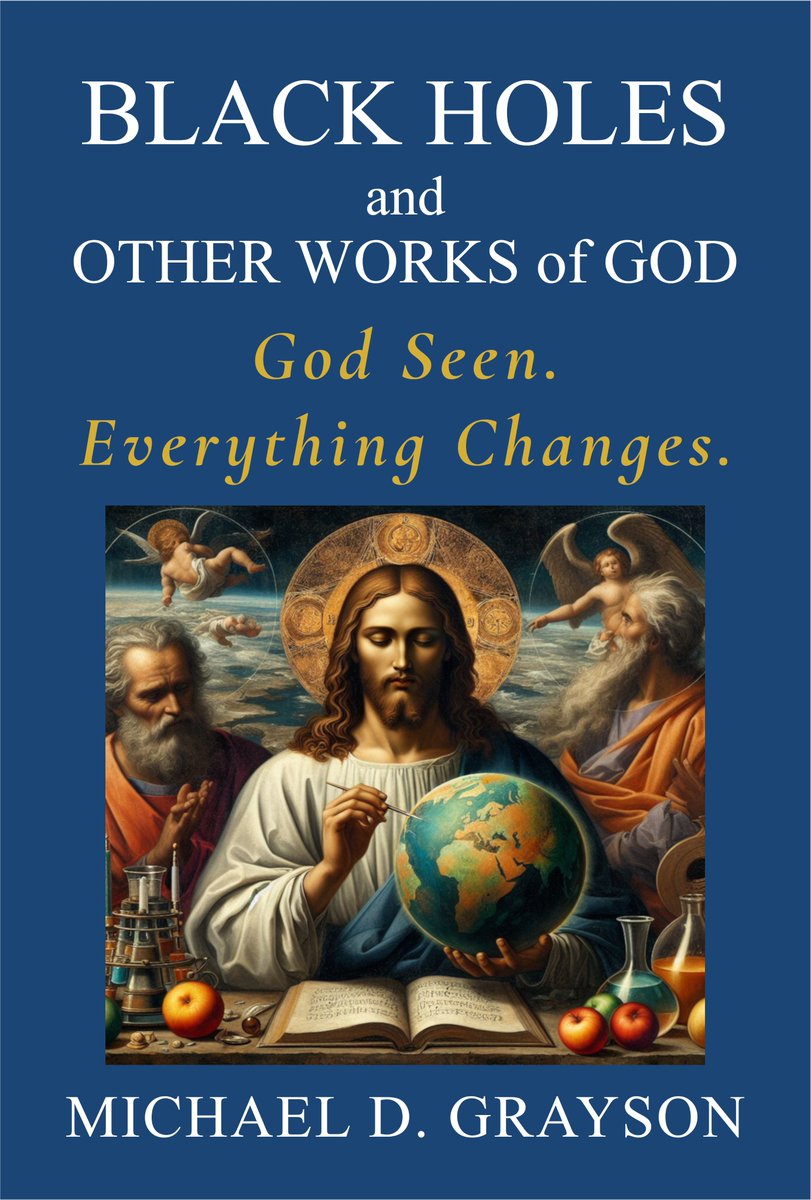
The key to self-improvement isn’t a better strategy — but understanding who we’re actually improving.
Bookstores are filled with books promising a better life. We read about leadership, productivity, influence, success, relationships, purpose, and personal growth. The desire to improve ourselves is nearly universal.
Yet beneath every effort lies a deeper question that is rarely asked:
“Who exactly is the person being improved?”
Before we can know where we’re going, we must understand who we are.
Before we can discover our purpose, we must understand our identity.
Before any real change can happen, we must answer one of life’s most fundamental questions:
“Who am I?”
Most people answer through achievements, relationships, possessions, careers, or personal beliefs.
Scripture begins somewhere entirely different.
It begins with God.
“So God created mankind in his own image, in the image of God he created them; male and female he created them.” (Genesis 1:27)
This truth is breathtaking — and it opens the door to even greater wonder about who we really are.— Excerpt from Chapter 4: “Who Am I?”
Black Holes and Other Works of God
https://t.co/U3wgrIv6Kc
What do you believe actually defines who you are?
America was founded on the principles of freedom, and all men and women being created equal. It is enshrined in our Constitution and even on our currency “In God We Trust”. America is a model that shows what grace really means. It is a reflection of our founding values. We want to lift up the world, not tear it down.
Happy July 4th! FREEDOM!
@TheBuddyCSM Thank you brother. I have been impressed by the valor and commitment of your generation in fighting the GWOT. Happy 4th! Thankful for all those defending freedom.
Today we celebrate freedom and the American “experiment”. But what is freedom?
Under ancient Roman law a “freeman” was one who wasn’t a slave to anyone, either through ownership or by class. They were equal to others who were also freemen.
Prior to the Declaration of Independence, all the governments of the world recognized a class system. There were the rulers, and the ruled. But on July 4, 1776 a new idea was born from Christian principles—that all men and women were equal, regardless of wealth or position.
But today the freedom killers abound. There are those who are eager to rule and limit the freedom of those around them. Some of the freedom killers are in political office, some are unelected bureaucrats. Some are wealthy manipulators. Some are radical anarchists. But they all have one thing in common they want to subject you—make you follow their rules. This is why freedom requires vigilance to survive. It is a fragile thing.
But what about the rule of law?
In order for a society to function there must be rules of behavior that protect the freedoms of the individual and benefit society. Your freedom to wave your fists around ends at my nose. But most rules aren’t that transparent—as to whether or not they protect or benefit the individual, or are designed to benefit a special interest group. Our society has become over burdened with rules. Rules that often limit the freedom of the individual without justice cause.
How is freedom protected?
Freedom is protected by one of two ways, by the voice of the people heard through their elected representatives or by armed conflict. This is why freedom cannot exist when elections are rigged. Freedom demands justice and fairness to exist, because without justice the only alternative for the people is armed conflict. Our founders understood this all too well when they balanced our rights with the rights to bear arms. Not to initiate anarchy and enslavement, but to protect against it.
This July 4th make an oath to exercise the one action that ensures your freedom as part of the American experiment, your freedom to vote for those whose heart is to defend the Constitution of the United States with all that is in them. If they are not willing to do that, then they aren’t worthy to server as defenders of our freedom.
This is a brilliant parallel between The Lord of the Rings and communism. I don’t know if, in fact, it was the intent of Tolkien, but it’s brilliant nonetheless.
Vietnam was miserable under communism. Today they are transforming themselves by embracing capitalism and freedom—and are prospering. Did you know there are now 1,200 churches in North Vietnam and 100 pastors recently graduated from a seminary in Hanoi? I can hardly believe it.
Communism is a miserable ideology.
Did you know that The Lord of the Rings was about communism?
(Maybe when you come from Poland, every evil looks like communism to you…:)
1. The Ring is not a weapon. It is the totalitarian temptation itself – the promise that this time, the right person wielding absolute power will finally produce the good outcome. Even heroes in the book are tempted by this argument. Gandalf refuses it, Aragorn refuses it, but it is the most seductive argument in politics. It is always wrong.
2. The Shire is where the story begins and where it must return. Hobbits grow their own food, smoke their own pipe-weed, own their gardens, and nobody tells them what a second breakfast should look like. This is not naivety – it is civilization at its most honest. Which is precisely why the system cannot leave it alone.
3. The Eye sees everything – not because it is omnipotent, but because enough servants are watching on its behalf. The Nazgûl are the secret police: former kings, once free and powerful, who accepted rings of power and became hollow enforcers. They did not fall suddenly. Each one made a reasonable accommodation, then another, until nothing remained inside the armor. The surveillance state does not need cameras everywhere. It needs people who have already sold themselves, and have nothing left to lose by selling others.
4. Saruman is the most sinister villain in the book – the brilliant intellectual who studied power so long and so closely that he decided he might as well have some. The collaborator. The man who convinced himself that managing the evil was smarter than opposing it, and ended up running a small franchise of it in the Shire.
5. The Shire gets collectivized. This is the chapter Western readers most want to skip – because it means that ignoring the darkness while it was distant did not protect the things that were close and dear. It came home anyway, wearing the face of bureaucratic administration: no private gardens, no excess, enforced sharing, small men with clipboards and new rules. Sharkey — the defeated Saruman — cannot create anything anymore. He can only administrate, regulate, and ruin. This is what the system looks like when it has already lost everywhere else.
6. Gollum is what the system produces when it finds someone useful. He serves the Ring completely, calls it his precious, and has long since forgotten what he was before it. He is not evil – he is consumed. The system doesn’t need to destroy you. It just needs you to need it more than you need yourself.
7. The Ring must be destroyed, not used. Not reformed, not redirected, not wielded by a better person for better ends. This is Tolkien’s most radical political statement: some instruments of total power cannot be turned to good purposes. They must be unmade. Every generation has to rediscover this, because the argument for just one more ring, in the right hands, for the right reasons, never stops sounding reasonable to some people…
@BlastingThrough I was part of II FFV and our small team (Sgt. Roger Johns and 9 ARVNs) were sent to Tay Ninh a day or two before the 25th. I think I heard about the ammo bunker blowing up. You have a great memory. We were part of the MACV CORDS program.
@EODHappyCaptain Been there many times over the past 20 years. No better place to have a Guinness and reenlist. It is the most correct way to do things.
@infantrydort The problem is that when they break that oath there are no consequences whatsoever. There must be consequences greater than a slap on the wrist.
Tony, I don't want to be critical of the decisions that were made. I have nothing but the utmost respect for these brave men. Yes—I believe mistakes were made, but I hope those mistakes were evaluated and folks said, "Let's not do that again".
I think one of the biggest mistakes made in both Vietnam and Afghanistan is that the brass underestimated the cunning of the enemy. Those guys knew we would send in a QRF team, and they were locked and loaded for an ambush. It was a terribly tough call—and I would hate to have been the guy who had to put his men in harms way.
I don't know the Sheriff, but would love to meet him since I went through "experimental" training designed by Col. David Hackworth (About Face) in Nov. of 1969. Some of the stuff we did made it into later spec ops training. And some of us ended up working with the CIA in Vietnam. So, I'd love to compare notes. He drove a beat-up Toyota truck—we had motorcycles on ops—both very unconventional.
I thank God for these men and those who serve.
As I sit in my nice comfortable chair this morning with the sun shining through a window brightening the room, I’m thinking about these men and their families. The loss. The families that were changed forever. The tragedy. My mind wanders back to over 50 years ago when I was on a team doing the same thing, capturing VC insurgents who were also a formidable enemy. Who had endured war long enough to know how we would respond to events like this.
I am thankful for the years God has given me. I am thankful for these men. My heart goes out to their families. I can only imagine that those coming to the rescue knew what they were flying into. The risk. The urgency. I can also imagine the Taliban knew they were coming, and lay in wait. Stepping into that environment is not small thing. They all knew it was life or death, which only makes their sacrifice more poignant.
I think that today I’ll pay a little more attention to what God has given me and be a little more grateful for these men and those like them.
21 years ago today, on June 28, 2005, four Navy SEALs were inserted under cover of darkness into the Hindu Kush mountains of Afghanistan, a place so high and so cold the clouds drift below your feet. Their mission was to find a Taliban commander hiding in the village of Sawtalo Sar. Their names were Michael Murphy, Danny Dietz, Matthew Axelson, and Marcus Luttrell.
By morning, fate walked right up the mountain to meet them. A goat herder and a boy wandered straight into their hidden position. The team had a choice no man should ever have to make: kill unarmed civilians, or let them go and risk everything. They let them go. Within an hour, the mountain came alive with rifle fire.
What happened next is almost too brutal to put into words. Dozens of fighters swarmed the high ground above them. The four men fought their way down a near vertical slope, throwing themselves off ledges and cliffs to escape the fire, breaking bones, tearing flesh, leaving blood on the rocks, and still turning to shoot. One by one they were hit. Still they fought. They would not stop. They would not surrender.
Their radios could not reach the base down in the valley. They were screaming for help into dead air. And so Lieutenant Michael Murphy did something that should never be forgotten. He stood up. He walked out of the rocks and into open ground, into the full teeth of the enemy, with bullets cracking past him on every side, just to get a clear signal. He was shot in the back while making that call. He dropped the radio, picked it back up, finished the call, and said thank you. Then he kept fighting until he could fight no more. That single act of courage is the only reason the world ever learned their names.
Help came screaming up the valley. An MH-47 Chinook, call sign Red Wings 11, packed with eight more SEALs and eight Army Night Stalkers of the legendary 160th SOAR, refused to wait for gunship cover. Their brothers were dying and they would not sit still for it. As the bird flared over the ridge, a single rocket propelled grenade flew through the open rear ramp. The explosion tore the aircraft apart in the sky. All sixteen men aboard were killed the instant it hit the mountain.
Three on the ground. Sixteen in the air. Nineteen American sons gone in a single afternoon. It remains the worst loss of life in Naval Special Warfare history since World War II.
Michael Murphy was posthumously awarded the Medal of Honor. Danny Dietz and Matthew Axelson received the Navy Cross. Marcus Luttrell, blown off a cliff and shredded by shrapnel, was the only one to come home. He survived because a Pashtun villager named Mohammad Gulab found him broken in a ravine and, under an ancient code of honor older than the country these men died for, stood between him and the Taliban and refused to give him up.
Twenty one years later, do not let these be just names on a screen. They had mothers. They had wives. They had children who grew up with a flag folded into a triangle instead of a father. They chose each other over their own lives on a mountain most people will never even hear of.
So today, say their names out loud. All nineteen of them 🇺🇸
In remembrance:
Lt. Michael P. Murphy
Gunner's Mate 2nd Class Danny P. Dietz
Sonar Technician 2nd Class Matthew G. Axelson
Lt. Cmdr. Erik S. Kristensen
Senior Chief Daniel R. Healy
Petty Officer 2nd Class James E. Suh
Petty Officer 2nd Class Eric S. Patton
Chief Petty Officer Jacques J. Fontan
Petty Officer 1st Class Jeffery A. Lucas
Petty Officer 2nd Class Shane E. Patton
Petty Officer 1st Class Jeffrey S. Taylor
Maj. Stephen C. Reich
Chief Warrant Officer Corey J. Goodnature
Chief Warrant Officer Chris J. Scherkenbach
Master Sgt. James W. Ponder III
Sgt. 1st Class Marcus V. Muralles
Sgt. 1st Class Michael L. Russell
Staff Sgt. Shamus O. Goare
Sgt. Kip A. Jacoby
Operation Red Wings. June 28, 2005. Never forgotten.
Great story Gabe. Very inspiring. Military service can open doors that would otherwise be closed. My TS clearance and leading a team in Vietnam fast tracked my career in defense SigInt. I’m grateful for the opportunity and encourage others to set their goals high.
BTW - Loved working with South Vietnamese SF. My wife and I helped relocate refugees after Saigon fell. I still maintain friendships with that community.