As mines are now going further below the earth’s surface because of mining for resources, geotechnical hazards are increasingly present in mining operations.
Rockbursts refer to a situation where rock experiences an abrupt and violent collapsing caused by the buildup of elastic strain energy due to excavation.
Such a situation can be dangerous to miners as it involves the generation of rock projectiles inside the mine tunnels. Seismic hazard control is thus important at this point.
What does recent research on rockburst prediction models reveal about deep-mine seismic risk management? Share your thoughts in comments.
Video rights: @kalen01 (YouTube)
Read more: https://t.co/B37dRvLOfX
Subscribe to Mining Doc to know more about Mining: https://t.co/v8NF3k3S50
Promote your mining technology to a global audience of mining professionals with Mining Doc. Contact us today at [email protected].
OEE stands for Overall Equipment Effectiveness, and it refers to a metric that represents the efficiency of using machinery in comparison with the maximum possible efficiency, where the latter is calculated during the planned hours; OEE is expressed in percent:
OEE = Availability x Performance x Quality.
How is overall equipment effectiveness (OEE) calculated and used to drive improvement in mining fleets? Share your thoughts in comments.
Video rights: @Earthmovers_media (YouTube)
Read more: https://t.co/J6iM49mohv
Subscribe to Mining Doc to know more about Mining: https://t.co/v8NF3k3S50
Promote your mining technology to a global audience of mining professionals with Mining Doc. Contact us today at [email protected].
Acid Rock Drainage is one of the environmental problems in the mining industry that involves acidic, metallic runoff.
The problem arises when the waste rock that contains metals such as pyrite is exposed to the atmosphere and meets both air and water, leading to oxidation reactions.
What are the engineering and geochemical methods used to predict and mitigate acid rock drainage (ARD) from a sulphide-bearing waste rock dump? Share your thoughts in comments.
Read more: https://t.co/RaZ1sDdy10
Subscribe to Mining Doc to know more about Mining: https://t.co/v8NF3k3S50
Promote your mining technology to a global audience of mining professionals with Mining Doc. Contact us today at [email protected]
Blasting sequence is the planned order in which explosive charges in a blast are detonated, while delay timing is the specific interval of time between sequential detonations.
Together, they are critical for achieving finer rock fragmentation, controlling rock displacement, and minimizing ground vibrations by allowing seismic waves from each explosion to interfere constructively or destructively.
What are the key considerations in designing a blasting sequence and delay timing? Share your thoughts in comments.
Video rights: @BHP (YouTube)
Read more: https://t.co/krvOFeSP32
Subscribe to Mining Doc to know more about Mining: https://t.co/v8NF3k3S50
Promote your mining technology to a global audience of mining professionals with Mining Doc. Contact us today at [email protected].
The reduction of rock particles into an optimal particle size for mining of minerals is an important component in current mining operations.
But comminution as it is known has been characterized by lack of efficiency. The current trend of having difficult ores to mine and expensive electricity has necessitated a move to optimal circuits in mining.
How is a comminution circuit optimized to reduce specific energy consumption (kWh/t)? share your thoughts in comments.
Video rights: @becker3d (YouTube)
Read more: https://t.co/Eb2AbgcBsp
Subscribe to Mining Doc to know more about Mining: https://t.co/v8NF3k3S50
Promote your mining technology to a global audience of mining professionals with Mining Doc. Contact us today at [email protected].
Open-pit optimization aims to extract the maximum economic value from the deposit by determining the most efficient configuration of mining operations.
One of the key concepts in this regard is the stripping ratio, which represents the volume of waste material per ton of ore extracted.
To determine the economic borders of the mine, engineers use the Break-Even Stripping Ratio (BESR) or the maximum amount of waste material that can be economically extracted to expose ore. Essentially, it is the point where waste stripping costs become equal to the net profits from the extracted ore.
What's the practical method for calculating break-even strip ratio in an open-pit optimization? Share your thoughts in comments.
Video rights: @pareedu (YouTube)
Read more: https://t.co/LQmcPervh7
Subscribe to Mining Doc to know more about Mining: https://t.co/v8NF3k4pUy
Promote your mining technology to a global audience of mining professionals with Mining Doc. Contact us today at [email protected].
Heavy mining companies require heavy equipment and machinery to meet their production objectives and raw material movement needs.
The challenge for fleet managers is how to decide whether to purchase the required equipment or lease them to expand or upgrade existing equipment.
The decision has great impact on the company’s capital management strategy, maintenance process, technology cycle and corporate taxes.
To choose the best way, the executives of the mining companies need to analyze the total cost of ownership during all life cycle phases and not focus only on upfront cost or lease payments.
How to structure equipment financing (lease vs. buy) decisions for a large mobile fleet replacement? Share your thoughts in comments.
Read more: https://t.co/m1te9VNMmk
Subscribe to Mining Doc to know more about Mining: https://t.co/v8NF3k4pUy
Promote your mining technology to a global audience of mining professionals with Mining Doc. Contact us today at [email protected].
Drill and blast in hard rock open-pit mining involves operations which include loading explosives into holes to fragment rocks. For such operations to be optimized, the relevant factors have to be analyzed with a focus on burden and spacing.
Burden is described as the minimum distance between a blast hole and the closest free face, while spacing means the distance between two adjacent blast holes in one row.
The term fines generation is referred to as the excessive grinding of rock materials in the process of blasting.
How to optimize blast hole burden and spacing to reduce fines generation in a hard rock open pit? Share your thoughts in comments.
Video rights: @bmecommunications (YouTube)
Read more: https://t.co/fSUupTqptR
Subscribe to Mining Doc to know more about Mining: https://t.co/v8NF3k4pUy
Promote your mining technology to a global audience of mining professionals with Mining Doc. Contact us today at [email protected].
Surface excavation and hard-rock extraction depend heavily on commercial explosives, yet more than eighty percent of total explosive energy dissipates into the ground as seismic waves and air overpressure.
These intense stress waves propagate outward through surrounding geological strata, creating significant hazards for nearby communities and mine work environments.
How can blast vibration monitoring protect nearby infrastructure and mine slopes? Share your thoughts in comments.
Video rights: @delmer.lozano (TikTok)
Read more: https://t.co/icrhstyxSC
Subscribe to Mining Doc to know more about Mining: https://t.co/v8NF3k3S50
Promote your mining technology to a global audience of mining professionals with Mining Doc. Contact us today at [email protected].
Room and Pillar is one of the most common underground mining methods, where excavated spaces (rooms) are separated by pillars of rocks retained to support overburden.
The engineering discipline referred to as geotechnical span design represents the process of finding out the maximum safe span of the excavated room and the size of its supporting pillars.
The right methodology aims at optimizing resource extraction and securing structural safety of the mine in the long run.
This task requires profound knowledge about rock mechanics, geological peculiarities and operational restrictions that may trigger local collapses and a chain of catastrophic pillar failures.
What's the correct methodology for geotechnical span design in a room-and-pillar operation? Share your thoughts in comments.
Video rights: @Aaron Witt (TikTok)
Read more: https://t.co/livuivKZb0
Subscribe to Mining Doc to know more about Mining: https://t.co/v8NF3k3S50
Promote your mining technology to a global audience of mining professionals with Mining Doc. Contact us today at [email protected].
30-40 SDM ECO's installed at ArcelorMittal Liberia
Our colleagues visited an ArcelorMittal site in Liberia, where approximately 30–40 SDM ECO’s are installed across several stages of the process.
Applications include:
▶️Slurry transport from the thickener to the tailings dam
▶️Lines to the screening area
▶️Final concentrate lines
▶️Mill discharge
From concentrate production to tailings transport, continuous inline density measurement gives operators insight into changing slurry conditions and supports process control.
Visits like these bring our team closer to the people working with our instruments every day, helping us understand their applications and support their measurement needs.
Discover more about the SDM ECO: https://t.co/b7JVj7Bxv9
@Rhosonicsbv
Resource models rely on exploration drilling grids that are often too widely spaced to capture localized geological complexities.
Consequently, unexpected discrepancies arise between long-term metal expectations and the grades extracted during day-to-day operations.
Mine reconciliation provides the diagnostic discipline needed to resolve these discrepancies. Rather than serving as a passive accounting audit, reconciliation functions as an active system that identifies and manages variances across the production chain.
How can grade control models reconcile predicted grades with mined grades? Share your thoughts in comments.
Read more: https://t.co/sxVtxyFpvy
Subscribe to Mining Doc to know more about Mining: https://t.co/v8NF3k3S50
Promote your mining technology to a global audience of mining professionals with Mining Doc. Contact us today at [email protected].
Porphyry deposits supply most of the global copper and molybdenum, yet economic targets are increasingly difficult to discover beneath cover or within eroded terrains.
Economic mineralised cores typically occupy compact footprints of less than one square kilometre.
In contrast, surrounding hydrothermal alteration envelopes extend across tens of square kilometres.
How do alteration and mineralization models support porphyry exploration targeting? Share your thoughts in comments.
Read more: https://t.co/UmgBORfRD2
Subscribe to Mining Doc to know more about Mining: https://t.co/v8NF3k3S50
Promote your mining technology to a global audience of mining professionals with Mining Doc. Contact us today at [email protected].
Natural ground conditions establish the foundational boundaries for every mineral extraction enterprise.
Deposit geology, rock mass competency, and local stress fields determine which extraction techniques remain physically safe and economically viable.
Structural geometry dictates whether surface or underground excavation is appropriate, while geotechnical variations govern production tempos, equipment selection, and worker safety.
How do geological conditions influence mining method selection and operational efficiency? Share your thoughts in comments.
Read more: https://t.co/7dQeowopfN
Subscribe to Mining Doc to know more about Mining: https://t.co/v8NF3k4pUy
Promote your mining technology to a global audience of mining professionals with Mining Doc. Contact us today at [email protected].
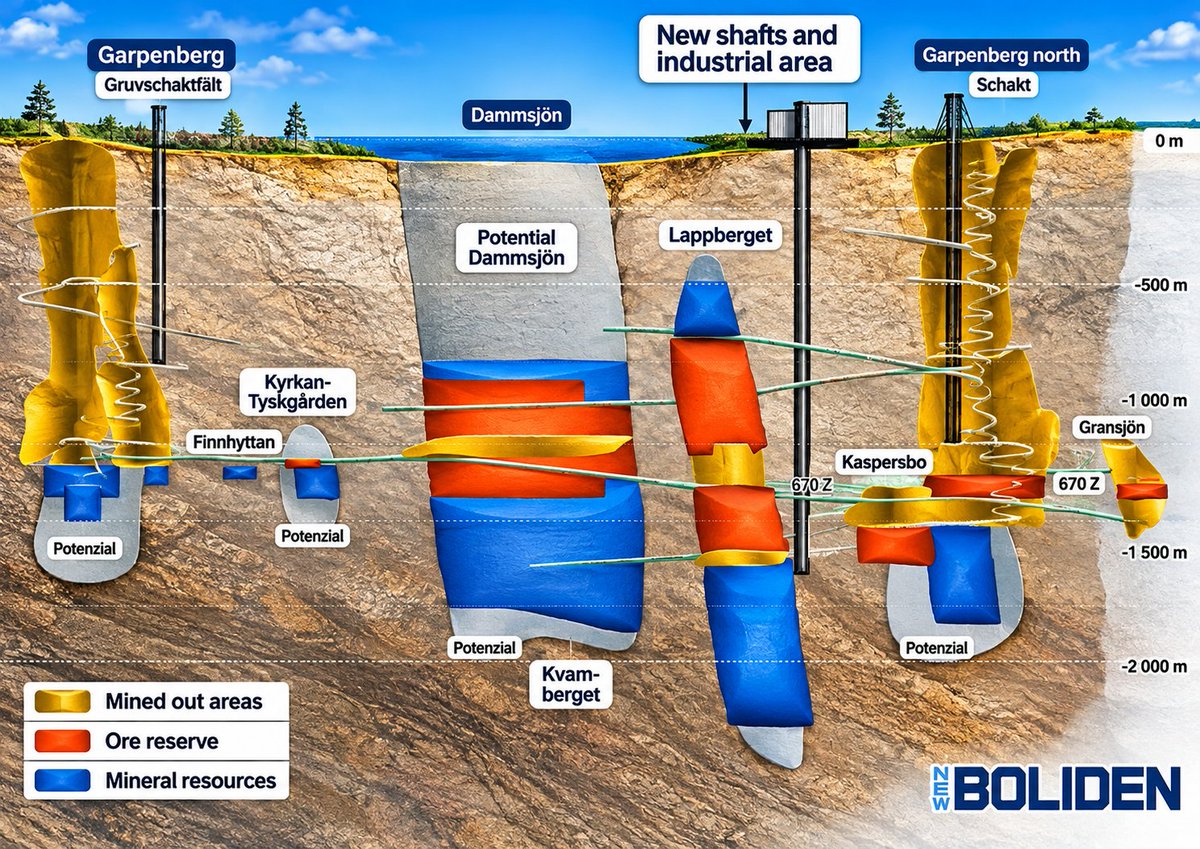
Depletion of near-surface mineral deposits forces the global mining sector to venture deeper underground to extract essential energy transition metals such as copper, nickel, and lithium.
Deep underground mines frequently exceed depths of one to two kilometers, with the deepest operations reaching three to four kilometers beneath the surface.
What technical challenges are associated with deep underground mining operations? Share your thoughts in comments.
Video rights: @GangadharKaranam (YouTube)
Read more: https://t.co/PCGuCHsh0K
Subscribe to Mining Doc to know more about Mining: https://t.co/v8NF3k4pUy
Promote your mining technology to a global audience of mining professionals with Mining Doc. Contact us today at [email protected].
𝗖𝗮𝘀𝗲 𝘀𝘁𝘂𝗱𝘆: How Rock Inspection Tool was implemented using Deswik?
The process of managing rock mechanics inspections in a mine is often done using a series of manual recordings complemented by subsequent data entry.
This presentation will outline how standard Deswik.CAD process maps and Deswik.MDM have been used to manage various rock inspection processes so as to support digital data capture, scheduling of future inspections and reporting of historic data.
Download the case study: https://t.co/mltgUhPpnX
Subscribe to Mining Doc to know more about Mining: https://t.co/v8NF3k3S50
Promote your mining technology to a global audience of mining professionals with Mining Doc. Contact us today at [email protected].
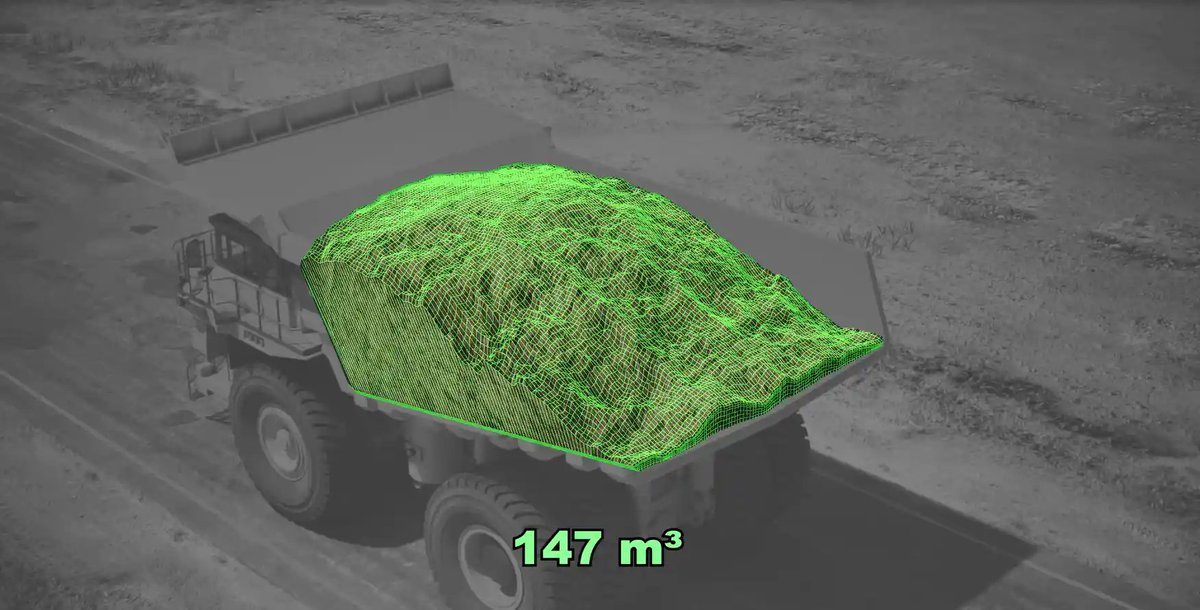
Case Study Truck Volumetric Scanning Lase TVM 3 D-M
Challenges in Traditional Load and Haul Analysis
Traditional load and haul analysis methods have been characterized by estimations and disjointed data, resulting in delayed decision-making and suboptimal load optimization.
The maintenance-intensive nature and high calibration costs of weighbridges and load cells further compound these challenges, leading to inaccuracies in load measurements.
Click here for the case study to our Lase TVM 3D-M in cooperation with our partner Dwyka Mining: https://t.co/HiWG64YyDF
Mineral processing circuits rely on continuous material flow across interconnected equipment stages.
Upstream feed variations propagate through primary crushing, secondary crushing, and grinding operations, causing severe operational challenges across the entire beneficiation facility.
The primary operational bottleneck frequently originates at the crusher when raw ore delivery fluctuates.
Consistent mass delivery into crushing chambers ensures stable mechanical operation, controlled liner wear, and predictable particle size reduction.
How does feed rate affect crusher performance and downstream plant stability? Share your thoughts in comments.
Video rights: @stonecrushersupplier (YouTube)
Read more: https://t.co/OQy8okZZwi
Subscribe to Mining Doc to know more about Mining: https://t.co/v8NF3k4pUy
Promote your mining technology to a global audience of mining professionals with Mining Doc. Contact us today at [email protected].
Conveyor transfer points represent critical junctions in industrial bulk material handling operations. Poorly designed transfer chutes often act as operational bottlenecks, causing material plugging, spillage, and severe belt wear.
Such inefficiencies can reduce conveyor belt service life by up to 75 percent. Modern chute engineering addresses these failure modes through controlled flow geometry, boundary friction management, and numerical simulation.
How do transfer-chute designs reduce blockages and conveyor belt damage? Share your thoughts in comments.
Video rights: @maxrocktech (YouTube)
Read more: https://t.co/0oxrso40ik
Subscribe to Mining Doc to know more about Mining: https://t.co/v8NF3k3S50
Promote your mining technology to a global audience of mining professionals with Mining Doc. Contact us today at [email protected].
Semi-Autogenous Grinding (SAG) mills represent the most energy-intensive equipment in modern mineral processing circuits.
Operational performance and specific energy consumption fluctuate continuously due to variations in ore hardness, media charge dynamics, and pulp rheology.
Primary grinding efficiency depends on precise control over mechanical and operational inputs.
How do SAG mill operating parameters influence grinding efficiency and energy consumption? Share your thoughts in comments.
Video rights: @icsonmx (TikTok)
Read more: https://t.co/2NqMSHysNC
Subscribe to Mining Doc to know more about Mining: https://t.co/v8NF3k3S50
Promote your mining technology to a global audience of mining professionals with Mining Doc. Contact us today at [email protected].