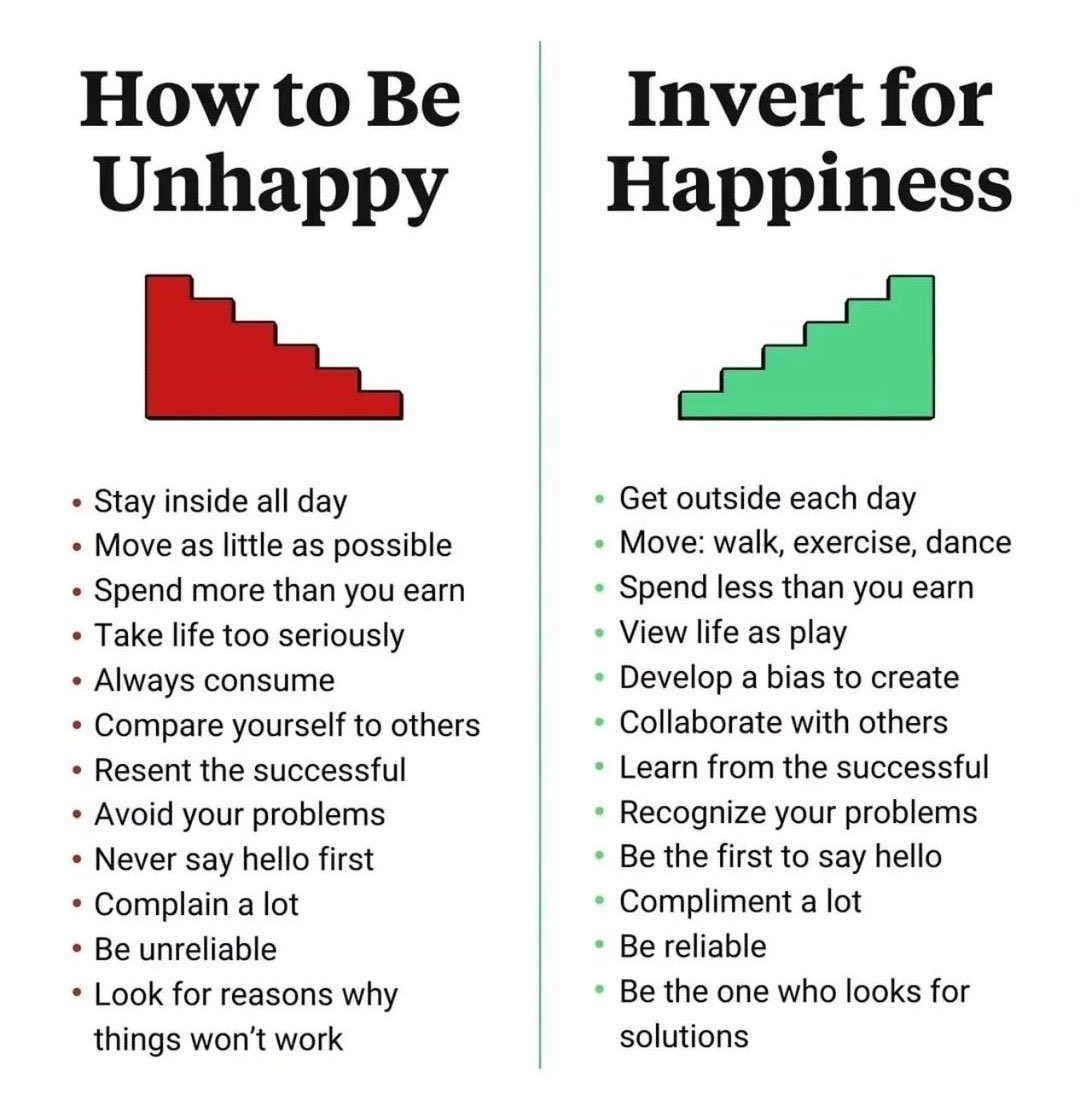
Chris Williamson reading Mark Manson’s “10 years of therapy in 1 minute” is gold.
Here’s the condensed wisdom:
1. No one is coming to save you. You’re responsible for your life — even the parts that aren’t your fault.
2. Strong boundaries beat weak ones every time.
3. Most problems don’t get “fixed.” You just learn to live well with them.
4. Your mind lies constantly. Tell it to shut the fuck up.
5. Stop trying to convince people to like you. The right ones won’t need convincing.
6. Sometimes the best move is letting a dream die.
7. Only a few people will truly matter long-term. Keep them close.
Mark’s reaction? “Why isn’t this taught in schools?”
Which of these hits you the hardest right now?
Vitamin D is misnamed. It's a hormone the body makes from cholesterol when sunlight hits the skin.
Two substances we've been told to avoid for fifty years.
The cholesterol gets prescribed away with a statin.
The sun gets blocked with SPF 50 from March.
When the bloodwork inevitably comes back deficient, you're handed a capsule of synthetic D3, often suspended in soybean oil, and told that supplementing is now essential.
The system removed the inputs. The system then sold you the replacement.
Vitamin D regulates immune function, bone density, mood, hormonal health, and the expression of hundreds of genes. The chronic disease epidemics of the modern era track its decline almost perfectly.
The cure is not a capsule. The cure is the cholesterol your liver wants to make and the sun on the skin it was always meant to meet.
Both are free. Which is the entire problem.
Bitcoin is doing it again.
Not the fun part yet. The part where it gets everyone doubting the whole thing before the next cycle can really begin.
People forget how this asset works. It does not just go up because “halving.” That is the kindergarten version. The real engine is fixed supply meeting human emotion. There will only ever be 21 million coins, so when demand wakes up and real holders stop selling, price has to climb until it finds enough coins willing to move.
That is how you get the insane runs. The 1k to 20k move. The 3k to 69k move. The 15k to 126k move.
But then comes the part nobody likes.
Bitcoin has to digest what it just ate.
If an asset runs 8x, the market does not just calmly reset in three weeks and move on. It has to work through late buyers, leverage, weak hands, tourists, ETF flows, and everyone who bought the top calling themselves a long-term investor until the candles turned red.
That is where the downside gets ugly. The person who bought too early in the downtrend eventually becomes a seller lower. The trader who thought he was buying the low finds out he was just catching another bounce. The leveraged long does not get to be patient. He gets liquidated. Perps and synthetic exposure make the whole thing worse because they create extra demand on the way up and forced selling on the way down.
This is how Bitcoin gets those elevator-down phases.
Not because it died. Because ownership is being cleaned up.
Coins move from people who liked the price action to people who actually want the asset.
That process feels terrible while it is happening, which is exactly why it works. Doubt comes back. The timeline gets dark. People say AI replaced it. Stocks are better. Bitcoin had its moment. The whole thing is over.
And somehow they say this while Bitcoin is still trading above the last cycle’s blow-off double top.
Think about how crazy that is.
The 2021 top near 69k was viewed as this insane parabolic event after a 20x plus move from the prior cycle low. Now, after 7+ months of crypto winter, Bitcoin is still hanging around that old “impossible” zone, and people are acting like the asset failed.
That is not failure. That is a much higher floor trying to form.
Maybe the final floor is already in. Maybe it is not. Nobody knows. The only way to stay sane is station to station. If you think it is going lower, fine. Mark the next real support. Mark the level above that proves your read is wrong. Then update when price gives you new information.
Do not do what the eternal bears do.
Do not pick some dramatic number like 15k, 3k, or zero and then build your whole personality around it. That is how people blind themselves. They stop doing analysis and start defending a prophecy.
Being wrong is not the problem. Everyone is wrong. The problem is refusing to say, “I was wrong,” when the market has clearly moved on.
That is why Bitcoin is such a funny asset. Most bears do not say it is expensive. They do not say it needs a normal correction. They say it is going to zero.
They said it at $7. They said it at $70. They said it at $700. They said it at $7,000. Now they say it when one coin is worth more than most people make in a year.
That is the magic.
Bitcoin creates doubt, then feeds on the people who get trapped inside it.
It runs. It digests. It makes everyone question the whole thing. Then when the floor is finally found, the same people who were waiting for zero are shocked when it starts moving again.
The supply is still fixed. The emotions still swing too far. The believers still absorb the panic. The doubters still give it fuel.
Everyone is falling for it again.
Bitcoin continues to challenge the neckline of a large head-and-shoulders top, while working off its overbought condition with little or no price damage. This is very much how early bull markets have generally behaved.
Your smart TV is taking a screenshot of your screen every 500 milliseconds.
Every show, game, video call, every laptop you have ever plugged into the HDMI port. The TV photographs all of it and ships the data back to the manufacturer.
On May 12, the law firm Peiffer Wolf filed a federal class action lawsuit against Hisense. Their smart TVs in millions of American living rooms capture screen content every 500 milliseconds and route the data through their Chinese parent companies, which are subject to laws compelling them to share that data with the Chinese government on demand.
Every major smart TV brand sold in America does the same thing. Samsung. LG. Sony. TCL. Vizio. Roku. Amazon Fire. The technology is called "Automated Content Recognition."
The data goes to the manufacturer's servers, then to advertising partners, then to data brokers, then to political campaigns.
Vizio executives admitted in 2021 that selling viewing data generates more profit than selling the actual televisions. By 2023, Vizio's platform revenue, which is mostly ads and harvested viewer data, hit $598,000,000.
The customer is the inventory.
75% of American households have a smart TV with ACR running. Roughly 100,000,000 homes. You paid the cartel to install the camera in your living room.
The fix takes 2 minutes. On every brand, the setting is buried in a privacy menu labeled with something polite like "Viewing Information Services" or "Live Plus" or "Smart TV Experience."
Toggle it off. Better yet, unplug the TV from the internet entirely and use a streaming stick you actually control. The screen does not need a network connection to display content.
Unplug it tonight.
You have every right to know what your government is doing, and they have no right to know what you are doing.
That is why they are called public servants and we are called private citizens.
Instead, the relationship has been inverted. The state hides behind secrecy, classified files, and redactions while demanding total visibility into your finances, communications, movement, and behavior.
A society where the rulers live in privacy while the population lives under surveillance is the very definition of tyranny.
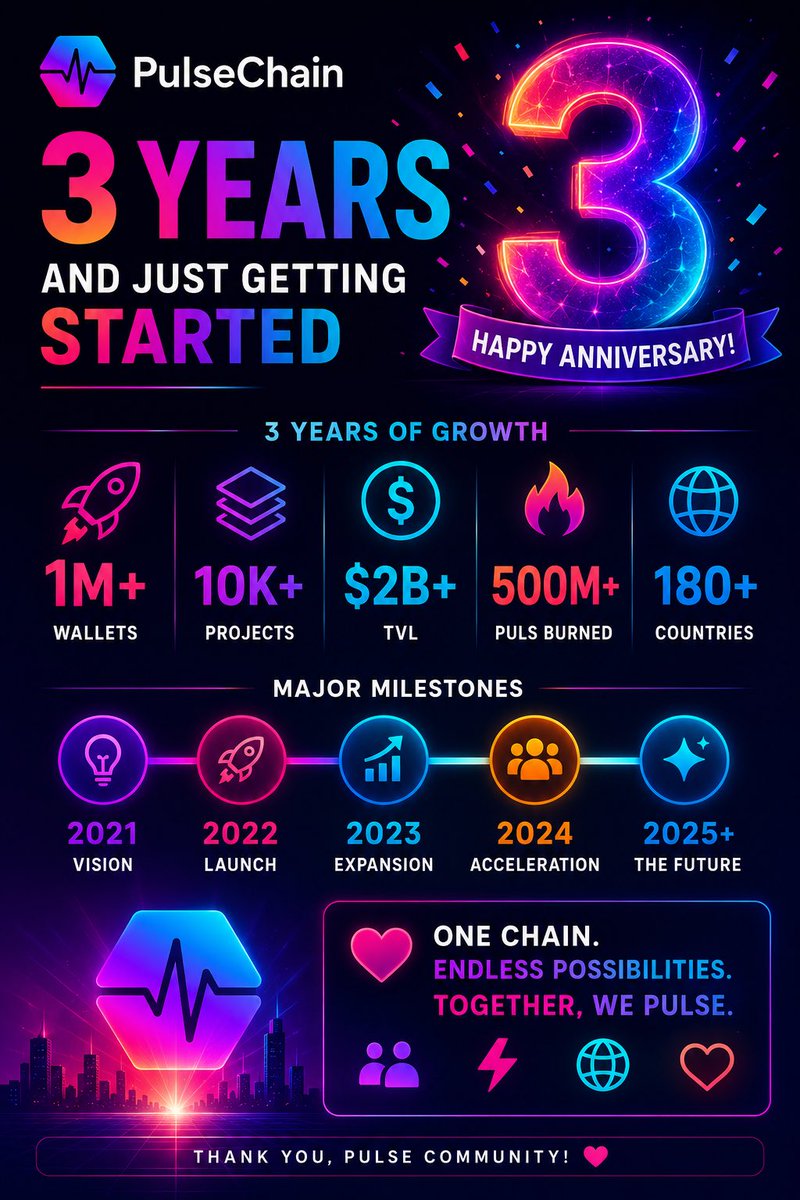
PulseChain, PulseX, HEX, ProveX all have more potential for maximum gains than Bitcoin does, because BTC has a 1.6 Trillion dollar market cap already. It's been around for 17 years already. You are not an early adopter in $BTC.
Those 4 coins all do things that BTC can't.
PulseChain has better potential, better technology, higher throughput, lower fees, is more secure, and is less owned by governments and banks to boot.
HEX did a 10,000x in price in the last 10 years and doesn't make electricity companies and mining hardware manufacturers rich at the cost of the price.
PulseX removes middlemen from trading, its just you and the code.
ProveX uses zero knowledge tech to enable peer 2 peer trading and issue other kinds of proofs.
Better potential, better tech.
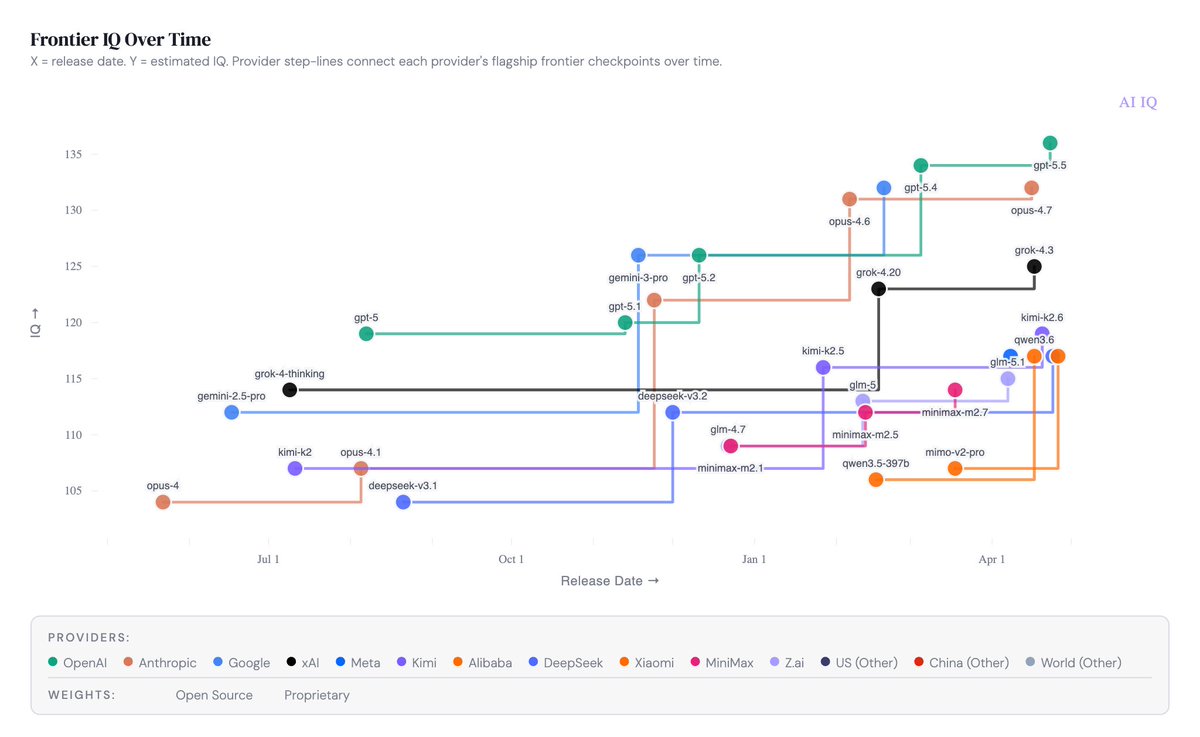
Today I’m launching AI IQ — frontier AI models, scored on the human IQ scale.
Instead of endless leaderboard tables, AI IQ shows:
• Where models land on the IQ bell curve
• How frontier IQ is changing over time
• How models compare on IQ and EQ
• What intelligence costs in practice
GPT-5.5, Claude Opus 4.7, Gemini 3.1, Grok 4.3, Kimi K2.6, Qwen3.6, DeepSeek V4, Muse Spark, and more.
Link in the first reply. Curious which chart surprises you most.
This is absolutely insane.
President Trump is currently flying to China with all of the following people to request "deals" with China's President Xi:
1. Elon Musk, Tesla and SpaceX CEO
2. Jensen Huang, Nvidia CEO
3. Tim Cook, Apple CEO
4. Larry Fink, BlackRock CEO
5. Stephen Schwarzman, Blackstone CEO
6. Kelly Ortberg, Boeing CEO
7. Brian Sikes, Cargill CEO
8. Jane Fraser, Citigroup CEO
9. Larry Culp, General Electric CEO
10. David Solomon, Goldman Sachs CEO
11. Sanjay Mehrotra, Micron CEO
12. Cristiano Amon, Qualcomm CEO
President Trump also says there are "many other" CEOs joining him on the trip who have not yet been disclosed.
Never in history has such a trip even remotely near this scale and caliber occurred.
This Trump-Xi meeting is far bigger than most realize.
Chamath Palihapitiya just said what Silicon Valley is terrified to say out loud.
On Joe Rogan. To millions of people. Without flinching.
Chamath: “The only person that we can trust is Elon.”
Not whispered at a dinner party. Not buried in a podcast nobody listens to.
Said on the record. Full weight behind it.
And then he told you why.
Chamath: “I feel like he’s the least corruptible. He’s the most independent thinking. And I think he’s the one that has an actual empathy for people.”
One of the sharpest capital allocators in Silicon Valley history looked at every founder building AI.
Every single one.
And chose the one the media spends the most energy telling you to hate.
That alone should stop you cold.
Chamath: “Then there are folks where there’s just an insane profit motive.”
He’s talking about OpenAI. He’s talking about Google. He’s talking about companies that swallowed billions from Wall Street and now answer to shareholders before they answer to humanity.
Chamath: “They’re less in control of the businesses that they run.”
The people building the most powerful technology in human history do not control their own companies.
Their boards do. Their investors do. Their liquidation preferences do.
And these are the ones we’re trusting with superintelligence.
Chamath: “He’s like, I need to get to Mars.”
This is the fracture line nobody wants to touch.
Every other AI founder is optimizing for the next earnings call. The next funding round. The next quarterly number that keeps the machine fed.
Elon is optimizing for the next planet.
One group builds to satisfy investors. The other builds to survive as a species.
Those aren’t different strategies. Those are different operating systems running on different hardware.
And it changes everything about how you build.
When your time horizon is 90 days, you cut corners. You monetize behavior. You trade safety for speed because the board needs a number by Friday.
When your time horizon is interplanetary, you can’t afford a single shortcut. Because shortcuts don’t survive launch.
Chamath: “Where is this going to end up?”
The only question that matters. And nobody in power wants you asking it.
Because the answer comes down to who gets there first.
If it’s a company owned by Wall Street, superintelligence becomes the most sophisticated extraction engine ever built. Every decision optimized. Every behavior predicted. Every market captured. Not for you. For the balance sheet.
If it’s someone who can’t be bought, pressured, or voted out by a board of directors, there’s at least a chance it bends toward something bigger than quarterly revenue.
History never remembers who built the most powerful technology.
It remembers who controlled it. And what they used it for.
The only founder in AI who cannot be fired by a board, leveraged by an investor, or replaced by a shareholder vote is the one they spend the most energy telling you not to trust.
Ask yourself why.
If you think PulseChain $PLS is a dead chain, or isn't going anywhere, take a look at all the action going on with the community, builders, and devs.
-You got @InternetMoneyio and @BrotherKDG with full support in their crypto wallet, constantly pushing updates and listening to HEXICAN feedback.
-You got @LibertySwapFi and @zkxwallet building a privacy wallet and gasless swapping features to align with Richard Heart's vision.
-You got @SIN3R6Y building a powerful wallet, that maybe be an equivalent to Rabby, only better with full PulseChain support!
-You got NFT marketplaces like @MintraAI and @THESTAKERCLASS (https://t.co/WKcFLjMhQg) built for PulseChain.
-You got @liquidloansio running their lending protocol and stable coin, and the founder @Crypto_Crazey speaking at conferences.
-You got long time influencers like @cryptocoffee , @yourfriendsommi , @hexologist369, @rhmaximalist , @MatiAllin , @TamTamHEX etc.. represting the HEX and PulseChain ecosystem and core values.
-You got a founder @richardheartwin who, against all odds, is still here, fighting, winning, active on X, still building, still posting, still interacting with the community. 💪
https://t.co/0qDqFmo0cd 🗽
When PulseChain launched, the one thing I knew we were going to be missing was infrastructure.
Not hype.
Not another token.
Not another chart.
Infrastructure.
Ethereum had years to build out the tooling, RPCs, indexers, data services, dashboards, wallet support, integrations, and all the invisible pieces that make a chain actually usable.
PulseChain needed a lot of that on day one.
So that’s where I focused.
It is a relatively thankless part of the ecosystem. Most people only notice infrastructure when it breaks. It does not really have a flashy narrative. It does not pump because a node stayed online. It does not trend because a backend service quietly handled traffic for another app.
But a lot of projects depend on it.
That work was hard, and for the most part, I do not really make anything from it. I did it because I thought it needed to be done.
At this point, I consider a lot of that infrastructure work done. Or at least done enough that I can start shifting more attention toward the next missing pieces.
Software is like an onion.
There are layers upon layers.
Most people only see the final app, the interface, the button they click, or the thing they directly use. But underneath that are all the other pieces that have to exist first: RPCs, APIs, data services, indexers, contracts, routing logic, security assumptions, UX standards, integrations, and a dozen other things nobody really wants to think about until something breaks.
Some software cannot properly exist until other software exists beneath it.
And when those lower layers are missing, someone has to build them.
That is a lot of what my work on PulseChain has been. Not just building the thing people see, but building the things the visible thing depends on.
That also means I have had to put my own personal opinions aside in a lot of cases.
There is software out there that I do not personally agree with. There are projects I would not use myself. There are decisions I may not like, products I may not believe in, and approaches I may think are wrong.
But infrastructure has to be agnostic.
If you are building foundational layers for an ecosystem, you cannot only support the things you personally like. You cannot alienate every project you disagree with. You cannot build in a way that says, “This only works for my corner of the chain.”
That is not how we grow.
A real ecosystem needs room for different products, different opinions, different strategies, and different types of users. Even when I disagree with someone, that does not automatically mean they should be cut off from the infrastructure layer.
That is not always easy.
But I think it matters.
And to be clear, I see a lot of devs working very hard on a lot of things.
I do not like shitting on people who are actually building good things. I can personally disagree with someone’s direction and still respect the work they are putting in. Those two things are not mutually exclusive.
There are projects I might not use myself. There are design choices I might not make. There are products I might think should go a different direction.
But if someone is showing up, writing code, solving problems, and trying to make the chain more useful, I respect that.
The beauty of software is that none of this has to be winner-take-all.
If another dev does not like Cappy, but they like a feature in it, they can implement that idea in their own way. If they think I missed something, they can improve on it. If they think my approach is wrong, they can prove it by building something better.
That is how this should work.
And in cases where there is strong overlap, I will even help where I can, as time allows.
That is how you grow.
That is how you get taken seriously as a chain.
In my opinion, anyway. I can be wrong.
That is part of why I’m building Cappy.
If you do not like Cappy, you do not have to use it. I mean that sincerely. I am not building a wallet because I think everyone has to agree with my taste, my priorities, or my product decisions.
I am building the wallet I personally would want to use.
That may not be the wallet you want to use. That’s fine. Some people like Microsoft Word. Some people like Google Docs. Some people like Rabby. Some people like MetaMask. Some people want something simple. Some people want something powerful. Some people want every possible feature. Some people want as little friction as possible.
There is no single perfect answer for everyone.
But the wallet I wanted to use on PulseChain did not exist in the form I wanted it to exist, so I decided to build it.
A lot of the pieces of this chain, I honestly thought other people would eventually figure out. In some cases, they did. In other cases, not really.
I thought we would attract more external devs. I thought more projects would port over. I thought more teams would support their forks. I thought more of the obvious gaps would get filled over time.
Maybe I was wrong to expect that.
Maybe I should have seen it differently from the beginning.
Either way, it is what it is.
At some point, I stopped waiting for other people to build the things I wanted to see exist.
That does not mean I think I am always right. I am not infallible. I am sure I will make decisions some people disagree with. I am sure some people will not like the way I build things. I am sure some people will think I should be working on something else.
That is fine.
You can dislike the software I write and not use it.
It really is that simple.
But I am going to keep building the things I believe are important.
People ask, “What about Sigma?”
I am working on it in parallel with Cappy.
People ask, “What about Cross Chain IcosaHedron?”
I am working on it in parallel with Cappy.
People ask, “What about the other ten pieces of software the ecosystem still needs?”
That is exactly the point.
These things are not always separate in the way people think they are. A wallet needs infrastructure. Cross-chain systems need reliable data. DeFi products need tooling. User-facing apps need lower-level services that most people will never directly touch.
Some things need other things to exist before they can function properly.
And if those other things do not exist, someone has to make them.
I am not randomly jumping between projects.
I am building the layers that make the next layer possible.
I have been told many times that I should run a foundation, or try to organize things, or try to be some kind of public face for the ecosystem. I do not know if I would even be good at that. Maybe I would. Maybe I would not.
What I do know is that I am at least decent at software.
So that is where I am putting my energy.
I can try to do the things I wish more people were doing.
Am I the happiest with Richard right now? No.
Do I respect what he has built? Yes.
Am I still hopeful for the future? Yes.
Those things can all be true at the same time.
I have more or less put everything on the line to move quickly and build things I think matter. The infrastructure phase was the first big priority, and I think that work is now far enough along that I can focus more heavily on actual products people can touch, use, critique, and hopefully benefit from.
Many of you support me, and I see that.
I do not take it lightly.
All I can really promise is this: I am going to keep trying to give this ecosystem the best software I can.
Not because everyone has to use it.
Not because I think I am the answer to every problem.
Not because I agree with every project.
But because I still believe PulseChain deserves better tools, better infrastructure, better user experiences, and more people willing to actually build the missing pieces.
That is what I am trying to do.
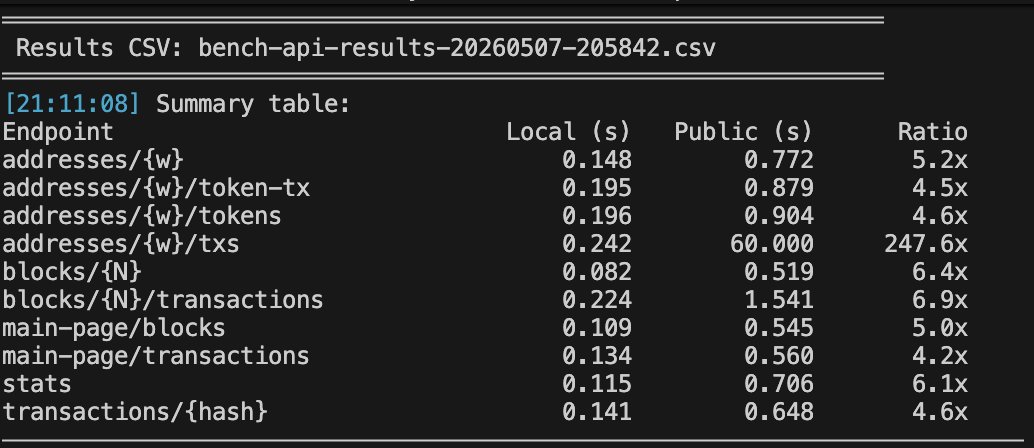
Thanks for coming to my Ted Talk. I hope you like the things I do. None of this is any kind of advice, especially financial and P.S. Cappy comes with a block explorer that (hopefully) people find fast and functional enough to like. It was a requirement to make Cappy work. Modified Blockscout fork.
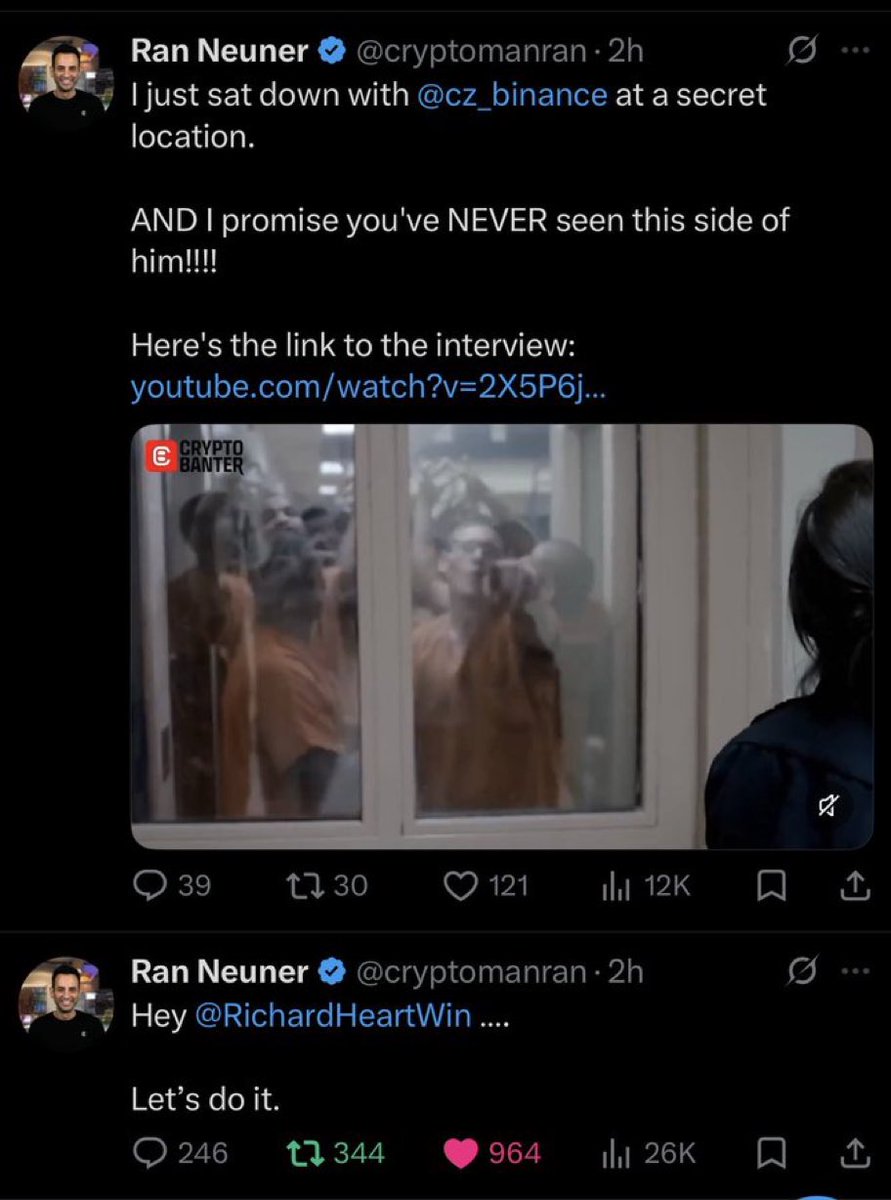
A picture says 1000 words
PulseChain on social media media gets more organic engagement than anything else
An exclusive interview between a top crypto influencer and top exchange founder / entrepreneur, both famous, gets less attention than a teaser of him maybe possibly interviewing Richard Heart. By a factor of almost 10x.