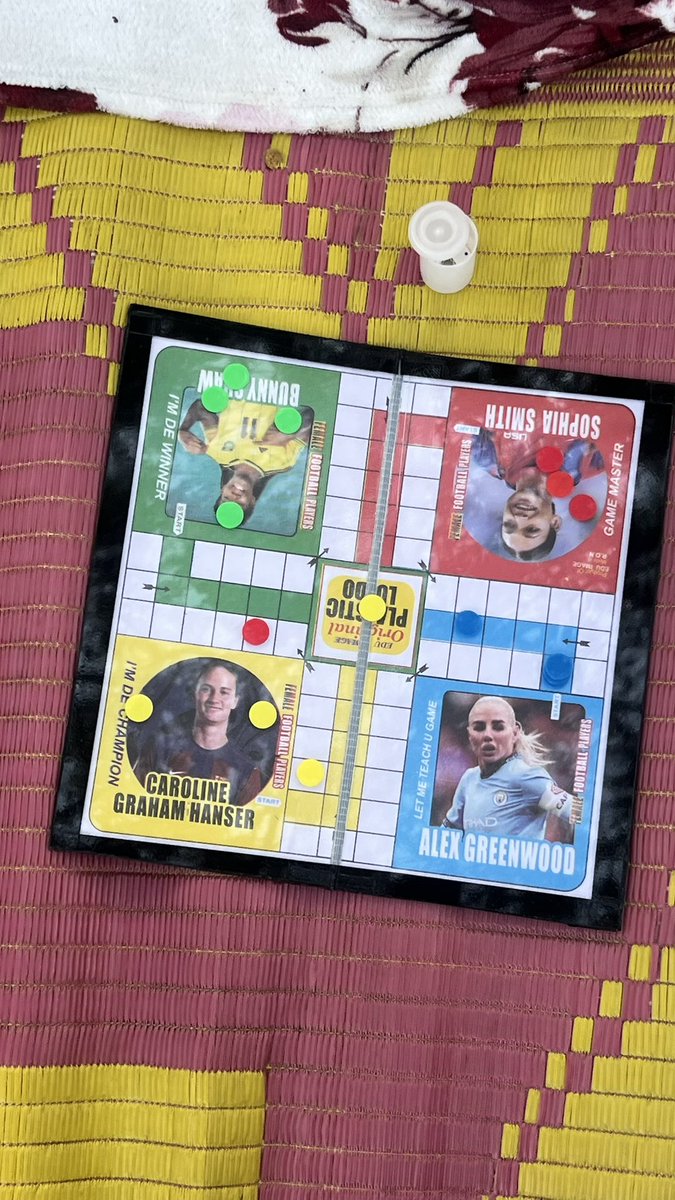
What we are building?
Community. Books. Conversations. No alcohol. No phones. Nature.
we’re so keen to promote a culture of reading, sobriety and mental wellbeing and many people already believe in this vision.
Help us make it easy @CityofKigali
The world ran through Kigali today! 🌍🔥 More than 5000 runners from 65 countries took part in #KIPM2026 – Run for Peace, celebrating unity and peace through sport.
#KIPM2026#IRun4Peace
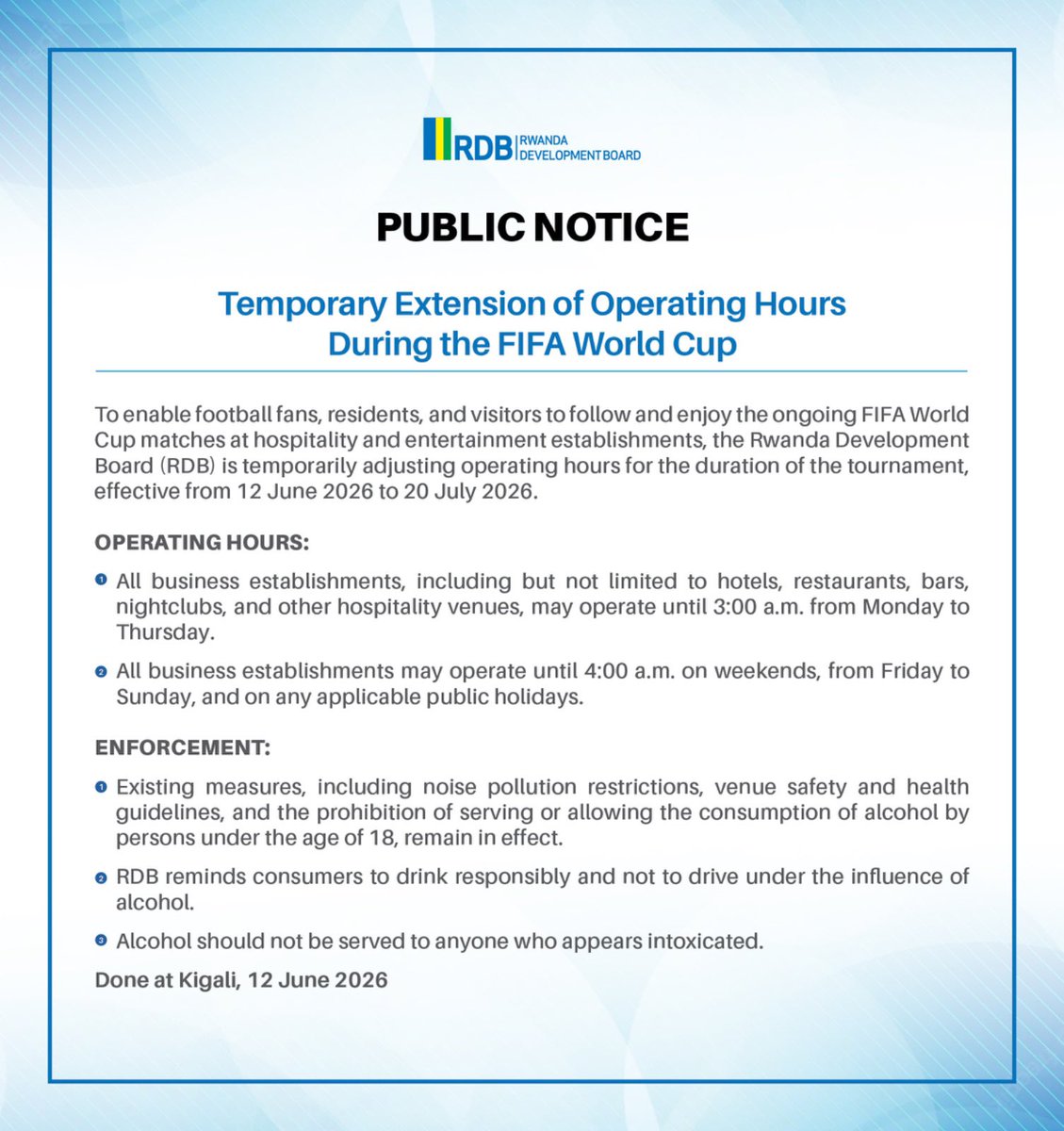
Public Notice: Temporary Extension of Operating Hours During the FIFA World Cup.
Itangazo: Amabwiriza agenga ibihe by’ubucuruzi bujyanye n’ubukerarugendo no kwakira abantu mu gihe cy’imikino y’Igikombe cy’Isi.
Back then, we'd get this in a magazine, but I'm glad @guardian_sport can still make quality content like this ahead of the World Cup https://t.co/TkUK9ZpROJ
An increase of Rwf 712 per litre of diesel🙆🏿♂️. We should brace ourselves for more tougher economic times ahead. Diesel powers most of the trucks & vehicles that transport goods across the country. This will definitely be followed by a rise in prices of food & other essential commodities🤷🏽 #FungaMkanda
McKinsey already generates 25% of its fees from outcomes-based pricing. Strategy advice accounts for less than 20% of the firm's work. They're shifting partner compensation into equity because revenue volatility is spiking. The transition is further along than this headline suggests.
Run the old math. A McKinsey engagement bills roughly $700 an hour. A six-person team scoped for three weeks on a market entry analysis ran somewhere around $500K. The client couldn't easily benchmark that against alternatives because the deliverable was proprietary methodology wrapped in a 200-slide deck.
AI broke the opacity. A client can now run the same market sizing, competitive landscape, and scenario analysis through Claude or GPT in an afternoon. The output isn't identical, but it's close enough that the client can see what $500K was actually buying: 70% data aggregation, 20% formatting, 10% genuine strategic insight. That last 10% is worth paying for. The first 90% is now a commodity.
McKinsey sees this, which is why they pivoted hard into implementation. 72% of their consultants actively use Lilli, their internal AI tool. They're selling multi-year transformation projects instead of three-week strategy sprints. The firm that defined strategy consulting is quietly exiting strategy consulting.
The pricing math is structural. In billable hours, AI productivity means more output per hour, more revenue per consultant. In outcomes-based pricing, AI productivity means same outcome delivered faster, less revenue per project. McKinsey chose outcomes-based because clients forced them to. Now every efficiency gain flows to the client instead of the firm.
$16 billion in annual revenue. 38,000 employees. A 100-year-old business model being unwound in real time. The firms that survive will look nothing like consulting firms. They'll look like AI-augmented implementation shops that happen to have McKinsey's rolodex.