It’s that time of year! We’re re-launching #HBPSummerSchool for you to explore ethical and social issues raised by brain research in our 12 lecture @HBP_Education course on @HumanBrainProj research, #ethics & societal impact!
https://t.co/27urM2Zu6d
The volume is now out in open access: https://t.co/uEOiqjME00 Join us at 4 PM to hear more about the right to science, one of the least known of the UN's Human Rights Declaration | @CRASSHlive@berytia @MannPorsdam @SamanthaJPeel
To affect political determinants of health we must understand in detail HOW they operate, as Professor David Williams explains in his introduction. We must also learn from history -- WHY and HOW some efforts succeeded, and others failed. This book explains all of that clearly.
Tomorrow -- Wed. Feb 17 5-6 pm EST -- @DanielEDawes joins Tuskegee-Harvard Black History Month series. Read this thread for more about his vitally-important work, then register here! https://t.co/WbhSQeo1Uh
Please join us! Tuskegee University-Harvard Medical School Black History Month Series Feb 3/10/17/24 5-6pm EST. Unless we understand the past, we can't know why/how we must repair the present. Unless/until we do that we won't have the better future we will _all_ benefit from.
It's now standard operating procedure to create scientific uncertainty in defense of products with significant health risks: from smoking and foods to global warming, asbestos, and pharmaceuticals. David Michaels talks about his new book "The Triumph of Doubt" #HarvardBioethics
Hmm..what should stem cell created embryos be called? Synthetic? Models? SOELS (self organizing embryo-like structures. Some embryonic models are so good as to be indistinguishable from "real" " natrual" embryos. #HMSbioethics
"OpenMINDS" is a curated, federated open database in the EU Human Brain Project for [M]etadata [I]nitiative for [N]euroscience [D]ata [S]tructures. Not all acronyms work, but this one is quite fitting. #HBP2020
~10% of US carbon emissions are attributable to health care-- especially drugs, structures & equipment and physician and clinical services. See chart. Data and discussion w/Cristina Ritchie, author of "Green Bioethics: Sustainability in Health Care" [2019] #HarvardBioethics
The earth is running out of resources. Cristina Ritchie talks about "Green Bioethics" at today's seminar @ HMS Center for Bioethics. The US is one of highest carbon emitters in the world 20 m.tons/person; 5x more than world average 4 m.tons/person. #HarvardBioethics
See the drop in deaths from car crashes? Not achieved by banning cars but by taking public health approach and targeting interventions/regulations. Same for firearms? #HarvardBioethics
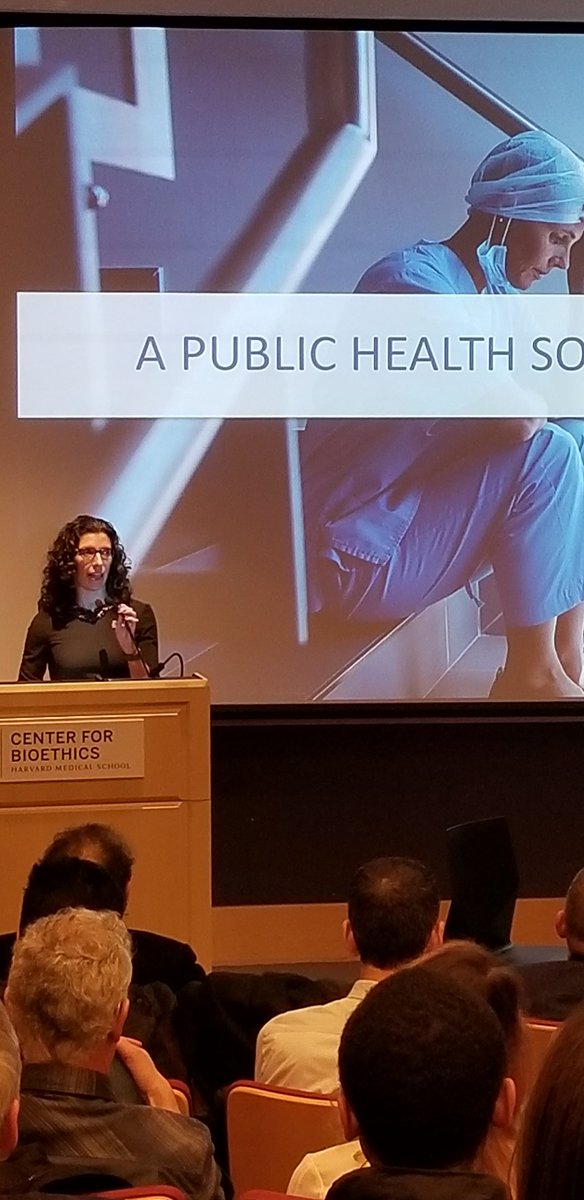
100+ gun deaths and 200+ gun injuris/ day in the US. Megan Ranney MD talks about a public health approach to gun violence at our monthly Center for Bioethics/PORTAL consortium on Health Policy and Bioethics. #HMSBioethics
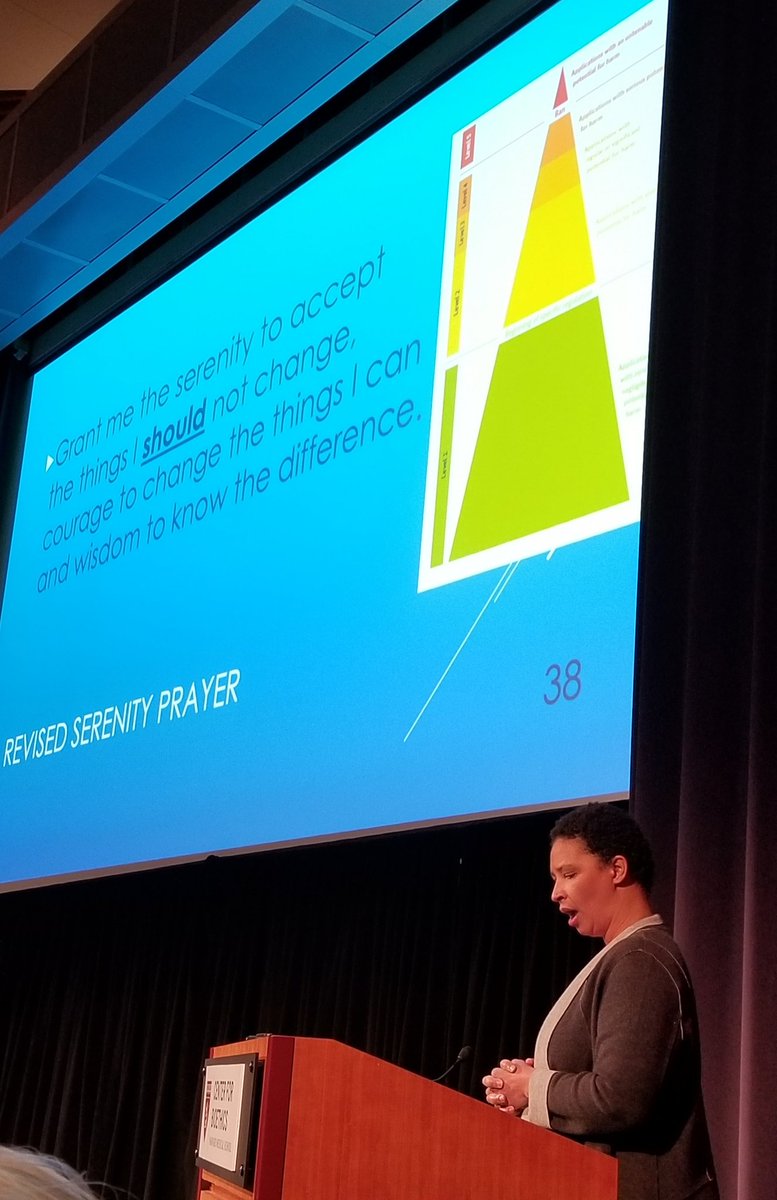
G.W.Gay Lecturer, Danielle Allen argues there are some things we should NOT change via germline gene editing, some we may...+need wisdom to tell the difference. Suggests developing criteria + regulatory restrictions, similar to restrictions upon nuclear power. #HMSbioethics
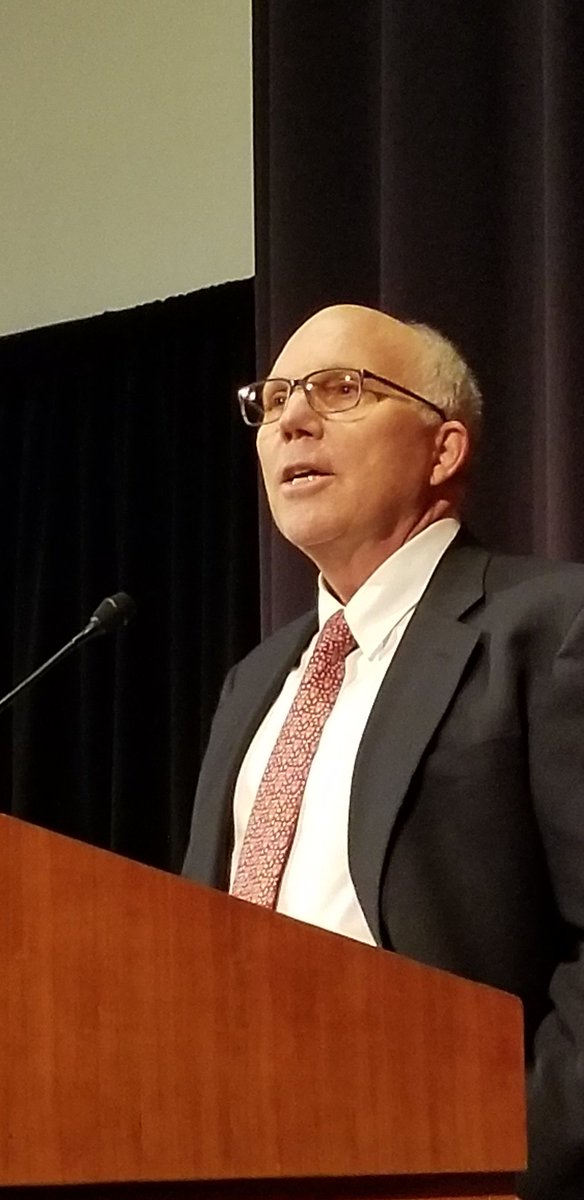
Bob Truog, Director of HMS Center for Bioethics, introduces this year's George W. Gay lecturer, Professor Danielle Allen, speaking about Human Choice in a Hyper-Technological Age. For example:Humans set the choices for algorithms
"What are the necessary features for a minimal person?"
George Church and Insoo Hyun discuss the plasticity of human cells and their moral status for Harvard Center for Bioethics' public forum on "Ethical Frontiers of Biotechnology" #HMSbioethics
Not all medical innovation occurs through clinical trials. In stem cell therpies, it is necessary to allow for medical innovation, but also protect patients and contribute to generalizable medicine. See principles #HMSbioethics










![Mitchell_HCB's tweet photo. "OpenMINDS" is a curated, federated open database in the EU Human Brain Project for [M]etadata [I]nitiative for [N]euroscience [D]ata [S]tructures. Not all acronyms work, but this one is quite fitting. #HBP2020 https://t.co/QWyUF1byxT](https://pbs.twimg.com/media/EP7EmTFX4AEoqVX.jpg)

![Mitchell_HCB's tweet photo. ~10% of US carbon emissions are attributable to health care-- especially drugs, structures & equipment and physician and clinical services. See chart. Data and discussion w/Cristina Ritchie, author of "Green Bioethics: Sustainability in Health Care" [2019] #HarvardBioethics https://t.co/pb63keRtYK](https://pbs.twimg.com/media/EMFeffZUwAAF6i3.jpg)


