I choose to rise above twitter arguments (especially when it’s insulting) for two reasons:
1. I may be interacting with someone elderly, far more refined or accomplished than I am, and engaging in insults would tarnish my ‘omoluabi’ reputation.
@singletcrypt@dorinzy@TheJohnOlonade@TomiwaImmanuel What kind of unintelligent comparison is this, for God’s sake! What is the correlation between writing the voluntarily UTME(public exam) and entering a mosque? 🤦♂️ An institution requested to be accredited to be a CBT Centre but is refusing well dressed Muslim candidates entrance.
@dorinzy@TheJohnOlonade@TomiwaImmanuel I’m not even talking about his school. Go and listen to the vile and hate comments he has made against Islam and Muslims unprovoked. The videos are on the internet. The same school stopped candidates wearing Hijab from writing UTME(a public exam) in their Centre. Just a day exam!
@TheJohnOlonade@TomiwaImmanuel “Ruthless disciplinarian” or a heartless fanatic/extremist. Only if a Muslim scholar had uttered half of such vile comments he used to make against Muslims, I wonder if you would still label him a mere “disciplinarian.”
“He sent God-over 20m” ≠ “He sent God over 20m” The lack of hyphen made me read an entirely different meaning to the statement initially. I was like “When dem start Dey wire the Almighty money?” 😂
MAIDUGURI–DAMBOA ROAD: THE TREACHEROUS CORRIDOR.
Before I begin, let me make it clear that nothing in this account is confidential or in violation of Operational Security. The reputation of the Maiduguri–Damboa road is well known to locals, traders, travelers, and anyone familiar with this treacherous corridor.
The Maiduguri–Damboa road is of immense economic importance to Borno State. Livestock, charcoal, firewood, beans, groundnuts, watermelons, and countless other goods move along this corridor into Maiduguri every day. In the opposite direction, traders transport supplies from Maiduguri to Damboa and onward to towns such as Chibok, Askira-Uba, Biu, Gonori, and several others.
However, sustained insurgent attacks turned the road into one of the most dangerous routes in the region. Many travelers abandoned it entirely, choosing longer and safer alternatives through Yobe State.
After major clearance operations, the road was reopened to commuters, but it wasn’t a free-for-all. Every vehicle moving between Maiduguri and Damboa had to join a military-escorted convoy.
Military deployments were established along the corridor to maintain a permanent presence, secure different sections of the route, support convoy operations, and reassure travelers that the road could once again be used for daily life and commerce.
All vehicles traveling from Maiduguri to Damboa on a daily basis were required to assemble into convoys at Molai, a village just outside Maiduguri. A popular local known as “Ci muci” was appointed to coordinate the civilians ahead of movement and assist with the convoy assembly process.
Trucks loaded with produce, commercial vehicles, private cars, traders, families, and travelers would begin gathering there, waiting to be searched before the day’s movement.
My formation, 192 Echo Company, was deployed at Delwa, beyond Molai, as a Forward Operating Base. Part of our task was to secure a section of the corridor and support convoy operations.
Every morning, we’d move back to Molai to link up with the convoy before movement. We served as the rear escort team. We’d also use that opportunity to scan known hotspots between Delwa and Molai before the movement commenced.
Other formations occupied key locations such as Kumala and Bulabulin, securing major threat areas along the route, while Damboa served as the final convergence point for the convoy system.
Vehicles arriving from Damboa were searched before continuing to Maiduguri. On days when our convoy from Maiduguri experienced delays, 25TF escort teams sometimes moved the Damboa convoy as far as Bulabulin, where we’d conduct convoy exchanges to ensure travelers from Damboa could continue their journey to Maiduguri before nightfall.
It’s important to understand the environment in which all of this took place.
By this time, most of the villages between Molai and Damboa had been sacked by Boko Haram.
Entire communities had disappeared.
On many stretches of the road, the only people you were likely to encounter were soldiers manning isolated positions, the occasional escapee from captivity, or someone whose presence raised more questions than answers.
That was the reality of the Maiduguri–Damboa corridor.
Ehn ehn….Now that I’ve given you the background, let’s talk about these pictures.
Picture One
The first frame shows what would typically be the second half of a convoy movement. On some days, a convoy could consist of anywhere between 80 and 120 vehicles.
To avoid slowing down the movement, the heavy trucks were usually released first under escort by gun trucks and Armoured Personnel Carriers. The smaller vehicles would follow later and eventually catch up with the truck convoy.
If a truck broke down along the route, occupants could be evacuated into the smaller vehicles, ensuring nobody is left stranded on the road.
If you zoom into the picture, you’ll notice a white Hilux leading part of the convoy. Those were the men of F-SARS who were also involved in
This is how misinformation spreads like wildfire on social media! See a lot of people agreeing to him in the comments. 🤦♂️. I can comfortably point out at least 3 errors in this piece of garbage.
Oh my!! This is great stuff…can we talk about having some of these great photos from your archives. Thank you! Thank you. All over the world, the Navy is used for national ceremonial. I hope this culture is revived. President Nnamdi Azikiwe only wore naval ceremonial dress for national parades and was buried in ceremonial Admiral uniforms.
My body system funny die 😂
iffa eat beans I will get heartburn
iffa drink garri I go still get heartburn
ifffa eat yam.... heartburn 😂😂
Body wey suppose dey thank God say I see food chop e wan dey select food 😭😂😂
E never ready
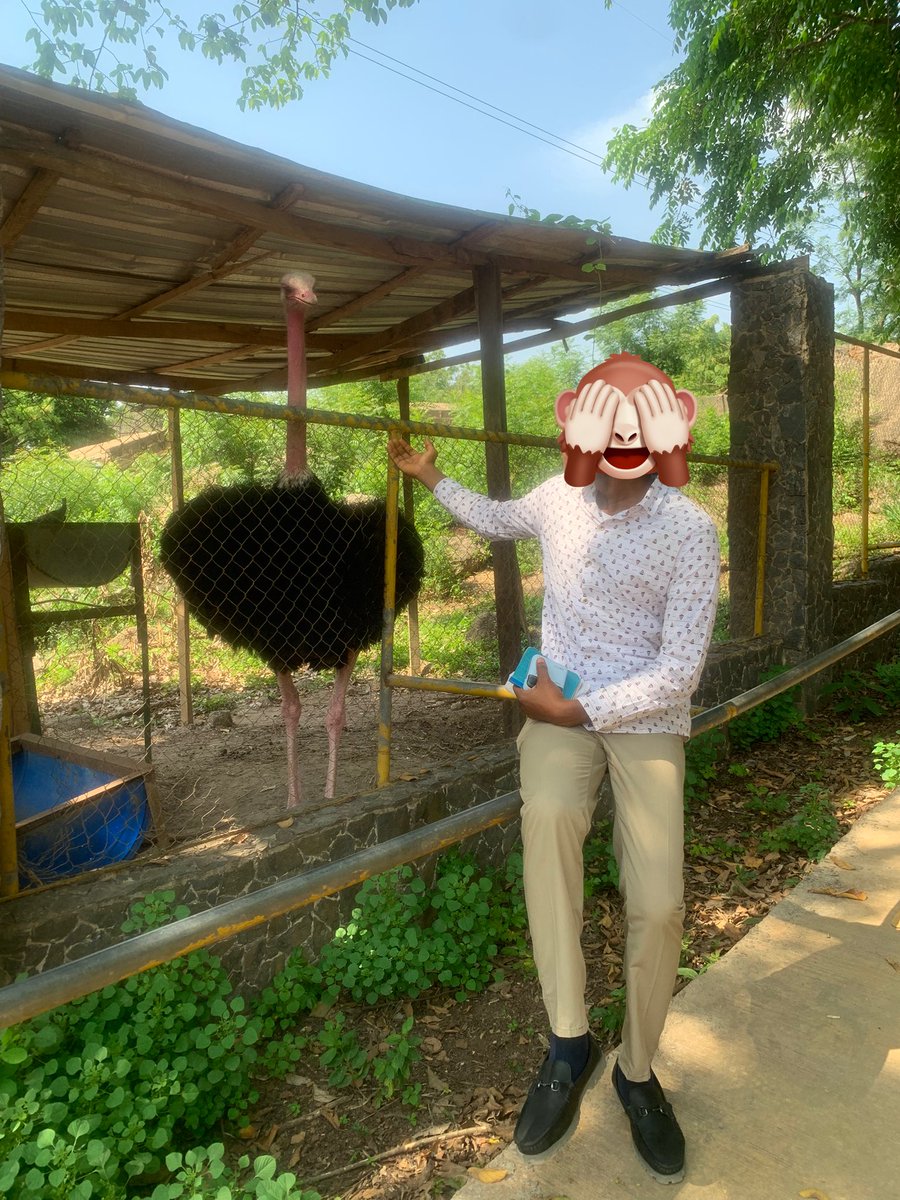
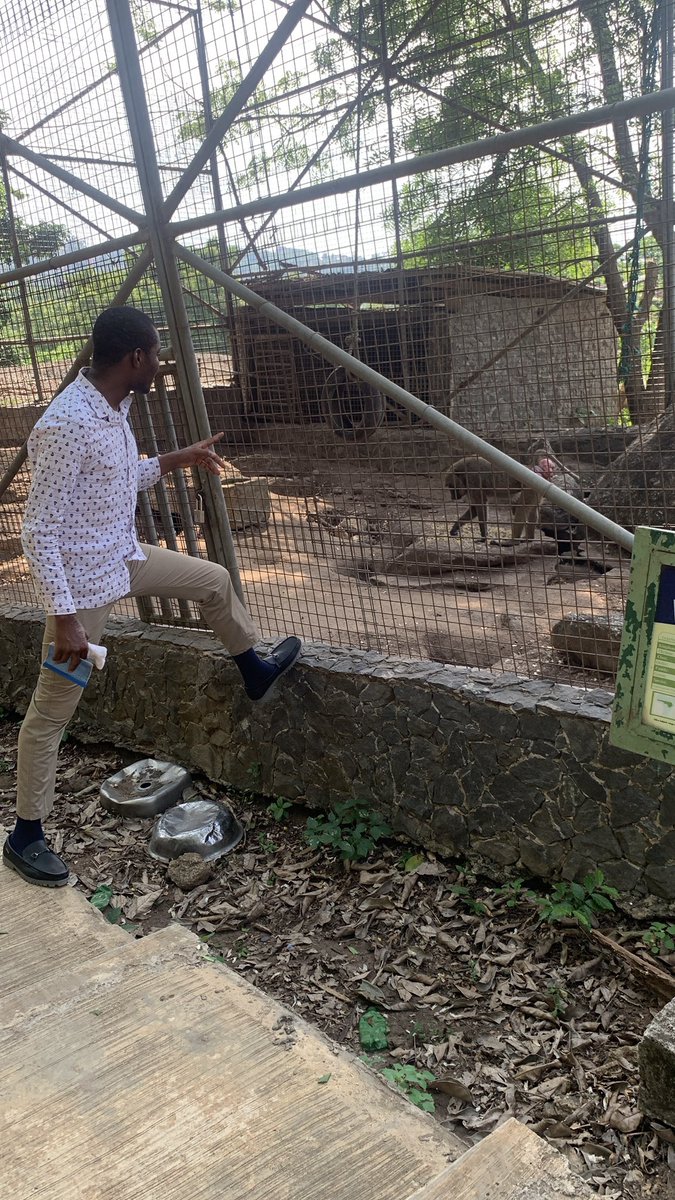
Took a quick detour to the OOPL Wildlife Park and came out smiling. Seeing real lions, hyenas, deer, ostriches, and plenty birds up close reminds you why we need to protect our wildlife. Peaceful vibes in the middle of Abeokuta. If you love nature, add this to your list! 📹 #OOPL