Every day, a new 52-week high for European natural gas.
Europeans now pay 8.6 (!) times more for natural gas than Americans.
And the bidding war with Asia to fill storage sites for next winter has not even started yet.
While gold declines... money printing has reaccelerated.
None of the fundamentals that drove gold to record highs have reversed. If anything, they've become even stronger.
- Central banks are still net buyers of gold.
- Global debt levels remain unsustainable.
- Government deficits continue to surge.
This war is reinforcing all of those trends.
Bessent's continuous interventions across multiple markets just show the game plan here.
Rather than risk the bond market, policymakers will sacrifice the currency through inflation.
This gold bull market is far from over.
Here is how Bessent's Treasury QE works:
- Step 1: Bessent issues UST bills.
- Step 2: The Fed prints money to buy them.
- Step 3: Bessent uses the proceeds to buy long-term USTs.
They don't call it QE because the Fed doesn't intervene directly in the long end...
Meanwhile the Fed is buying UST bills at a faster pace than during Covid.
I'm pretty sure we will effectively get YCC... just with a different name tag.
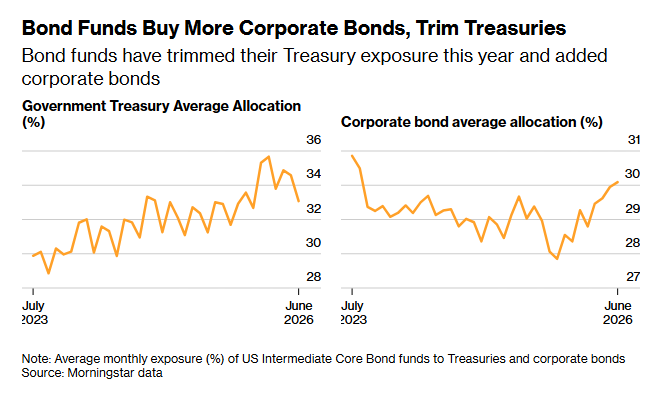
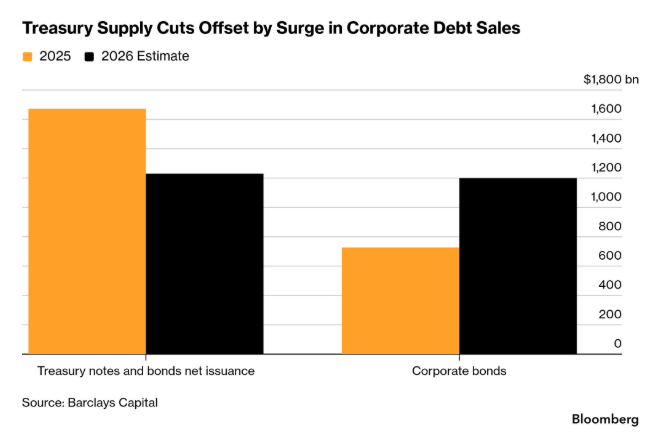
🦔AI companies have borrowed so much money this year that they're pushing up interest rates for the entire economy. Nomura estimates tech borrowing alone now equals 25% of what the US Treasury issues in bonds, five times more than last year. Bank of America says the surge has added about 0.3 percentage points to the 10-year yield. Bond managers are selling Treasuries to buy AI corporate debt instead because it pays more.
My Take
AI companies are now competing with the US government for the same pool of lenders, and the lenders are picking the corporate bonds. Alphabet's 30-year pays 6.4%. A Meta data center bond pays over 7.5%. At those rates, a 5.2% Treasury loses the fight for capital every time. That's one of the reasons long-term rates have stayed so stubborn even as the Fed tries to bring them down.
JPMorgan expects $5.5 trillion in AI infrastructure spending through 2030, and most of it will be borrowed. That borrowing raises the cost of money for everyone, the government, your mortgage, small businesses trying to get a loan. The AI buildout has reached the scale where it moves rates for the whole economy, and most people paying higher borrowing costs have no idea that a data center arms race is one of the reasons why.
Hedgie🤗
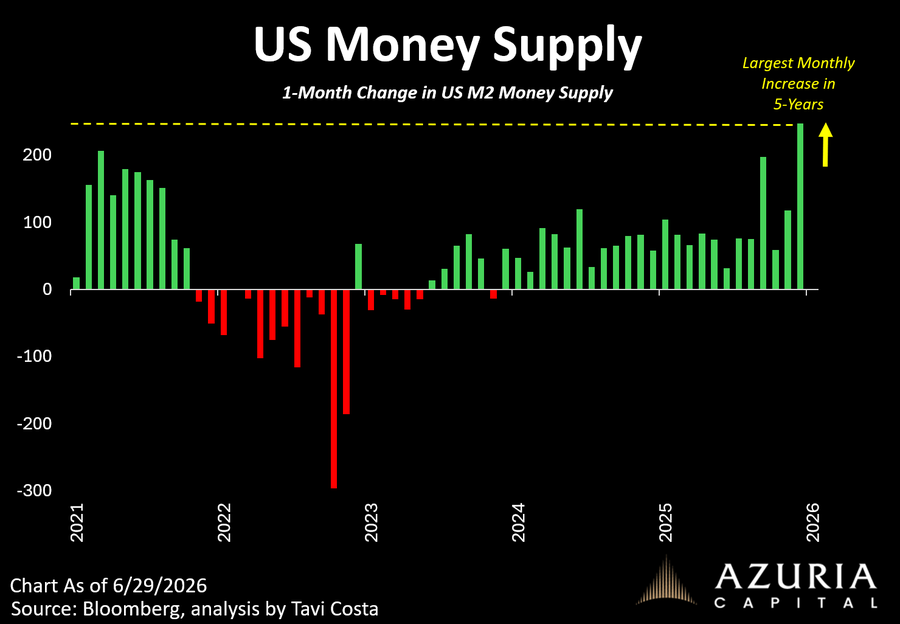
US M2 money supply is rising at the fastest pace in five years.
The last time money supply accelerated this rapidly, inflation followed with a lag.
Today's increase is smaller than the COVID surge, but the direction is clear.
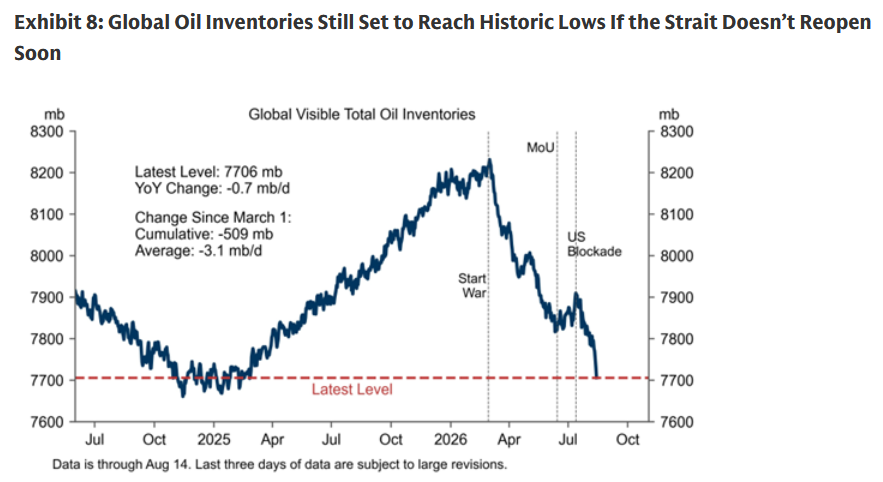
The longer Hormuz remains closed, the more money they will have to print.
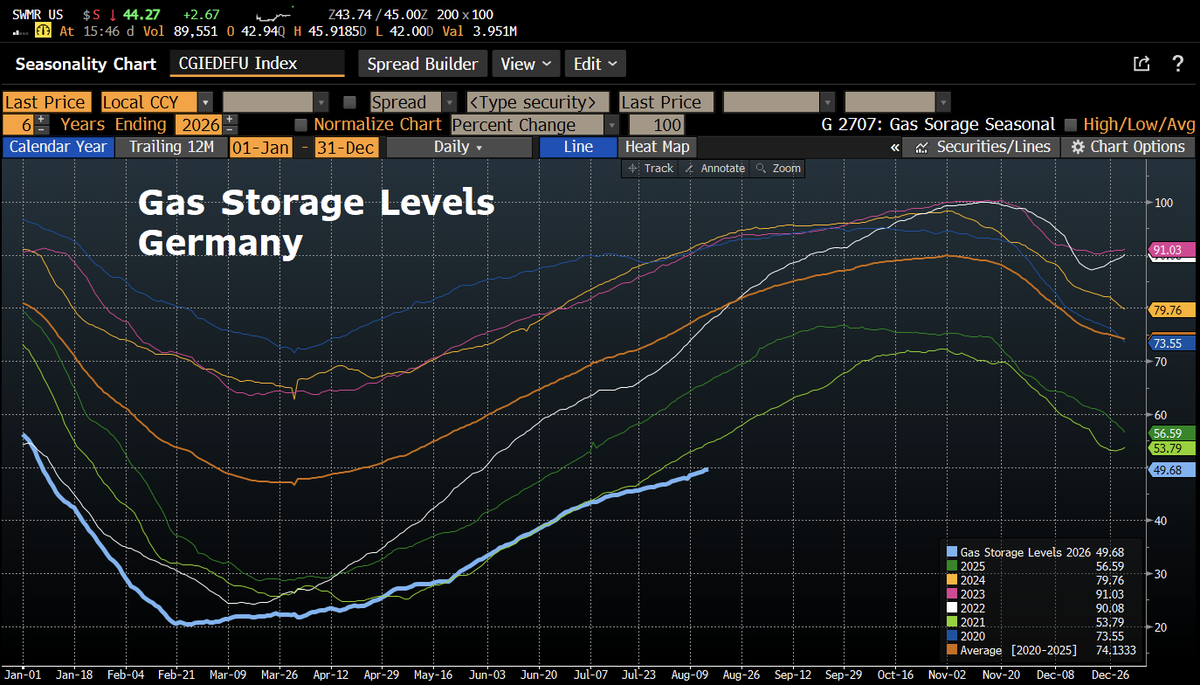
Good Morning from Germany, where the country risks running short of gas this winter if storage tanks aren’t filled much faster. They are just 49.7% full, the lowest ever for this time of year and ~17ppts below 2025. At the current injection pace, Germany could enter the heating season near 60%. Meanwhile, European gas trades above €62/MWh. LNG terminals reduce the risk but leave little buffer for a cold winter or supply disruption. Germany’s energy insurance is getting expensive again.
Scott Rubner (Citadel):
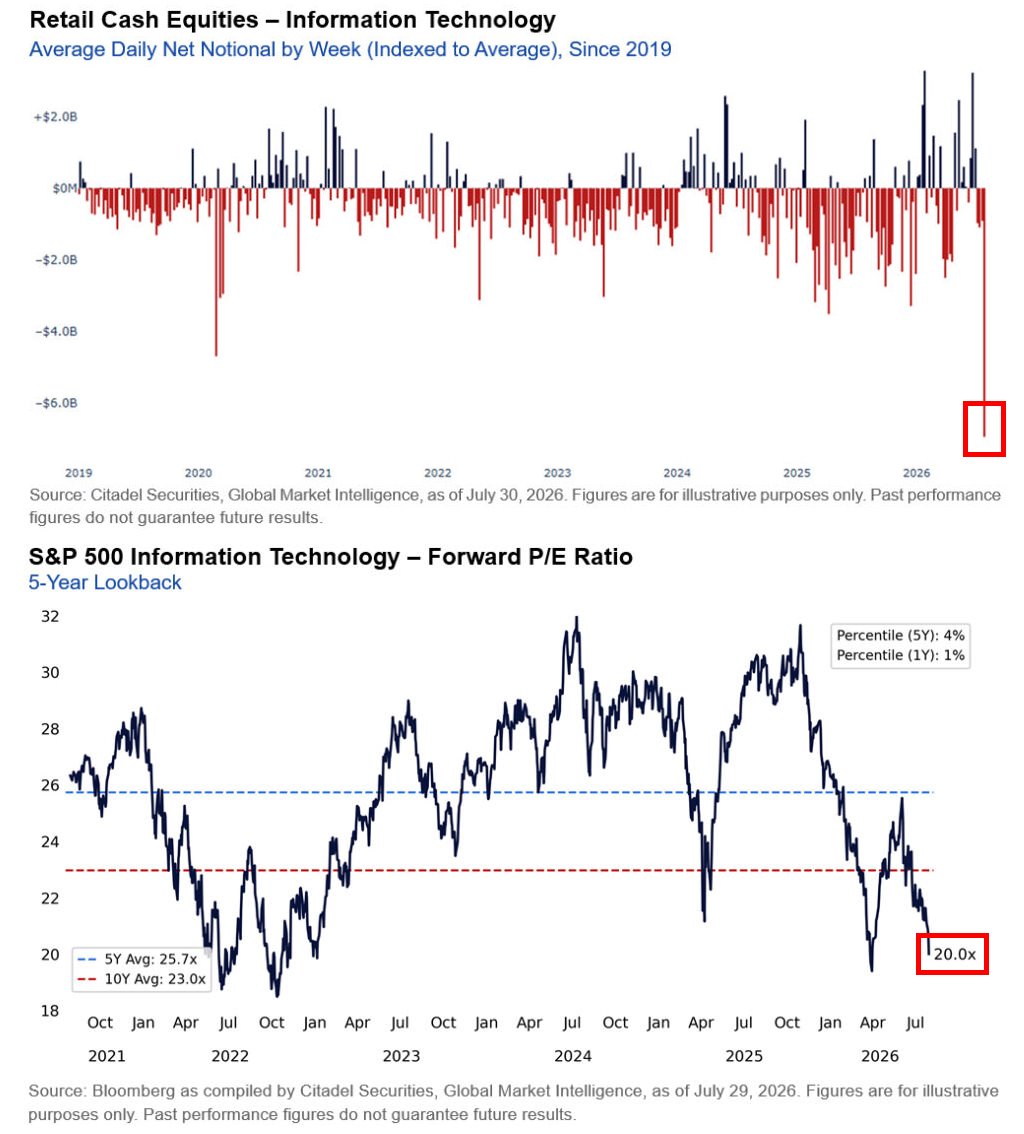
"The technical reset we have been waiting for has largely occurred. July did not change the structural bull market. It reset it."
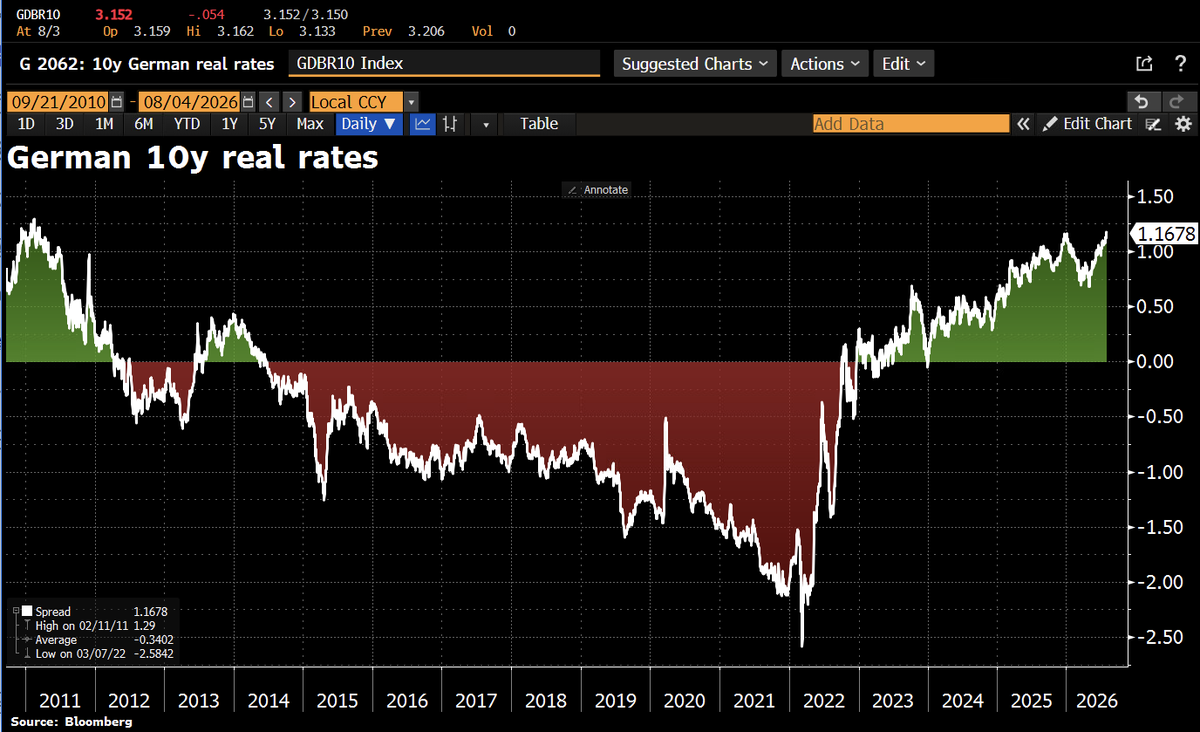
Good Morning from Germany, where the era of free money is over. Germany’s 10y real yield has risen to 1.17%, near its highest since 2011, after spending most of the past decade below zero. Good news for savers, but a much tougher financing regime for borrowers and the state.
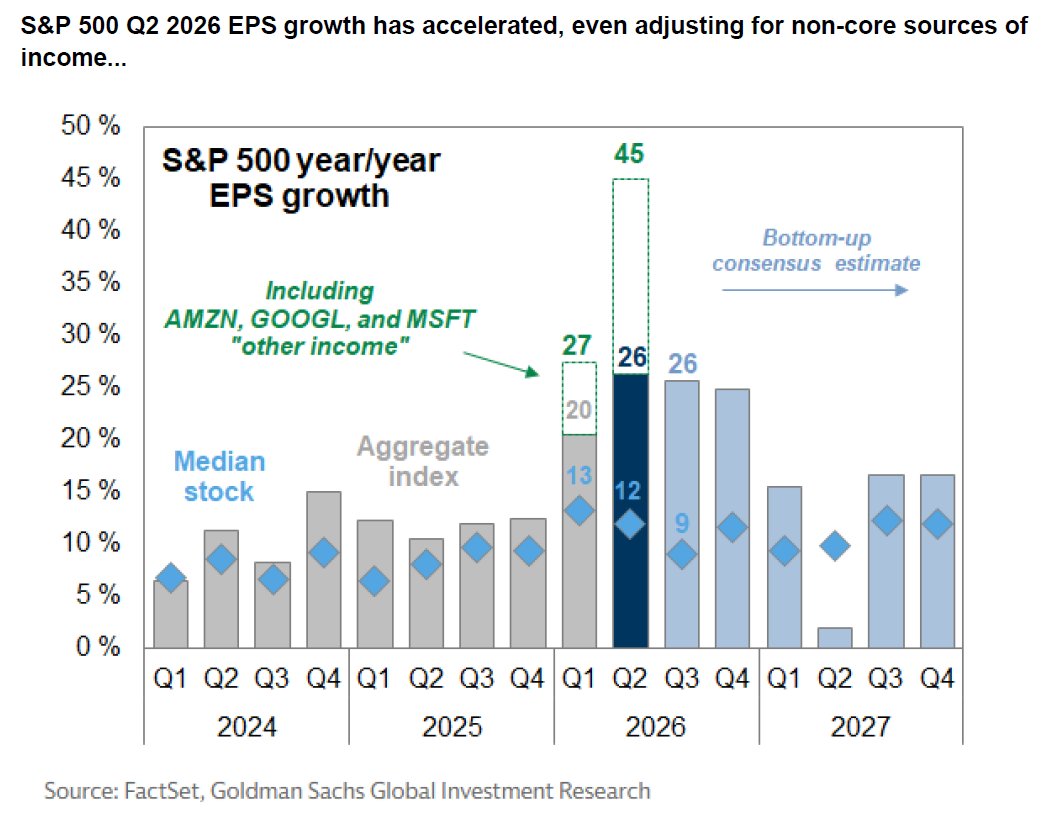
S&P 500 EPS growth is tracking 45% YoY in Q2 compared with a consensus estimate of 22% coming into the quarter. However, 19% of that growth is attributable to Alphabet and Amazon's combined $151 billion of "other income" related to equity investments. Excluding these gains, S&P 500 EPS growth is tracking at 26%, an acceleration vs. Q1 and the fastest pace of growth since 2021 - Goldman
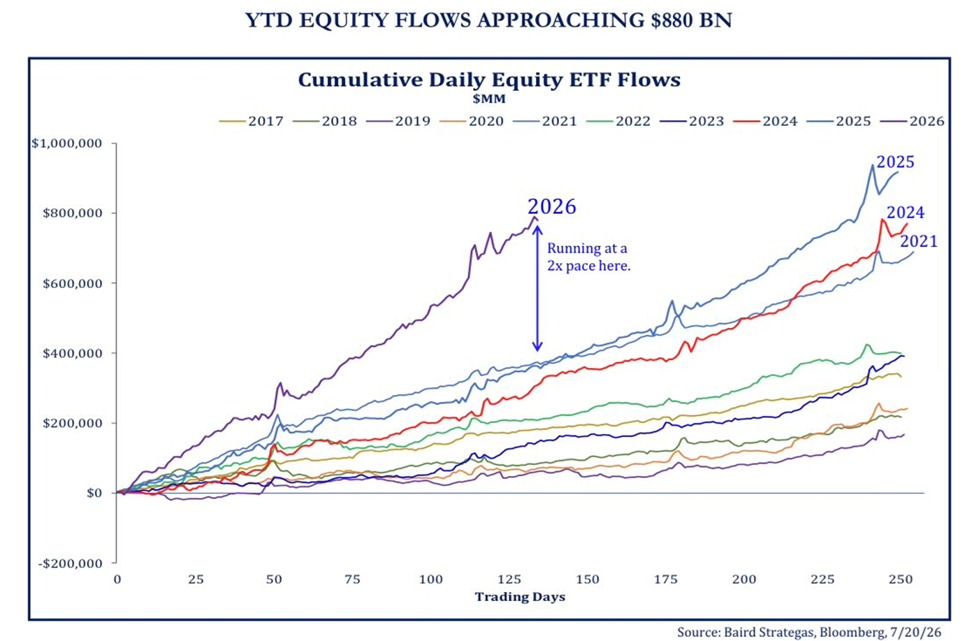
Investors are piling into US equities at a record pace:
US equity ETFs have attracted +$880 billion in inflows year-to-date, on track for their largest annual inflow on record.
This already surpasses every full-year total except the all-time high set in 2025.
Furthermore, current inflows are more than twice the levels seen at the same point in 2021 and 2025.
At this rate, annual inflows will exceed +$1.4 trillion by year-end.
This would be ~$500 billion above the 2025 record of ~$920 billion.
Investor demand for US equities is unprecedented.
⚠️Es ist offiziell!
QE ist zurück. Die Fed muss mehr Geld drucken, um mehr Staatsanleihen zu kaufen, weil Ausländer fast aufgehört haben, in US-Staatsanleihen zu investieren (da die Militärausgaben und Handelsverwerfungen den US-Haushalt sprengen).
Die FED hat bereits im letzten Jahr über 300 Milliarden US-Dollar in Staatsanleihen investiert. Next: QE UNLIMITED 4EVER.
Grafik: @JohnFMauldin
Good Morning from Germany, where the economy is showing a pulse again. Private-sector activity unexpectedly returned to growth in July: Composite PMI jumped to 51.2 vs 49.7 exp, led by manufacturing at 52.2. Services improved to 49.6, but higher energy prices threaten the rebound
French sovereign bond yields surpassing Greece's is wild.
France runs a 6% fiscal deficit during good times. With its political spectrum being just different shades of socialism, needed reforms won’t come.
The second Euro crisis will start in France, just a question of time.
🇨🇦 Every printed dollar has to become someone’s asset. In Canada it became someone’s debt.
Money supply up 361.96% since 2004, the most in the G7. (Build Canada, national central banks.)
Household debt now sits at 99.1% of the entire national GDP. (CEIC, Bank of Canada.)
The money went out through mortgages and came back as a liability chained to the household.
Home price to income rose more than 80% since 2004, worse than any of 23 OECD countries measured. (Missing Middle Initiative.)
Cheap money didn’t make the house affordable.
It made you bid against yourself with borrowed dollars, then handed you the note.