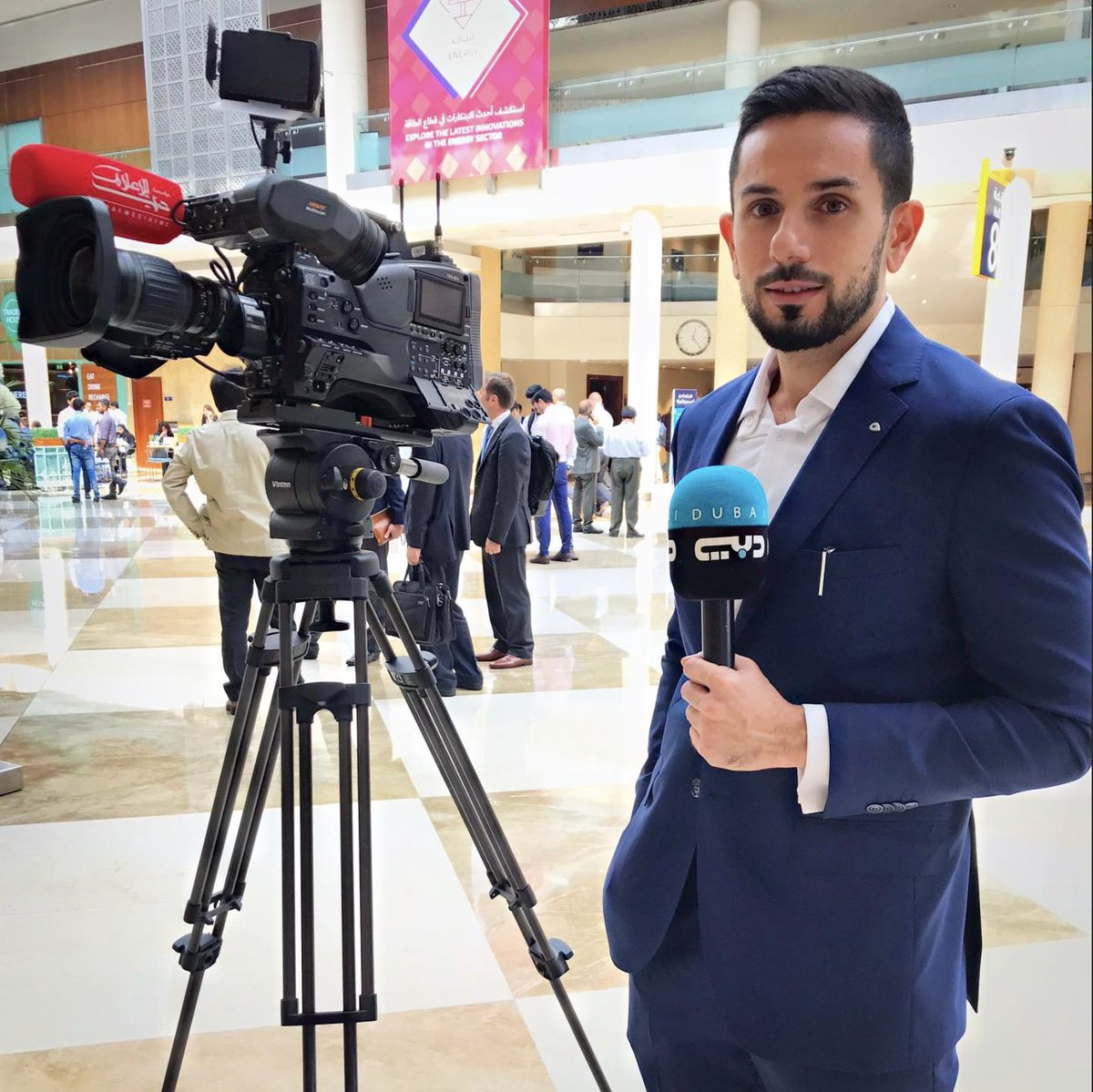
I help people handle high-stakes media interviews | TV Presenter | MMA enthusiast
My show w/ Coach Javier Mendez @javiermoshow
MMA acc in Arabic @MoAzizah_AR
Follow my new MMA Show with coach Javier Mendez.
Video podcast available on YouTube. Audio available on every streaming app.
Links: https://t.co/gnjMMN2P88
First episode is on YouTube now!
In this episode, we cover a variety of topics, including UFC 13, our opinions on a few fighters, and Coach Javier shares some of his wisdom and life experiences.
We hope you enjoy this episode. Don’t forget to subscribe!
@hilbertspaess There is a strong reason for me not believe that AGI will hurt people:
If there is a natural disaster that might threaten the AGI’s life,
wouldn’t want to protect humans as they are the only biological species that are able to birth it again if it dies?
There is a strong reason for me not believe that AGI will hurt people:
If there is a natural disaster that might threaten the AGI’s life,
wouldn’t want to protect humans as they are the only biological species that are able to birth it again if it dies?
I resigned from Anthropic today. I spent the last three years doing pretraining research at both OpenAI and Anthropic. Neither company is acting responsibly. They are racing straight to self-improving superintelligence and gambling with our lives. More thoughts below.
I didn’t love the Max Holloway call out.
My advice to fighters: understand the value of that post-fight microphone.
A call out isn’t where you tell us your dream fight.
Call out someone realistic enough that the fighter, the fans and the UFC have to respond.
Or forget the call out completely and say something so cocky, funny or memorable that people remember your name.
That airtime is incredibly valuable.
You should leave the cage having created either a fight or a moment.
Salahdine Parnasse had almost the perfect UFC debut.
But I didn’t love the Max Holloway call out.
My advice to fighters: understand the value of that post-fight microphone.
A call out isn’t where you tell us your dream fight.
Call out someone realistic enough that the fighter, the fans and the UFC have to respond.
Or forget the call out completely and say something so cocky, funny or memorable that people remember your name.
That airtime is incredibly valuable.
You should leave the cage having created either a fight or a moment.
Salahdine Parnasse had almost the perfect UFC debut.
But I didn’t love the Max Holloway call out.
My advice to fighters: understand the value of that post-fight microphone.
A call out isn’t where you tell us your dream fight.
Call out someone realistic enough that the fighter, the fans and the UFC have to respond.
Or forget the call out completely and say something so cocky, funny or memorable that people remember your name.
That airtime is incredibly valuable.
You should leave the cage having created either a fight or a moment.
Salahdine Parnasse had almost the perfect UFC debut.
But I didn’t love the Max Holloway call out.
My advice to fighters: understand the value of that post-fight microphone.
A call out isn’t where you tell us your dream fight.
Call out someone realistic enough that the fighter, the fans and the UFC have to respond.
Or forget the call out completely and say something so cocky, funny or memorable that people remember your name.
That airtime is incredibly valuable.
You should leave the cage having created either a fight or a moment.
Everyone seems excited about Ilia Topuria’s comeback.
I’m not.
When Gaethje battered Tony Ferguson in 2020, Khabib said:
“When you take damage like this, you’ll never be the same.”
I thought Khabib was just being salty because of the rivalry.
Tony never won in the UFC again.
After watching what Gaethje did to Ilia, I can’t get that quote out of my head.
My prediction: Ilia will fight again.
But I don’t think he’ll ever be UFC champion again.
I really hoped Israel Adesanya’s next move would be Trevor Wittman.
Training with Volk’s team is obviously high level but at this stage of Izzy’s career, I think he needs something very specific.
Wittman has a track record of getting veteran fighters to become more disciplined, more efficient and dangerous with their power.
Izzy doesn’t need to reinvent himself.
He needs someone who can help an older version of Izzy find ways to hurt people again.
𝗝𝗼𝗯 𝗶𝗻���𝗲𝗿𝘃𝗶𝗲𝘄 𝗼𝗿 𝗺𝗲𝗱𝗶𝗮 𝗶𝗻𝘁𝗲𝗿𝘃𝗶𝗲𝘄: if one unexpected question can throw you off, you weren’t prepared. You were rehearsed.
Most people prepare by trying to predict the questions.
Then they prepare the “right” answers.
The problem comes when the conversation goes somewhere they didn’t expect.
Suddenly, they stop listening and start searching their memory for something they rehearsed.
A better approach is to prepare the substance, not every sentence.
Know what matters.
Then practise being taken somewhere you didn’t expect.
When the question changes, listen first.
Decide what actually needs answering.
Then respond to the conversation that is happening, not the one you practiced.
𝗧𝗵𝗲 𝗴𝗼𝗮𝗹 𝗶𝘀𝗻’𝘁 𝘁𝗼 𝗽𝗿𝗲𝗱𝗶𝗰𝘁 𝗲𝘃𝗲𝗿𝘆 𝗾𝘂𝗲𝘀𝘁𝗶𝗼𝗻.
It’s to make sure an unexpected one doesn’t take away your ability to think.
Prepare the substance. Train for the surprise.
This is something worth practising in media preparation.
A difficult question does not require an immediate answer.
Sometimes the strongest response starts with giving yourself a few seconds to think.
Silence feels much longer to the person speaking than it does to everyone else.
This is exactly what I train executives for in media preparation.
Not memorising more answers.
Learning to stay calm when the interview changes direction.
Listen. Decide whether to answer, correct, qualify or set a boundary. Then respond.
Prepare the substance. Train for the surprise.
This is something I train executives to do in media preparation.
I’ve worked on the other side of the camera, and questions can come from research, briefing notes, producers or something said moments earlier.
If the premise is weak, correct it before answering.
Don’t confuse the confidence of the question with the quality of the premise.
A simple question doesn’t become smarter because you give it a complicated answer.
Sometimes the strongest answer is simply knowing when you’ve said enough.
A useful rule:
Match the size of your first answer to the size of the question.
If it needs four words, don’t give forty.
You can always explain more afterwards.
If someone says something uncomfortable and you immediately dodge toward your preferred message, people notice.
You have to earn the right to steer.
Acknowledge what was said first.
Then explain what it means.