Trump’s Hedge Fund Guy Is Now Overseeing the U.S. Treasury, IRS, OCC, U.S. Mint, FinCEN, F-SOC, and the Consumer Financial Protection Bureau
https://t.co/HuJREDCjkk
The mystery of who created BitcoinBTC deepened when an HBO documentary tagged 39-year-old software developer Peter Todd as Satoshi Nakamoto. However, he immediately denied being Satosh.
https://t.co/PDPmRkmxDh
It's been more than 24 hours since Matthew Farwell was arrested for murdering Sandra Birchmore - something State Police investigators knew he did and intentionally covered up by calling it a suicide. How has no one been fired yet?
In between playing guitar in a nightclub and eating pizza in a Nazi-themed restaurant in Kiev, Secretary of State Antony Blinken took the time to justify Ukraine's cancellation of elections and the inevitable loss of democratic legitimacy of the Ukrainian government.
This "war for democracy" thus is revealed as just a proxy war on Russia.
Also today: The Gaza aid pier is about to go live, but may well lead to disaster. Finally, new documents show Biden's complicity in the horrors in Gaza.
Watch below:
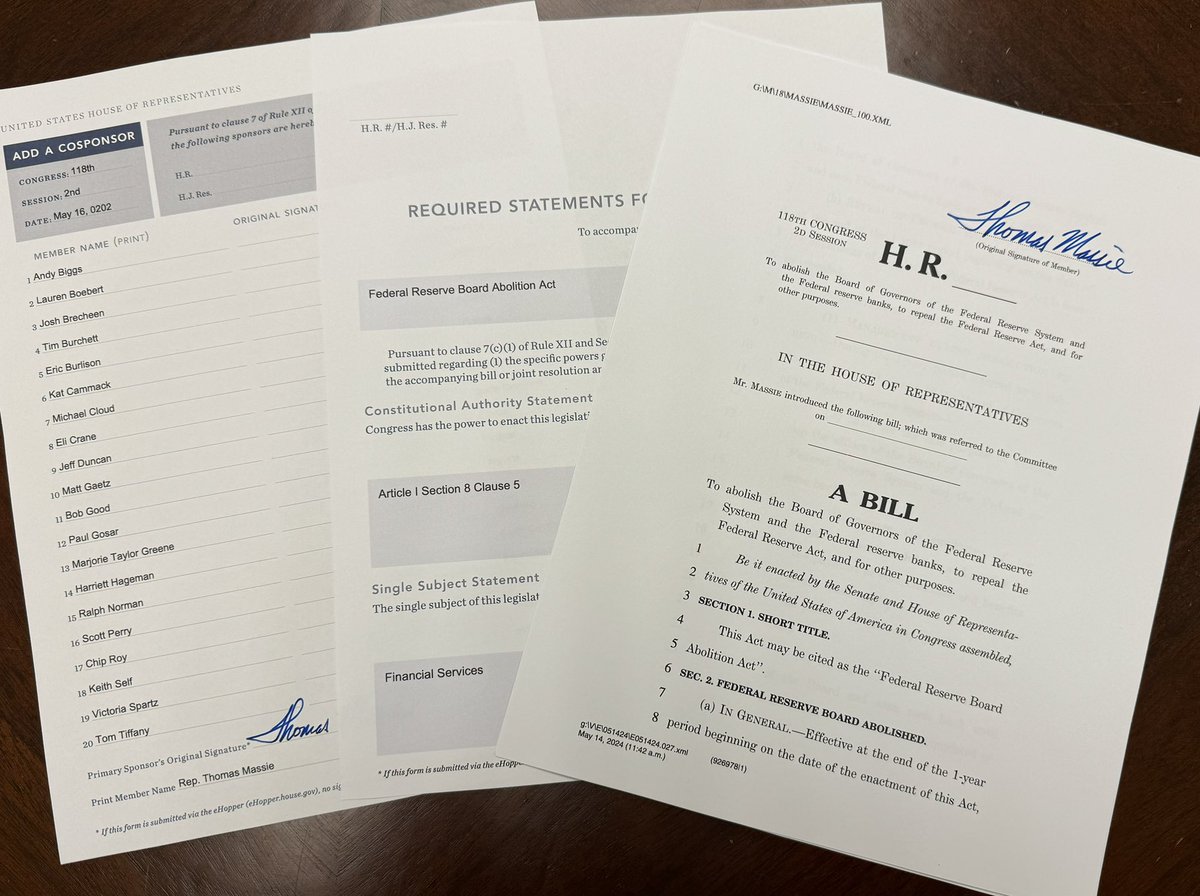
I just introduced “End the Fed”
Title: Federal Reserve Board Abolition Act, HR 8421
Americans would be better off if the Federal Reserve did not exist. The Fed devalues our currency by monetizing the debt, causing inflation.
https://t.co/JWSaCssAJB
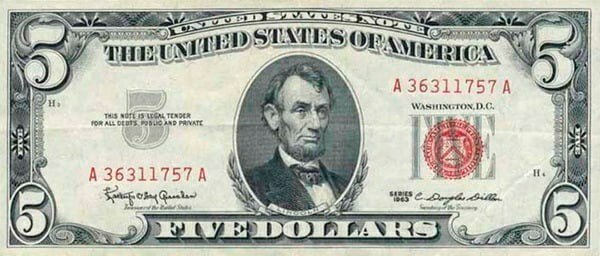
On June 4, 1963, President John F. Kennedy issued Executive Order No. 11110, directing the Treasury to produce $4 billion worth of $2 and $5 bills.
The bills, supported by silver reserves stored in the Treasury's vaults, were issued without debt or interest. The seigniorage, or profit from coinage, went directly to the US government rather than to the privately owned US Federal Reserve Bank.
This issuance of notes was part of Kennedy's broader strategy to diminish the influence of the US Federal Reserve Bank.
On November 22, 1963, President Kennedy was assassinated in Dallas, Texas.
Andrew Jackson, often referred to as the "People's President," survived an assassination attempt in 1835 when Richard Lawrence attempted to shoot Jackson, but both of Lawrence's pistols misfired.
Jackson vetoed a bill in 1832 that aimed to renew the Second Bank of the United States. He was opposed to the bank's influence in the nation's financial system, viewing it as a tool of the wealthy elite and foreign interests.
The Bank was under the control and influence of the Rothschild Family.
US green investments may be penalized under proposed new bank rules that leave Wall Street facing a wave of financial disincentives https://t.co/TAAGQsyChW