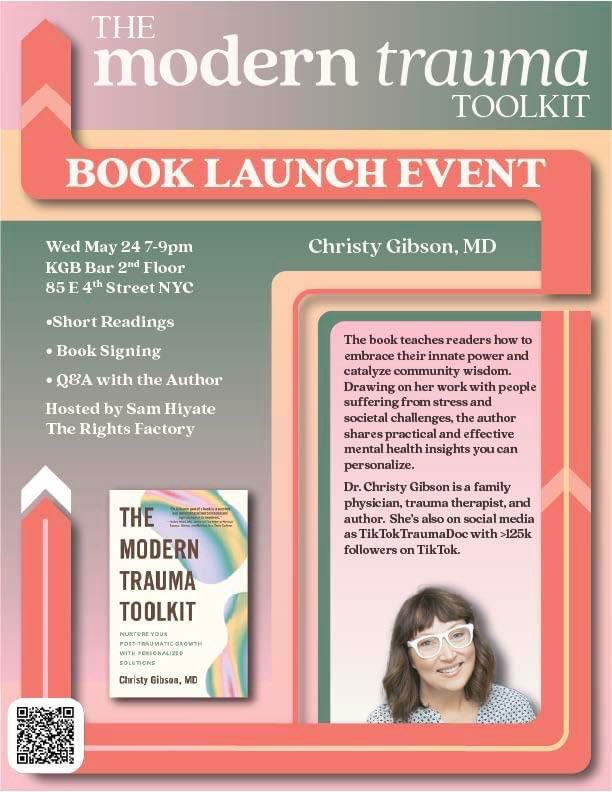
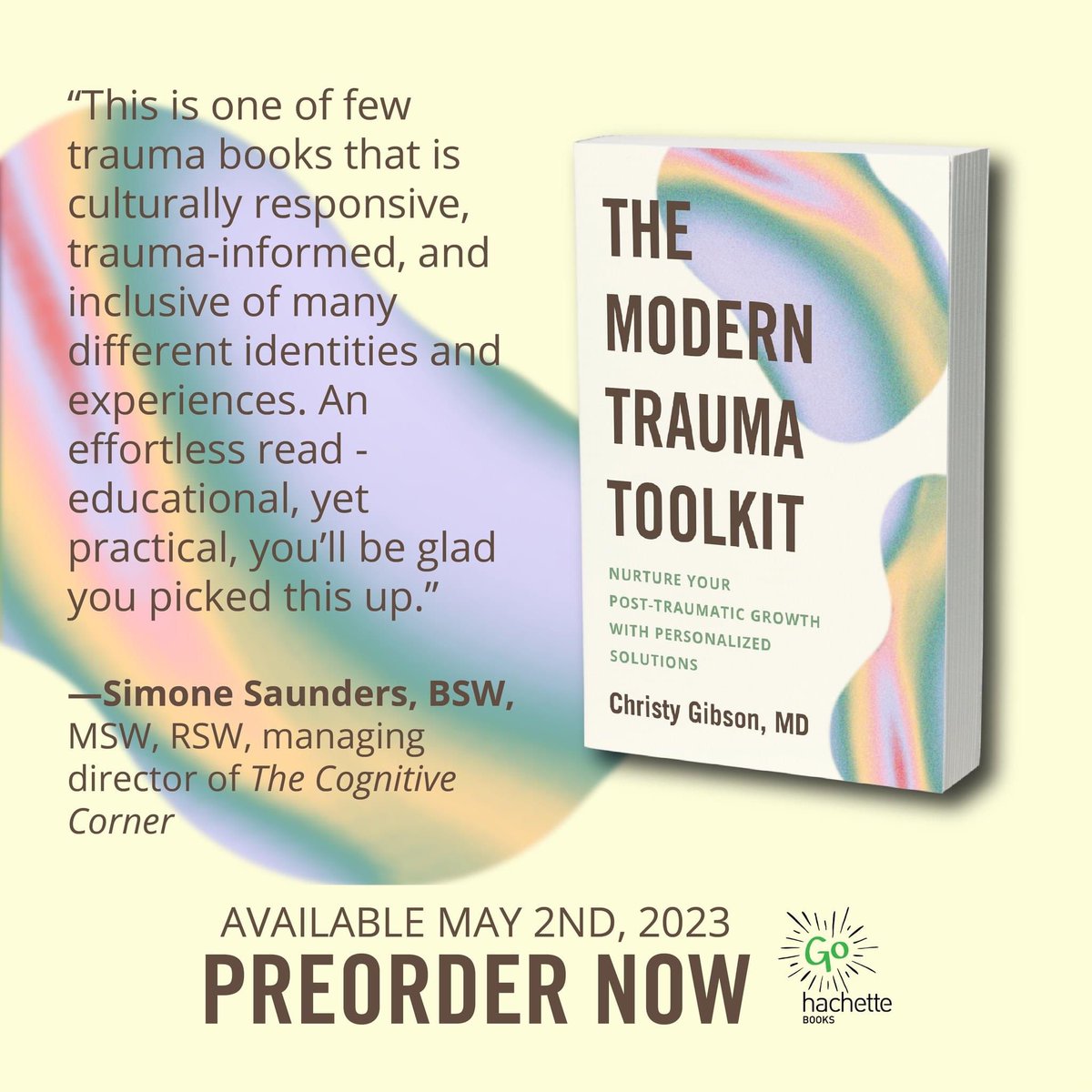
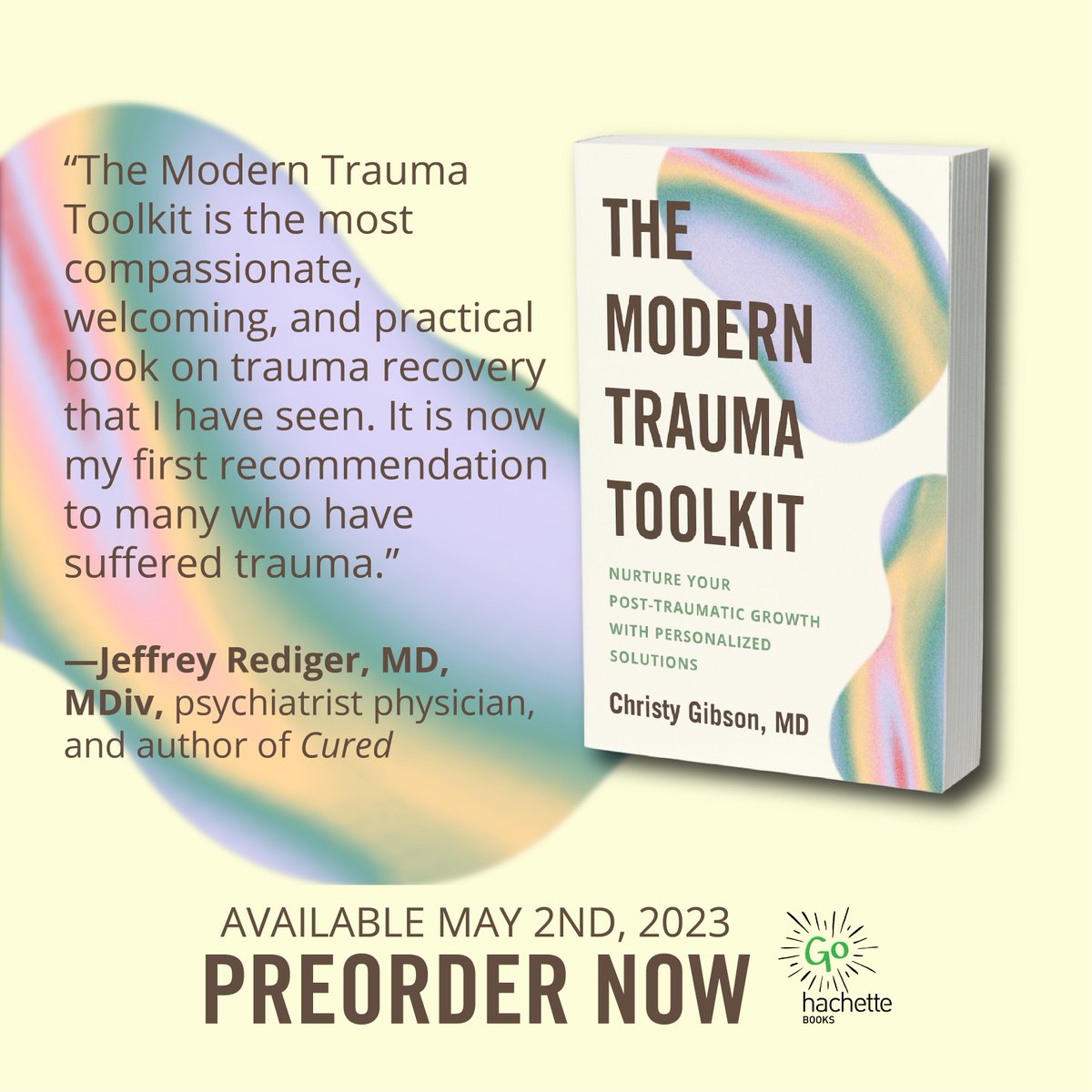
The Modern Trauma Toolkit, a book by Christy Gibson MD. It describes mental health stress and post-traumatic growth, in an accessible and solutions-focused way.
@elmo These responses are why I gave up family medicine to focus on #trauma. The world is suffering and people are finally talking about it. Join me on ⏰ as tiktoktraumadoc or check out @ModernTrauma for an explanation and solutions.
Sold >130 copies at the Boston Trauma conference. The buzz was ecstatic. If we could tell someone about the book, >80% purchased. It’s filling a clear need - a gentle, nourishing book that has all the foundational knowledge and skills people need.
Sold out!!! Brought 50 books to Boston at the Trauma Research Foundation and they sold out in less than two days. Even sold the ones earmarked for NYC. Good thing @HachetteUS@porchlightbooks@TRFNews is able to hook me up to more - arriving tomorrow!! https://t.co/M6SWf3z2y0
The Modern Trauma Toolkit is intersectional and accessible - which many books about mental health fail to accomplish. Have you pre-orders yet? https://t.co/M6SWf3z2y0 #trauma#stress#cPTSD#TherapistTwitter
@Lissarankin was a huge influence on my emergent career, learning more about the trauma in medical training and practice was a turning point. Very grateful for her endorsement of https://t.co/M6SWf3z2y0
Just going to leave this here. With thanks to @DrGaborMate My goal was to write a primer on trauma that was accessible, inclusive, and solutions-focused. https://t.co/M6SWf3z2y0 @GibtrotterMD
My Substack today is about why I called my book the MODERN trauma toolkit.
Please consider pre-ordering your paperback, eBook, or audible.
The article has a short preview clip of the recording!
https://t.co/YYMaKdgYfq
https://t.co/AlsAW528j2
Dear Medical Doctors, if you want to help patients with complex chronic diseases (and they sincerely need your support!), here are some important wishes from a patient’s perspective.
1/
Before sharing, I will adamantly state that I do not owe anyone this private experience. I'm sharing it in the event that it would validate others or encourage folks to not be passive bystanders to any abuse in on or offline. I'd also ask that white readers not fetishize this: 1/
Some practices I share are imagining leaves floating in a river or clouds in the sky. Label each as an emotion and notice it flow by. We all experience the wide range - this is normal. What’s less normal is to get caught up in a cloud or to be a leaf twisting in an eddy.
One thing I always find helpful in therapy is to suggest saying “There is (emotion)… ” rather than “I am (emotion)… ” Because the more you identify as being this emotion, the higher likelihood it could get stuck. A 🧵
The key is to make sure the emotion doesn’t become your sense of identity “a sad person” rather than simply being “a person experiencing sadness.” Emotions last 90 seconds on average - so the practice is learning how to let them flow. It’s common to get stuck for a time.