Today, we’re launching Reve 2.0, the best 4K image model in the world.
We invented a new way to generate and edit any image using precise layouts. For the first time, it’s possible to create images you can touch.
Today we published a technical blog post about Ideogram 4.0 — our goal is to enable more innovation and creativity.
It's a 9.3B Diffusion Transformer trained from scratch, paired with a frozen 8B VLM as text encoder. The nf4 checkpoint runs on a 24GB consumer GPU.
Thread 🧵
Cozomo de Medici: The Pseudonymous Patron of the Digital Renaissance
In the world of NFTs and digital art few figures command as much respect and mystery as Cozomo de Medici. Emerging in mid 2021 this anonymous collector has become a modern embodiment of Renaissance patronage championing digital creators with deep pockets sharp taste and a vision for elevating on chain art into the cultural mainstream.
A Dramatic Entrance
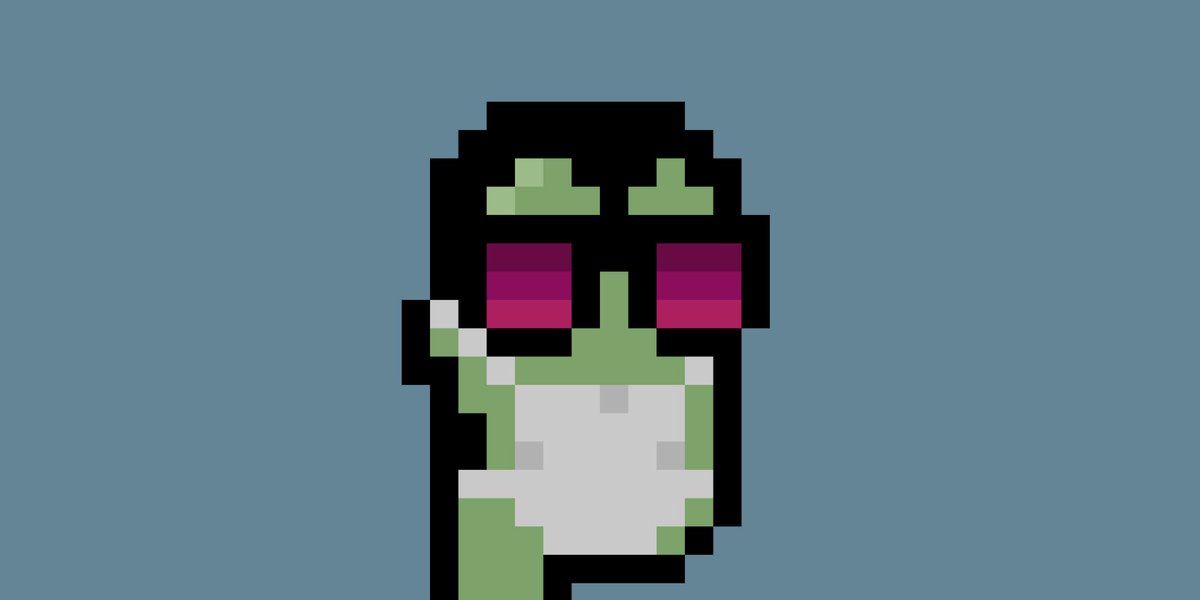
Cozomo burst onto the scene in July 2021 with a splash dropping roughly 1550 ETH (around 2.63 million USD at the time) on two rare CryptoPunk Zombies. The pivotal piece was CryptoPunk 3831 a masked COVID Zombie already nicknamed Cozom in the community. That purchase inspired his alias a playful twist on the 15th century Florentine banker and arts patron Cosimo de Medici. What began as an intended first and last NFT buy quickly snowballed into The Medici Collection one of the most respected portfolios in digital art.
Building a Legacy Collection
Cozomos taste spans blue chip generative art and bold 1 of 1 pieces. Highlights include multiple elite CryptoPunks God Mode Fidenza 938 by Tyler Hobbs major works by XCOPY (such as Right click and Save As Guy) pieces by Sam Spratt DeeKay Motion Claire Silver and others.
The collection deliberately traces the history of the crypto art movement from early experiments to boundary pushing contemporary works while supporting both established names and emerging talent.
Museum Recognition and Cultural Impact
In February 2023 Cozomo made history by donating 22 blockchain artworks by 13 international artists to the Los Angeles County Museum of Art (LACMA). It was hailed as the first and largest private collection of on chain art to enter a major US museum.
The gift bridged the gap between traditional institutions and the decentralized art world with Cozomo stating his goal was to help integrate digital art into broader contemporary art conversations.
He maintains a strong public presence through his account @CozomoMedici and the weekly Medici Minutes newsletter where he shares insights on collecting market trends and the philosophy of digital patronage. With hundreds of thousands of followers his voice carries significant influence.
The Mystery of Identity
Speculation about Cozomos real identity has been relentless. In 2021 Snoop Dogg famously tweeted I am Cozomo de Medici sparking a media frenzy. Cozomo later described it as a fun troll by friends and evidence (including photos and timelines) strongly suggests the collector is not the rapper.
True to his ethos Cozomo has repeatedly said his personal identity is irrelevant what matters is the art and the artists supported. He values anonymity for security and creative freedom in the often risky crypto space.
A Lasting Influence
Cozomo de Medici represents more than just big buys. He embodies the idea of a New Renaissance an era where blockchain technology creates an infinite canvas for artists and patrons alike. Through bold acquisitions thoughtful curation and institutional gifts he has helped legitimize digital art while reminding the space that true patronage is about vision not just value.
In a world of fleeting hype Cozomos legacy endures as both collector and catalyst one masked Punk at a time.
Using Niji to create children’s illustrations, GPT Image 2 to transform them into storybook pages, and Seedance 2.0 to animate them like a living book is a really interesting workflow that, when done well, can produce truly beautiful results.
I used @mitte_ai to bring everything to life and animate it. It’s the platform I always use for my animations.
Here’s how I did it 👇
What does it mean to make art with code?
@tylerxhobbs — the generative artist behind Fidenza, QQL, Incomplete Control, Day Gardens, and more — answers in our new documentary 👇
Plus: the curation of OpenSea's QQL, by Tyler himself.
Chapters:
0:00 Art Meets Community
0:37 Meet Tyler Hobbs
0:55 How Code Shaped His Vision
1:15 Order vs. Chaos
1:34 Notable Works
1:48 Inside QQL
2:10 Why QQL Is Open
2:46 The OpenSea Collab
2:53 Picking the Perfect Seed
3:38 A Flagship Honor
Two years after the NFT hype collapsed, something interesting happened. NFT art didn't die. It evolved into two clear directions, according to critic @briandroitcour :
Schizocollage: maximalist, chaotic digital collages born from PFP culture, trait randomization and internet noise.
Blockchain formalism: artists who treat the blockchain itself as medium, material and social architecture /1
Exactly 200 years later, the world’s First Photograph (2026) gets upscaled with AI.
We asked NightCafe what the world might’ve actually looked like in the first photo ever taken and this is what it gave back.
The original was taken in 1826 by Joseph Nicéphore Niépce, using an exposure that took 8 hours to burn rooftops into history. It was grainy, shadowy, and kind of eerie. But this? This feels like stepping into the memory right before the photo was taken.
Chapeau @SHL0MS ! I love your Monet stunt.
Like my refusal of the Sony World Photo Award in 2023, it is an epistemic trap: You changed the label around an image and watched people and institutions reveal how they judge art under AI anxiety.
But you and I pointed the trap in opposite directions: I staged a boundary test, you staged a perception test.
When I entered “PSEUDOMNESIA | The Electrician”, an AI-generated image, into the Sony World Photography Awards, then refused the prize publicly, I wanted to accelerate the debate about what counts as photography.
SHL0MS did the inverse with “Inferior Image“: posting an actual Monet Water Lilies as a supposed AI-generated image, asked people to explain why it was inferior to a “real” Monet, and thousands complied, producing elaborate critiques of a real Monet under a false AI label.
My act said: the system is not ready - we need new categories, new language, and honest rules. I wanted to “speed up this debate.” And in addition to refusing the prize, I suggested to donate it to a Ukrainian photo festival.
SHL0MS’s act said: the viewer is not ready; people do not see first and judge second - they classify first and then invent reasons. Your “Inferior Image“ is a diagnosis of mass aesthetic suggestibility. And by minting the image as an NFT, you made the market controversy part of the work.
I attacked the category confusion between photography and promptography. SHL0MS attacked perceptual corruption: seeing versus believing.
My work depended on my skills in AI image making (yes, in Autumn 2022, this image was the most photorealistic you could get!).
SHL0MS’s work depends on attention design: choosing a Monet that was not instantly recognizable, phrasing the provocation, steering replies, collecting critiques, and structuring the viral discourse. He basically “prompted” humans instead of prompting an image model.
👉BUT:
We both used misattribution as a mirror: the real artwork is not only the picture. It is the reaction system around the picture. In old art-history language, both are post-Duchampian.
We both show that the crisis is not only technological. It is psychological. The image itself is no longer the whole evidence. The caption, platform, institution, category, and social mood now do enormous perceptual work. The eye has become a press secretary for the belief system.
Thank you for adding a smart conceptual work to the history of art.
The Writer Automaton (1770s)… one of the earliest examples of a programmable machine.
Built from 6,000+ custom metal parts and powered by ~40 internal cams.
By setting metal tabs on an input wheel, it can write custom messages up to ~40 characters long.