Agentic payments are not a breakthrough. Slapping crypto cards on bots and routing stablecoins through traditional rails is just doing what banks were supposed to build ten years ago. It is iterative plumbing with crypto branding on top.
Had a call with a Tier 1 exchange and one detail stuck with me: they are targeting up to 50% of their revenue from non-crypto sources.
One of the oldest crypto exchanges actively diversifying half its income away from pure trading fees.
Early on, exchanges lived and died by spot volatility. Bull runs brought windfall cash; bear markets brought layoffs.
Major crypto rails diversifying into traditional financial revenue isn't abandoning crypto. It is maturity. The endgame for infrastructure isn't riding cycle beta forever, it's building a balance sheet that survives every winter.
Organizing the first Bitcoin conferences, we coordinated on Bitcoin Talk. Just usernames putting faces to each other.
No yield farming. No squeezing every dollar. Just people building together because they believed in it. The foundation was real.
Russia will let ordinary investors buy bitcoin, ether and USDT from 17 November, after a test and with a cap per broker. A central bank approving a dollar stablecoin for retail is the part I didn't expect.
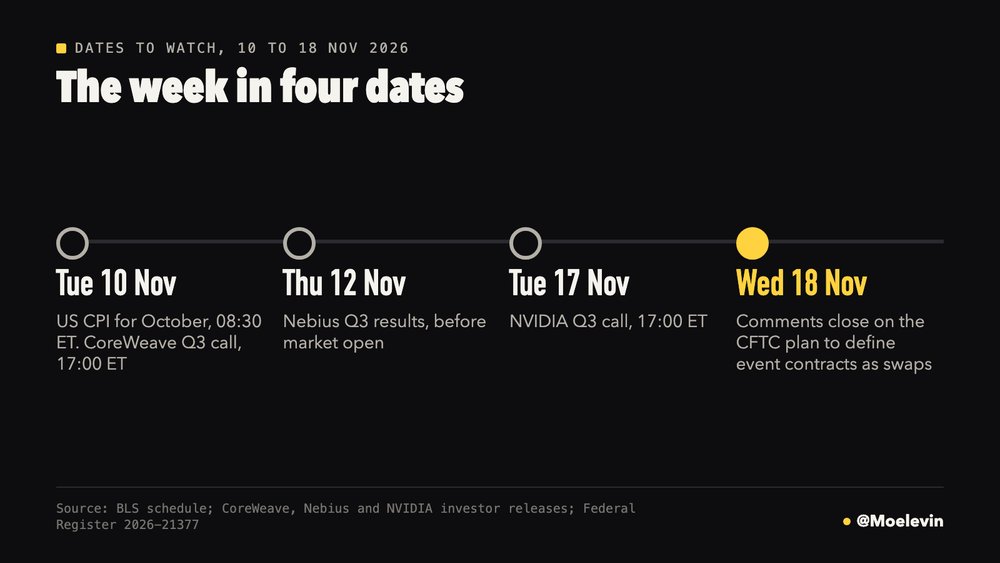
Dates I care about this week: US inflation and CoreWeave today, Nebius on Thursday, NVIDIA on the 17th, and the CFTC's prediction market comments close on the 18th. The last one matters most to me.
US rules don't directly cover AI agents paying through smart contracts, according to the Cleveland Fed's president, and banks may hold back until they do. Who writes those rules first, the Fed or Congress?
Strive made $509m last quarter, nearly all of it from bitcoin going up on paper, then bought almost twice as many coins in October as in the whole quarter. What does @Strive do if the next quarter runs the other way?