Somalia and Ethiopia in Ankara:
Lessons in Strategic Communication
Below are two speeches delivered in Ankara at the conclusion of Turkish-mediated peace talks between Ethiopia and Somalia. The talks were attended by Ethiopia’s Prime Minister Abiy Ahmed and Somalia’s President Hassan Sheikh Mohamud, along with foreign ministers, intelligence chiefs, and other high-level government officials.
Key Observations:
1.Premeir Abiy Ahmed’s Speech:
Abiy delivered a tightly scripted speech, adhering closely to prepared remarks without deviating from the official narrative. His speech showcased Ethiopia’s consistent talking points and strategic framing of the situation.
2.President Hassan’s Speech:
Prez Hassan Sheikh’s speech appeared more off-the-cuff, consulting notes or points intermittently. While it emphasized cooperation and mutual benefit, it failed to hammer home the critical issues central to Somalia’s position.
Analysis of PM Abiy’s Speech:
Prime Minister Abiy’s speech repeated Ethiopia’s long-standing narrative since its bid to annex Somali territory began on January 1, 2024. His framing of the situation included:
•Downplaying Aggression: He characterized the crisis as a “misunderstanding” rather than annexation, dismemberment, and sovereignty violations.
•Economic Justifications: Abiy framed Ethiopia’s desire for access to Somalia’s sea as an economic necessity rather than an aggressive demand, ignoring Somalia’s sovereignty.
•Family Framing: He dismissed the involvement of third parties, portraying the dispute as a “family quarrel,” despite Somalia’s classification of Ethiopia as an enemy state, akin to Al-Shabaab.
•Sacrifices of Ethiopian Troops: He highlighted the role of Ethiopian soldiers in Somalia under the guise of AU missions, despite allegations of Ethiopia’s destabilizing actions, including illegal arms smuggling and troop movements into Gedo.
Analysis of President Hassan Sheikh Mohamud’s Speech:
In contrast, President Hassan Sheikh Mohamud’s speech lacked a strong (actually any) emphasis on Somalia’s critical issues, such as sovereignty, international law, and Ethiopia’s history of aggression. Instead, it appeared to align with Ethiopia’s narrative, diluting Somalia’s position.
Quotes by Prez Hassan Sheikh That Weakened Somalia’s Core Position
•“Ethiopia and Somalia are two neighborly nations with many commonalities and very limited differences.”
•“Somalia will remain a true friend of Ethiopia and is ready to work together to benefit both our peoples.”
•“We recognize the sacrifices Ethiopian forces made in Somalia as part of AU peacekeeping missions.”
This approach undermined the messaging Somalia has consistently maintained, which portrays Ethiopia as a threat, and contradicted recent communiqués highlighting Ethiopia’s destabilizing actions in Somalia.
States are inherently strategic, self-interested actors, and while President Hassan Sheikh may have sought reconciliation, such overt concessions are challenging to reconcile with the narrative Somalia has worked hard to communicate to its allies and citizens.
A Lesson in Diplomacy:
While Abiy’s speech displayed focused messaging and a high level of diplomatic skill, President Hassan Sheikh’s approach reflected a lack of preparation or consultation with experts. This laissez-faire or shall I call it “nomad diplomacy” risks undermining Somalia’s position on the global stage.
This critique is not intended to disparage the president but to highlight areas for improvement. As any expert who has reviewed the publicly available video will note, the Ethiopian side demonstrated deft strategic communications.
Addressing these shortcomings openly is crucial for ensuring that future Somali leaders understand the value of expert input and disciplined messaging in advancing national interests.
Abiy’s speech earns an A for consistency and strategic framing, while our President’s performance, well … could have been better.
🗣️ “It shows the kind of world order we have,” @MohammedYarrow of the appointment of another Brit as the UN’s relief chief. “The UN and the international system, it is not listening to the voices and the communities who are affected by these crises.”
https://t.co/Q8zd1LVNpu
Somalia has emitted as much Co2 from fossil fuels since the 1950s as the US does in 3 days!
BBC News - Climate change is turbo-charging Somalia’s problems - but there's still hope
https://t.co/YqUiDVgOej
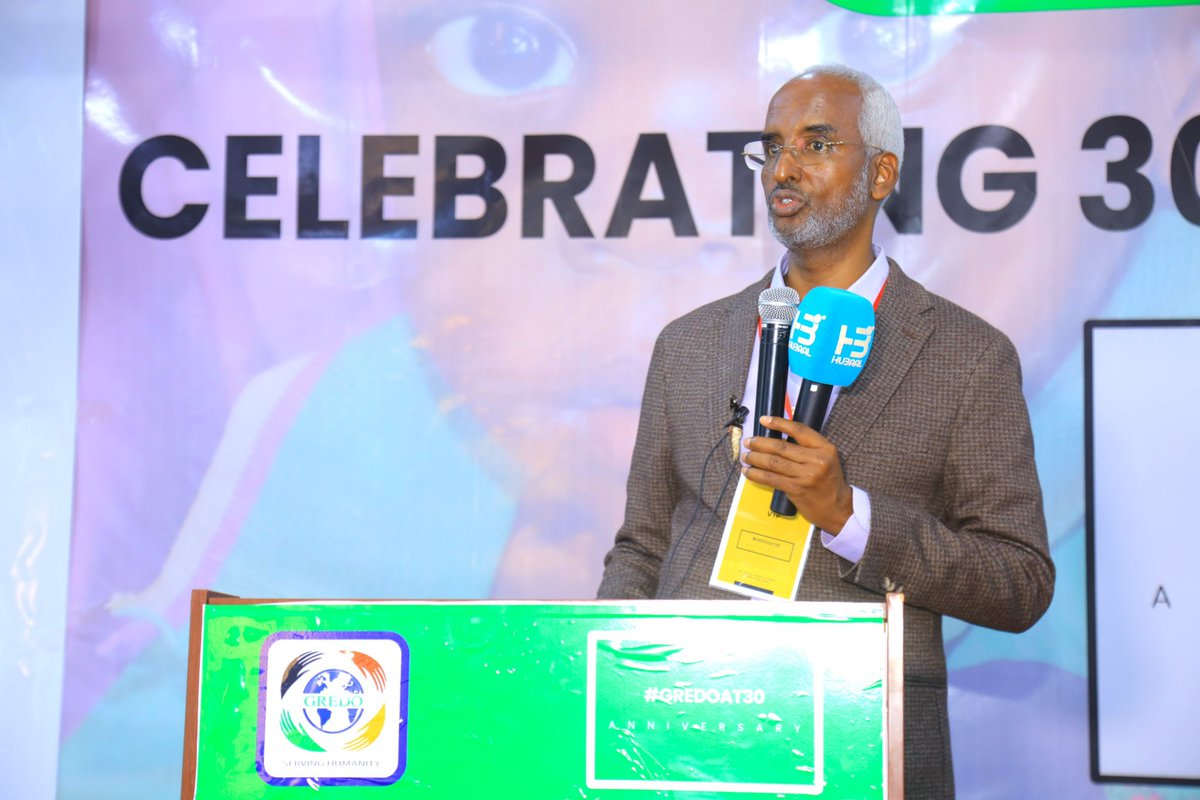
Acting @SomaliNexus Executive Director Shahida Suleiman together with the Chairman of Nexus Consortium Mr. Mohamed Yarrow and Ali Klay of GREDO had a productive discussion with @Welthungerhilfe 's Abdukadir Abdi, Alex F. and Matthias Amling in Mogadishu.
A must-read article by two former Ethiopian officials, the late Seyoum Mesfin and Abdeta Beyene, lays bare how Ethiopia systematically ruined Somalia.
Wrongly titled “The Practicalities of Living with Failed States,” it should have been titled:
“How Ethiopia Ruined and Dominated Somalia for Decades: A First-Hand Account.”
The authors — one long time foreign minister and the other senior diplomat turned academic — detail how their country manipulated and devastated Somalia through ‘assets’ while systematically preventing the emergence of a national government and a viable state.
They openly admit, even boast, that Ethiopia advanced its interests by subjugating #Somalia and its people through proxies, buffer zones, direct interventions, and blatant disregard for international norms.
But now, as karma would have it, Ethiopia is reaping what it sowed. All groups Oromo Amhara and Tigray are fighting each other, and their central government run by Abiy is also fighting them all;
Irony of ironies, now buffer zones exist in Tigray controlled by their archenemies, the Amhara and the Eritreans!
Mesfin, one of the architects of Somalia’s suffering, was shot between the eyes by Abiy’s forces, while Abdeta (who rationalized what Gabre, Meles, and Mesfin did to Somalia in academic circles) has been reduced to a professional conference-goer, masquerading as a Somalia expert.
Their 2018 article isn’t just a history lesson — one that should be required reading for every Somali university student — it’s also a slow-motion documentary of how Ethiopia kept Somalia under its oppressive grip for decades.
There is a Somali proverb that says: “Do not dig a well for your brother, and even if you must, do not make it deep, lest you fall into it yourself.”
They dug a deep well for Somalia, but they fell into it themselves.
https://t.co/ERGfiuz4SV
I’m thrilled to announce that @CPD_Africa and the other 7 founding members of the @SomaliNexus consortium have fully become members of the @StartNetwork. The first national organizations in the country to join the network. Congrats to @SomliNexus members & the secretariat
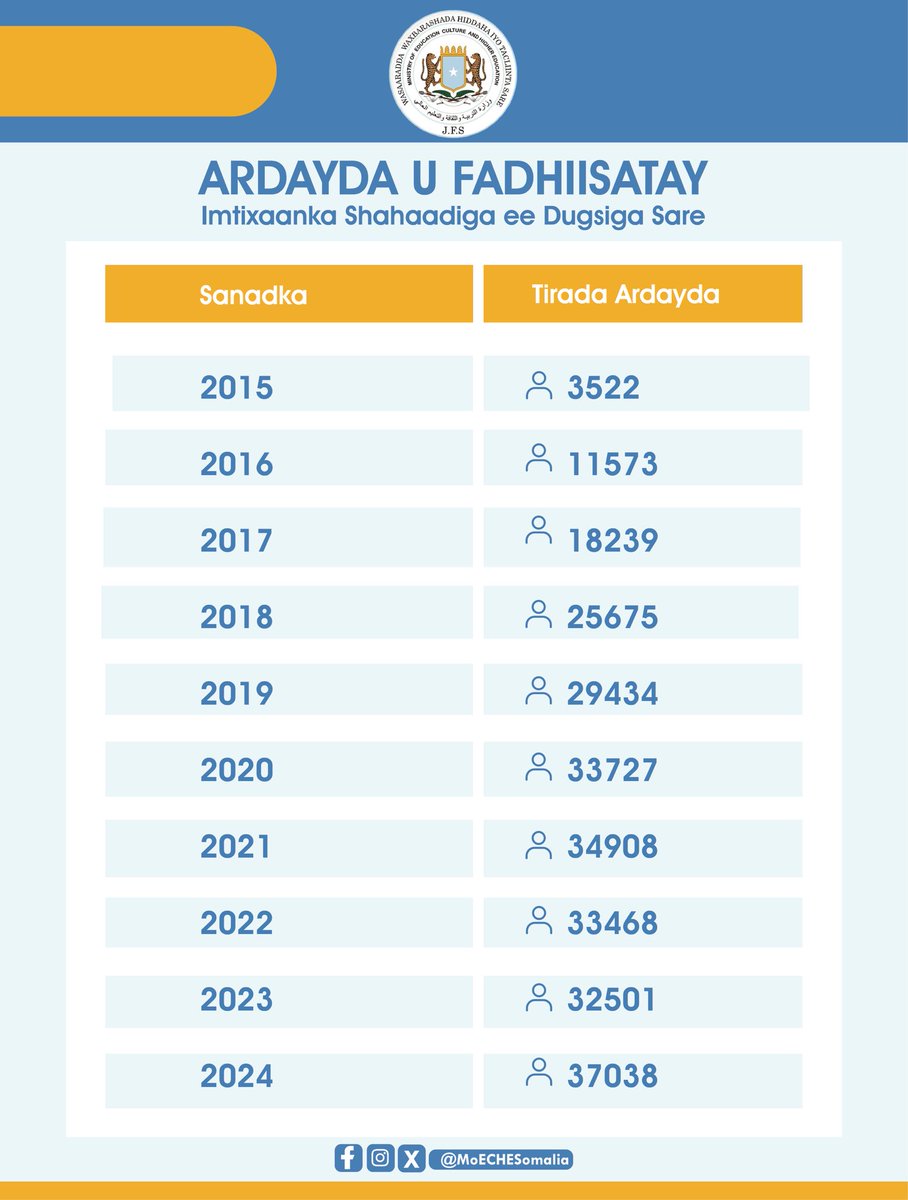
Since @moechesomalia resumed administering 12th-grade national exams in 2015, the number of students taking these exams has soared from 3,532 to 37,038 in 2024. This major progress toward standardized national exams ensures quality and consistency in education across the country.
🌊Last year, @SHF_Somalia allocated $14.7M to help partners respond to #ElNiño-induced flooding. As these projects wrapped up, our team visited to review their impact.
📹Watch as our colleague Suleiman shares his insights from the ground.
The Story of a Billion-Dollar Insurance Policy and the Hysterical Horn Politicians
Abiy Ahmed, the Prime Minister of Ethiopia, is mired in a civil war driven by his own gun-politics.
Muse Bihi, the leader of the self-declared independent region of Somaliland, is facing a political and electoral revolt. His support has crumbled, with all clans, including his own, flocking to his rivals. Even his vice president has deserted him, urging the community to vote for ‘whomever they want!’
In a desperate bid for survival, these desperados are pushing a rejected and unimplementable MoU, claiming that Muse will get recognition for Somaliland, and Abiy will gain Somalia's coast.
Even if Muse could hand over a port to Abiy as their fictitious MoU stipulates — which he cannot — such a move would render the port of Berbera in northern Somaliland worthless. This is why the Somaliland community decided to get rid of Muse Bihi. Berbera, the key source of revenue for Somaliland, would be closed off if Ethiopia gained sea access — a classic case of cutting off the branch you’re sitting on.
Moreover, even if Ethiopia could seize or swindle a port from Somalia with the help of this Quisling — which it won’t, as Somalis have defended their coasts for a millennium — Ethiopia would have no need for the Berbera port. Their entire reason for seeking to acquire a port is to avoid paying for the use of Djibouti ports, the Berbera port, and other Somali ports, as well as Assab and Massawa in Eritrea.
So, if on June 26, 2024, you see a media appearance of two destitute and desperate men trying to pull a rabbit out of an empty hat, know they are drowning in their own bad politics and hoping for a dramatic rescue that isn’t coming.
Ethiopia won’t have Somalia’s coast because Somalia signed a ten-year security pact with Turkey, which has taken the responsibility to protect the Somalia coast while a capable Somali navy is built. In return, Somalia grants Turkey economic deals, particularly in fish and oil, worth billions of dollars.
Northern Somalia is thus fully protected by a billion-dollar insurance policy — courtesy of southern #Somalia. That’s what brotherhood is for.
Our Executive Director Mr Albashir together with other @SomaliNexus leaders including the Board Chairman Mr Mohamed Yarrow, Mr Alinoor of GREDO and Shahida of SSWC (All Nexus Consortium Leaders) engaged in a fruitful meeting with Dagmar Traub-Evans of Germany Embassy in Somalia.
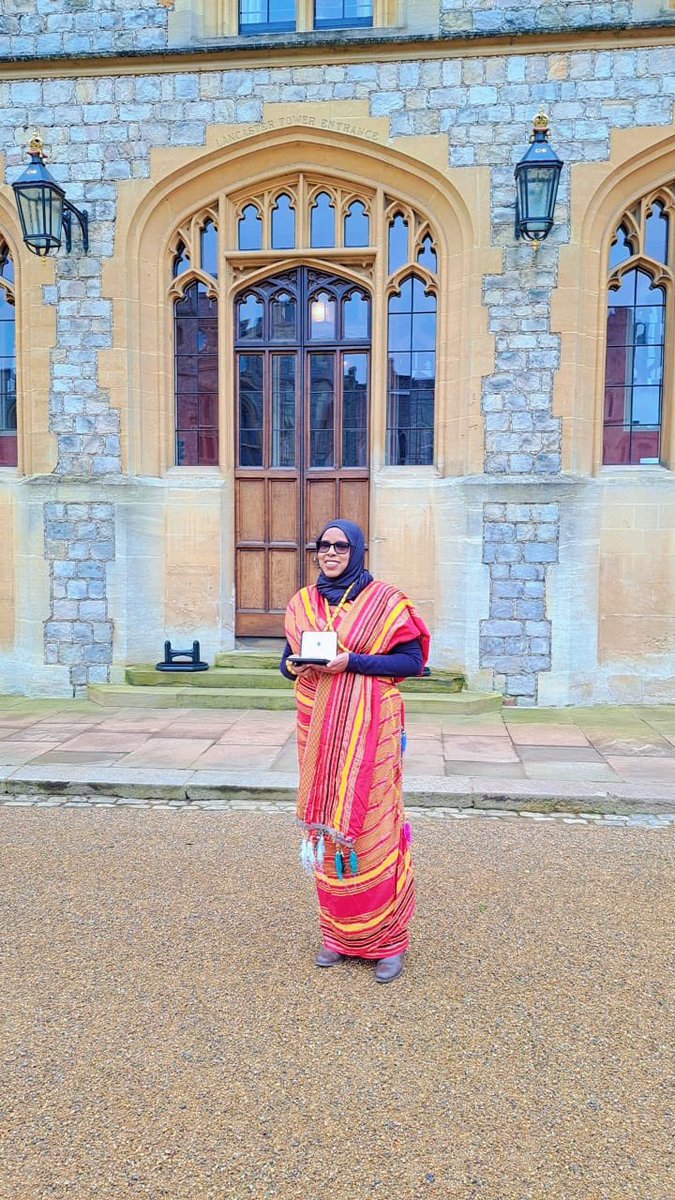
This is truly a well-deserved honor @NimoA_Hassan. It is wonderful to see your efforts recognized by Prince William, and we are proud you. It is a feather in the cap of the entire team at @NGOConsortium 🎊
Felicitations from everyone at @CPD_Africa
Yay! It’s official. 🥳🎉
Thrilled to receive #MBE from Prince William at Windsor Castle today. Unforgettable experience, deeply honoured & grateful. Cherishing this incredible opportunity forever. Thank you @UKinSomalia@NGOConsortium#blessed
We're expanding the team as we support more households...
Are you an experienced Coordinator? Skilled in safety net cash transfers and partnering with authorities?
Apply here: https://t.co/0sIQl69eoO
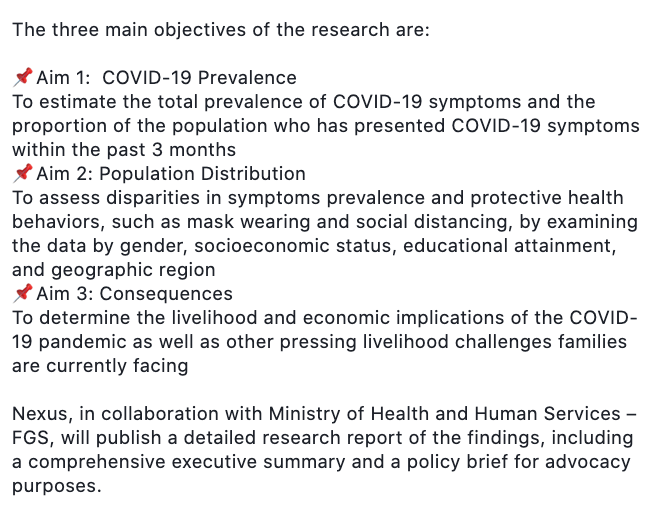
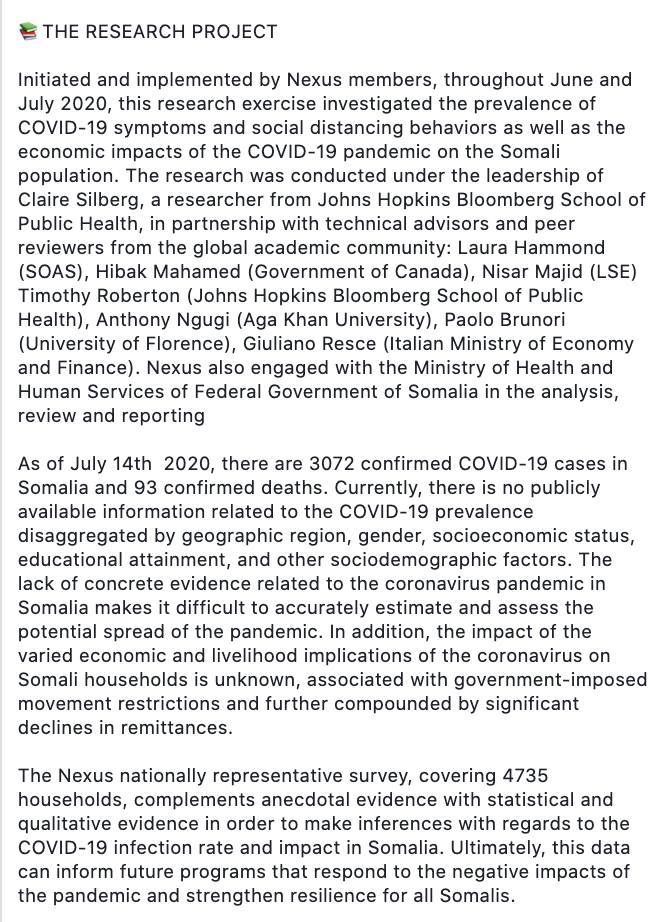
Reading this very useful policy brief by @SomaliNexus
The significant impacts of #COVID-19 on the livelihoods and health of #Somali communities: Findings from
a nationally representative household survey
https://t.co/zDl7YXGDje
#Somalia@Adesoafrica
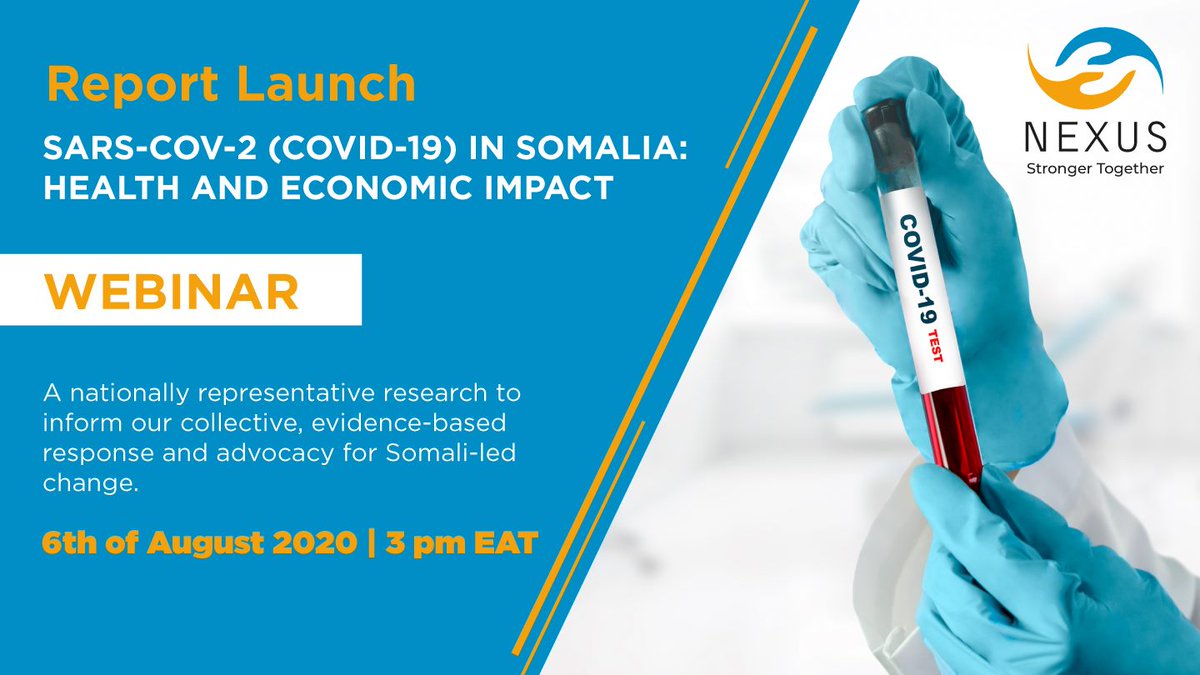
The day is here! Join us at 3pm EAT today for this great discussion hosted by @SomaliNexus.
Here's the direct link for registration:
https://t.co/akWMngZp3o
Webinar for the launch of #COVID19 in #Somalia: Health & Economic Impact Report to discuss how the research findings can inform our response & advocacy efforts & formulate a common strategy moving forward.
Register for this upcoming event here: 👉 https://t.co/fLXb3pXA0Q
At @CPD_Africa-run Health Centre, thanks to the #SHF, up to 18,501 beneficiaries received consultations, vaccinations & treatment, including 3,814 boys, 3,830 girls, 4,327 men and 6,530 women. Find out more about achievements in 2019 ➡ https://t.co/eMNtmz07Lc
#InvestInHumanity