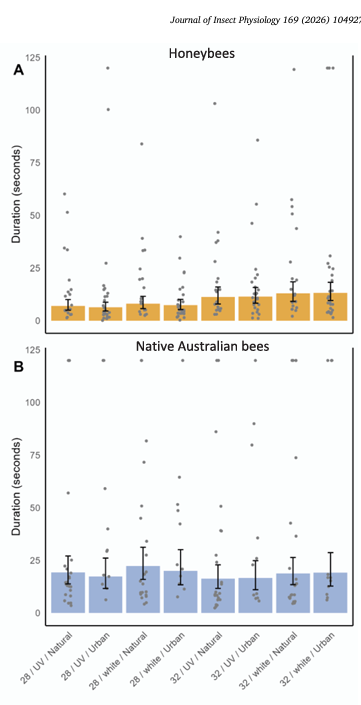
How do interactions between temperature, urban gradient, and light type impact the phototactic response in native and non-native bees? Emily Watson and co-authors found honeybees were faster under all conditions. https://t.co/3tjejrBz5h
Why don't we use behavioural ecotoxicological studies in environmental management? Michael Bertram & colleagues assess whether behavioral measures are relevant at the population level. They conclude that, yes, they are and they are underutilised. @BBM_Wong https://t.co/fn4gOg8IrY
You have heard of the gut microbiome but what do we know about plant microbiomes? Christopher Blake & colleagues examined the bacteria in the rhizosphere of Canola and suggest scope for better design interventions that support sustainable crop production. https://t.co/8qCGnXwohB
Can we really train bacteriophages to selectively target certain bacteria? Natasha Torriero-Smith and co-authors explore this question and propose some solutions to help drive the field forward. https://t.co/udlqsBYmEt @MikeJayMcD@JeremyJBarr
Hermaphrodites have lower metabolic rates than gonochores Open Access
;George C. JarvisCorresponding Author📷
Dustin J. Marshall
📷
Author & article information
Proc Biol Sci (2025) 292 (2060): 20252276 .
https://t.co/e0LIVApp3L
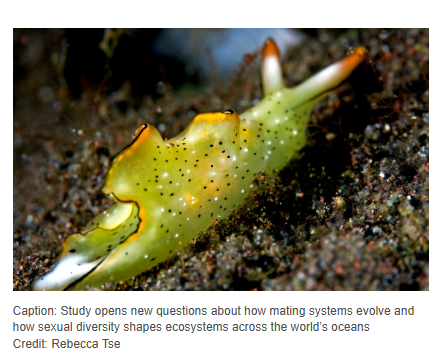
Is hermaphrodism less common in animals because it is energetically more costly? @gc_jarvis and Dustin Marshall have analysed 536 species of marine invertebrates and found that hermaphrodites require approximately 27% less energy than gonochores on average.
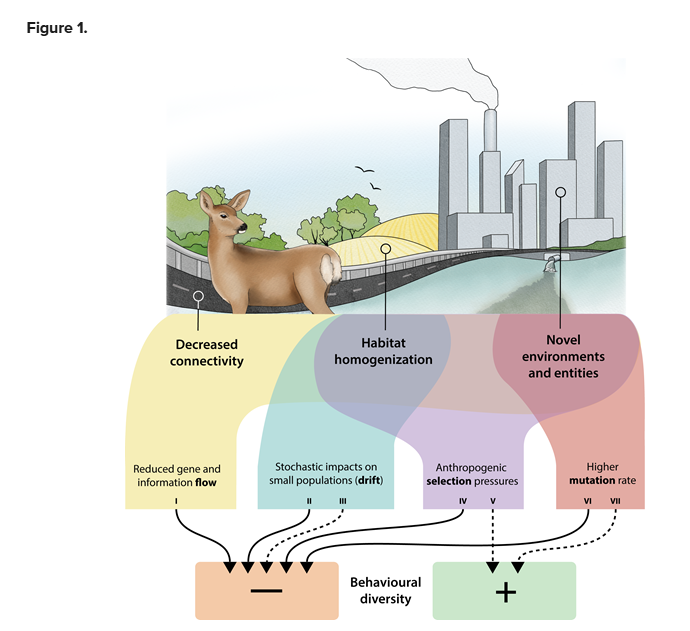
How is behavioural diversity affected by human-induced change? Oded Berger-Tal and co-authors review how anthropogenic disturbances can impact behavioural diversity through the evolutionary forces of selection, flow, mutation and drift. https://t.co/DzNeZUHknh @BBM_Wong
Eduardo Flores-Sandoval and colleagues propose that the gene MpARF2 and the hormone auxin work together to providing signalling information to surrounding differentiating cells—a game changer for embryophyte evolution https://t.co/lgbESea7lh
Travis Park & Co-authors investigate the optimal evolutionary path in aquatic mammal feeding and find novel morphological innovations can shift evolutionary trajectories from optimal paths yet still result in highly diverse and successful animal lineages. https://t.co/bpG5E2dbSE
70 species of marine megafauna found to have high vulnerability to anthropogenic threats. Overall, temperature extremes and plastics and other solid waste were rated as affecting the largest proportion of populations. https://t.co/cbzzPJiGGO
Can we improve the efficiency of photosynthesis in C4 plants such as sorghum and maize? @mary_in_vivo@RobertSharwood and Robert Furbank review and highlight future possibilities. https://t.co/sDSybRvKyB
@NewPhyt Tansley Reviews
Till Ramm and colleagues analyse next-generation data in a transdisciplinary framework, and demonstrate the benefits of integrating a paleontological perspective into conservation-oriented studies. Current Biology https://t.co/6s1LNCGFFo...
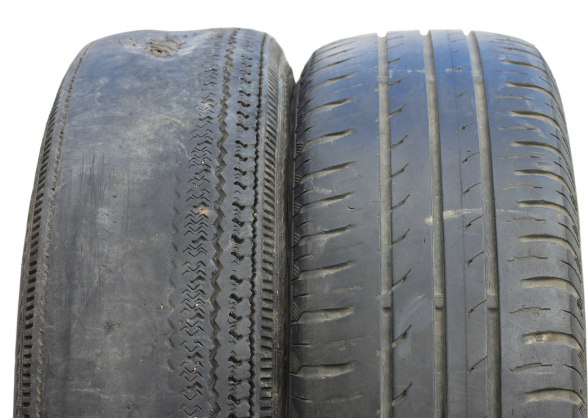
As your car tyres wear down, they leave microscopic particles that can end up in waterways and are toxic to a range of aquatic species. María Angeles Gonzalez-Vazquez and co. review current knowledge on the ecotoxicity of selected tyre-related chemicals. https://t.co/VXd0NWP9U2
How can pollutants affect the success of non-native species? Isaac Ligocki & colleagues find the potential influence of chemical pollution on invasion success remains largely unexplored and recommend its inclusion in conservation and restoration @BBM_Wong https://t.co/nTDkMtnfhm