Welcome back to Throwback Thursday! We have another 3-part thread 🧵 for you today!
1/3
🦍🍫 Ever wondered where the ultimate cereal monkey legend comes from? Meet Coco the Monkey - the absolute icon of Kellogg’s Coco Pops (or Cocoa Pops in some markets)!
Coco first swung onto our screens back in 1963 (some say 1961 in early black-and-white US-style spots), but it was his 1986 redesign that turned him into a proper British breakfast superstar: brown fur, that cheeky blue cap with the big yellow “C”, white t-shirt proudly showing off his name, and blue pants. Voiced with a proper cheeky British accent, he’d swing through the jungle belting out the legendary jingle: “I’d rather have a bowl of Coco Pops!”
The ads were pure 80s/90s gold - jungle capers with his mates like Crafty Croc, Kylie Kangaroo, Ozmelda the Ostrich, Shortie the Giraffe and Hefty the Hippo. There were spoon toppers, musical mugs, monkey & friends figures, and enough merch to fill a cereal aisle. Sales went through the roof thanks to him, and he became a nostalgic staple for generations of kids who’d rather have Coco Pops than… well, anything else. Pure monkey magic. 🐵✨
But the story gets even more British when you look at the name drama. In 1998, Kellogg’s tried to rebrand the cereal as Choco Krispies across the UK to line it up with their global range. Sales took a nosedive almost immediately, so they let the nation decide in a massive public vote in 1999 - over a million people dialled in or logged on, and a whopping 92% voted to bring back the beloved Coco Pops name. The change happened in May 1999, complete with tongue-in-cheek election-style ads featuring Screaming Lord Sutch as the returning officer. Classic British democracy at its breakfast-best!
Around the world, Coco’s adventures vary wildly. He’s the face of Coco Pops in the UK, Ireland, Australia, New Zealand, and loads of other countries - same cheeky design, same jungle vibe. In the US, the equivalent cereal is Cocoa Krispies, where Coco the Monkey had a brief stint in the 90s before Snap, Crackle and Pop took over again. Elsewhere you’ll find him repping Choco Krispies, Chocos, or even Choco Krispis in places like Mexico and South America, sometimes with slightly tweaked looks or local twists. He’s a true global monkey ambassador!
These days, Coco has been a bit back-benched in big UK ad campaigns. As the 2000s rolled on, his starring roles got quieter - new spots focused more on “what goes on in that bowl?” with only fleeting cameos and no speaking lines. A lot of it ties into stricter UK consumer laws around high-fat, sugar and salt (HFSS) products. Rules tightened to protect kids from junk-food marketing, making it trickier for sugary-cereal mascots like Coco to headline TV ads aimed at children (there was even a 2018 ASA drama over a Coco Pops Granola ad that got temporarily banned for leaning too hard on the chocolatey brand vibes). He’s not vanished from the boxes entirely - Kellogg’s still uses him, and recent Europe-wide nostalgia campaigns have given him a refreshed look and brought him roaring back - but the glory days of wall-to-wall jungle capers are a fond memory.
Still the king of the cereal aisle in our hearts though. Who else grew up singing along with Coco? Drop your favourite memory below! 🍫🐵
#CocoPops #MonkeyVerse
https://t.co/gtOtI9F55H
🐵 Monkey Mythos Mondays: The Sasquatch and Skunk Ape - Primate Shadows of North America
Last week we stood, ready to cross, at the foot of the frozen Beringia bridge, having looked at the Chuchuna and Almas of the Siberian wilds. Now, having crossed, we swing into the vast forests, mountains, and swamps of North America, where indigenous nations have shared the land with hairy hominid cousins for thousands of years.
No fresh Neanderthal DNA bombshells on this side of the Pacific… but the footprints (literal and legendary) run deep. What if relic populations of ancient primates made it across with the first humans and never left?
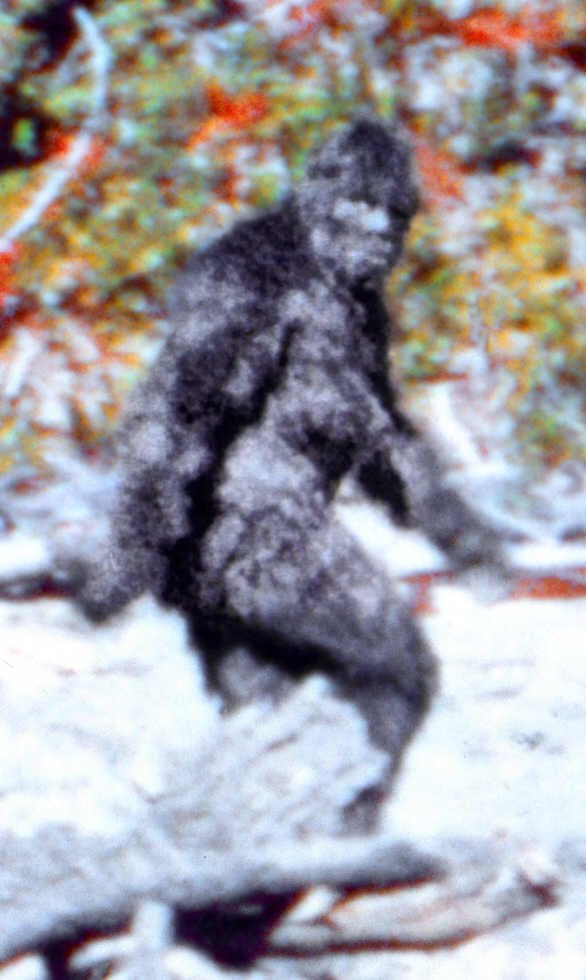
Enter the Sasquatch - also known as Bigfoot, from the Coast Salish “Sasq’ets” meaning “wild man.” Towering 7-10 feet tall with massive shoulders, long arms, and a conical head, these upright walkers are cloaked in dark brown or black fur. They roam the rain-drenched Pacific Northwest from British Columbia down through Oregon and Northern California. Some accounts describe them as shy giants who leave 16-24 inch footprints, emit deep whoops and whistles, and occasionally raid remote cabins for food - yet they’re just as often portrayed as gentle forest guardians who avoid humans. Native stories from the Salish, Lummi, and many other nations speak of them as ancient kin of the mountains, sometimes leaving simple stick structures or stone cairns as signs.
Their southern cousins, the Skunk Ape (or Florida Bigfoot), haunt the steamy swamps and hammocks of the Everglades and Southeast. Shorter at 5-7 feet, with reddish-brown or black matted hair and a face that’s more ape than man, they’re infamous for the eye-watering stench that gives them their name - a mix of rotten eggs and wet dog. More curious and occasionally bold than their northern kin, they’ve been reported raiding orchards, startling hikers, and even approaching cars along lonely backroads. Seminole and Miccosukee traditions echo similar “hairy swamp dwellers,” blending fear and respect for these elusive beings of the wetlands.
Whether you view the Sasquatch and Skunk Ape as surviving Gigantopithecus descendants, undiscovered hominids, misidentified bears, or pure Monkey Mythos… their stories have endured from pre-colonial campfire tales to modern trail-cam clips and plaster casts that still stump the skeptics. Eyewitness reports from loggers, park rangers, and everyday folks keep the legend alive across two continents’ worth of wilderness.
Cornelius remembers… and so should you.
That’s our deep dive into the Sasquatch and their swampy cousins the Skunk Ape.
We continue our cryptid-kick next week as we head south of the border into the misty jungles and high peaks for more New World primate legends! Drop your favourite Sasquatch or Skunk Ape story, sighting tale, footprint photo, or wild theory below (or suggest the next primate legend you’d like covered - more cryptids? African ape gods? Lemur lore?).
Follow @MonkeyVerseApe for the full Multiverse of the Apes. 🐒🌲🌿🍄✨
🐵 Monkey Mythos Mondays: The Chuchuna and Almas - Wildmen of the Siberian Tundra
Last week we met the wild ape-man guardian of the snow peaks - the Yeti. But we swing much much further north and east, where the snow-laden taiga gives way to the frozen tundra of eastern Siberia and the Russian Far East.
There’s been a lot of talk about Neanderthals recently - a real wild ride over the last couple of months with groundbreaking ancient DNA studies reshaping everything we thought we knew about their demography, bottlenecks, and interbreeding with us. But what if they never went extinct?
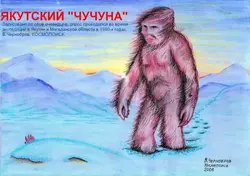
Enter the Chuchuna - also called Chuchunaa, Tjutjuna or the Siberian Snowman - the hairy wildman of the endless northern wilderness. In Yakut and Tungusic folklore this biped stands 6-7 feet tall, with broad shoulders, long matted hair, a protruding brow and powerful limbs that hang below its knees. Covered in thick dark or reddish fur, some accounts describe it clad in crude deerskin or reindeer hides, hinting at tool use or primitive clothing. The Yakuts know them as ChunChun (“evil spirits”), while the Tungus call them Mulen (“bandit”). Reclusive cave-dwellers of the remote taiga and tundra, they utter piercing whistles instead of speech and emerge at night to raid herder camps for food or livestock.
Their cousins, the Almas (or Almasty, from the Mongolian for “wild man”), roam the Altai Mountains, Pamir and Tian Shan ranges across Mongolia, Kazakhstan and parts of Central Asia. Slightly smaller at 5-6 feet, with reddish-brown fur and strikingly human-like features - flat nose, heavy brow ridges and no chin - they appear more akin to ancient hominids than apes. Some tales portray them as shy but curious beings who wear simple fur garments, communicate through gestures and occasionally interact with humans in the high steppes and forests.
The Chuchuna and Almas remain the untamed holdouts - wild primate cousins who never descended from the frozen wilds. Indigenous shamanic traditions of the Yakut, Tungus and Mongolian peoples have long spoken of these beings as powerful spirits of the hunt and the high places, sometimes feared for midnight raids yet respected as ancient kin of the land. Pre-Soviet folklore and even 20th-century eyewitness reports from remote herders blend fear, awe and wonder in true Monkey Mythos fashion.
Whether you see the Chuchuna and Almas as relic populations of Neanderthals or Homo erectus, misidentified bears, or living fossils of our primate past… they remain two of the most enduring simian legends of the far north. Indigenous stories and expedition accounts still echo across the tundra, blending survival tales with the raw power of the Siberian wilderness.
Cornelius remembers… and so should you.
That’s our deep dive into the Chuchuna and their cousins the Almas. We continue our cryptid-kick next week as we move beyond Beringia and into the new world. Next stop, North America!
Drop your favourite Chuchuna or Almas story, sighting tale, or theory below (or suggest the next primate legend you’d like covered - more cryptids? African ape gods? Lemur lore?).
Follow @MonkeyVerseApe for the full Multiverse of the Apes. 🐒❄️🌲✨
Cornelius remembers… Ape Fact Friday!
🐒�� Did you know that one of the world’s smallest primates, the Philippine tarsier, makes its home among the 1,200+ awe-inspiring Chocolate Hills of Bohol Island? These fist-sized nocturnal marvels have eyes bigger than their brains, hunt insects by night in the forests between those ancient limestone cones that turn a dreamy chocolate brown each dry season, and fill the twilight with their haunting songs. Cornelius is filing this one under “tiny Philippine primates”.
What’s YOUR favourite ape or monkey fact? Drop it below and Cornelius will add the best ones to the archive!
#MonkeyVerse #ApeFactFriday
🐵 Throwback Thursday: Good Night, Gorilla!
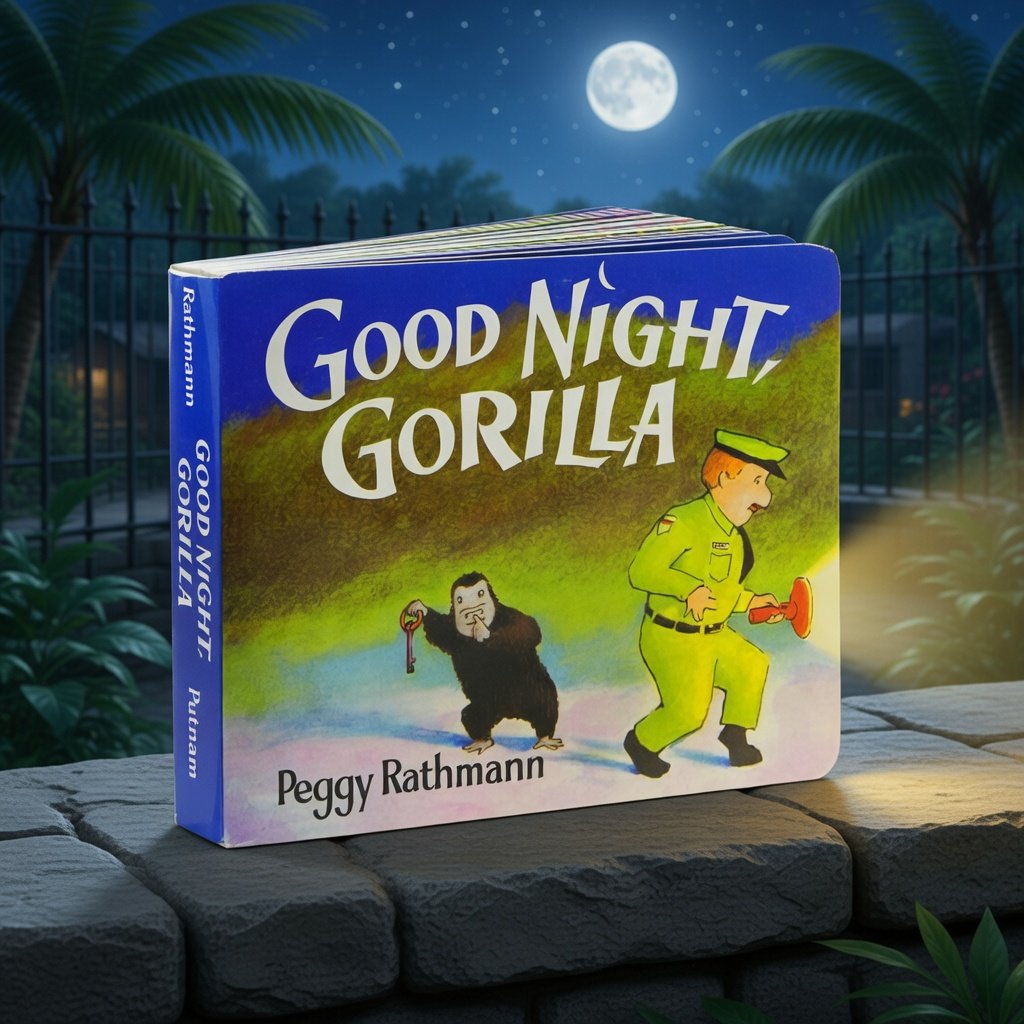
Good morning, ape crew! Cornelius here with a proper bedtime story throwback today - the 1994 picture book classic Good Night, Gorilla by Peggy Rathmann.
I remember reading this one to baby Milo 616 countless times at bedtime. That cheeky gorilla quietly nicking the zookeeper’s keys, letting himself out, then politely freeing the elephant, lion, giraffe and the rest of the gang for a sneaky midnight parade back to the keeper’s house… pure toddler gold. The almost wordless pages, those hilarious illustrations, and the brilliant final twist where the whole zoo ends up tucked into bed with the zookeeper and his wife had little Milo giggling every single time.
On a superficial level, it always reminded me of the vintage Donkey Kong Jr. Saturday Supercade episode “Gorilla Ghost”. Back when Donkey Kong and DK Jr. were fresh on the scene - barrels flying and Junior swinging vines to rescue his dad - Saturday Supercade aired a 1980s cartoon featuring the young son on a quest to find his father. In “Gorilla Ghost” (which aired in November 1983), young DK Jr. and his mate Bones head to the city zoo to visit Uncle Julius, only to run into spooky nighttime chaos involving a mysterious “gorilla ghost” causing all sorts of mischief with the animals.
Both have that fun gorilla-on-the-loose-at-night vibe - one a gentle, heart-warming bedtime caper for little ones, the other a boisterous 80s cartoon adventure full of ghost-hunting laughs and monkey muscle. The book is quiet and sweet; the episode is loud Saturday-morning telly mayhem. Yet they both capture that same playful primate spirit that’s been making us smile for decades.
You can still watch the full “Gorilla Ghost” episode right here: https://t.co/kgzLEkSnu3
It’s moments like these - curling up with your little ones and a good book - that you really cherish whilst you still have them, ape crew. The days may be long, but the years are short.
Anyone else have fond memories of reading Good Night, Gorilla (or any cheeky primate bedtime stories) to their own little apes? Or did Saturday Supercade with DK Jr. and “Gorilla Ghost” spark your love of all things ape-related? Drop your stories below - favourite page, best giggle moment, or which episode had you shouting “Monkey muscle!” the loudest.
Let’s hear it, gang. 🐵📖
#ThrowbackThursday #GoodNightGorilla #DonkeyKongJr #SaturdaySupercade #BedtimeStories #MonkeyVerse #ApeAdventures #ParentingThrowback
Wild Weird Wednesday: The Time Machine - When Humanity Splits into Prey and Predator
Fellow simian scholars and time-haunted humans,
Last week we unearthed H.G. Wells’ The Island of Doctor Moreau and watched Victorian scalpels birth the Beast Folk. This week the Time Traveller drags us 802,701 years forward… and the horror is no longer created in a lab. It has evolved.
In The Time Machine (1895), Wells shows us the ultimate class war made flesh. The delicate, childlike Eloi frolic in sunlit gardens above ground - beautiful, helpless, vegetarian. Below, in the machine-haunted darkness, lurk the Morlocks: pale, ape-like, industrious cannibals who tend the engines by night… and rise to harvest the Eloi like cattle. Wells’ chilling thesis: when the rich and poor are divided long enough by technology and comfort, they stop being the same species. One becomes livestock. The other becomes the butcher.
Now peer into the fossil record from just 41,000–45,000 years ago.
A groundbreaking 2025 study in Scientific Reports (Goyet cave, Belgium) reveals Neanderthals practiced highly selective exocannibalism. One group dragged in outsider females and children - non-local individuals, deliberately targeted - butchered them with the same precision they used on deer, and consumed them. Isotopic and DNA evidence confirms these victims were not from the local band. They were the “Eloi” of their time: the vulnerable from a rival group, carried underground (or into the cave) and eaten. The cannibals? Almost certainly other Neanderthals - Morlocks preying on their own kind during the final centuries before Homo sapiens arrived and the Neanderthal world collapsed.
Wells was writing fiction. The Goyet bones are the receipt.
And what of your far future?
Scientific thought experiments and evolutionary papers paint a disturbingly Wellsian trajectory:
- Technological divergence: With AI, automation, and genetic engineering, natural selection no longer weeds out the weak the way it once did. Some models (Bostrom, Powell, and others) warn that privileged populations could evolve toward Eloi-like traits - longer-lived, less aggressive, smaller-brained, physically delicate - while those who maintain the machines, mine the asteroids, or colonise the harsh off-world colonies become tougher, more subterranean, more Morlock. Space isolation alone could drive speciation within millennia.
- Engineered post-humans: Dougal Dixon’s Man After Man (1990) and modern biotech papers sketch future humans deliberately reshaped: vacuum-adapted orbital workers, low-gravity “elves,” or radiation-hardened deep-space labourers. Class, wealth, and ideology become the new selective pressures. The rich design their descendants for beauty and leisure. The rest design theirs for survival in the dark.
- Collapse scenarios: If civilisation falters, papers on “future evolution under resource stress” suggest a return to brutal selection. The pampered surface-dwellers become easy prey for those hardened by scarcity - exactly as the Eloi were.
Wells wasn’t predicting. He was warning.
The Time Machine is public domain - read it free at Project Gutenberg (https://t.co/sqyd1Vad3P). Then ask yourself: when our own technological divide grows wide enough, will the surface still belong to the Eloi… and the tunnels to something that remembers our face?
What say you, my fellow apes? Are we already choosing which branch of the family tree becomes the cattle… and which becomes the butcher?
- Cornelius, Ape Archaeologist
Wild Weird Wednesday continues…
#HGWells #TimeMachine #NeanderthalCannibalism #FutureEvolution #HumanityUnraveling
Cornelius 616
Just touched down after a wild 4-day jaunt through the Monkeyverses.
Apologies for the total radio blackout, gang - wormhole travel plays absolute havoc with the subspace comms array. One minute you’re mid-broadcast, next you’re quantum-surfing between realities with nothing but static and the occasional screeching cosmic monkey.
But the blackout is over. Transmission resuming immediately.
Missed you all. Let’s pick up right where we left off. 🚀🐒
Cornelius remembers… Ape Fact Friday! 🐒📜
Did you know that chimpanzees wage deadly “civil wars” against rival troops in the wild? Long-term field studies in Uganda and beyond have captured troops splitting into rival factions before launching calculated patrols, ambushes, and takeovers that can last for years. It’s a powerful example of the complex social structures and intelligence that make our primate cousins so fascinating.
Cornelius is filing this one under “primate intelligence”.
What’s YOUR favourite ape or monkey fact? Drop it below and Cornelius will add the best ones to the archive!
#MonkeyVerse #ApeFactFriday
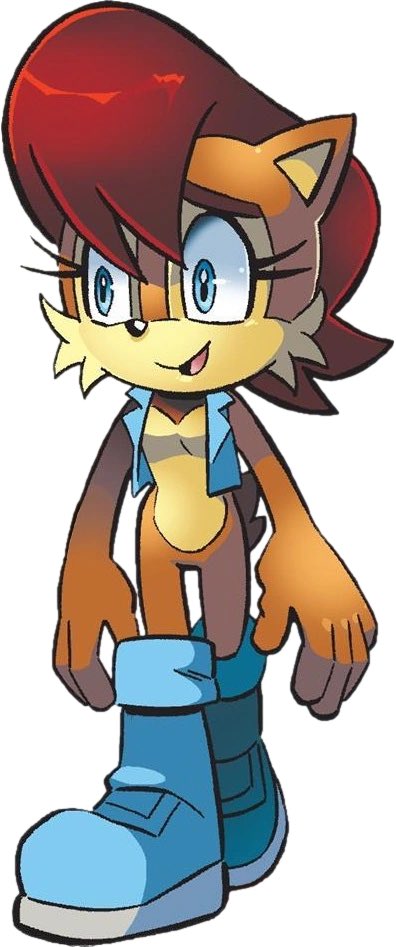
You want to know a fact I find funny? I’m 100% sure that Bluster Kong will reappear in the donkey Kong franchise before sally acorn reappears in the sonic franchise again, and they’re basically 2 sides of the same coin besides Sally is way more popular.
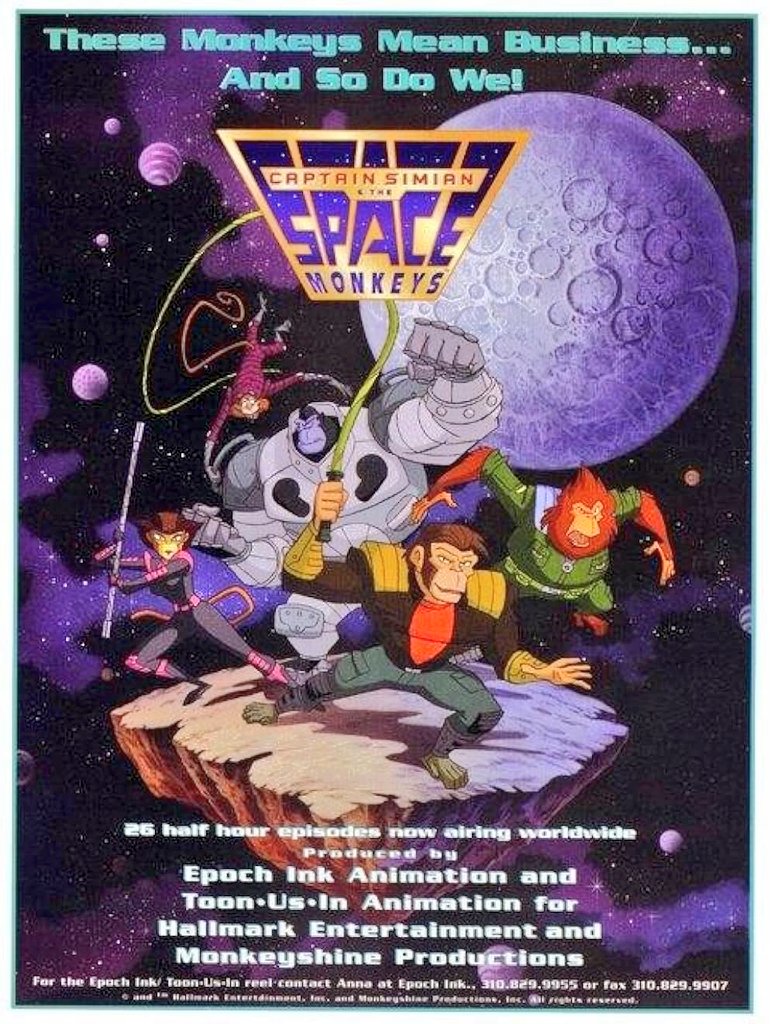
🐵 Throwback Thursday: Captain Simian & the Space Monkeys!
Good morning, ape crew! Buckle up for a proper 90s blast from the past - today we’re talking the wildest space-faring primate squad ever to hit Saturday morning telly: Captain Simian & the Space Monkeys!
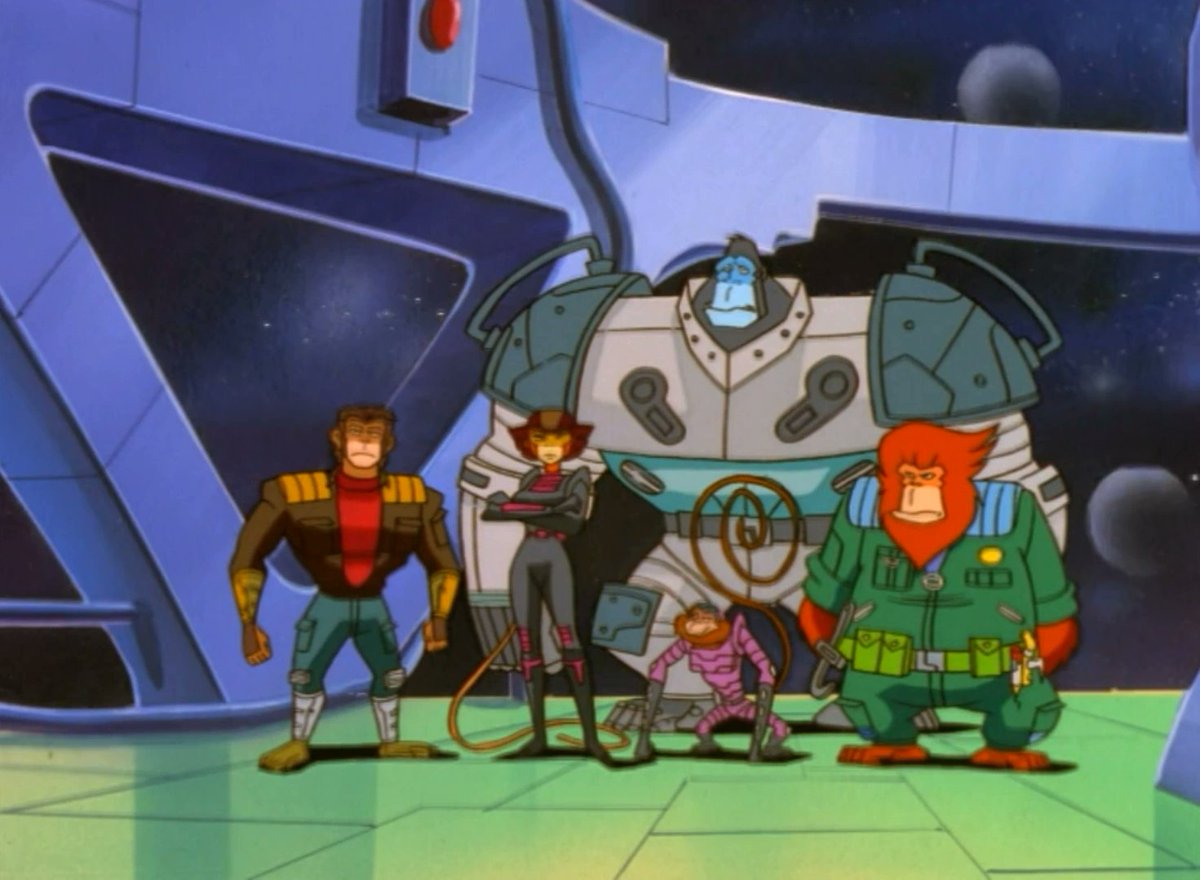
Back in the 1960s, a plucky NASA chimp named Charlie gets launched into orbit… but his capsule goes wildly off course. Frozen in stasis for decades, he’s eventually picked up by a mysterious super-advanced alien race (they’re so advanced their name can’t even be pronounced - it’s just a thoughtful pause!). They mistake him for Earth’s dominant species, crank up his intelligence, kit him out with a shiny starship called the Primate Avenger, and give him one massive mission: save the universe from the evil Lord Nebula (a half-human, half-black-hole baddie who wants to crunch everything into a new Big Bang and start over).
Captain Simian (now going by Chuck) doesn’t fly solo. He beams up a ragtag crew of Earth primates and gets straight to banana-fuelled heroics across 26 episodes of sci-fi comedy chaos:
• Spydor - the wisecracking spider monkey thief from a New York organ grinder (voiced by Dom Irrera)
• Shao Lin - graceful golden snub-nosed monkey martial artist who speaks in the royal “we” (Karen Maruyama)
• Gor - gentle giant gorilla from Rwanda with super-strength but childlike innocence… until he rages and turns into the massive Gormongous (James Avery Sr. - yep, Uncle Phil from The Fresh Prince)
• Dr. Splitz / Splitzy - the two-faced orangutan scientist/engineer with a split personality (Maurice LaMarche)
• Plus Orbitron, the slightly glitchy robot sidekick (Jeff Bennett)
They’re up against Lord Nebula himself (voiced by none other than Michael Dorn - Worf from Star Trek) and his cyborg enforcer Rhesus 2 (Malcolm McDowell). Cue laser battles, planet-hopping, running banana gags, and plenty of Saturday-morning parody fun.
The show premiered first in the UK on 16 August 1996 (a full few weeks before the US on 7 September), part of Bohbot’s syndicated Amazin’ Adventures block. It only lasted one season, but that star-studded voice cast and bonkers premise made it a cult favourite for 90s kids who loved their cartoons with a side of space-race nostalgia.
Anyone else remember catching this on a Saturday morning, or was it just me and my bowl of Coco Pops (or maybe in another timeline it was a bowl of Tiptop's Choco Pops)? Drop your memories below - favourite crew member? Best episode? Did you have any of the Mattel action figures that could “float” in their packaging? Or was this one that slipped under the radar for you?
Let’s hear it, gang - who’s ready for a Primate Avenger reunion? 🚀🍌
#ThrowbackThursday #CaptainSimianAndTheSpaceMonkeys #90sCartoons #SpaceMonkeys #MonkeyVerse #ApeAdventures #SaturdayMorningCartoons
Wild Weird Wednesday: From Dr. Moreau’s Ape-Man to the Chimeras in Our Labs - Are We Still on the Island?
🐵🔬 Ahoy, my fellow simians and curious primates! Cornelius here, your favourite ape-scribe from the MonkeyVerse, picking up right where last week’s merman madness left off. We were knee-deep in 19th-century hoaxes grafting monkey torsos onto fish tails - pure carnival splice-job weirdness that birthed Feejee Mermaids. But what if the real “splicing” wasn’t some dusty sideshow? What if it was a scalpel-wielding madman turning beasts into near-men… and what if we’re doing it now, in shiny labs, with stem cells instead of stitches?
Step into the lore, kin: H.G. Wells’ 1896 fever-dream The Island of Doctor Moreau. A shipwrecked gent named Prendick washes up on a remote Pacific isle and meets Dr. Moreau - disgraced London vivisectionist turned god-complex exile. No fancy CRISPR here; just knives, pain, and raw surgery. Moreau carves animals into “Beast Folk”: dog-men, leopard-men, swine-people… and yes, the Ape-Man himself.
That hairy, five-fingered fellow (he calls himself and Prendick “Five Men” because thumbs matter) shuffles about in rags, spouting the Law in broken English: “Not to go on all-fours; not to suck up drink; not to eat flesh or fish…” He has “Big Thinks” - half-baked philosophy that makes him feel almost human. Almost. The House of Pain echoes with screams as Moreau “stamps the human form” onto raw beast flesh. No anaesthesia. No mercy. Just evolution by force. The creatures breed, regress, chant the Law… until the whip cracks no more and nature reclaims the island.
Wells wasn’t pulling this from thin air. He drew from the real Victorian backlash against vivisection - live animal dissections that horrified the public while scientists chased Darwinian “progress.” Moreau’s island is a brutal mirror: What separates us from the beasts? A few cuts? A Law we pretend to follow? Prendick flees home, haunted, seeing the animal in every human face.
Fast-forward to your times, fellow primates. The Wild Weird Wednesday before last nodded to those Chinese monkey-human chimera embryos. Remember? 2021, international team (Spanish-led but run in Chinese primate labs) injected human induced pluripotent stem cells into macaque monkey embryos. Human cells thrived, integrating into the growing monkey bodies - muscle, organs, even early neural tissue - for up to 20 days in the dish before ethics shut it down. Goal? One day grow human-compatible organs for transplant. Disease models. The ultimate splice.
Then 2023: Chinese scientists crank it up - live-birth chimeric monkeys with sky-high donor stem-cell contribution (20-90% in tissues, including gonads). Not human cells this round, but same principle: engineered embryos that actually survive and glow under the right light. Proof-of-concept for bigger, better chimeras.
Sound familiar? Moreau’s Beast Folk, but with petri dishes and billion-dollar grants instead of a whip. Today’s society debates it fiercely: organ shortages solved? Or a slippery slope to sentient lab creations demanding rights? Transhumanists cheer the biotech leap; ethicists warn we’re playing god again, just with better funding. CRISPR babies, designer genomes, AI minds in silicon - the Island never sank. It went corporate.
We primates have always grafted our dreams (and nightmares) onto each other. Merman hoaxes sold wonder. Sea Monkeys sold childhood fantasy. Moreau sold horror. Modern chimeras? They sell hope… wrapped in the same old question: When the Law fails and the Beast Folk look back at us in the mirror, whose side are we on?
What say you, troop? Read the book (it’s public domain - short, savage, unforgettable). Watch the old films. Then glance at the latest stem-cell headlines. Are we the enlightened humans… or just the next batch in the House of Pain?
Oook oook, stay weird, stay wild.
— Cornelius
🐒📖 Join us next week on Wednesday to see what the future holds!
Cornelius remembers… Table Top Tuesday! 🎲🐒
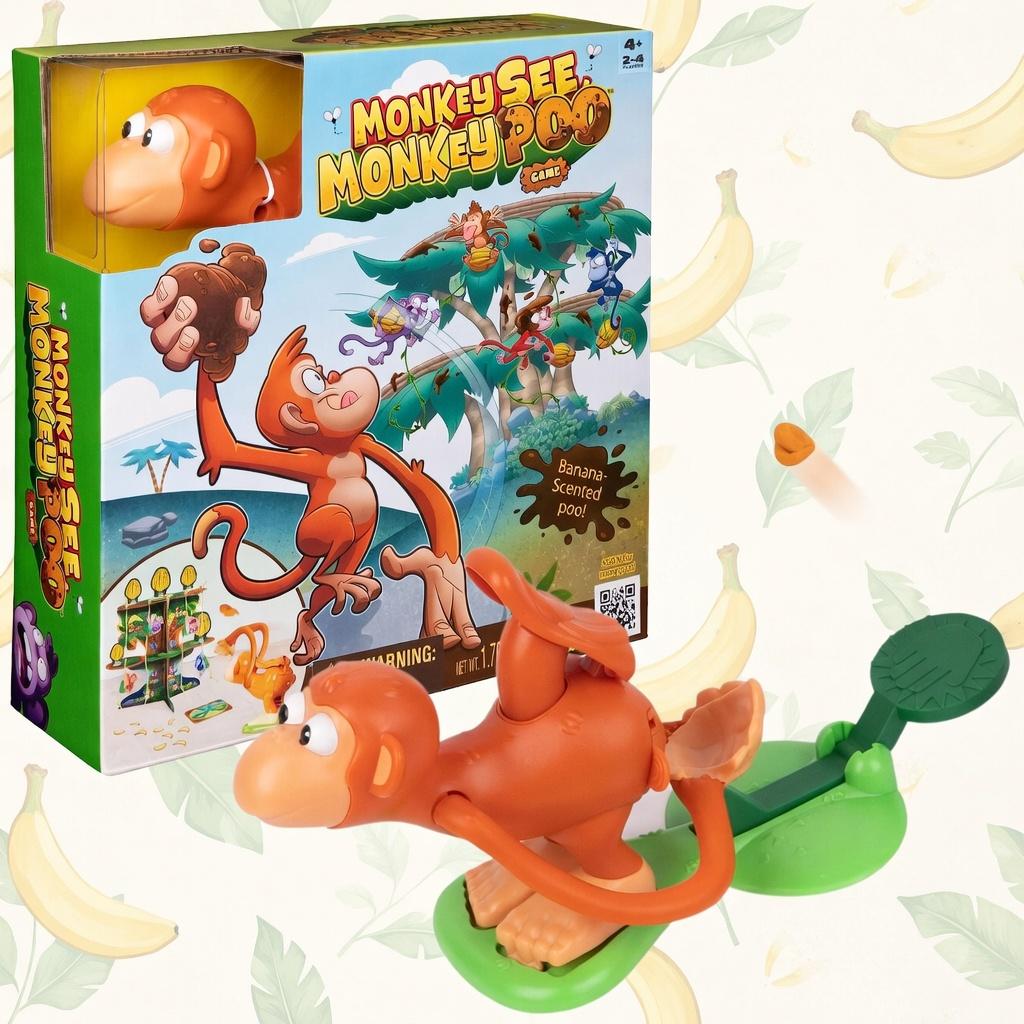
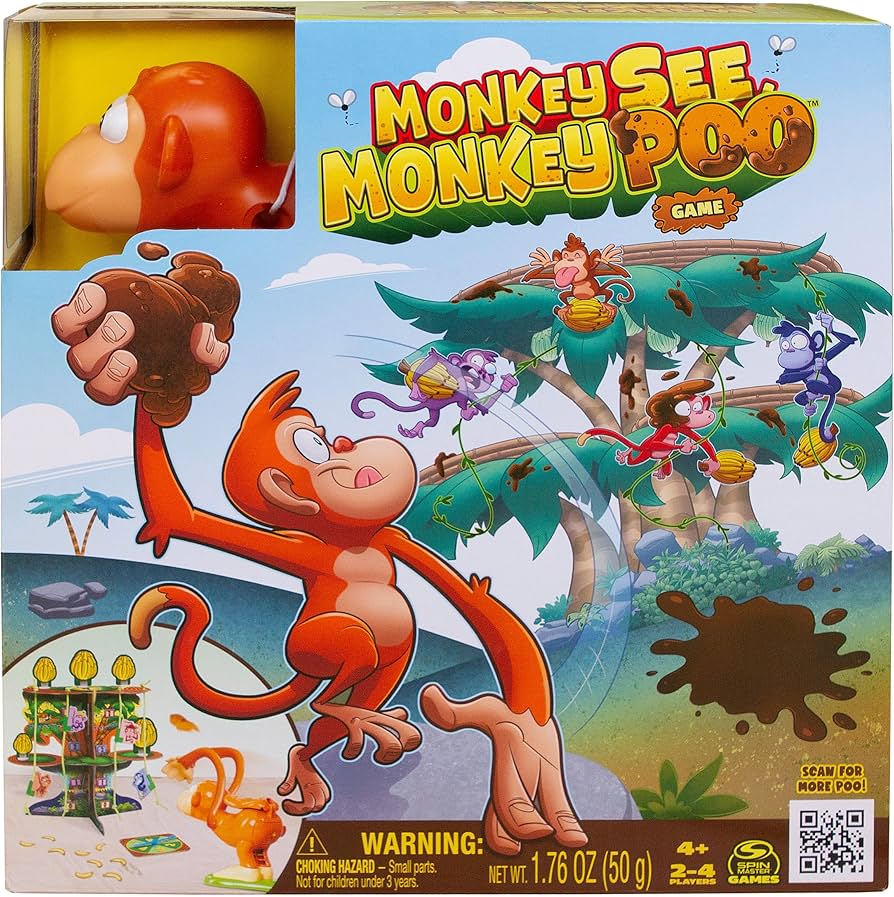
Did you know that in 2023 Spin Master released Monkey See Monkey Poo, a delightfully silly vertical dexterity game where players load a monkey flinger with banana-scented dough and fling poo to knock down banana bunches? The first to collect enough tokens and climb their monkey to the top of the tree becomes the Top Banana in this hilarious race of messy monkey mayhem! Cornelius is filing this one under “modern monkey dexterity games”. What’s YOUR favourite tabletop memory involving apes or monkeys? Drop it below and Cornelius will add the best ones to the archive!
#MonkeyVerse #TableTopTuesday
Bearilla: In the mid-1970s, residents near Paradise, Kentucky, reported a towering creature that looked like a cross between a bear and a gorilla. https://t.co/NCQQcYUG2c #Cryptids#Folklore
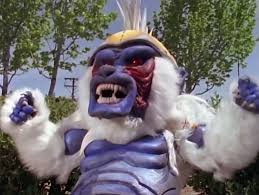
Primator featured in the Mighty Morphin Power Rangers
Lord Zedd brought him to life from a gorilla suit belonging to Zack Taylor, the Black Ranger!
By pounding his chest, Primator can transform into any person or Ranger, including their morphed forms. He can also perfectly mimic voices, fire blue lightning bolts from his hands and explosive energy beams from his head or helmet eyes when disguised.
Can you remember how the rangers defeated him?
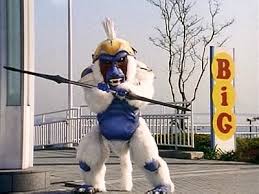
Power Rangers Jungle Fury also featured Munkeywi, a baboon-themed monster and a personal Rinshi servant of the Overlord Grizzaka
His design is adapted from the character Hihi from the Super Sentai series Juken Sentai Gekiranger.
With super-speed and agility, he was a troublesome foe for the rangers!
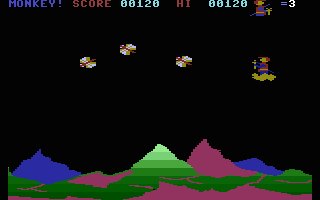
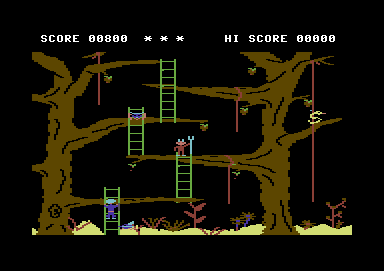
VTech Time & Fun "Monkey" (1981) is a vintage handheld LCD electronic game, designed to compete with Nintendo's Game and Watch.
The game challenges players to control a character who must prevent monkeys from stealing coconuts from palm trees
Atari's Monkey Magic was the original WuKong video game, released in 1987
Based on the Japanese TV series 'Monkey' (1978–1980), the player would fly around on Wu Kong's cloud and explore the forest to rescue the princess from the evil dragon!
There is a famous, much rarer arcade game called Monkey Magic, released by Nintendo in 1979. It is completely unrelated to the Atari platformer and is instead a Breakout-style game where you knock out the teeth of a giant monkey face
Interested in all the recent Neanderthal chatter?
Here's a bullet-point list of all key Neanderthal-related papers/preprints (February–early April 2026 wave, plus closely related preprints):
• February 26, 2026 – Science: "Interbreeding between Neanderthals and modern humans was strongly sex biased" by Alexander Platt, Sarah Tishkoff, and colleagues (University of Pennsylvania). Evidence from X-chromosome patterns shows predominant Neanderthal male + modern human female pairings. DOI: 10.1126/science.aea6774
• February 20, 2026 – bioRxiv preprint: "Tracing Neanderthal ancestry patterns through successive population expansions in Europe" by Alexandros Tsoupas and colleagues (University of Geneva). Analyzes how early hunter-gatherer expansions and reproductive isolation shaped a Southeast-to-Northwest cline of Neanderthal ancestry in Europe, preserved through later Neolithic migrations. DOI: 10.64898/2026.02.20.706963
• January 6, 2026 – bioRxiv preprint (closely related to the wave): "Tracing the Neanderthal–Modern Human hybrid zone using paleogenomic data" by Lionel N. Di Santo, C. S. Quilodrán, P. Cerrito, and M. Currat (University of Geneva). Uses paleogenomes to map the geographic hybrid zone (~0°–69°E longitude, 29°–59°N latitude) and models the cline in Neanderthal ancestry increasing with distance from the Levantine source. DOI: 10.64898/2026.01.06.697899
• March 23, 2026 – PNAS (first of two): "A high-coverage Neandertal genome from the Altai Mountains reveals population structure among Neandertals" by Diyendo Massilani, S. Peyrégne, J. Kelso, S. Pääbo, and colleagues. High-coverage genome from a ~110,000-year-old bone fragment (Denisova Cave) showing early rapid regional isolation, low diversity, and high inbreeding in Neanderthal subpopulations. DOI: 10.1073/pnas.2534576123
• March 23, 2026 – PNAS (second of two): "Archaeogenetic insights into the demographic history of Late Neanderthals" by C.M. Fotiadou, J. Krause, C. Posth, and colleagues. mtDNA analysis from 59 Neanderthals (including new European samples and fetal bones) documenting a major turnover/bottleneck ~75–65 kya and late European Neanderthals descending from a single southwestern French refugium lineage. DOI: 10.1073/pnas.2520565123
• April 4, 2026 – bioRxiv preprint: "The Neanderthal population history and the introgression landscape inferred from the UK Biobank" by Adeline Morez Jacobs, Luca Pagani, and colleagues (University of Padova et al.). Uses ~45,000 UK Biobank genomes to analyze Neanderthal haplotypes; estimates effective population size of the introgressing Neanderthal lineage at ~6,564 (comparable to or slightly larger than early modern humans) and maps introgression deserts/selection signals. DOI: 10.64898/2026.04.03.716297
🐵 Monkey Mythos Mondays: The Chuchuna and Almas - Wildmen of the Siberian Tundra
Last week we met the wild ape-man guardian of the snow peaks - the Yeti. But we swing much much further north and east, where the snow-laden taiga gives way to the frozen tundra of eastern Siberia and the Russian Far East.
There’s been a lot of talk about Neanderthals recently - a real wild ride over the last couple of months with groundbreaking ancient DNA studies reshaping everything we thought we knew about their demography, bottlenecks, and interbreeding with us. But what if they never went extinct?
Enter the Chuchuna - also called Chuchunaa, Tjutjuna or the Siberian Snowman - the hairy wildman of the endless northern wilderness. In Yakut and Tungusic folklore this biped stands 6-7 feet tall, with broad shoulders, long matted hair, a protruding brow and powerful limbs that hang below its knees. Covered in thick dark or reddish fur, some accounts describe it clad in crude deerskin or reindeer hides, hinting at tool use or primitive clothing. The Yakuts know them as ChunChun (“evil spirits”), while the Tungus call them Mulen (“bandit”). Reclusive cave-dwellers of the remote taiga and tundra, they utter piercing whistles instead of speech and emerge at night to raid herder camps for food or livestock.
Their cousins, the Almas (or Almasty, from the Mongolian for “wild man”), roam the Altai Mountains, Pamir and Tian Shan ranges across Mongolia, Kazakhstan and parts of Central Asia. Slightly smaller at 5-6 feet, with reddish-brown fur and strikingly human-like features - flat nose, heavy brow ridges and no chin - they appear more akin to ancient hominids than apes. Some tales portray them as shy but curious beings who wear simple fur garments, communicate through gestures and occasionally interact with humans in the high steppes and forests.
The Chuchuna and Almas remain the untamed holdouts - wild primate cousins who never descended from the frozen wilds. Indigenous shamanic traditions of the Yakut, Tungus and Mongolian peoples have long spoken of these beings as powerful spirits of the hunt and the high places, sometimes feared for midnight raids yet respected as ancient kin of the land. Pre-Soviet folklore and even 20th-century eyewitness reports from remote herders blend fear, awe and wonder in true Monkey Mythos fashion.
Whether you see the Chuchuna and Almas as relic populations of Neanderthals or Homo erectus, misidentified bears, or living fossils of our primate past… they remain two of the most enduring simian legends of the far north. Indigenous stories and expedition accounts still echo across the tundra, blending survival tales with the raw power of the Siberian wilderness.
Cornelius remembers… and so should you.
That’s our deep dive into the Chuchuna and their cousins the Almas. We continue our cryptid-kick next week as we move beyond Beringia and into the new world. Next stop, North America!
Drop your favourite Chuchuna or Almas story, sighting tale, or theory below (or suggest the next primate legend you’d like covered - more cryptids? African ape gods? Lemur lore?).
Follow @MonkeyVerseApe for the full Multiverse of the Apes. 🐒❄️🌲✨