🇸🇦🇹🇷🇵🇰🇮🇷 The Mecca Pact's visit to Tehran may be meant to stop the Yemen front becoming the opening of a Saudi-Iran war, or, ultimately, an Iran-versus-Mecca Alliance war.
Saudi Arabia's Khalid bin Salman is there with Pakistan's Asim Munir and Turkey's intelligence chief Ibrahim Kalin.
The message may be twofold
→ Riyadh and its partners may be ready to intensify action against the Houthis in Yemen.
→ Tehran should not read that as a direct attack on Iran , and should not answer with strikes on Saudi cities, oil facilities or shipping.
But the reassurance contains a warning
→ Restrain the Houthis. End attacks on Saudi territory.
→ Or Riyadh and its new alliance may conclude that they have to act themselves.
This is diplomacy before escalation: an attempt to separate the Houthi war from a wider Iran–Mecca Alliance confrontation, while making clear that the separation depends on Iran's choices.
@stochastikos I don't deny any maritime law, Greece is right to use them. When I said "fencing" I was talking about the willingness of Turkey to not let Greece operates freely in the area.
It's hard to defend this big chunk of the sea.
May be I should have used another word.
🇬🇷🇹🇷 Greece is fighting for a sea it can't fence, and a Greek islet of 500 people, 2 km off Turkey's coast, matters more to Athens than almost any warship.
On 20 October, eastern Libya's parliament ratified the 2019 sea deal with Turkey, a line from Anatolia to Libya that leaves Crete out. Athens called it illegal. Its government spokesman, Pavlos Marinakis, now says Greece will keep widening its 2020 sea deal with Egypt, and needs no Turkish permission for its power cable to Cyprus. Behind every one of these moves sits the same aim: keep Turkey's share of the eastern Mediterranean as small as the law allows.
So why does Athens fight for every mile, and what does that strategy cost it?
First, what "access" means
→ Nobody can stop Turkish ships from sailing the Mediterranean; that freedom holds everywhere
→ The fight is over who owns the seabed and the water above it: gas, fish, cables, up to 200 nautical miles out
→ On Athens's map, each Greek island earns that zone, so Turkey keeps a thin strip off its southern coast
Reason one: the islands are Greece
→ Greece has about 6,000 islands and islets; if Kastellorizo, Rhodes or Crete lose their sea, the same argument reaches the Aegean
→ That's why Athens never trades the principle, even for an islet of 500 people
→ Turkey's parliament said in 1995 that extending Greek waters to 12 miles in the Aegean would be cause for war; Greece went to 12 miles in the Ionian in 2021, not yet in the Aegean
Reason two: the gas and the wires
→ Greece has licensed Chevron to explore south of Crete; Turkey calls that unlawful
→ The planned Crete to Cyprus power cable, over €2bn of mostly EU money, crosses water the Turkey-Libya line claims
→ Wherever Turkey holds a claim, every survey ship needs Ankara's blessing or a naval escort
Reason three: keep the navy at a distance
→ Turkey's Blue Homeland doctrine treats the sea as territory to be held, not just crossed
→ Navies grow into the water their country can call its own; a wide Turkish shelf would put Turkish patrols off Crete by right, not by provocation
→ In August 2020 a Greek and a Turkish frigate collided while shadowing a Turkish survey ship; Athens wants fewer places where that can happen
Reason four: the camp it built
→ Sea deals with Italy and Egypt in 2020, a gas forum with Cyprus, Egypt and Israel since 2019
→ A 2021 defence pact with France, sealed with a €3bn order for French warships
→ The catch: Paris said in 2021 that the pact does not cover sea zones, so borrowed protection stops near the shore
→ So Greece arms itself too: defence spending near 2.8% of GDP in 2025 on NATO's estimate, and a modernisation plan worth more than €25bn
What Ankara says
→ Turkey says it has the longest mainland coast in the eastern Mediterranean, and that islands on its doorstep can't wall it in
→ It never signed the UN sea treaty and argues that fairness, not distance, should draw the lines
→ Courts have cut tiny islands back before (Ukraine's Serpents' Island, 2009), and that is Turkey's best legal card
What it costs Greece
→ Squeezing Turkey pushed it toward Libya, and now Ankara courts Egypt with the promise of more sea
→ A line on a map is not control at sea: no stretch of water is ever held once and for all, only defended day after day
→ Egypt has become the swing vote: whichever map Cairo signs is the one others start to use
For Athens, every mile is really about the islands, not the water: lose the principle at Kastellorizo and it is lost in the Aegean too. That logic holds, but containment has a price, and Turkey has already found a partner to share the bill with. Watch three things: whether Cairo widens its 2020 deal with Greece, whether the Crete to Cyprus cable survey goes ahead without a Turkish escort, and whether France signs the stronger mutual defence clause it is reportedly preparing with Athens.
🇪🇬🇹🇷🇬🇷 One signature from Cairo could redraw the eastern Mediterranean, because Egypt is the only country both sea camps need.
→ Greece, Cyprus and Israel built their sea map on deals with Egypt (2003, 2020)
→ Turkey and Libya drew a rival line in 2019, ratified by eastern Libya on 20 Oct
→ Ankara says Egypt would gain about 26,500 km² of sea on its map
So would Cairo really switch sides?
Why it might
→ Turkey reportedly urged Egypt to join the Mecca Pact it shares with Saudi Arabia and Pakistan
→ More sea, Gulf money and a seat in a defence pact make a strong pitch
Why it probably won't
→ Switching tears up the 2003 and 2020 deals, and the Israeli gas that feeds Egypt's export plants
→ Riyadh reportedly opposed Egypt joining the pact
→ This month Cairo pledged help to Riyadh and kept talking to both Ankara and Athens
What the video shows
→ Each camp closes ranks once its seas touch; Egypt is the one flag that can still move
→ A line on paper needs ships to hold it, and whoever Egypt backs gets its coast and its navy too
Egypt doesn't need to choose to win: being courted by both maps is already its best deal. Watch Cairo's next sea talks, with Athens or with Ankara.
🇸🇦🇮🇷 The Mecca pact sends its leaders to Tehran to talk to Iran.
→ Saudi minister Khalid bin Salman is there with Pakistan's Asim Munir and Turkey's intelligence chief Ibrahim Kalin.
→ Rayed Krimly says they will meet President Masoud Pezeshkian and security chief Mohsen Rezaei.
Can a pact built for collective defence help stop a wider war?
Two agendas
→ Krimly seeks de-escalation and backs Qatar and Pakistan's mediation.
→ Iran's Baghaei cites Israeli expansion, its occupation of Lebanon and the US war on Iran.
The opening
→ Riyadh can rely on allies while keeping a Tehran channel open.
→ Past regional pacts often promised more than they delivered.
What matters next
→ The US blockade and Iran's restrictions still put Gulf shipping at risk.
A meeting buys time. A joint statement or step on shipping would show whether it bought more.
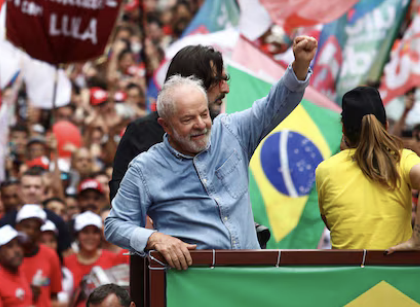
BREAKING: 🇧🇷 Lula defeats Flávio Bolsonaro to win a fourth presidential term, blocking the Bolsonaro family’s return to power.
He'll remain in office until January 2031.
What a comeback
🇧🇷🇺🇸 Brazil’s next president could shift Latin America’s balance of power. First, voters had to reach the polls.
→ Lula faces Flávio Bolsonaro, Jair’s son, who led round one by 2.2 million votes.
→ Transport disruptions and rain prompted both campaigns to seek extra voting time.
What is this election deciding?
Access and trust
→ Police are investigating possible transport interference in five states. Deliberate suppression is not established.
→ Only stations still open at 5 p.m. could stay open longer. Extra time cannot automatically repair lost access.
Security and living costs
→ Crime and everyday prices challenge Lula despite low unemployment and easing inflation.
→ Flávio promises tougher policing; Lula also shifted on criminal responsibility. Both face demands for protection and prosperity.
Washington and Beijing
→ Flávio could bring closer US security ties. Lula stresses sovereignty and Global South partnerships.
→ China remains Brazil’s largest export market. Political affinity cannot erase that economic weight.
The winner inherits competing pressures at home and abroad. Watch the count, the governing coalition and the first trade and security decisions.
🇧🇷 Brazil’s election map echoes its racial divide.
→ Today’s runoff pits Lula against Flávio Bolsonaro, Jair’s son.
→ Early-October Datafolha polling put Lula ahead among Black voters, 56% to 37%.
Why do race and region overlap so sharply?
The divide is visible
→ The Northeast is 72.6% Black or pardo, Brazil’s mixed-race census category. The South is 72.6% white, says the 2022 census.
→ That poll gave Lula 61% in the Northeast and Flávio 58% in the South. These are voting intentions, not today’s results.
What lies underneath
→ Income matters: Lula also led among households earning up to two minimum wages. Racial and economic inequalities overlap.
→ Our reading: redistribution offers more to people excluded from prosperity. That helps explain the pattern without making race destiny.
Watch turnout and voter surveys alongside the count: Brazil’s inequality runs deeper than two colours on a map.
🇧🇷 Brazil’s election hits a roadblock: voters wait for buses while the clock runs down to cast their ballots.
→ Transport problems in São Paulo and Salvador raised fears voters couldn’t reach the polls.
→ Salvador’s electoral court ordered full bus service restored.
Bad planning, or something more?
Who pays the price?
→ Voters without cars or taxi money face the hardest choices. Equal voting rights need practical access.
→ Courts must make transport orders work on the street.
Is the timing suspicious?
→ It warrants scrutiny. Timing alone cannot prove deliberate suppression.
→ Check dispatch logs, cancelled routes and who ordered buses held back.
investigate the decisions behind the disruption. A vote can be lost before anyone reaches a ballot box.
🇧🇷 Brazil’s election map echoes its racial divide.
→ Today’s runoff pits Lula against Flávio Bolsonaro, Jair’s son.
→ Early-October Datafolha polling put Lula ahead among Black voters, 56% to 37%.
Why do race and region overlap so sharply?
The divide is visible
→ The Northeast is 72.6% Black or pardo, Brazil’s mixed-race census category. The South is 72.6% white, says the 2022 census.
→ That poll gave Lula 61% in the Northeast and Flávio 58% in the South. These are voting intentions, not today’s results.
What lies underneath
→ Income matters: Lula also led among households earning up to two minimum wages. Racial and economic inequalities overlap.
→ Our reading: redistribution offers more to people excluded from prosperity. That helps explain the pattern without making race destiny.
Watch turnout and voter surveys alongside the count: Brazil’s inequality runs deeper than two colours on a map.
BREAKING: 🇷🇸🇷🇺 A Balkan earthquake for Moscow: Putin backed Vučić. Now Vučić concedes defeat.
Moscow’s eyes are on Serbia tonight.
The Student List won the most seats, based on a sample. Final results are pending.
Does this redraw the Balkan balance?
The geopolitical stakes
→ Moscow faces losing a familiar partner; Brussels gets an opening for democratic reforms.
→ But the students oppose sanctions on Russia. Serbia's balancing between the EU, Russia and China could survive him.
The domestic test
→ A protest victory matters if it makes institutions answer to citizens.
A blow to Vučić's rule, with Serbia's direction still unsettled.
Watch the cabinet, Russia policy and Kosovo talks.
🇺🇸🇸🇴 President Trump calls Somalia “maybe the worst country in the world,” claiming it has no government or police.
Why keep targeting Somalia and Ilhan Omar?
A domestic target
→ Somalia lets him tie immigration to disorder and attack Minnesota's Democratic leaders.
→ Omar, a Somali-born Muslim congresswoman and vocal critic, gives that message a face.
Who belongs?
→ Calling for her removal casts an American citizen as a foreigner whose right to criticise is conditional.
He turns Somalia's crises into ammunition against opponents at home. Watch how often attacks on the country end with demands to remove Omar.
🇺🇸🇸🇦 Washington is ordering its people out of Saudi Arabia.
Non-essential US staff and their families must leave after Houthi attacks on airports and other infrastructure. The embassy warns hostilities could escalate rapidly.
What makes this more than a travel warning?
Pressure beyond the battlefield
→ Yemen's Houthis can disrupt Saudi life without taking Saudi territory.
→ Hitting airports threatens the connections a business hub needs.
For travellers
→ The embassy urges “extreme caution” at Saudi airports amid disruption.
The danger already reaches civilian travel. Watch whether more airlines suspend flights.
BREAKING: 🇾🇪 Yemen’s government forces claim 218 Houthi fighters “neutralised” and 78 vehicles destroyed or disabled in 750+ operations in 24 hours.
What do these figures tell us?
→ The reported targets included command centres, firing positions and supply routes.
→ The claims remain unverified.
Beyond the battlefield, Dakar 2027 is moving out of Saudi Arabia amid regional security concerns. Houthi attacks may be undermining the stability image that Gulf states spent decades building to attract tourism and investment. The battlefield is one front; economic confidence may be another.
🇶🇦🇮🇷🇺🇸 A Qatari delegation is in Tehran today, and an Iranian official says the roadblock is not the mediators but Washington's "constant reneging on its commitments".
→ They call it a "visit routine"
→ Other reports tie it to a US-coordinated push to ease tensions
So can a go-between fix a deal when one side says the other keeps breaking its word?
Why Qatar still gets the job
→ It already carried Washington's reply to Tehran in late September
→ Iran hit its Ras Laffan gas plant in March, yet both sides later spoke of a "common understanding"
Mediators carry offers; trust has to come from the parties. Watch whether a US reply reaches Tehran before the 3 Nov midterms.
🇮🇷🇺🇸 Iran's parliament says any talks with the US are "meaningless" until Washington accepts Iran's seven conditions.
→ Speaker's spokesman Abbas Gouzardi calls Trump's talk of new attacks "boasting with the aim of threatening"
→ He says the US wants Iran to give up its nuclear capacity and "lose the Strait of Hormuz"
Is Tehran bluffing, or does it hold the better hand?
Why Iran can say no
→ Hormuz is its leverage: Iran offered to reopen it in seven days if the conditions are met, among them an end to the war and to the US naval blockade
→ Bombing alone rarely makes a state give up what it sees as its core interest
Why it may be a bluff
→ The blockade chokes Iran's oil, and Trump keeps a three-day strike plan ready for after the 3 Nov midterms
Both sides want the strait and neither will move first, so "meaningless" may just mean "not yet".
Watch the days after 3 Nov.
🇮🇷🇦🇪 Iran's parliament speaker says the UAE wants the UN's top job to "whitewash a systematic genocide" in Gaza.
→ Ghalibaf on Emirati diplomat Lana Nusseibeh: "Defending the Gaza tragedy is the résumé"
→ He says her bid would "clear the diplomatic runway for Greater Israel project"; Guterres leaves in December
Is this a real warning about the UN, or Iran going after the UAE?
Why Tehran is angry
→ The UAE joined the Abraham Accords with Israel in 2020, and an expert calls it Iran's "number one target" in this war
Watch the next Security Council straw poll.
🇪🇬🇹🇷🇬🇷 One signature from Cairo could redraw the eastern Mediterranean, because Egypt is the only country both sea camps need.
→ Greece, Cyprus and Israel built their sea map on deals with Egypt (2003, 2020)
→ Turkey and Libya drew a rival line in 2019, ratified by eastern Libya on 20 Oct
→ Ankara says Egypt would gain about 26,500 km² of sea on its map
So would Cairo really switch sides?
Why it might
→ Turkey reportedly urged Egypt to join the Mecca Pact it shares with Saudi Arabia and Pakistan
→ More sea, Gulf money and a seat in a defence pact make a strong pitch
Why it probably won't
→ Switching tears up the 2003 and 2020 deals, and the Israeli gas that feeds Egypt's export plants
→ Riyadh reportedly opposed Egypt joining the pact
→ This month Cairo pledged help to Riyadh and kept talking to both Ankara and Athens
What the video shows
→ Each camp closes ranks once its seas touch; Egypt is the one flag that can still move
→ A line on paper needs ships to hold it, and whoever Egypt backs gets its coast and its navy too
Egypt doesn't need to choose to win: being courted by both maps is already its best deal. Watch Cairo's next sea talks, with Athens or with Ankara.
🇷🇺🇨🇳🇺🇸 My new piece is on the summit China says it is "already preparing," and the fact everyone skips: no European leader is near it.
Europe is not in the room this time. Full case in the article. https://t.co/ICrqAOv40V
🇺🇸 Barack Obama and Donald Trump are refighting a real war with words, eleven days before the midterms.
→ Obama in Cleveland: Trump "decided to start an unnecessary war that nobody asked for"
→ Trump on Truth Social: Obama was "grossly incompetent," paid Iran "billions" for "a road to a nuclear weapon"
Whose record survives this fight?
Is the war necessary?
→ The oldest test for a just war is necessity; "nobody asked for it" is Obama's way of saying Trump fails it, pointing to Iran's Hormuz blockade and oil shock as proof
1.7 billion that will not die
→ Trump's figure is real: a 2016 cash payment on an old debt, timed with a prisoner release, which critics call ransom. The deal he blames capped enrichment at 3.67%, not a road to a bomb
Both men need voters to remember the other's decision, not their own.
🇺🇸🇮🇷 Obama says Iran now holds a veto over the Strait of Hormuz and is stronger than before the war, in a midterm campaign speech.
→ About a fifth of the world's oil and gas normally goes through that strait
→ Oil was about $70 before the war and was above $100 in early October
So is Iran really stronger after seven months, or just louder?
Why he has a point
→ Iran needs no navy: mines and drones are enough to close the world's busiest oil route
→ The side the world depends on holds the leverage
Why it's not the whole story
→ A US blockade has choked Iran's own ports since April
→ Saudi and UAE pipelines now carry about 5m barrels a day around the strait
Iran found its strongest card, and it hurts Iran too. Watch what the 3 Nov midterms do to both sides' patience.