Osun: When the People Stand, Democracy Wins
I warmly congratulate Governor Ademola Adeleke on his re-election and the good people of Osun State on this important democratic victory. They - Osun people - have spoken with courage and clarity, reaffirming that the power to choose their leaders belongs to the people. Through his commitment to the people, compassion for their needs, and the strength of his work and achievements in office, Governor @AAdeleke_01 has earned their renewed confidence and been entrusted once again with their mandate.
I particularly commend the courageous youths of Osun who rose to the occasion and peacefully defended their democratic mandate. Their vigilance and determination demonstrate that when citizens stand firmly to protect their votes, the forces of good can overcome the forces of darkness.
The lesson from Osun is clear: democracy is strongest when citizens are alert, conscious of their civic responsibility, and determined to ensure that their votes count. Every genuine vote must be respected, and every lawful mandate must be protected.
This is also a clarion call as we approach 2027. Nigerians must remain informed, participate actively, vote, and protect their votes. The Nigerian people are the ones experiencing hunger, deprivation, insecurity, and hardship; therefore, they are also the ones with the power, through their votes, to bring about the change that will end these conditions.
I urge all political actors to place the interests of the people above partisan considerations and to embrace peace, unity, and the rule of law. Elections should never be battles of violence, but contests of ideas, competence, character, and service.
May the Osun experience strengthen our confidence in the democratic process and inspire Nigerians everywhere to remain vigilant and committed to building a just, secure, prosperous, and truly people-centred nation.
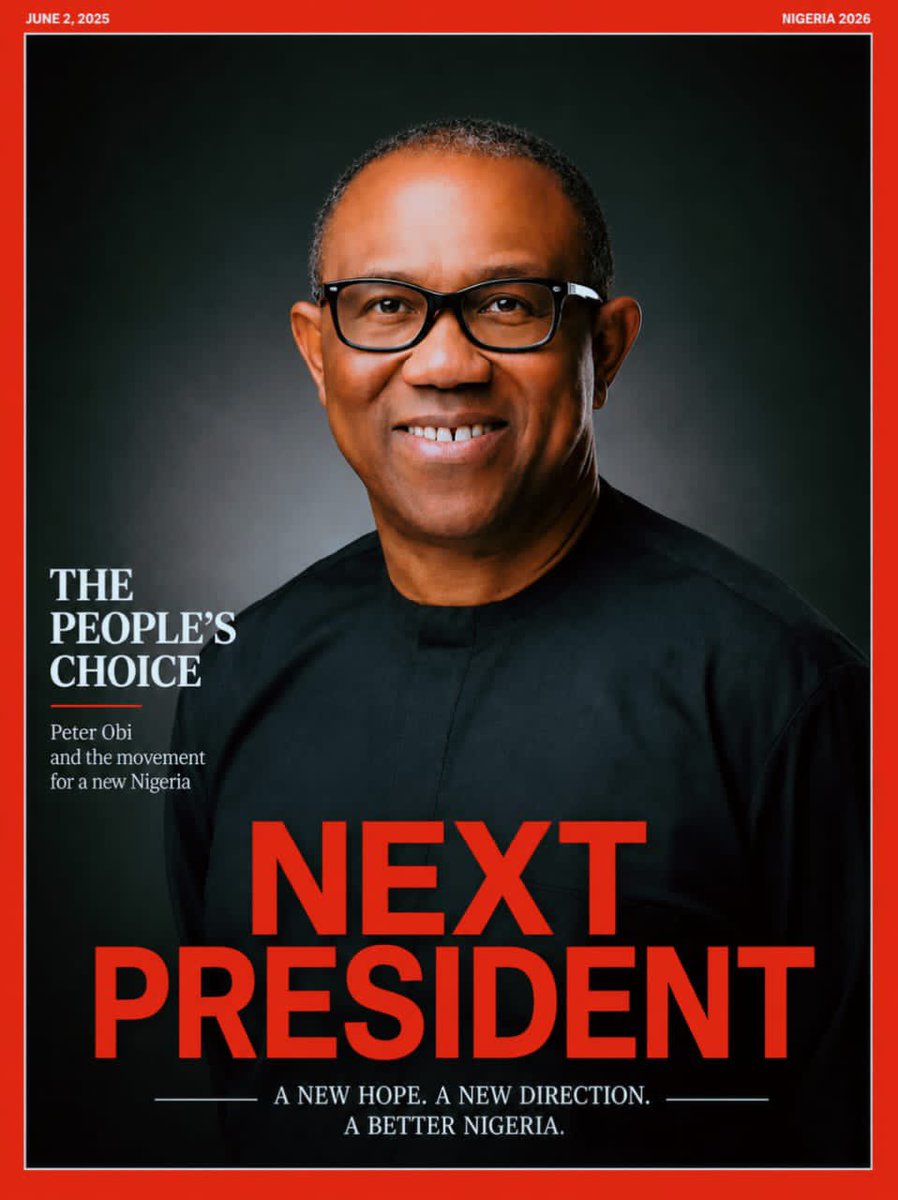
A New Nigeria is POssible. -PO
OSUN STATE: LET THE PEOPLE CHOOSE, LET PEACE PREVAIL
As we approach the upcoming election in Osun State, I wish to draw the attention of Nigerians, our institutions, political actors, the diplomatic community, international observers, and all friends of Nigeria across the world to the solemn responsibility before us.
Osun belongs to its people. Therefore, I call on the Independent National Electoral Commission, security agencies, political parties, candidates, government institutions, civil society organisations, religious and traditional leaders, the media, and every stakeholder to act with the highest degree of neutrality, professionalism, and restraint.
The people of Osun must be allowed to vote freely, safely, and without intimidation. Their votes must be counted transparently, protected faithfully, and announced according to the genuine will of the electorate.
To those within Osun State, I appeal for peace. Do not allow politicians to turn your neighbours, friends, and communities against each other. Do not destroy your state in the name of winning an election. Nigeria is bigger than any candidate, and Osun is greater than any political party.
To those outside Osun- politicians, supporters, influencers, and financiers- I urge you to exercise restraint. Do not import violence, intimidation, or desperation into a state whose people have the constitutional right to choose their leaders peacefully.
To our security agencies, your loyalty must be to Nigeria and the Constitution, not to any political party or individual. Your duty is to protect every voter equally.
To INEC, the credibility of this election must be safeguarded from the preparatory stages to accreditation, voting, collation, and declaration. Every irregularity must be addressed seriously, and every legitimate vote must count.
And to the international community, diplomatic missions, and election observers: please monitor Osun closely. Your presence, vigilance, and principled observation can bolster confidence in our democratic process. Nigeria welcomes genuine partnerships in the protection of democracy, peace, and the rule of law.
Let us remember that democracy is not merely about who wins. Democracy is about whether the people are truly allowed to choose.
Let Osun demonstrate to Nigeria, and indeed the world, that political competition can be intense without degenerating into violence; that disagreement can exist without hatred; and that power can change hands through ballots rather than blood.
Let every vote count. Let every voter be protected. Let every legitimate result be respected. And above all, let peace reign in Osun State.
Nigeria is watching. Africa is watching. The world is watching.
Let us provide them with a democratic process worthy of the Nigerian people.
A new Nigeria is POssible. -PO
By Making Excuses for Unverified Certificates, We Are Planting Poison in the Soul of Our Society
A nation that tolerates unverified academic credentials at any level of leadership, regardless of who is involved, risks destroying the very standards upon which a society is built. The issue is not about an individual. It is about standards, accountability, and the values we choose to pass on to the next generation.
We cannot continue to excuse blurred, missing, questionable, or unverified credentials simply because they belong to someone we support. The process through which people attain positions of responsibility matters greatly. How we get into leadership is as important as what we do with leadership.
If we normalise the abandonment of basic verification today, tomorrow we may have professors who never attended a university, doctors who never studied medicine, and judges who never studied law.
That is the dangerous precedent we must never allow. Nigeria cannot sacrifice its future on the altar of today's transactional politics. We must build a society where truth is not partisan, standards are not negotiable, and accountability applies equally to everyone.
History will judge us not only by those we defended, but by the principles we were willing to defend. We must choose truth over convenience, standards over sentiments, and the future over political expediency.
A New Nigeria is possible, but only if we are willing to do the right thing, even when it is inconvenient. -PO
I have followed with deep concern the developments surrounding the reported freezing of the bank accounts of the Osun State Government by the Economic and Financial Crimes Commission (EFCC), coming just days before the governorship election.
Let me reiterate that I have always supported a relentless fight against corruption. However, that fight must never become a tool for political intimidation or the suppression of democracy. No institution, however important, should be used in a manner that creates the impression of influencing the electoral process.
The timing of this action raises legitimate questions. If investigations had been ongoing for months, why take such a drastic step on the eve of an election? In a democracy, institutions must not only be impartial but must also be seen to be impartial.
What is increasingly troubling is the growing perception that state institutions are being deployed to achieve political ends and secure power at all costs. This is dangerous for our democracy. Governments come and go, but once institutions lose their independence and credibility, the nation suffers.
If there is evidence of wrongdoing, the Constitution provides a clear path: seek the appropriate orders from a competent court. Due process is the foundation of justice. No agency should exercise powers beyond those granted by law.
I call on all relevant authorities to act strictly within the Constitution and ensure that nothing undermines the credibility of the Osun Governorship Election. The people of Osun must be allowed to freely determine their future through the ballot, without intimidation or institutional interference.
Nigeria’s democracy was built on sacrifice. We must not allow it to be weakened by the misuse of institutions or the pursuit of political advantage.
A New Nigeria is POssible. -PO
When a Government Declares War on the Truth
President Donald Trump of America recently described Nigeria as “a now disgraced country.” The painful reality is that Nigeria’s challenges continue to deepen. Each passing day reveals deeper signs of decline, especially when a government becomes increasingly intolerant of truth and hostile to those who speak about the suffering of the people.
The Catholic Church has never functioned as an opposition party in Nigeria. Across military regimes and successive democratic administrations, the Catholic Bishops’ Conference of Nigeria (CBCN) has maintained a principled voice on national issues and the nation’s conscience, commending governments when they deserved commendation and speaking the truth whenever national conscience demanded it. Its interventions are driven by a moral obligation, rooted in Christian social teaching, to defend truth, justice, and the common good.
The same applies to Nigeria’s major religious organisations. Bodies such as Jama’atu Nasril Islam (JNI), the Supreme Council for Shari’ah in Nigeria (SCSN), the Christian Association of Nigeria (CAN), and the Nigerian Supreme Council for Islamic Affairs (NSCIA) have repeatedly raised concerns over economic hardship, inflation, and insecurity. Living among the people, religious leaders often encounter the suffering of citizens firsthand. They speak because they witness families struggling with rising food prices, unemployment, and the fear created by kidnappings and insecurity.
As leaders, we should be gracious enough to listen to people and organisations that speak the truth to us and genuinely criticise us when things are not going in the right direction. As Governor, I had the opportunity of working with a very strong Council of Traditional Rulers, led by the Obi of Onitsha, and religious bodies that consistently criticised me and offered suggestions. This contributed greatly to our success in Anambra State, especially in critical areas like education and health.
Against this background, the attacks on the CBCN, and especially on His Eminence, John Cardinal Onaiyekan, are deeply troubling. Even in 1998, when Pope John Paul II visited Nigeria and told General Abacha some hard truths, including about the incarceration of Chief Moshood Abiola, nobody vilified him.
During the inauguration of Pope Leo XIV in Rome, to demonstrate his purported commitment to and respect for the Catholic Church, President Bola Tinubu arrived in Rome days before the event, ahead of most other visiting dignitaries, including Catholics such as the U.S. Vice President, JD Vance. He participated in the liturgy, queued with other world leaders to greet the Holy Father, and displayed deep respect for the moral authority of the Church. Back in Nigeria, however, that posture has now changed completely.
What is playing out today also reveals how political leaders sometimes exploit religion and ethnicity to divide the people. Even when it was obvious that the CBCN was speaking on issues affecting Nigerians across religious and ethnic boundaries, aides to the President immediately reduced it to a “religious affair.” The question is: are insecurity, poverty, inflation, unemployment, and hardship problems exclusive to a particular faith? Do these challenges recognise religious or tribal boundaries?
The bishops merely expressed what millions of Nigerians experience daily: insecurity has worsened, poverty is deepening, inflation is crippling families, businesses are struggling, and hope is fading. These are realities echoed by religious leaders across the country, to whom successive governments gave thanks and promised to look into their observations.
Rather than address these concerns or explain the measures in place to ameliorate them, President Bola Ahmed Tinubu’s aides and supporters responded with vicious attacks, particularly against Cardinal John Onaiyekan, with little regard for his age, stature, and accomplishments.
Hunger and the Insensitivity of Mr. President
I watched with deep concern the statement made by President Bola Tinubu to the Catholic Bishops who visited his office, that there has always been hunger in Nigeria, even before he was born.
While it is true that hunger has been a part of human life and has existed in our country for decades, such a statement appears insensitive to the plight of the millions of Nigerians who face worsening economic hardship today. More importantly, we must focus on the facts and the measurable outcomes of governance.
Before the present administration assumed office in 2023, an estimated 17 million Nigerians were facing acute food insecurity, primarily caused by insecurity, armed conflict, widespread banditry, and devastating floods. Today, less than three years later, that number has risen to about 35 million Nigerians. Instead of improving the situation, the crisis has worsened significantly under the current administration.
The same trend is evident in poverty. Before this government took office in 2023, Nigeria’s extreme poverty was estimated at 87 million people. Current projections suggest that this number is approaching 140 million people, making Nigeria home to the largest population of people living in extreme poverty anywhere in the world.
No one disputes that this administration inherited serious challenges. However, leadership is measured not by the challenges inherited but by the results achieved. The government must honestly acknowledge that its response has fallen far short of what the situation demanded, with millions more Nigerians pushed deeper into poverty and hunger.
The combination of persistent insecurity, poor economic management, fiscal indiscipline, wasteful public expenditure, and inadequate investment in productive sectors has compounded the suffering of ordinary Nigerians.
A responsible government must prioritise investment in education, healthcare, agriculture, security, and small businesses while pursuing policies that create jobs, expand production, and lift people out of poverty. That remains my commitment to the Nigerian people.
A New Nigeria is Possible. PO
Seyi Tinubu took his two children to the World Cup, where VIP tickets cost $34,500 each. That is a total of $103,000, or 142 million Naira.
It would take an average minimum wage earner 170 years to make that amount of money.
Why the voter registration exercise should be extended.
As we continue to encourage Nigerians to participate actively in our democracy, I respectfully appeal to INEC to consider extending the voter registration window to the latest practical date that still allows adequate time for the preparation of a credible voters’ register before the 2027 general elections.
Every day, more young Nigerians attain the age of 18 and become constitutionally eligible to vote. They are not just our future; they are stakeholders in our present. It would be unfortunate if many of them were denied the opportunity to exercise their civic responsibility simply because the registration process closed long before the elections.
Moreover, this position is legally supported by the High Court judgment delivered on 22 November 2022 in Anaja Salmat & 3 Others v. INEC (Suit No. FHC/ABJ/CS/1342/2022). In that decision, the Federal High Court held that voter registration should continue until 90 days before a general election to protect the constitutional voting rights of eligible Nigerians.
I appreciate the enormous responsibility placed on INEC to deliver free, fair, and credible elections. I also recognise the need for sufficient time to clean the register and make the necessary logistical preparations. However, our electoral process should, as much as possible, maximise participation rather than limit it.
A democracy is strengthened when every eligible citizen has the opportunity to be heard. I therefore urge INEC to adopt a registration timeline that protects the integrity of the process while ensuring that no eligible Nigerian, especially our young people, is unnecessarily disenfranchised. -PO
Roadmap to a New Nigeria That Is Possible – Part II
Education and Healthcare: The Foundation of a Renewed Nigeria
Recall that on July 1st, in Part 1 of "My Vision for a Productive and Prosperous Nigeria," I outlined the broad framework of my proposed roadmap for national renewal. In it, I emphasised that the transformation of Nigeria must begin with rebuilding our human capital through quality education and healthcare, supported by reforms in Technical and Vocational Education and Training (TVET), character and civic education, and strategic investments that will move our nation from a consumption-driven economy to a production-driven one. I promised to follow up with other parts in the coming weeks and months.
Today, July 16th, in the middle of July, I wish to expand on these two critical pillars - education and healthcare - because they are the bedrock upon which every prosperous nation is built. They are the cornerstones of the foundation that will ensure that a son of nobody can become somebody and remove many from the ranks of the disaffected who often become tools in the insecurity challenges confronting us.
Evidence from around the world shows that quality education and accessible healthcare are among the clearest distinctions between thriving nations and lagging ones. Princeton University Nobel Prize-winning economist Angus Deaton highlights this reality in his book, “The Great Escape: Health, Wealth, and the Origins of Inequality.”
Nothing, therefore, could be further from the truth than the claim by some young people that “education is a scam.” Education, when combined with good health, provides the ladder for individual upward mobility and drives economic growth for the nation.
We must become more intentional about aligning education with our national priorities, as Singapore did, and challenge our country to value education in the same way Deng Xiaoping repeatedly urged China to do from 1978 onwards, with the remarkable transformation we see today.
We will work through commissions that strengthen collaboration among the tiers of government, ensuring that primary education is domiciled at the community and local government levels, with strong parental involvement and curricula that are sensitive to local economic factor endowments and the value chains derived from them.
State governments will be supported to expand high-quality Technical and Vocational Education and Training (TVET), as well as general secondary education, through targeted grants and incentives.
We are also developing schemes that will enable universities to focus more deliberately on specialised areas of teaching and research, making them globally competitive while producing a workforce equipped for the demands of the future.
A NEW Nigeria is POssible. -PO
The Children's Safe Return Is Worthy of Thanksgiving.
I am greatly relieved and delighted to learn of the safe rescue of the schoolchildren who were kidnapped. I sincerely thank all those whose tireless efforts made their freedom possible, especially the security personnel and everyone who worked behind the scenes.
While we celebrate this happy outcome, we must remember that no child should ever have to endure such trauma. The recurring incidents of kidnapping, particularly of schoolchildren, underscore the urgent need to strengthen our security architecture and make the protection of lives and property the foremost responsibility of government.
Our children deserve to learn in an atmosphere of safety, not fear. We must continue to work towards building a Nigeria where every child can pursue education without the threat of violence or abduction.
I rejoice with the children, their families, their schools, and all Nigerians on this heartening development.
A new Nigeria is POssible. -PO
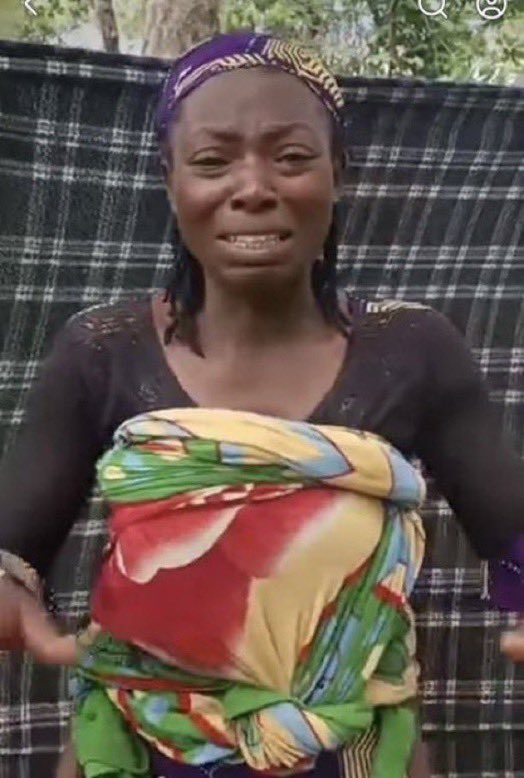
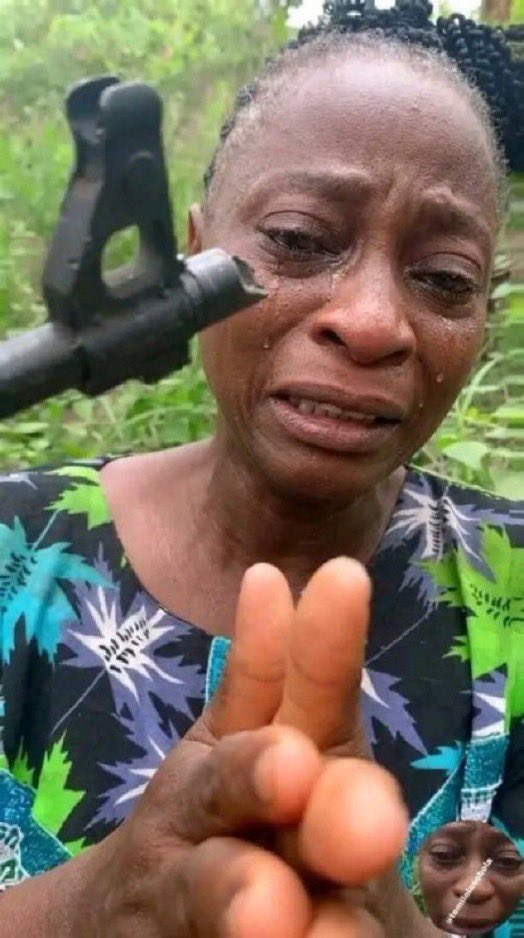
It’s 53days since Oyo children were taken.
It’s 53days since Oyo children were taken.
It’s 53days since Oyo children were taken.
It’s 53days since Oyo children were taken.
It’s 53days since Oyo children were taken.
Pls keep speaking up 💔
Pls share for the world to see this.
💔
Worsening Leadership Crisis in the Country Now Evident
The ultimate cost of uncompassionate leadership, as evident in the country today, is turning citizens’ frustration into deep, volatile resentment. It is even more traumatising when the leader presiding over that collapse demonstrates clear incapacity and a lack of compassion.
The government and people of Oyo State, more than 50 days after the abduction of the schoolchildren without any tangible effort toward their rescue, should rightly feel bitter and abandoned.
Since this unfortunate incident, I have spoken publicly about it twice, including appealing directly to the kidnappers to release the children. I also called the Governor twice to assure him of my solidarity, understanding that this issue is not just an Oyo problem but a Nigerian tragedy.
On Friday, July 3, I decided to travel to Ibadan with Prof. Pat Utomi to express solidarity with the Governor, as more than 50 days had elapsed without the rescue of the children and with numerous others still being held captive across the country.
During our two-hour meeting, I shared my experience in addressing insecurity as Governor of Anambra State. I recalled how President Olusegun Obasanjo, and later Presidents Umaru Musa Yar’Adua and Goodluck Jonathan, would personally call us several times whenever we faced major security challenges.
But, to my utmost shock, I discovered that, contrary to my assumption that they had been in regular communication over the matter, Governor Seyi Makinde had not received a single call from President Bola Tinubu.
I remember the only case of a school kidnapping during President Goodluck Jonathan’s era - the Chibok girls. It drew local and international attention. Even though the security agencies provided almost daily updates on their efforts, Nigerians and the rest of the world were outraged that it took President Jonathan over two weeks to call the then State chief Executive.
I vividly recall that the current President, Bola Tinubu, led a team of vocal critics who called for President Jonathan’s immediate resignation over the incident, citing his delay in calling the state governor. That call for IMMEDIATE RESIGNATION should actually be the case in this matter.
Today, under President Tinubu, there have been more than 13 school kidnappings, yet the President has found it difficult to call the affected state’s chief executive after more than 50 days (over 7 weeks). This is outrageous. I suspect the same may also have been the case in other school kidnapping incidents.
I cannot imagine any issue more important than the lives of our kidnapped children, their teachers, and the many other Nigerians being held captive across the country. It is now an indisputable fact that governance has completely collapsed under this administration.
The situation reflects a total lack of capacity and compassion, compounded by glaring insensitivity.
Amid such an apparent display of incompetence, the President should either resign or, at the very least, abstain from seeking re-election for the sake of our dear country. This call is patriotic, not political. A new Nigeria is POssible. -PO