Hello folks! I am a heatpump ultra and solar chearleader now! I got a new job, I am working as a communications specialist at Deutsche Energie Agentur (@dena_news) in Berlin. Expect me to tweet a lot more on renewables from now on, lets push forward the transition with info 💪
German cities are tasked with planning their way out of fossil fuel heating.
The first 223 plans reviewed show fossil fuels gone by 2045.
District heating rises from 16% to 40%, heat pumps reach 38%, and heating demand falls by a third.
+Daten for you ✨+
Nächste Woche kommt der #Bundeshaushalt. Das ist jedes Jahr ein großes Event, nur leider durchsteigt niemand >3000 Seiten pdf.
Wir helfen gerne mit dem neuen Haushaltstracker.
Was zahlt der Bund für Mütterrente, Munition, Kitas? 👉 https://t.co/iKhQxhlMW8
Rund jede zwanzigste der insgesamt etwa 11.000 deutschen Gemeinden heizt schon weitgehend erneuerbar: In diesen Gemeinden dominieren Erneuerbare und Strom, also Holz, Biomasse, Wärmepumpen oder Stromdirektheizungen. (1/3)
Erneuerbare und Strom als Energieträger überwiegen in
Neue Frauenhofer-Studie:
Neue Gasheizung ist mit dem geplanten Gesetz von Reiche (CDU) und Hubertz (SPD) im EFH in 20 Jahren ca. 60.000 Euro teurer als eine Wärmepumpe und im MFH rund 10.000 Euro pro Wohnung.
Grundgütiger. Wer schützt die Mieter?
https://t.co/itPlyjNWgH
WSJ: "Germany’s famously open economy was its greatest economic asset, delivering almost 20 years of uninterrupted growth and turning it into one of the biggest winners of globalization."
I think I would have framed this differently.
Germany's trade competitiveness for a long time was based on its ability both to suppress household income growth relative to productivity growth (as it did, for example, after the 2003-5 Hartz reforms), and to keep its currency cheap (as it did, for example, through adoption of the euro).
Under our current form of globalization, in other words, we experience an example of the Kalecki paradox, in which wage-suppression policies that allow one country to grow faster than its trade partners are actually bad for overall global growth – to the extent, anyway, that consumer demand drives investment among its trade partners.
In this system, all countries are under pressure to suppress wage growth in order to expand manufacturing and retain manufacturing employment, but the "winner" is the one who is able to do it most effectively.
For many years, when much of China's high saving was directed into domestic investment, Germany was one of the main winners from this system. But as Chinese investment became increasingly unproductive, Beijing began trying to rein in the debt needed to fund so much unproductive investment.
This process, of course, took off after the 2021-22 property crash, and once that happened, Germany's ability to benefit from the Kalecki paradox evaporated, as it quickly became one of the main losers of the system.
The point is that the problem isn't China. The real problem is a system that rewards countries for implementing policies that undermine overall global growth. The good news is that for many years, when Germany was able to exploit the global trade regime, it was also one of the greatest defenders of this system. Now that it is on the losing side, German policymakers are increasingly recognizing how damaging a system it is.
There is nothing new about this. If you read the economic debates between the UK and the US in the 1920s, a period when US productivity soared even as wages remained stagnant, it was the UK that complained about the trade imbalances. The US insisted that its huge trade surplus was simply the consequence of more efficient manufacturing techniques and harder-working people. The US of course abandoned that argument in the 1970s, when it lost its trade surplus.
In the economic debates of the 1980s, it was the US who complained about trade imbalances, and Japan who insisted (what else?) that its huge trade surplus was the result of more efficient manufacturing techniques and harder-working people. No one in Japan makes such a silly claim anymore.
In the 2000s, of course, Germany rather patronizingly explained to the rest of Europe that if only they could become as efficient in manufacturing and as hard-working as the Germans, they too would be in just as good a shape. So much for that claim.
Meanwhile our trading system continues to reward policies that depress global growth by putting downward pressure on wage growth, or that, alternatively, force the world to encourage rapid increases in debt in order to counter the impact of lower wage growth.
That is why the real solution isn't a global alliance against China. While this may help defuse current tensions, it won't change a system that will continue to reward bad behavior – i.e. household income-suppressing policies – by allowing countries to externalize the costs of this bad behavior through large, persistent trade surpluses. And this means that it will continue to support increases in income inequality within countries.
https://t.co/9g6zh3ET99
81 % of eastern German municipalities have fewer residents today than in 1985. Losses cluster especially in Pommerania and rural Sachsen-Anhalt, where towns often shrank by a third or more. Growth is mostly confined to larger cities like Berlin & Leipzig and their commuter belts.
Economic growth was once closely linked to increasing environmental degradation. More recently, however, many high-income countries have continued to increase GDP per capita while reducing their environmental impacts.
In dieser Woche werden mehrere tausend Menschen in Europa sterben. Allein in Berlin werden 300 Tote geschätzt. Es trifft neben Köln und Düsseldorf viele Städte im Ruhrgebiet. Der Klimawandel ist ein medizinischer Notfall, der gerade erst beginnt.
https://t.co/otQZ6JMycW
Major new polling suggests overwhelming support for taxing AI.
AI data center tax +64
Tax on AI fortunes +53
Corporate tax on AI corps +44
Literally a generational opportunity for whoever figures out how to do this
https://t.co/oZSh2YdEqi
Hochinteressanter Lesestoff von @empirica_inst und @rbraun_inst: Ist-Zahlen zum Leerstand 2011-2025 und Prognose 2025-2045.
Spoiler: Ja, es gibt Leerstand, aber 60% davon ist nicht "marktaktiv" (ohne gr. Investitionen nutzbar).
https://t.co/mALnabRbnN
In nur 10 Jahren von 8 auf 48 Prozent: Die Wärmpumpe dominiert den Heizungsmarkt. Zeit für einen genaueren Blick auf Effizienz, Lautstärke, Heizkörpertausch und die praktischen Schritte zur Installation. (1/6)
Ein Thread >>>
56% der Bürgerinnen und Bürger in Deutschland gehen laut einer Forsa-Umfrage davon aus, dass das Heizen mit Öl und Gas bis 2045 unbezahlbar werden wird. https://t.co/jVRgjXrmBJ
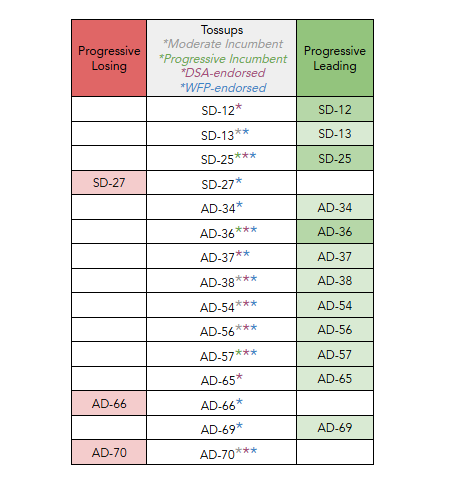
Progressives in the New York Legislature are poised for a fantastic night. So far, among the 15 districts where the DSA or WFP endorsed a candidate, the DSA is trailing in just one race and the WFP in two, with all three still uncalled.