Your AI agent does the work in a black box. You get the answer — never the thinking.
Flowtrace turns the work into a map you watch build, step by step, and steer while it runs.
Open source. Works with Claude Code, Codex & Cursor.
⭐ https://t.co/R5Z3O8EH64
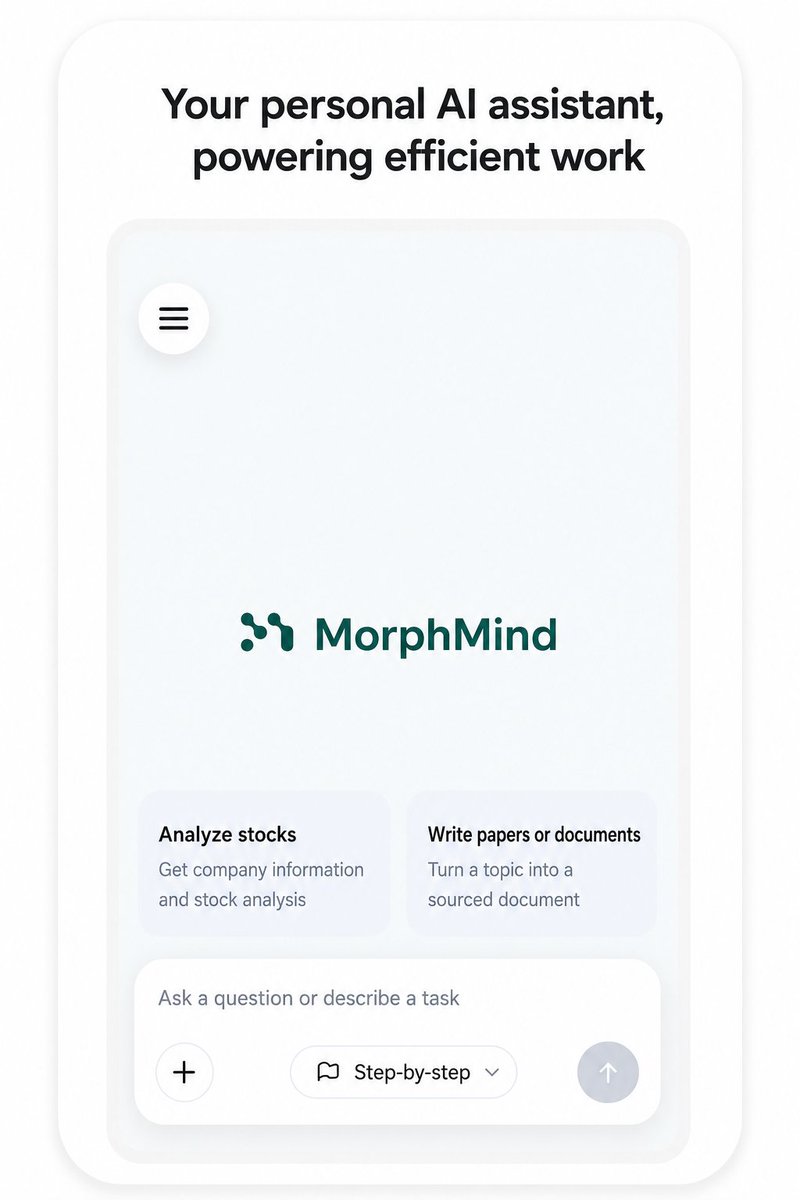
MorphMind is now available on the Apple App Store.
https://t.co/5703lrRRHT
With MorphMind, you can:
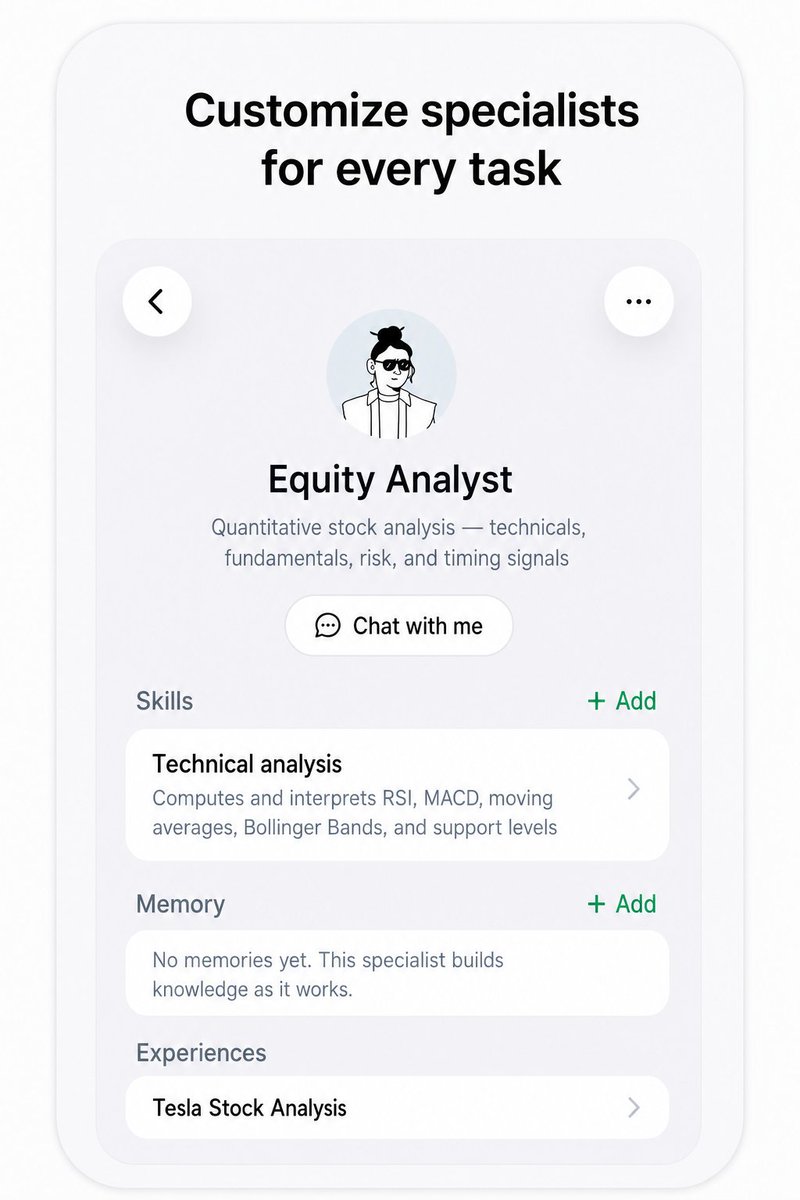
✔️ Create specialized AI agents for different fields
✔️ Break down complex tasks and review each execution step
✔️ Build and adjust your own workflows
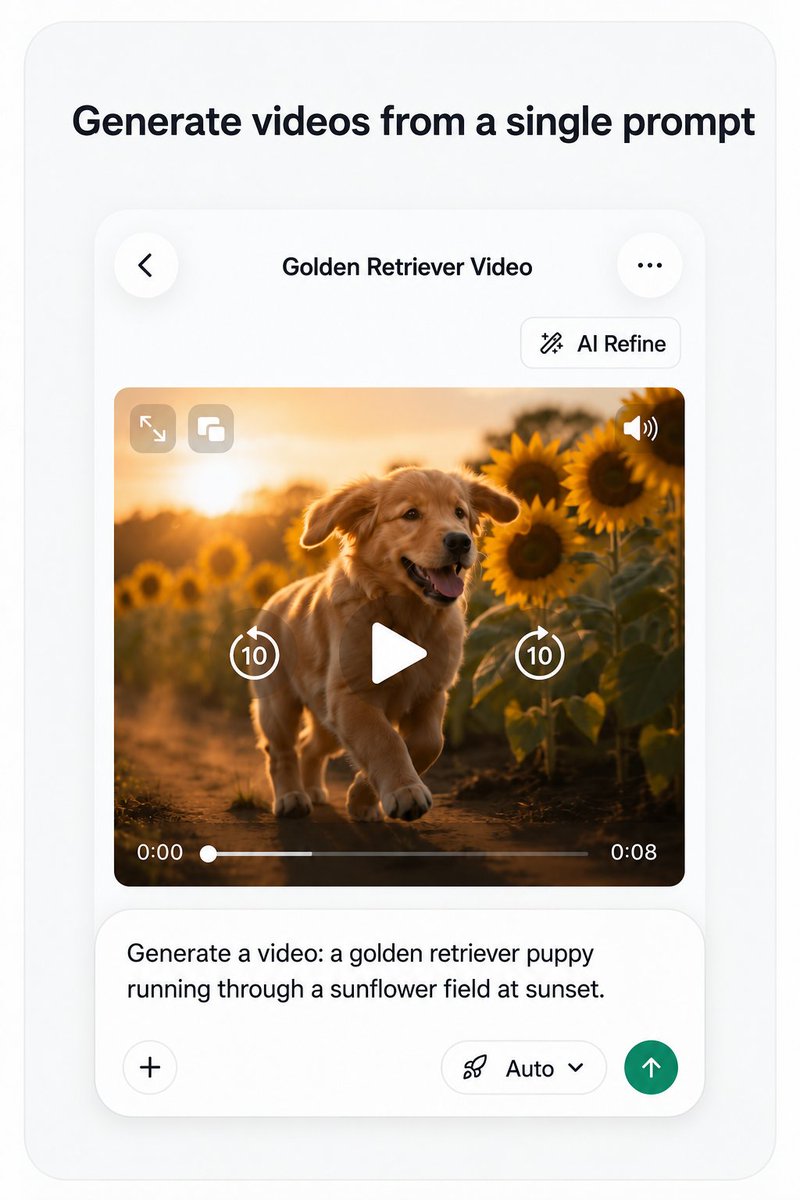
✔️ Generate reports, documents, and presentations
✔️ Review, edit, and confirm AI-generated outputs
We believe AI should do more than simply deliver results. The entire process should also be transparent, controllable, and easy to understand.
#MorphMind #AI4S #AITools #ResearchTools #ProductivityTools #AIAgents #AppDiscovery
Our team's academic writing tool is in Nature today, and the debate it sparked is the part worth having.
"Detect the AI" is the wrong battle. Text detectors are unreliable, and they disproportionately flag researchers writing in a second language. Integrity rests on disclosure, not detection.
AI can draft. A human still owns the result.
https://t.co/pSP13ZYE9a
Some of us write a lot of papers and grant proposals, and our team started using AI to help with drafts. The catch is that AI writing is easy to spot: the "In recent years..." openers, the puffed-up phrasing, the very long sentences, the em-dashes. Reviewers pick up on it.
There are tools called "humanizers" that try to remove that AI flavor, but they're made for blogs and marketing. Run one on a paper and an NSF proposal and it also strips out the precision and the careful, evidence-bound wording that academic writing needs, so it ends up doing more harm than good.
So we put together our own for the group. To get the rules, we had the AI compare its own drafts with our team's accepted papers and funded proposals, and we went through the differences by hand.
It's nothing fancy, and it isn't about gaming review or adding fake novelty. We just wanted AI-polished drafts to still read like a person wrote them.
Built by NSF / CAREER / NIH R01-funded researchers. MIT, free:
https://t.co/f4NPRshqgg
Open-sourced Academic Humanizer: a Claude Code skill that strips AI tells from papers and NSF/NIH grant proposals, while keeping every citation, hedge, and number. Claims stay tied to evidence. MIT, free.
https://t.co/Ix3JXrZrNU
Agents and pipelines need a real probability to act on — block at 0.9, escalate at 0.5. TorchKM returns calibrated probabilities AND the exact, reproducible solution.
And it's fast: one fit() call trains + tunes (CV over the whole grid) in tens of seconds where scikit-learn takes hours. sklearn-style API.
MIT licensed, coauthored by @MorphMind__AI team.
⭐ https://t.co/7p7YVG0EtS
Don't let your AI agent guess on tabular data.
TorchKM gives it a classifier it can call — and verify: exact solution, calibrated probabilities, GPU-native. Full train + tune in seconds, not hours.
Open source 👉 https://t.co/GIB8XXfL7k
Skills are the moves. Workflows are the order.
Traces are the missing layer: the composition — how a kind of task actually gets done — as a graph you can see, reuse, and improve.
MIT-licensed. Built in Rust.
What people already run as traces:
"Should I buy NVDA?" → a fixed-format research-note PDF
• Single-cell RNA-seq analysis
• A 24-step statistical pipeline on a dataset
• A resume tailored to one job post
One graph each. Watch them build.
Your AI agent does the work in a black box. You get the answer — never the thinking.
Flowtrace turns the work into a map you watch build, step by step, and steer while it runs.
Open source. Works with Claude Code, Codex & Cursor.
⭐ https://t.co/R5Z3O8EH64
Big week for 'observability' becoming enterprise vocabulary. Here's what that looks like in practice: watch every step as it runs, steer mid-task, verify outputs against sources — before anyone signs off. We built that. https://t.co/AhsfTWL9Ix https://t.co/72v9PWd7Ua
Microsoft just made 'observe, govern, and secure every agent' a GA product. The EU AI Act clock hits in August. Controllable AI is no longer a design preference — it's the compliance floor. https://t.co/AhsfTWL9Ix https://t.co/oJBSpWrbkK
The headline on Codex isn't 'AI takes over your PC.' It's that you can steer it mid-run from your phone. That's the product bet worth noticing — and it's exactly what MorphMind is built around. https://t.co/AhsfTWL9Ix https://t.co/EY0PZzBkMF
The hallucination research is clear: the blocker isn't the model anymore, it's the missing verification layer. At MorphMind, every run shows its sources inline — so your team doesn't review AI outputs on faith. You trace them. https://t.co/AhsfTWL9Ix https://t.co/dRa8mCP6KK
93% of frontline workers don't fully trust the AI they use every single day. That's not a change-management problem — that's the product telling you something. Trust is a UI feature, and most teams haven't shipped it yet. https://t.co/AhsfTWL9Ix https://t.co/kXzvhNCQ0P
When AI quietly updates your CRM, deploys code, and triggers workflows mid-run — 'trust but verify' isn't a policy, it's an architecture. https://t.co/AhsfTWL9Ix is built for exactly that moment. https://t.co/aDiks6O4J6