Sauron’s bias¹
Why backward-looking projections are bound to be underwhelming
In Tolkien's Lord of the Rings, Aragorn — a valiant ranger — plans to draw the Dark Lord Sauron's eye to the Black Gate, a move that will distract Sauron so that the protagonists Frodo and Sam can slip into Sauron's realm through another route.
Sauron falls for this distraction, because he is controlled by fear of the past, when Aragorn's ancestors chopped off the all-powerful ring from his finger. In trying to avoid a repeat of that event, he fails to see that new problems are simmering.
If only Sauron had studied complex systems in nature, this wouldn't have happened!
Sauron prioritizes his decisions based on the last bad thing that happened - similar to what we do when faced with calamities.
As COVID came, the focus shifted towards investments in healthcare and protection. As the war in Ukraine happened, the focus became energy independence from Russia, as China started to rear its dragon-head, geopolitics came back on the agenda.
As John Gall put it in Systemantics: “The army is now fully prepared to fight the previous war”. We’re always ready to deal with the previous year’s crisis. But what about the next?
In fact, this backward-looking approach is the basis for most models for prediction.
Even as AI seems to improve, its ability to generalize doesn't seem to go beyond its training data. See for example the use of AI in radiology. When faced with new data or new situations, the AI model struggles to keep up — often dropping accuracy from 90% to 60-70%².
Prediction then becomes a dangerous game. It cannot generalize for novelty!
So what should Sauron have done?
Adaptation and Optionality. The example is playful but proves a point: Sauron needed to tame his perceptual blindness, and one of the many ways to do that is allowing his army to evolve in the face of new threats. By keeping his options open, he could have trained his armies to fight all sorts of battles: from huge armies, to a band of hobbits.
This doesn’t require top-down, singular vision prediction. It requires adopting a completely non-Sauron like way of looking at the world: one rich in connections, and evolving relationships.
Mapping out relationships between and within different actors can help you see how situations are evolving.
It’s the only way to fight back Sauron’s bias - and not be haunted by past mistakes.
—✱—
¹ Coined by Jessica Flack and team at SFI: https://t.co/ZFizsv1TPA
² This paper from Nature goes in-depth here: https://t.co/9HaOmXCnMw
The Jurisdiction on your invention stops after you create it
The invention of Diesel (and the tragedy of Rudolf Diesel)
An author’s jurisdiction on his work stops after publishing. He is in no position to demand a certain interpretation of his work. The interpretation is now between the reader and the book itself. You may leave clues, but it is the reader that solves the mystery - correct or incorrect.
The beauty of the free market is that the end usage of an invention depends on what need is being met. The interpretation is in the hands of the market.
This is also at the expense of what needs the inventor believed needed to be met. Take the inventor Rudolf Diesel - who patented the diesel fuel injection. Diesel's ambition was to produce light and cheap engines that would be purchased by smaller entrepreneurs (machinists, watchmakers, restaurants) to usher in an extensive decentralization of industry.
“It is undoubtedly better to decentralize small industry as much as possible and to try to get it established in the surroundings of the city, even in the countryside, instead of centralizing it in large cities where it is crowded together without air, light, or space. This goal can only be achieved by an independent machine, the one proposed here, which is easy to service. Undoubtedly, the new engine can give a sounder development to small industry than the recent trends which are false on economic, political, humanitarian, and hygienic grounds”
His dream was to bring in large scale social change. But what happened in the end?
Diesel's machine found its most important uses not in small workshops but in heavy machinery and locomotives and post World-War II in larger scale container ships.
This led to an unprecedented level of concentration of mass-scale manufacturing — in direct contrast to Diesel's vision.
The market maketh what it chooseth.
In the current discourse of AI, we are quick to presume what the end goal will be. Yet, taking a piece out of Diesel's books, let's not get caught up in visions. Let’s wait for the market to decide.
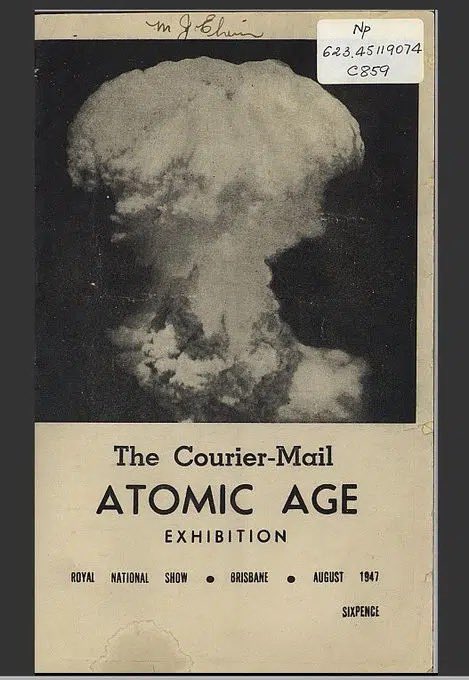
Future-gazing for idea generation and preventing technology lock-in
In 1989, the economist Brian Arthur asked a simple question:
To what degree might the actual economy be locked-in to inferior technology paths?
Brian did not have a clear answer to this question. Studying the history of technology I've often wondered if there were situations where we were locked out of a superior technological path because of 'externalities' — other dimensions that we never accounted for.
Brian uses the example of the U.S. nuclear industry. An overwhelming majority of reactors in the U.S today are Light Water Reactors (LWRs). This design was adapted from a compact reactor used in the USS Nautilus — the first nuclear powered submarine. A series of circumstances¹ — such as the Navy's role in early construction contracts, political convenience and personal influences favoured LWRs.
Soon LWRs dominated as learning and construction experience caused lock-ins.
This brings up a natural question: Are we living in one of these moments right now?
Consider deep learning today. There has been a lot of research and investment done on the "bigger is better" race regarding deep learning architectures and GPU requirements. This domain specialization has created important efficiency gains, however it makes it "even more costly to stray off of the beaten path of research ideas"².
Our consilient hypothesis is that new developments here may require a completely different combination of algorithm, hardware and software.
But this demands a new way of looking at the field; unrestricted by the availability of current hardware limitations. This may also require looking back in time and figuring out early research branches that were 'pruned off' for one reason or another³. Ideas that were considered 'ahead of their time'.
Palmer Lucky (@PalmerLuckey) , founder of Anduril had something similar to say in a recent appearance on Invest Like the Best:
"If I want to understand what's going on in the modern day, you want to go back to the future and say, what were people saying, back then, what are the ideas that people aren't even discussing right now?"
Going down a historic deep dive, and future gazing from that vantage point might lead some very interesting clues!
— ✱ —
¹ Light water: How the Nuclear Dream dissolved (https://t.co/Jf1I26CXw0)
² The Hardware Lottery - August 2020 (https://t.co/xTneHY5PCJ)
³ In their survey paper for Collective Intelligence in Deep Learning, David Ha and Yujin Tang mention Cellular Neural Networks (CeNNs) as a technology that became a subfield of AI Research in the mid-2000s, but then disappeared from the scene. https://t.co/RkXgNkLmAb
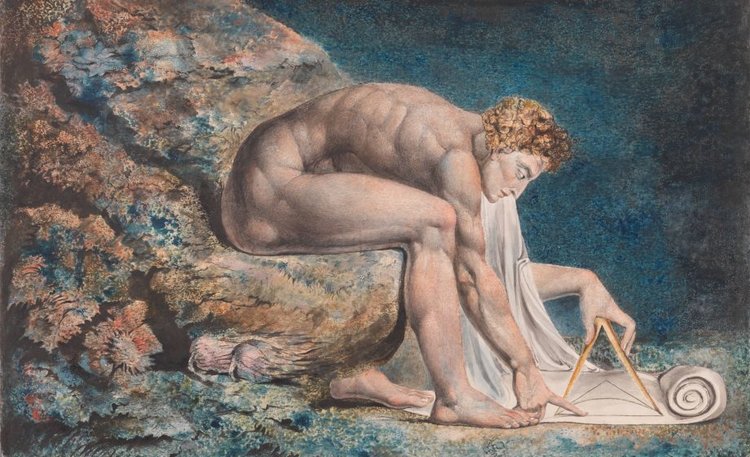
"I must create a system
or be enslaved by another man's;
I will not reason and compare:
my business is to create."
- WILLIAM BLAKE
"The Marriage of Heaven and Hell"