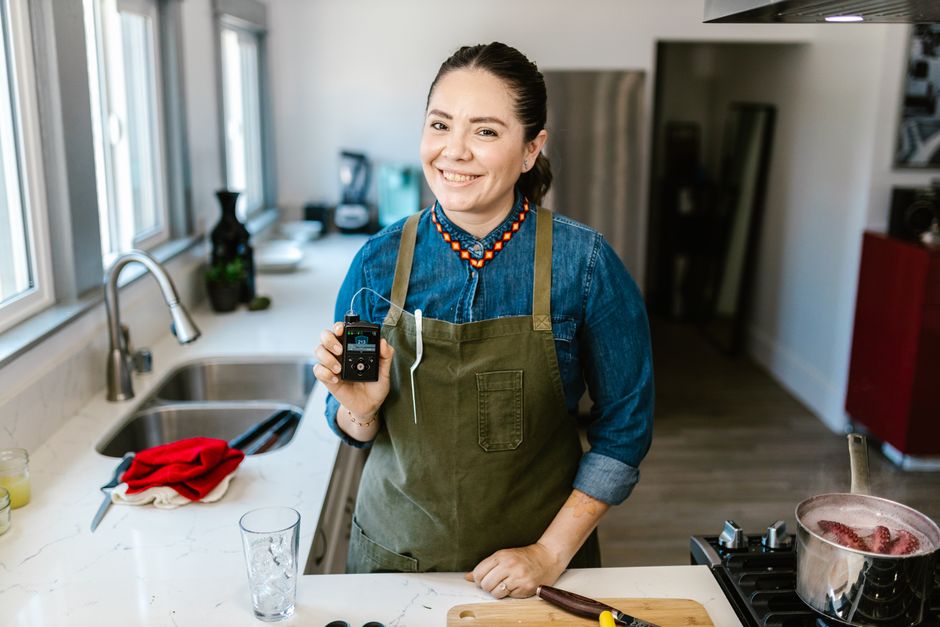
I stopped going crazy over skincare routines a while ago. Turns out what's happening below the surface matters way more than what's going on it. In my experience: gut function + hormonal balance = clear canvas. Now I approach everything from the inside out.
Here's what actually shifted when I started tracking properly:
Better sleep the week before my period → massive PMS difference
Cortisol management matters way more than I realized
My cycle is data, not drama.
I watched women do everything 'right' — clean eating, lifting, fasting — and still carry the same stubborn fat. Then I studied GLP-1s and realized: female hormones completely reshape how these meds work in our bodies. That changes the whole conversation. 🧬
I spent years guessing where I was in my cycle. Then I started tracking cervical position + mucus. Suddenly, I could SEE my fertility window clearly. Big shift for women who wanted to conceive — or just feel less confused. 😮💨
I spent years telling women to just eat less and move more. Then I learned how GLP-1s actually work in female bodies — it's not willpower, it's biology. The scale moves, but so does your skin, your cycle, your energy. Worth checking in with a pro.
I spent years blaming my stubborn PCOS weight on 'weak willpower.' Then I learned it's literally a metabolic issue. Not laziness. Not food noise. Once I worked WITH my hormones instead of against them… the scale finally moved.
PCOS scale won't move no matter what? It's not willpower — it's insulin resistance, period. In my practice, adding insulin-supportive peptides alongside nutrition work has been a game changer for my clients. Less frustration, actual progress 🙌
PCOS weight isn’t fixed by just eating less. In my experience, balancing insulin + cortisol first changes everything. Clients see results without starving. Small tweaks > extreme diets. 🌸
WhatsApp me: https://t.co/FlVAIBXTOq
I used to hand my endo the lab sheet and say 'everything look normal?' She stopped me mid-sentence once and asked 'which cycle day was this drawn?' That question alone rewired how I look at every hormonal lab from then on.
Here are the questions I started asking that turned me from a passive patient into someone who can actually read her own data:
What cycle day is this? A lot of the numbers I call 'low' are actually fine if you're in the right follicular window. Progesterone before ovulation is noise.
Where does my LH-to-FSH ratio actually sit, and does it matter? For years I saw high LH and assumed PCOS. My endo asked me whether the elevation was relative or absolute — different conversation entirely.
Am I tracking free or total T? Total testosterone looks fine in so many of my patients. Free T or a calculated free index tells a different story about what's actually bioavailable.
What does my SHBG suggest about insulin resistance and metabolic flexibility? Low SHBG showed up in my labs before fasting glucose ever budged. It was a head's up nobody gave me.
How am I interpreting estradiol relative to progesterone, not just on its own? A 'normal' E2 means very different things depending on where progesterone lands in the same window.
What does my DHEA-S tell me about adrenal contribution vs. ovarian output? The ratio between the two shapes how we approach support, not just supplement blindly.
What I'm watching next: whether morning cortisol and DHEA-S start moving in the direction I'd expect once I adjust timing rather than just adding more. Sometimes the question isn't more — it's better timed.
If you've ever had labs that 'look normal' but you still feel off, what question finally got you somewhere?
WhatsApp me: https://t.co/VSvmOYXL2f
I used to treat my cycle like an inconvenience. A monthly nuisance I powered through with coffee and willpower. Now? It's the dashboard light for everything else—my energy, my skin, my mood, my hunger, my focus. And honestly, learning to read it changed how I move through the world.
When I started tracking my cycle alongside my labs a couple years ago, patterns jumped out that I'd completely missed. My cortisol spikes in the luteal phase aren't random—they're hormonal. My evening crashes aren't a discipline problem. My breakout before period two is estrogen-dominance whispering, not skincare failure. Mapping it all together felt like finally getting the user manual I never received.
Right now I'm watching how my morning fasting glucose drifts across phases. Follicular: steady. Luteal: a little bumpier, but still in a reasonable range. It's not about perfection—it's about understanding the rhythm. Eating with the phase instead of against it makes a noticeably different afternoon for me. Less brain fog, fewer sugar whispers.
My skin coach friends always say cycles are the ultimate mirror. You can't hide what's happening internally. I learned that the hard way during a year of chaotic shifts. Once I started adjusting my routine rather than masking symptoms, the noise quieted down.
Next up: I'm reading about how blood flow and inflammation markers trend across the four phases. Want to know what I'm keeping an eye on too? Let me know what your cycle reveals to you—what patterns have you noticed in your own body?
WhatsApp me: https://t.co/VSvmOYXL2f
I spent years guessing where I was in my cycle. Then I started tracking cervical position + mucus. Suddenly, I could SEE my fertility window clearly. Big shift for women who wanted to conceive — or just feel less confused.
I used to treat my period like a monthly inconvenience. Now it's the dashboard light for my entire nervous system. After years of hiding PMS with coffee and grace, I finally started tracking my cycle alongside lab work. What I found changed everything about how I move, eat, and show up at work.
Each phase carries a different metabolic fingerprint. In the follicular window, my energy climbs roughly 15 to 25 percent compared to the luteal trough. My skin clarity improves by that same margin, and my recovery from strength work feels noticeably sharper. During the luteal phase, body temperature rises about half a degree, sleep fragments more, and cravings swing toward carbs by roughly 20 to 40 percent. This isn't fluff; it's basic endocrinology wearing a human face.
The breakthrough came when I matched symptoms to lab ranges instead of generic norms. My cortisol rhythm shifted across the month, peaking earlier in the follicular phase and flattening out later. Estradiol and progesterone weren't abnormal, yet the gap between them told the story. When the ratio dipped below 10:1, anxiety spiked and my skin texture turned rough. When it hovered near 15:1, I felt balanced and focused. Those ratios live within a wide band, so I track my own trends rather than chase perfect numbers.
Now I plan around the cycle, not against it. Heavy lifting happens when estrogen supports recovery. Social events land in the late follicular window when my social battery is highest. Challenging conversations get scheduled when progesterone keeps me steady. Meal timing follows insulin sensitivity, which tightens in the first half of the month and loosens as we approach the next bleed.
What I'm watching next is research on how light exposure and core temperature interact with the luteal phase. Early signals suggest that morning bright-light therapy might stabilize sleep architecture without blunting the natural thermogenic shift. I'm also tracking my resting heart rate variability across phases to see whether a simple wearable could replace some of the guesswork.
What's one subtle sign your body's been sending that you've finally learned to trust instead of dismissing?
WhatsApp me: https://t.co/VSvmOYXL2f
I used to think my cycle was just "whatever happens." Then my skin started flaring predictably, my energy cratered around the same days every month, and I finally sat down with my own lab patterns and realized: my body was trying to tell me something.
Over the past few years, I've watched my hormone readings shift in ways I could actually map to my cycle phases. Mid-cycle estradiol and progesterone after ovulation — both swing wide, sometimes landing in ranges that feel dramatic on paper and even more dramatic in how I actually move through my day. The pattern isn't random. It's data. And once I started tracking it, everything clicked.
What really changed for me wasn't any quick fix. It was learning to read the signals before they became emergencies. When my labs show a consistent tilt in one direction month after month, I can adjust course way before symptoms snowball. That's the whole point of working with cycle data instead of ignoring it.
I also learned that skin, mood, energy, sleep, and gut comfort aren't separate problems — they're threads from the same rope, pulled tight or loose depending on where I am in my cycle and what my labs are showing. Treating them individually never made as much sense as treating them as one system.
Here's what I'm watching next. I'm mapping how seasonal shifts — shorter daylight, colder months, changes in routine — interact with my cycle hormone patterns. Early readings suggest a meaningful tilt, but I want to see the full picture before drawing conclusions. I'm also getting deeper into fasting glucose and insulin trend lines alongside cycle phase data, because the metabolic side of hormonal health is where I've noticed the most blind spots.
I'd love to hear from you: have you ever connected your cycle to a recurring symptom — skin, energy, mood, digestion — only to realize later it was happening on the exact same window every month?
WhatsApp me: https://t.co/VSvmOYXL2f
I used to wake up at 2am like clockwork every single night for three months straight. No matter what I tried — magnesium, herbal teas, breathing exercises — my body would just snap awake and refuse to fall back asleep. I was convinced it was my gut or my blood sugar, so I kept tweaking those things.
Then my doc pulled my hormone panel and said the one thing nobody ever warned me about: your progesterone has a direct relationship with your sleep architecture, and most women are walking around with a silent deficit in the luteal phase. I had never connected those two dots before.
Here is what changed my understanding:
Progesterone is a neurosteroid that binds to GABA receptors in the brain — the same receptors. When your levels drop or your body isn't making enough during the second half of your cycle, that calming signal literally weakens. You feel wired but tired. That is not in your head.
In my experience as a coach, I see this pattern constantly: women who sleep terribly from day 18 onward but dreamlessly through the first half of their cycle. The difference is not willpower. It is chemistry.
Tracking my own progesterone alongside sleep data over several months revealed something I now share with every woman I work with — sleep quality often improves more from hormonal support than from any supplement stack I have tried.
What I am watching next: new research on natural progesterone support during the luteal phase and how small adjustments in that window shift deep sleep duration. The data I have seen is promising.
Has your sleep pattern shifted at different points in your cycle?
WhatsApp me: https://t.co/VSvmOYXL2f
Periods taught me more about fertility than any textbook ever did. Here's what I learned:
• Your cycle is daily data
• Tracking > guessing
• Hormones communicate before symptoms show up
In my practice, women who track cycles navigate
WhatsApp me: https://t.co/t8iCaggBDS
After coaching women for years, I'm fascinated by how GLP-1 medications can support sustainable weight loss while considering hormonal balance. From my experience, success depends on personalized approaches—not one size fits all. 喙✨
WhatsApp me: https://t.co/t8iCaggBDS
My cortisol curve looked like a rollercoaster for years. 9am wired, 3pm crash, midnight wide awake. Here's what finally helped me flatten it:
• Morning light within 30min of waking
• Protein-fit breakfast
• No caffeine after 1pm
WhatsApp me: https://t.co/t8iCaggBDS
Honest update from someone who spends every day studying what works for women's skin.
The collagen peptides I've been studying lately are genuinely supporting my clients — not hype, just consistent results over time
WhatsApp me: https://t.co/t8iCaggBDS
Been noticing something about my skin lately... Hormones aren't just for cycles—they're major players in breakouts and barrier health. My take? Slow down on the active routines, lean into gentle support. Less is often more.
WhatsApp me: https://t.co/t8iCaggBDS
I spent years tracking my cycle and thought I knew my hormones. Then I got labs done — and what I found completely rewired how I coach women now. ☀️
Here's the thing most of us never get taught: cycle tracking and bloodwork answer two completely different questions.
Cycle tracking tells you what your hormones are DOING. Your energy swings, your sleep quality, whether you're bloated or sharp, your mood around ovulation or before your period — that's all downstream hormone data. It's real. It's raw. It's telling you how your body is actually living through each phase.
Bloodwork tells you what your hormones ARE. The actual concentrations — progesterone at day 21, estradiol in the follicular phase, LH surges, thyroid numbers riding along for the ride. It gives you the biochemical readout that symptoms alone can't always reveal.
I've seen this play out so many times with my clients. Someone feels perfectly fine during the second half of her cycle — no PMS, great sleep, steady energy — and then her lab work shows progesterone sitting way too low for what her body needs. Or the reverse: brutal PMS, terrible cycle tracking data, but bloodwork that looks totally in range. Both are true. Neither tells the whole story alone.
That's why I now push every woman I work with to do BOTH. Track the symptoms, track the signs — basal temperature if you want, cervical mucus, mood, energy. And then layer in strategic lab work at the right points in the cycle. Not every single month, but at key moments when the data matters most.
What I'm watching next is a shift I see happening across my practice — more women in their 30s and 40s using this combined approach and finally connecting dots they've carried for years. The cycle data flags the problem, the bloodwork confirms it, and together they build a map that actually makes sense. ☀️
I'm especially paying attention to how cycle pattern changes — shorter luteal phases, spotting before the period, changes in mid-cycle energy — can predict shifts before bloodwork ever catches up. That early warning system changes everything for proactive care.
Have you ever had a moment where your cycle tracking and your lab results told completely different stories? I want to know what you noticed — and what you did after.
WhatsApp me: https://t.co/LCVwO36qGJ