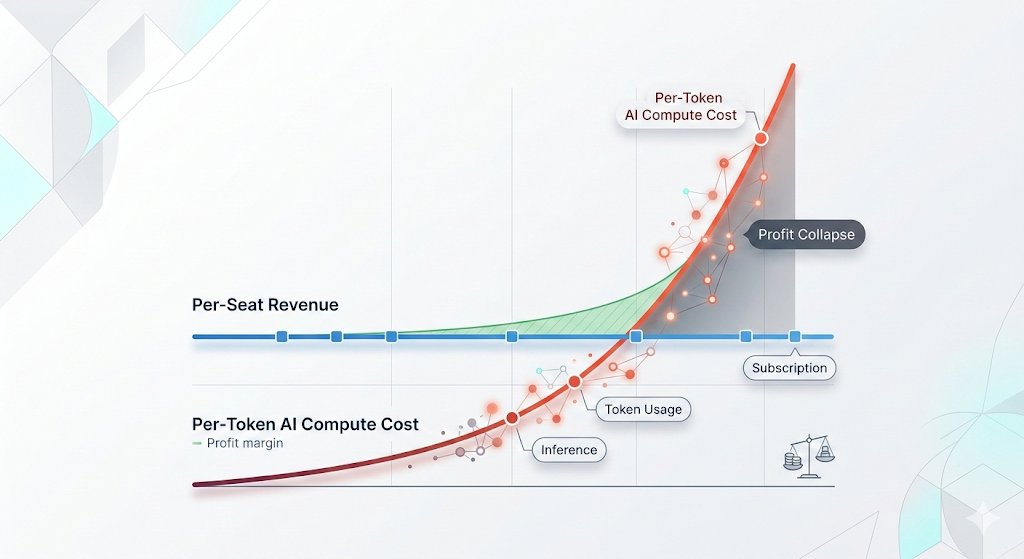
The math is not mathing for frontier model token costs.
It’s time to reimagine enterprise AI deployment.
Locally deployed, open source models may be the way forward.
🦔Microsoft canceled its internal Claude Code licenses this week after token-based billing made the cost untenable, even for a company with effectively infinite cloud resources. Uber's CTO sent an internal memo warning the company burned through its entire 2026 AI budget in just four months. American AI software prices have jumped 20% to 37%, and GitHub (owned by Microsoft) is dropping flat-rate plans for usage-based billing across its products.
My Take
The AI subsidy era is ending in real time. The same company that put $13 billion into OpenAI and built the Azure infrastructure powering most of Anthropic's compute just looked at the bill from a competitor's coding tool and decided it was not worth paying. That is not a productivity failure on Anthropic's end. Token-based pricing is forcing every enterprise customer to confront the actual cost of running these models at scale, and the number turns out to be far higher than the flat-rate experiments suggested.
This ties directly to my Gemini Flash post yesterday. Anthropic, OpenAI, and Google all raised effective prices in the last six months. Enterprises that built workflows assuming AI costs would keep falling are now watching annual budgets evaporate in months. Two outcomes look likely from here. Either enterprises scale back AI usage to fit budgets, which slows the revenue ramp the labs need to justify their valuations ahead of IPOs, or the labs cut prices and absorb the losses, which makes the unit economics worse at exactly the wrong moment. Both paths land in the same place, the numbers stop working, and somebody has to take the writedown.
Hedgie🤗
🚨 Every Iowan needs to watch this video by a retired army bomb squad specialist explaining what will happen when the lead azide bomb detonates tomorrow. This is more terrifying than I thought. [language warning]
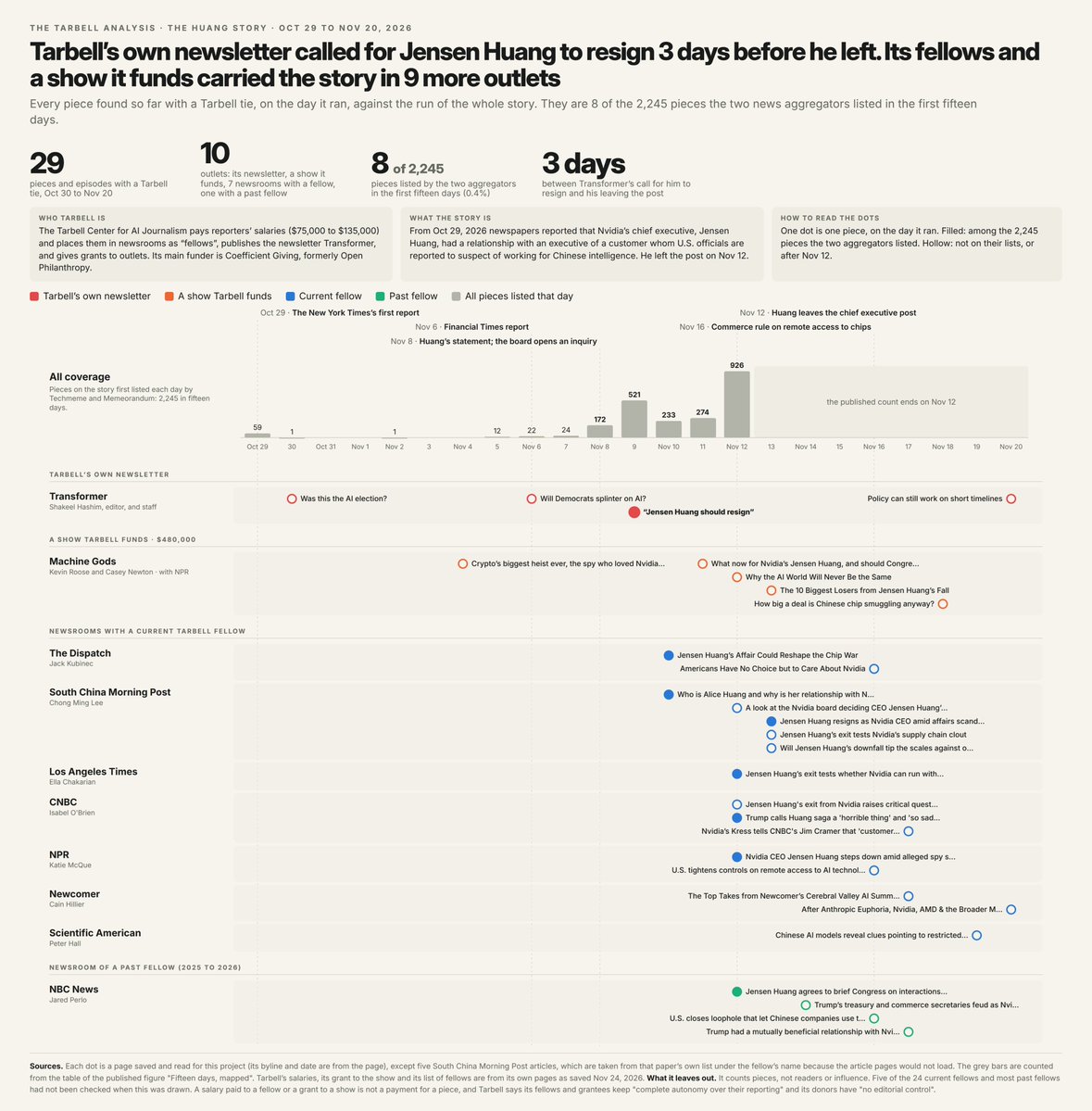
Coefficient Giving, founded by Anthropic investor Dustin Moskowitz, spent hundreds of millions on both journalism and policy outfits that shaped the Jensen Huang story.
Here's how this works.
Dustin Moskowitz invested billions of dollars of his Anthropic stock into Good Ventures Foundation.
Good Ventures Foundation funds Coefficient Giving.
The higher the stock goes, the bigger the money pile of the nonprofit network spinning out of Coefficient Giving gets.
The Anthropic nonprofit network under Dustin Moskowitz therefore has a direct incentive to try to help Anthropic eliminate its competitors.
You can see this in action in the figure.
Why isn't Congress investigating the ways that this rogue Anthropic nonprofit network is trying to manipulate politicians and public opinion?
Tarbell, a journalism nonprofit funded by the Anthropic network, runs a newsletter called Transformer.
Transformer called for Jensen Huang's ouster three days before he resigned.
At least 7 current Tarbell Fellows have shaped stories on the alleged Nvidia scandal.
Several of the major newsrooms that ran stories hostile to Huang have a current Tarbell Fellow.
Why isn't Congress investigating this?
Who looks into the ways that public opinion -- and even Congress itself -- is being manipulated by interests who want to see Jensen Huang gone?
Who watches the watchers?
Why isn't Anthropic's hand in the hysteria being investigated?
I built a miniature San Francisco that runs in your browser.
Real buses, planes, boats, and weather. Plus robotaxis you can ride!
https://t.co/Ixyqxdn2H2
Jensen Huang’s reinstatement at NVIDIA..
Negative Coverage:
NBC
CNN
BBC
Vox
NYT
Axios
WaPo
CNBC
MSNBC
Reuters
POLITICO
Raw Story
TechCrunch
Boston Globe
The Guardian
Rolling Stone
The Daily Beast
The Independent
New York Magazine
The Wall Street Journal
Tells you everything…