TAKE A LOOK AT OUR NEW PAPER : Comparison of online versus in-person education of lumbopelvic manipulation: a mixed methods study https://t.co/RBJXAh0kSj
@OtagoCHARR@marklaslett_NZ@NAIOMT
🟢 OPEN ACCESS - https://t.co/MnaF0XkdV0 - 🤔 How can we rethink self-management support to prioritise patient-centred outcomes, address contextual barriers, and drive sustainable change in healthcare? #SelfManagement#PatientCentredCare#HealthcareInnovation #ImplementationScience
Difficult-to-treat RA is a heterogeneous condition that remains challenging to stratify in clinical practice.
New Notes From the Field in Arthritis & Rheumatology looks at the potential role of ultrasound in disease stratification & treatment decision-making
Proposed framework for the use of ultrasound in D2T-RA. All images are longitudinal greyscale ultrasound with power Doppler (PD). Synovial hypertrophy appears hypoechoic and is indicated by double dagger (‡), while bone cortex appears hyperechoic. PD signal is shown as red/orange spots and indicates vascularity. Arrows indicate osteophytes, and arrowheads indicate bone erosions. Images A, B, and D show the second metacarpophalangeal (MCP2) joint, whereas image C shows the MCP4 joint. Ultrasound positive images show ‘active’ inflammation, with PD signal and synovial hypertrophy, whereas ultrasound-negative images show synovial hypertrophy without PD signal and structural damage (enthesophyte in Figure B and bone erosions in Figure D). The boxed regions indicate the area of PD assessment
https://t.co/a69fU3stmx
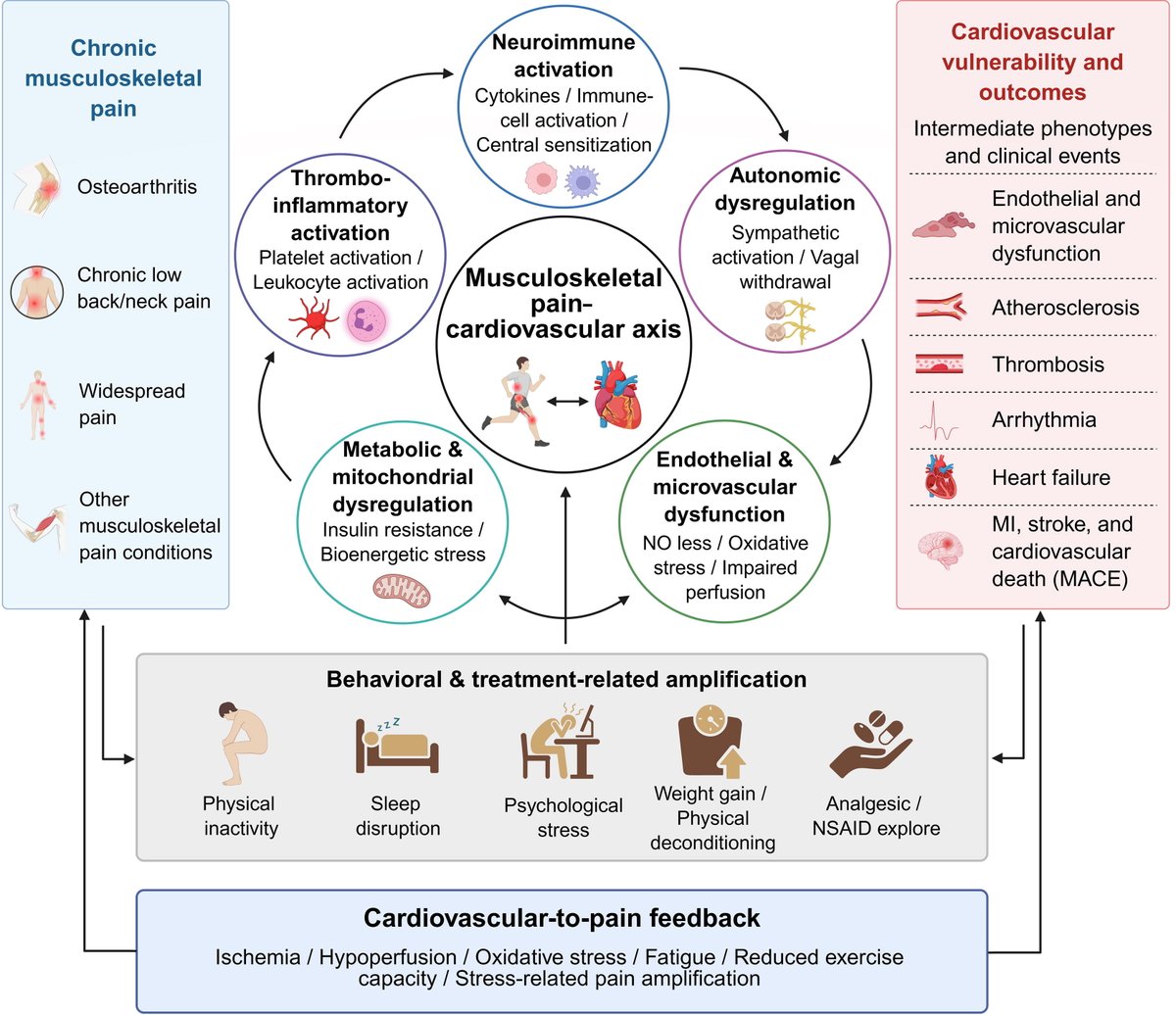
Interconnected, dynamic systems. Pain can be a symptom/maker of systemic dysregulation and not always a result of injury/damage.
https://t.co/iIvE8ukDPD
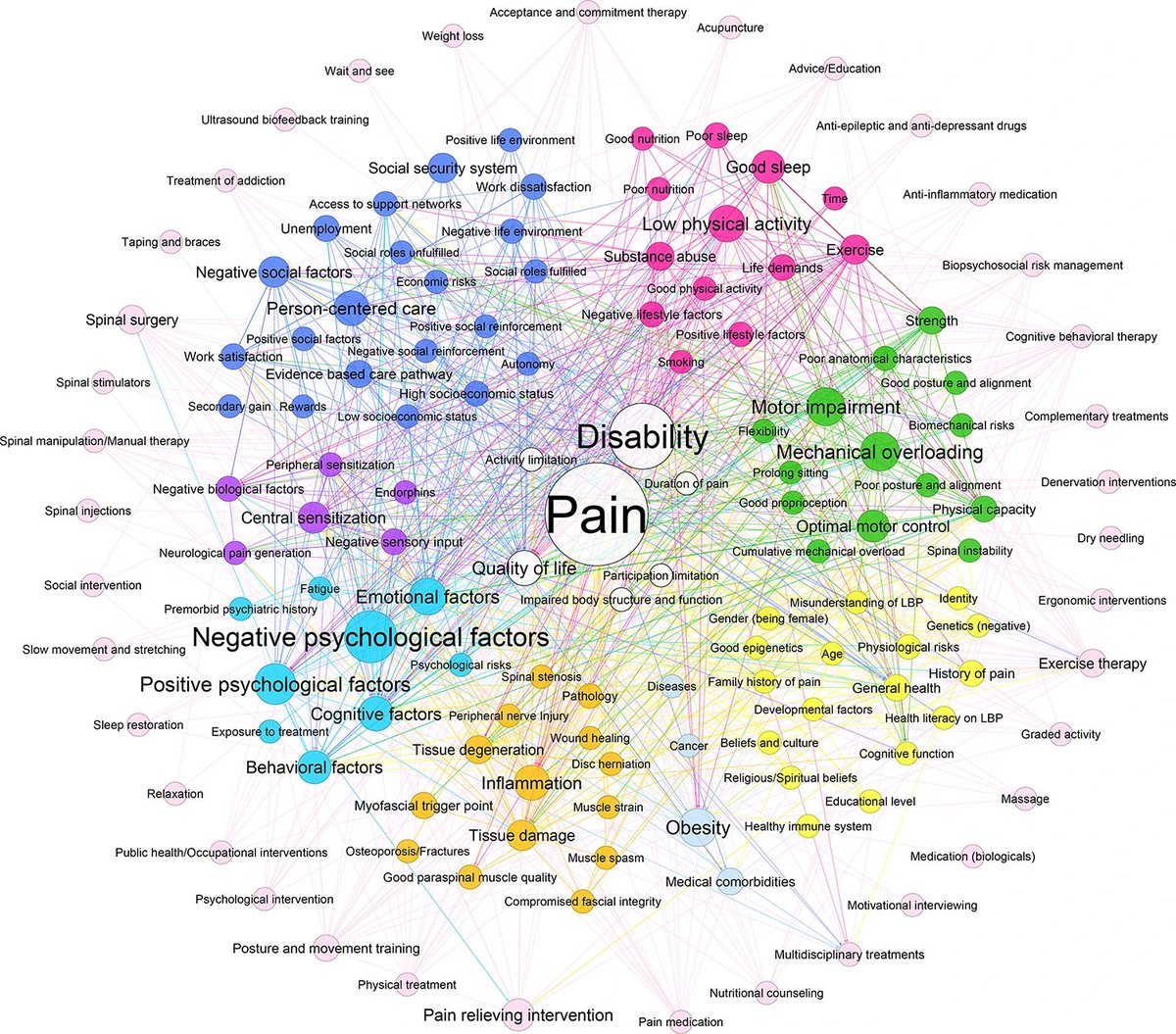
A few graphics illustrating NSLBP, the evidence for CFT, and some common observations I see in clinic, described in the accompanying text
Scroll down 😎
"Clinicians must move beyond the assumption that hypermobility is benign, beyond purely passive care, and beyond discharging patients simply because pain persists"
"Managing Patients with #Hypermobility Disorders" is our August #Editorial 👉 https://t.co/t2fkKoLdXU
#yourJOSPT
Associations Between Graft Choice and Return to Sports After Primary Anterior Cruciate Ligament (ACL) Reconstruction in Athletes https://t.co/IzIS13TB5G
ACL-HS retear rate was 38% but cleared at 25 weeks RTS
ACL-QT retear rate was 10.7% and cleared at 37.6 weeks
ACL-PTG retear rate was 9.6% and cleared at 41.1 weeks after surgery
Should we stop labeling #treatments as “active” or “passive”?
This latest paper examines the limitations of this widely used distinction in #rehabilitation and proposes a more person-centred approach to treatment planning that prioritizes both evidence and patient specific factors. #physiotherapy, #activetreatment, #passivetreament, #patientcentrecare.
🏃♂️ Does exercise reduce chronic low back pain by lowering inflammation?
This secondary analysis of the ASTEROID randomized controlled trial explored whether a 12-week, digitally delivered run–walk program could modify systemic inflammatory markers in adults with chronic low back pain.
To read the intriguing findings: https://t.co/M8duMEuqIp
#Exercise training #Physical activity #Jogging #Interval training #Inflammation
Spinal Manipulation and Clinician-Supported Self-Management for Preventing Chronic Low Back Pain Impact: The PACBACK Randomized Clinical Trial
👇👇👇
https://t.co/3ekQQWe5Fm
Our review of 32 primary care guidelines for low back pain has been published today in @TheLancetRheum
We compared current recommendations for low back pain and explored how they have changed over the last 30 years
https://t.co/clQG53Nq24
A few key findings 🧵👇1/8