@FlyFrontier Frontier your supervisor at gate A30 in Charlotte/ 8pm eating chicken wings and people waiting in line to rebook a flight after 90 mins delay…what a joke of an airline
@FlyFrontier Probably the worst customer service experience by these 2 ladies, in the A30 gate in Charlotte Airport. 8pm eating chicken wings in the counter while passengers were waiting to be rebooked on a flight after 1:30 delay…
130 schools said no.
He led the losingest program in college football history to a national championship anyway.
Fernando Mendoza was a 2-star recruit from Miami.
He tried to walk on at his hometown school. They passed.
So did FIU.
So did FAU.
So did everyone else.
At 17, he was sitting in his bedroom, crying over a silent recruiting inbox—after driving to 18 camps with his dad and sending highlights to more than 100 programs.
Not one FBS offer.
His only option? Yale. No scholarship. No NFL path.
Everyone told him to be “realistic.”
“Know your place.”
“Be grateful.”
He didn’t listen.
Because Mendoza understood something most people miss:
The worst outcome isn’t failing.
It’s never getting the chance to try.
Two weeks before signing day in 2022, his phone rang.
Cal needed a body. One offer. Out of 134 schools.
He took it.
He arrived as the third-string quarterback.
Spent a year on the scout team.
Lost his first four starts.
Got sacked 41 times behind a broken offensive line.
Still got up. Every time.
Then Cal brought in a transfer instead of building around him.
So Mendoza left the only school that had ever said yes.
He transferred to Indiana—the losingest program in college football history.
People laughed.
“Career suicide.”
“Graveyard program.”
“Nobody wins there.”
One coach told him something different:
“I’m going to make you the best Fernando Mendoza possible.”
That was enough.
Mendoza wasn’t just playing for football.
His mother has battled multiple sclerosis for 18 years.
Before every snap, he thought of her.
“My mother is my why.”
Indiana went 16–0.
Beat six Top-10 teams.
Won their first Big Ten title since 1945.
Mendoza threw 41 touchdowns.
Won the Heisman—first in school history.
First Cuban-American to ever do it.
Then came the title game.
Miami. Near his hometown.
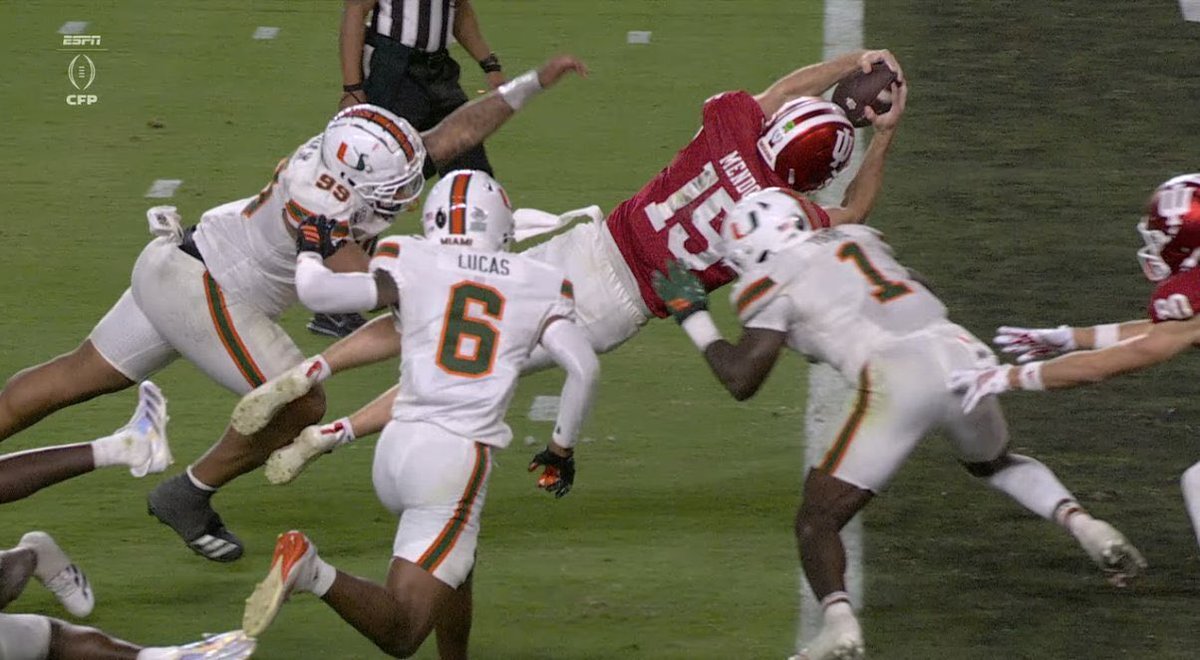
Fourth-and-4. Season on the line.
Quarterback draw.
The kid 134 schools rejected spun through defenders and dove into the end zone.
Game over.
Indiana—national champions.
The losingest program became the best team in America.
All because a 17-year-old refused to believe “no” was the end.
Rankings don’t decide your ceiling.
Gatekeepers don’t write your ending.
Being overlooked isn’t a verdict—it’s a starting point.
Sometimes all you need is one shot…
and the courage to bet on yourself when nobody else will.
Don’t quit.
Credit: Barclay Mullins
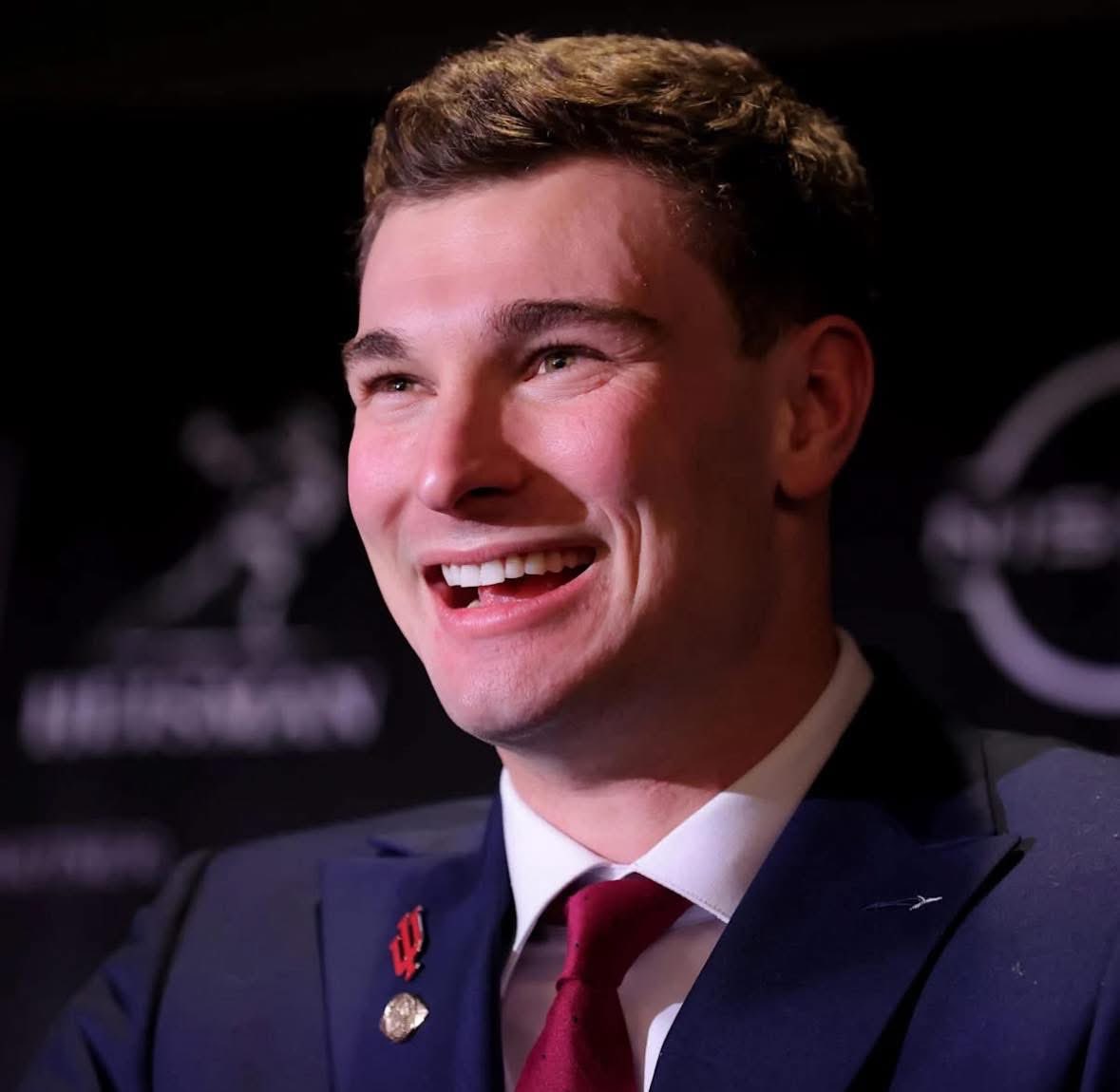
Fernando Mendoza went from being a barely recruited 2-star prospect, to a third-string college QB, to winning the Heisman trophy and College Football National Championship.
It’s cool to care.
Be yourself and go all the way.
In an era where people are afraid to be called “cringe,” Mendoza led the Indiana Hoosiers’ historic turnaround with his heart on his sleeve and a captivating earnestness.
After leading the Hoosiers to an improbable Big 10 Championship over Ohio State, Mendoza barely held back tears in an emotional post-game interview, which had a commentator opining, “Did Mendoza just lose the Heisman with that interview?”
A week later, Mendoza won the Heisman Trophy. He cried during that speech, too.
He said, “I want every kid out there who feels overlooked, underestimated, to know I was you. I was that kid too. I was in your shoes.
The truth is, you don’t need the most stars, hype or rankings. You just need discipline, heart, and people who believe in you and you need to believe in your own abilities."
Perhaps Mendoza isn’t the best player in college football in spite of how much he cares; perhaps he is the best player in college football because of how much he cares.
And that he isn’t scared to be seen caring.
Mendoza didn’t waste time or energy playing a certain part. He needed every heartbeat to rise from a little known afterthought to the best college football player in the world.
The point isn’t that we should try to be more like Mendoza. It’s that we waste so much time and energy worrying about what others think and mimicking them instead of owning who we are and harnessing it for greatness.
The variety of caring that living an excellent life requires is neither saccharine nor solely focused on outcomes. It’s a process of laying it on the line and giving something your full effort, and it must be renewed every day.
It means that in success and even in failure you can be proud of the effort you gave, the guts you showed, and the person you are becoming.
Fernando Mendoza is a great model for young athletes (and really, all people).
Worrying about what others think is an enormous black hole of energy. It keeps so many on the sidelines and short of realizing their potential.
Being comfortable with who you are and giving it your all is a superpower.
At its best, excellence is an expression of authenticity. You pour who you are into what you do.
You don’t need to fit someone else’s idea of what it means to be great.
What you need is to put in the work.
Be yourself. And go all the way.
This guy just pulled off the smartest wealth transfer in modern history.
But nobody understands what he actually did.
Yesterday, Michael Dell announced $6.25 billion to fund "Trump Accounts" for 25 million American kids.
Media's celebrating it as philanthropy.
But it's not charity...
It's billionaires weaponizing government infrastructure.
Here's what happened:
Trump signed a law creating investment accounts for kids under 18.
Kids born 2025-2028 get $1,000 from Treasury. Parents add $5,000/year tax-deferred. Money goes into S&P 500.
Standard program?
Wrong.
The loophole:
"Qualifying organizations may make additional contributions that do NOT count toward the $5,000 limit."
Unlimited money can flow in.
Dell drops $6.25 billion for $250 deposits to 25 million kids in zip codes under $150k income.
The genius part:
Dell doesn't build a foundation, track recipients, manage investments, or handle taxes.
Treasury does ALL of it.
One check. Government does the work.
Brad Gerstner: "This is a unique platform created by government that can unlock major giving."
First time billionaires use FEDERAL INFRASTRUCTURE to distribute wealth.
Zero overhead.
The compounding:
$250 at age 10 → $8,000 by age 50
Add $100/year from parents → $72,000
Dell's $250 becomes a $72k nest egg. He gets full credit.
The contrarian take:
Dell's net worth: $148 billion.
Lifetime giving before this: $2.9 billion.
This move: $6.25 billion.
He DOUBLED his entire lifetime philanthropy in one transaction.
Why? Before this, giving 25 million kids money cost $1-2 billion in overhead.
Now government does it free.
Other billionaires are watching too: Uber, Zillow, Nvidia, Salesforce already committed to employees' kids.
This is the playbook now.
But what people miss?
Accounts are tax-deferred, not tax-free. Withdrawals get taxed when kids turn 18.
Government loans money, gets paid back decades later through taxes.
Dell's stock jumped 4% since announcement. $148B → $154B net worth.
He gained $6B in market value from a $6.25B donation.
Net neutral. Plus "largest commitment to US children" PR.
But Dell didn't invent this.
Brad Gerstner spent 4 years lobbying.
Dell waited until the infrastructure was built, dropped $6.25B, and claimed the narrative.
Why build rails when government does it?
What happens next:
Within 5 years, $100+ billion will flow into these accounts from other billionaires.
This becomes the primary vehicle for billionaire philanthropy.
Not because it's the most effective.
Because it's the EASIEST.
Write one check. Government does the rest.
For entrepreneurs watching this:
The lesson isn't about charity.
It's about INFRASTRUCTURE.
Dell hijacked an existing system and scaled instantly.
That's how you move $6.25 billion in 24 hours.
Don't build rails. Find existing rails and run your train.
The reality:
$250 doesn't solve poverty. But it gets 25 million families comfortable with investing and compounding.
75% of zip codes qualify. Including middle-class families who don't need it.
Which means this is either:
The smartest philanthropic innovation in decades.
Or the most sophisticated PR play ever.
Time will tell which one it is.
But one thing's certain...
Michael Dell just changed the game for how billionaires give money away.
And it all happened because the government built the infrastructure first.
Juan Luis Guerra presenta una nueva versión de su emblemática canción ‘Estrellitas y Duendes’, ahora junto a la inconfundible voz de Sting. Una colaboración histórica que se siente tan mágica como la canción misma.