Corrosion doesn’t wait. Neither do visionaries.
Nominations are now open for the 2027 Materials Performance Corrosion Innovation of the Year Awards.
This program recognizes breakthrough technologies and solutions advancing corrosion prevention and mitigation, the innovations protecting vital assets from corrosion’s damaging effects.
If your team has developed a revolutionary solution, now is the time to bring it forward.
Nomination Deadline: October 15, 2026
Award recipients announced at AMPP Annual Conference + Expo 2027, April 11–15, 2027, in Columbus, Ohio.
Nominate your innovation: https://t.co/gS8UxaTq8E
#2027MPAwards
What can periodic vessel inspections reveal about long-term asset integrity? In the latest issue of Materials Performance, Megan Dahl, Ryan Crosswhite, and Glenn Edgemon share findings from inspections at the U.S. Department of Energy’s Hanford Site Effluent Treatment Facility, highlighting the role of condition assessments in identifying corrosion mechanisms and supporting maintenance decisions.
🔗 Learn more at https://t.co/fpa954AyuF
#Corrosion #AssetIntegrity #MaterialsPerformance #Infrastructure #CorrosionEngineering #MIC #Inspection #MaterialsScience
Education, perseverance, and opportunity can shape the next generation of corrosion professionals. In this personal reflection Paola Andrea Postigo Rojas shares her journey into cathodic protection and highlights the importance of introducing students to careers in corrosion engineering, asset integrity, and infrastructure protection.
🔗 Read more: https://t.co/EPW6zlXxZH
#CathodicProtection #AssetIntegrity #STEM #WomenInEngineering #Infrastructure #Education #ProfessionalDevelopment
#sponsored Delayed Coker Units (DCUs) are essential profit centres in modern refineries, converting heavy residues into higher-value products. Yet, they operate under some of the harshest process conditions in refining. Corrosion in fractionators, gas oil strippers, amine systems, and flare drums can compromise asset integrity, leading to costly unplanned shutdowns and escalating maintenance budgets.
🔗 Download Integrated Global Services's white paper: https://t.co/BDE06EagYD
#AssetIntegrity #Corrosion #Refinery #ReliabilityEngineering #Turnaround #OilAndGas
@NIST has released its technical findings on the 2021 collapse of Champlain Towers South. The investigation identifies a combination of design and construction deviations, added structural loads, and long-term corrosion as key factors that reduced the building's margins against failure.
🔗 Read more: https://t.co/x9siUC4DYR
#NIST #StructuralEngineering #FailureAnalysis #Corrosion #Infrastructure #BuildingSafety
@NIST has released its technical findings on the 2021 collapse of Champlain Towers South. The investigation identifies a combination of design and construction deviations, added structural loads, and long-term corrosion as key factors that reduced the building's margins against failure.
🔗 Read more: https://t.co/0la4IXHOyt
#NIST #StructuralEngineering #FailureAnalysis #Corrosion #Infrastructure #BuildingSafety
#sponsored In this study, ground-breaking data analytics techniques are employed to combine high spatial resolution measurements from a Close Interval Survey (CIS) with year-round, daily Remote Monitoring Unit (RMU) measurements from nearby coupons. In effect, we create a “living” CIS profile, which updates in response to incoming RMU readings.
🔗 Download the white paper: https://t.co/10Bo8D7rwu
#cathodicprotection #remotemonitoring #corrosionprevention
#sponsored For decades, radiographic testing (RT) has been the backbone of weld inspection. It’s familiar, visual, and codified. But it’s also slow, hazardous, expensive, and increasingly outdated. Across industries—from pipelines and refineries to heavy fabrication—project owners are demanding faster, safer, and fully traceable inspection data. The pressure is clear: deliver high-confidence inspections of weld integrity without the cost and constraints of radiation.
🔗 Downloas the white paper at https://t.co/8VMImd4r30
How do stress distributions influence sulfide stress cracking (SSC) test results? In Materials Performance, Thomas Haase and Andreas Mondry of Salzgitter Mannesmann Forschung, together with Christoph Bosch and René Rüter of EUROPIPE GmbH, use finite element modeling and full-ring validation to show how common laboratory test methods can produce stress levels that exceed real-world pipeline conditions—providing valuable insights for improving SSC test interpretation and reliability.
🔗 Read the article: https://t.co/03VaPCiCM0
#Corrosion #SulfideStressCracking #MaterialsPerformance #PipelineIntegrity
Researchers from Equinor and the Institute for Energy Technology have developed an improved corrosion fatigue test methodology for unbonded flexible risers. By more accurately simulating annulus environments and protective corrosion films, the approach provides more reliable fatigue life predictions and has already enabled the safe extension of service life for six offshore risers beyond their original design life.
🔗 Read more: https://t.co/iZZNcNlqHb
#Corrosion #CorrosionFatigue #FlexibleRisers #OffshoreEngineering #AssetIntegrity #OilAndGas #MaterialsScience #MaterialsPerformance #StructuralIntegrity #EngineeringResearch
#sponsored 🔍 Inspection is a key part of preventing corrosion-related failures, reducing downtime, and supporting safe operations. As assets age, continuous corrosion monitoring can provide the reliable data needed to make informed maintenance and integrity decisions.
Join this webcast to learn about implementing ultrasonic testing corrosion monitoring systems, selecting the right monitoring approach for different applications, and understanding the advantages of continuous monitoring over traditional inspection methods.
Presented by Steve Strachan, Director, Global Sales, Corrosion and Power Gen at Eddyfi Technologies.
🔗 Register now: https://t.co/HDk9emKySc
#CorrosionMonitoring #AssetIntegrity #Inspection #UltrasonicTesting #CorrosionControl #NDT #Infrastructure
Corrosion monitoring is entering a new era of connected data and smarter decision-making.
From non-intrusive sensors and real-time data acquisition to robotic inspections, continuous monitoring, and advanced analytics, new technologies are helping engineers move beyond periodic inspections toward a more complete, condition-based view of asset health.
Read how five key approaches are transforming corrosion monitoring and asset integrity management in the feature article from latest issue of Materials Performance Magazine.
🔗https://t.co/6Ri7B9k5YL
#CorrosionMonitoring #AssetIntegrity #PredictiveMaintenance #CorrosionEngineering #Infrastructure #MaterialsPerformance
#sponsored MESA Products provides cathodic protection materials with a 99% on-time ship rate nationwide. Whether you need anodes, test stations, rectifiers, or anything else, we provide reliable solutions backed by industry expertise. Wherever you operate, we’re here to help you keep your CP systems performing at their best.
https://t.co/ypzDAeK0ga
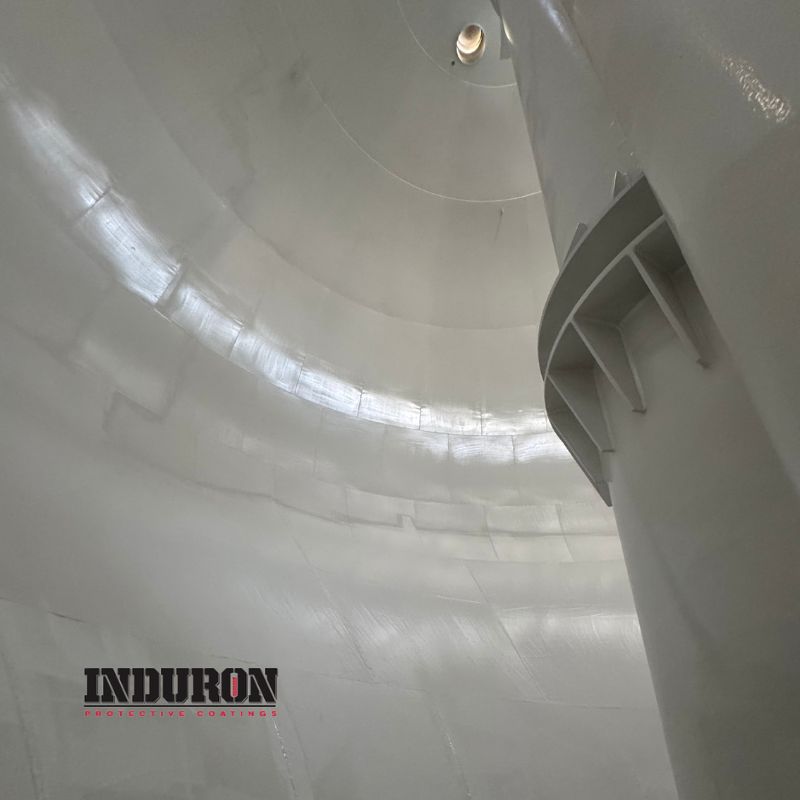
#sponsored When performance and efficiency matter, Induron’s Perma-Clean 100 SL delivers. This 100% solids ceramic epoxy tank lining is built for potable water and treatment plant services, providing durable, thick-film protection with a simple single-leg application—no complex equipment needed.
Reliable protection through innovative coatings starts here.
https://t.co/VGU8nHqX82
Modeling and simulation are playing an increasingly important role in optimizing corrosion protection and extending asset life. 💪
💡 In this webcast, Bertil Nistad will walk through how COMSOL Multiphysics and the Corrosion Module can be used to analyze corrosion behavior, evaluate cathodic protection systems, and support more informed design decisions.
Attendees will gain insight into corrosion modeling approaches, see a live demonstration, and learn how simulation tools can simplify complex electrochemical analyses.
👉 Register for free to learn more: https://t.co/HpHOn3ygZ8
#Corrosion #CathodicProtection #Engineering #Simulation #Modeling #AssetIntegrity #MaterialsScience #Infrastructure #Electrochemistry
Modeling and simulation are playing an increasingly important role in optimizing corrosion protection and extending asset life. 💪
💡 In this webcast, Bertil Nistad will walk through how COMSOL Multiphysics and the Corrosion Module can be used to analyze corrosion behavior, evaluate cathodic protection systems, and support more informed design decisions.
Attendees will gain insight into corrosion modeling approaches, see a live demonstration, and learn how simulation tools can simplify complex electrochemical analyses.
👉 Register for free to learn more: https://t.co/HpHOn3ygZ8
#Corrosion #CathodicProtection #Engineering #Simulation #Modeling #AssetIntegrity #MaterialsScience #Infrastructure #Electrochemistry
#sponosored At the AMPP Annual Conference and Expo, Dan Aiken of ROCKWOOL Technical Insulation shared how CR-Tech is changing the game in CUI mitigation—using an embedded inhibitor that activates in real-world conditions to help protect critical assets.
With expanding manufacturing in North America and strong market adoption, it’s clear this technology is gaining momentum.
🔗 For more information about ROCKWOOL and CR-Tech visit https://t.co/0bVVOSgPJD
#AMPP #CorrosionControl #CUI #Insulation #Infrastructure #Innovation
Born from Borin Manufacturing and Automa, B&A Technologies delivers advanced cathodic protection, remote monitoring, and control solutions. Supporting oil, gas, and water sectors, we help protect assets, boost performance, and enable safer, smarter operations.
Link: https://t.co/6S8gYAUKEt
From May 11–13, industry leaders will gather in Washington, D.C. for @AMPPorg Advocacy Days 2026 to bring real-world expertise directly to policymakers. This event connects engineers, coatings experts, and asset managers with federal leaders to help shape stronger, more resilient infrastructure.
With corrosion costing the U.S. an estimated $276 billion annually, these conversations are more critical than ever.
🔗 Learn more: https://t.co/HbKkXVxtif
#AMPP #CorrosionControl #Infrastructure #Energy #Defense #WorkforceDevelopment
Oxygen doesn’t belong in oil and gas systems—but it finds its way in more often than you think.
In this Materials Performance article, Shrirang Deshmukh (Clariant Corporation), David Young, and Bruce Brown (Ohio University) explore the hidden pathways of oxygen ingress—from seawater injection and chemical treatments to routine maintenance and equipment failures.
Even trace amounts of oxygen can accelerate corrosion, reduce inhibitor performance, and threaten asset integrity.
Understanding these risks is key to building safer, more reliable operations.
🔗Read more: https://t.co/cgjJYJoAjB
#CorrosionControl #OilAndGas #AssetIntegrity #MaterialsPerformance #EngineeringInsights #PipelineIntegrity