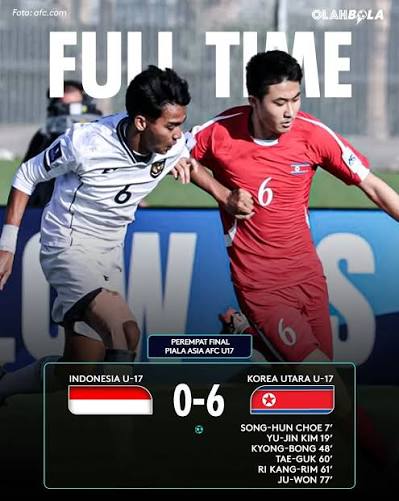
@PENJUALMIRAZ@ruangtaktik iraq, palestine, suriah itu kualitas pemain2 lokalnya masih di atas pemain lokal kita. Dan sebapuk2nya korea utara juga masih di atas indonesia
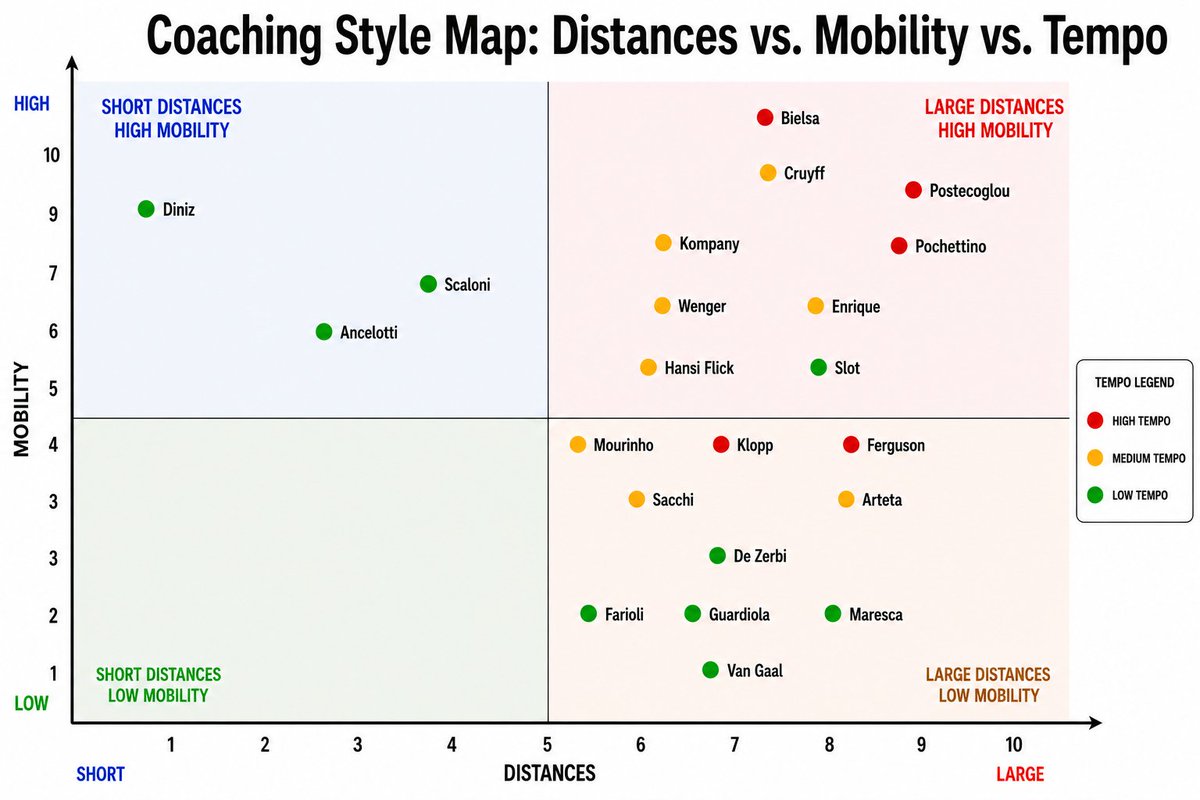
Every approach is ultimately built on balancing three core concepts: distances, mobility, and tempo.
How a coach thinks about these three variables dictates everything, from strategy and tactics down to player profiling and individual coaching. What kind of distances he wants the team to play with, how much mobility he wants within the structure, and the tempo he wants the game to be played at will shape the entire identity of the team. It even reflects in the personalities of the coaches themselves, and the type of personalities they prefer in players.
Every elite coach accepts certain risks in order to minimise others. An effective team-level strategy cannot exist without balancing these trade-offs. Coaches who try to maximise all three simultaneously struggle to consistently dominate at elite level. There has to be a mechanism that allows the team to control the game, whether through shorter distances, lower mobility, lower tempo, or a balance between them.
As distances, mobility, and tempo all increase simultaneously, the game naturally becomes more chaotic. Players have fewer stable references while making decisions, structural compactness lowers, and the physical demands placed on the team are unreasonable across a full season, especially with European football. This explains a lot about the careers of coaches like Bielsa, Postecoglou, and Pochettino.
Strategically, it becomes almost impossible to sustain a coherent in-possession model and control defensive transitions without balancing these concepts properly. On a team level everything is a trade-off between distances, mobility, and tempo.
@TimnasXtra@izeeshaan3 Vietnam pasti mau persiapan piala asia, China juga batal ikut karena mau lawan tim2 timur tengah, bodoh sekali kalau mau lawan tim2 Asean lagi