Two years ago she put down a R160k deposit and bought an . Monthly installment: R12,300.
Now the car has been repossessed.
It’s sad because sometimes people don’t realize how quickly circumstances can change. A car can look affordable during good times… until life starts life-ing.
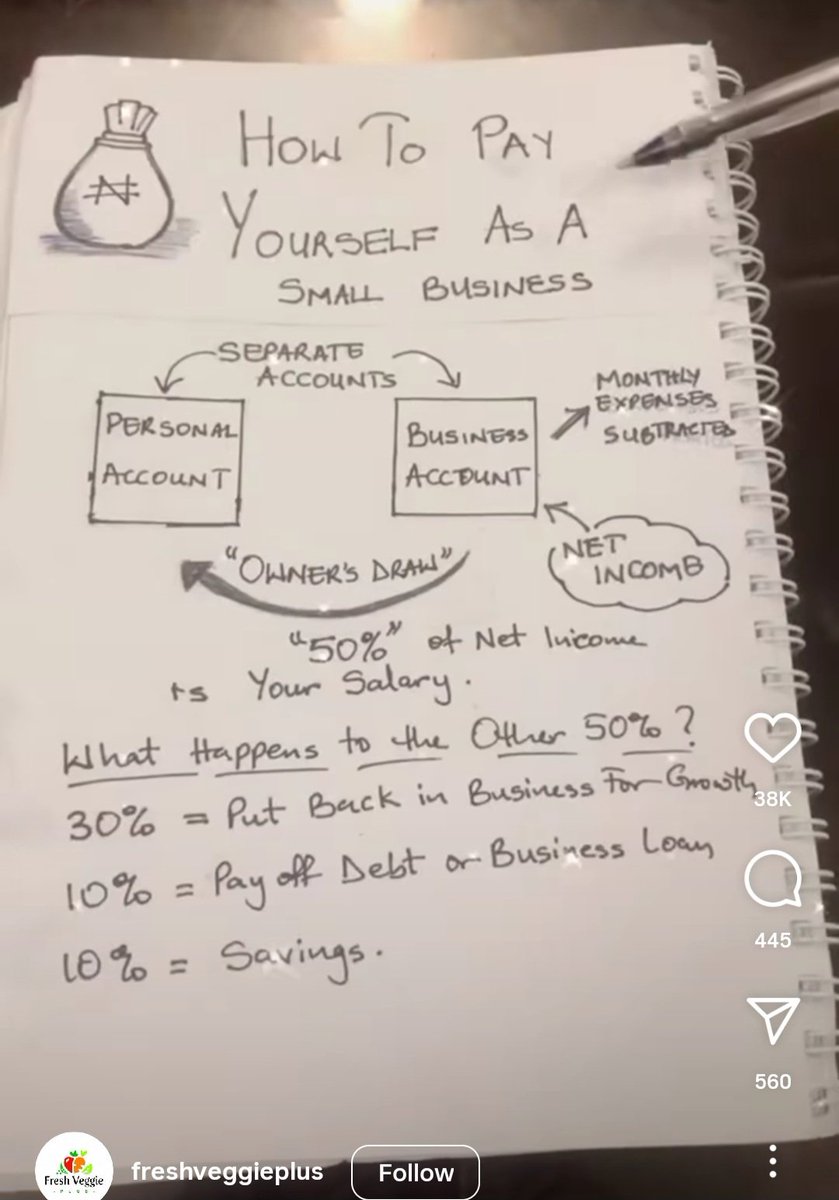
HOW TO PAY YOURSELF AS A SMALL BUSINESS OWNER
I came across this online, and since I’ve tried it myself, I can confidently recommend it to any small business owner (SBO) struggling with cash flow.
One major mistake most SBOs make is running business transactions through their personal accounts. This rookie mistake often leads to overspending and poor financial control. To avoid this, you must have two separate accounts: one for your business and one for personal use.
All business expenses should be paid strictly from the business account. This makes it easier to monitor expenses and accurately determine your profit margin at the end of a given period.
I also recommend using a simple Excel template to record and track your revenue and expenses daily. This way, you can easily assess the financial health of your business at a glance.
At the end of the month, after deducting all expenses, such as staff salaries, raw materials, supplies, staff motivation, transportation, marketing, taxes, miscellaneous costs, etc., from your revenue, whatever remains is your income.
This is where many SBOs become lazy and undisciplined. They start spending the income recklessly because they believe they can always make the money back and don’t answer to anyone. After all, it’s “their money.”
You can not have this mindset if you plan to grow and expand your business.
Instead, do this:
1. Pay yourself 50% of the income as an employee
There is you, and there is your business. Treat your business as a separate entity. When closing your books for the month, pay yourself a salary just as you pay your staff. Transfer this 50% into your personal account. This should cover your personal savings, expenses, and enjoyment.
2. Reinvest 30% of the income back into the business
This does not have to be spent immediately if there’s nothing urgent to purchase. You can set it aside until it’s enough to acquire new equipment or fund business growth. Just ensure the money is strictly reserved for the business.
3. Use 10% to pay off debt or business loans
If your business is debt-free, you can add this percentage to your business savings.
4. Save 10% in an interest-yielding platform
This savings is for your business, not your personal savings. Over time, it helps build financial stability and future expansion capacity.
I hope this helps someone out there. Financial discipline is especially challenging when you run a business that brings in daily income, but it’s also what separates sustainable businesses from struggling ones.